
Struggling to shape the perfect clarinet tone can leave even seasoned American musicians questioning their approach. For professionals and advanced amateurs, tonal variations are not just about loudness or equipment but stem from mastering specific technical skills and understanding the instrument’s intricate acoustical design. This guide focuses on muscular control, air support, and embouchure precision as the foundation for a personalized sound, while dispelling stubborn myths and offering actionable insight for clarinetists across the United States.
Table of Contents
- Clarinet Tone Defined And Common Myths
- Instrument Variations And Acoustic Principles
- Embouchure, Air, And Voicing Effects
- Mouthpiece, Barrel, And Reed Selection
- Player Technique And Equipment Maintenance
- Troubleshooting Tone Issues And Misconceptions
Key Takeaways
| Point | Details |
|---|---|
| Clarinet Tone Development | Mastering air control, embouchure precision, and technique is essential for producing quality sound, rather than relying solely on high-end equipment. |
| Role of Instrument Components | The mouthpiece, barrel, and reed significantly affect tone quality and should be customized through personal experimentation for optimal sound. |
| Embouchure and Air Management | Maintaining consistent lip pressure, air stream control, and muscle tension is crucial for effective sound production and expressive performance. |
| Technique and Maintenance | Regular practice and diligent maintenance of the instrument are critical for achieving and sustaining a high standard of clarinet performance. |
Clarinet tone defined and common myths
Clarinet tone represents the unique sound quality and character produced by an instrument, far more complex than simply how loud or soft a note sounds. Musical tone emerges from intricate interactions between player technique, instrument construction, and individual performance nuances.
Understanding tone requires dispelling several persistent myths that can mislead musicians. Clarinet fundamentals reveal that good sound production isn’t about mysterious secrets, but mastering specific technical skills:
- Consistent air control matters more than equipment
- Embouchure precision significantly impacts sound quality
- Tone results from technique, not just instrument type
- Small adjustments can dramatically transform sound characteristics
Many clarinetists mistakenly believe tone quality depends exclusively on expensive mouthpieces or professional-grade instruments. In reality, sound production is a sophisticated blend of muscular control, breathing technique, and subtle physical adjustments.
The embouchure plays a critical role in defining tone. Precise embouchure formation determines not just volume, but the harmonic richness and tonal color of each note. Professional musicians understand that microscopic changes in lip tension, air pressure, and mouth positioning can transform a clarinet’s voice.
Pro tip: Practice tone production using long, sustained notes while maintaining consistent breath support and minimal embouchure movement.
Instrument variations and acoustic principles
The clarinet family represents a complex ecosystem of instruments, each with unique acoustic characteristics that dramatically influence sound production. Clarinet acoustics reveal a fascinating interplay between physical design and sound generation, where subtle variations in instrument construction profoundly impact musical performance.
Clarinet types span an impressive range, from tiny piccolo to massive contrabass models. These instruments share fundamental design principles but differ significantly in acoustic behavior:
- Cylindrical bore determines fundamental sound characteristics
- Bore length directly influences pitch range
- Material composition affects harmonic resonance
- Keywork complexity impacts tonal flexibility
The instrument’s acoustical architecture is remarkably sophisticated. Woodwind instrument design demonstrates how physical properties like bore shape and size create distinctive tonal qualities. Professional clarinetists understand that each instrument type produces a unique voice, influenced by microscopic engineering details.
Interestingly, the clarinet’s cylindrical bore causes it to overblow at the twelfth, creating distinct register changes that set it apart from other woodwind instruments. This unique acoustic behavior allows musicians to explore extraordinary tonal landscapes across different instrumental variants.
Pro tip: Experiment with multiple clarinet types to understand how bore geometry and construction fundamentally transform sound production.
Embouchure, air, and voicing effects
Embouchure represents the critical intersection between musician and instrument, where subtle muscular adjustments transform sound production. Clarinet embouchure fundamentals demonstrate how lip tension and positioning create the essential gateway for airflow, directly influencing tone quality and musical expression.
Successful clarinet performance depends on mastering several key elements:
- Consistent lip pressure
- Controlled air stream
- Precise mouth cavity shape
- Dynamic tongue positioning
- Balanced muscle tension
Breath support forms the foundation of exceptional clarinet performance. Tone production techniques highlight the critical role of diaphragmatic breathing in maintaining a steady, resonant sound. Professional musicians understand that voicing—the internal shaping of the oral cavity—dramatically affects tonal characteristics across different registers.
The relationship between embouchure and voicing is extraordinarily complex. Microscopic changes in tongue position, jaw alignment, and lip tension can produce dramatic shifts in tone color, pitch stability, and harmonic richness. Advanced clarinetists develop an intuitive sense of these minute adjustments, allowing them to craft a personalized sound that transcends technical limitations.
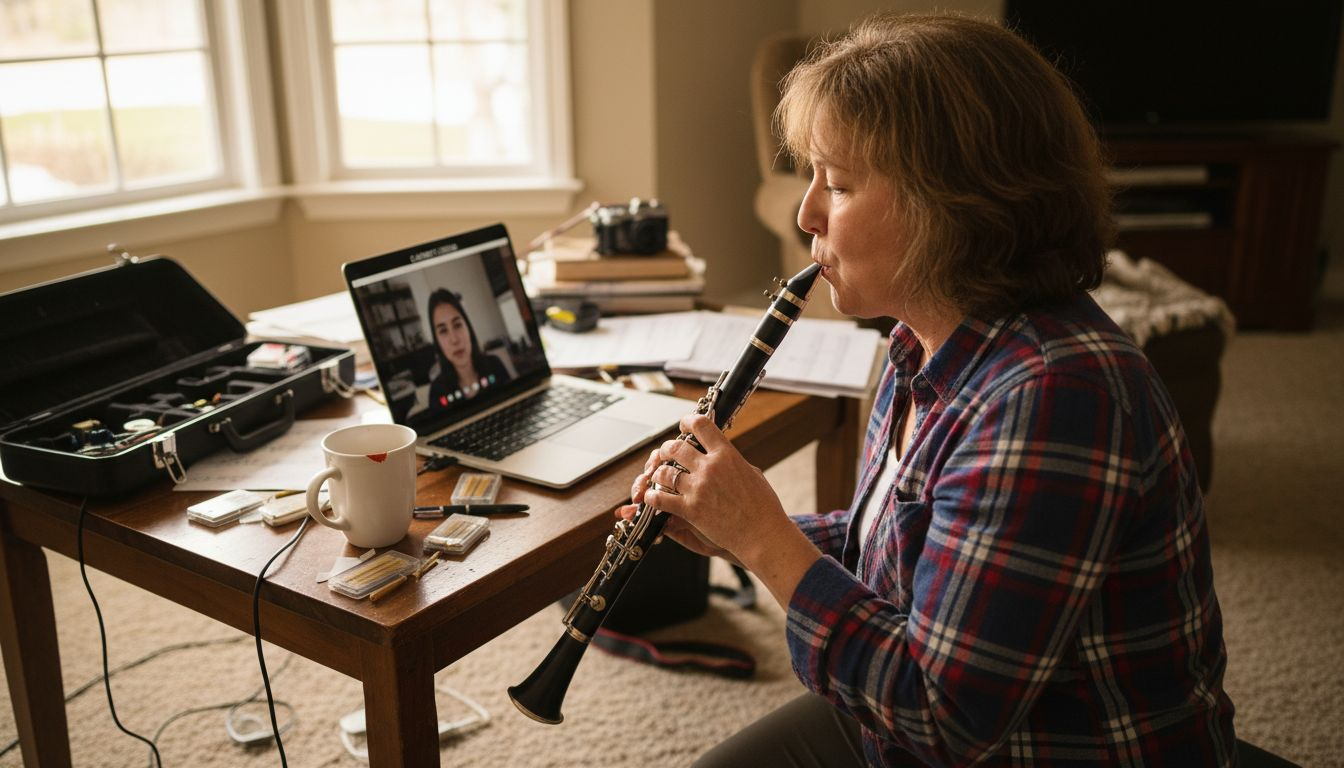
Pro tip: Practice long tone exercises while focusing on maintaining consistent embouchure tension and exploring subtle voicing variations.
Mouthpiece, barrel, and reed selection
The acoustic trinity of clarinet sound production involves mouthpiece, barrel, and reed—each component playing a crucial role in shaping musical expression. Clarinet acoustics reveal how these interconnected elements transform steady airflow into nuanced musical tones.
Clarinet performers must consider multiple factors when selecting components:
- Mouthpiece material influences resonance
- Reed strength affects vibration characteristics
- Barrel length impacts tonal projection
- Material composition changes harmonic qualities
- Individual playing technique determines optimal setup
Mouthpiece selection represents a deeply personal journey. Mouthpiece material properties demonstrate that different substances—hard rubber, plastic, wood, metal—produce distinct acoustic signatures. Professional clarinetists understand that no universal ‘perfect’ combination exists; instead, musicians must experiment to discover their unique sound profile.
The intricate relationship between reed, mouthpiece, and barrel demands careful calibration. Microscopic variations in reed cut, mouthpiece facing, and barrel dimensions can dramatically alter tone color, intonation, and dynamic range. Advanced players develop an intuitive sense of these subtle interactions, allowing them to craft a personalized sound that transcends technical limitations.
Here is a concise comparison of how different clarinet components shape overall tone quality:
| Component | Primary Influence | Typical Player Adjustments |
|---|---|---|
| Mouthpiece | Affects resonance/smoothness | Vary facing, test materials |
| Barrel | Alters projection and timbre | Change length, swap materials |
| Reed | Controls response and color | Adjust strength, select cut |
| Instrument Body | Sets base voice and overtones | Experiment with bore and material |
Pro tip: Systematically test different mouthpiece, barrel, and reed combinations, keeping detailed notes about each configuration’s sonic characteristics.
Player technique and equipment maintenance
Clarinet performance extends far beyond musical skill, encompassing meticulous technique and systematic equipment care. Clarinet fundamentals emphasize the critical relationship between player technique, muscle memory, and instrument maintenance in achieving consistent sound quality.
Effective maintenance and technique development involve multiple strategic approaches:
- Regular practice of long tone exercises
- Consistent scale and articulation drills
- Precise air support development
- Systematic equipment inspection
- Proactive instrument cleaning protocols
Musicians must approach equipment maintenance with the same precision applied to musical performance. Instrument care techniques reveal that preventative maintenance prevents performance disruptions and extends instrument longevity. Professional clarinetists understand that proper cork greasing, careful cleaning, and minor repair knowledge are as crucial as technical proficiency.
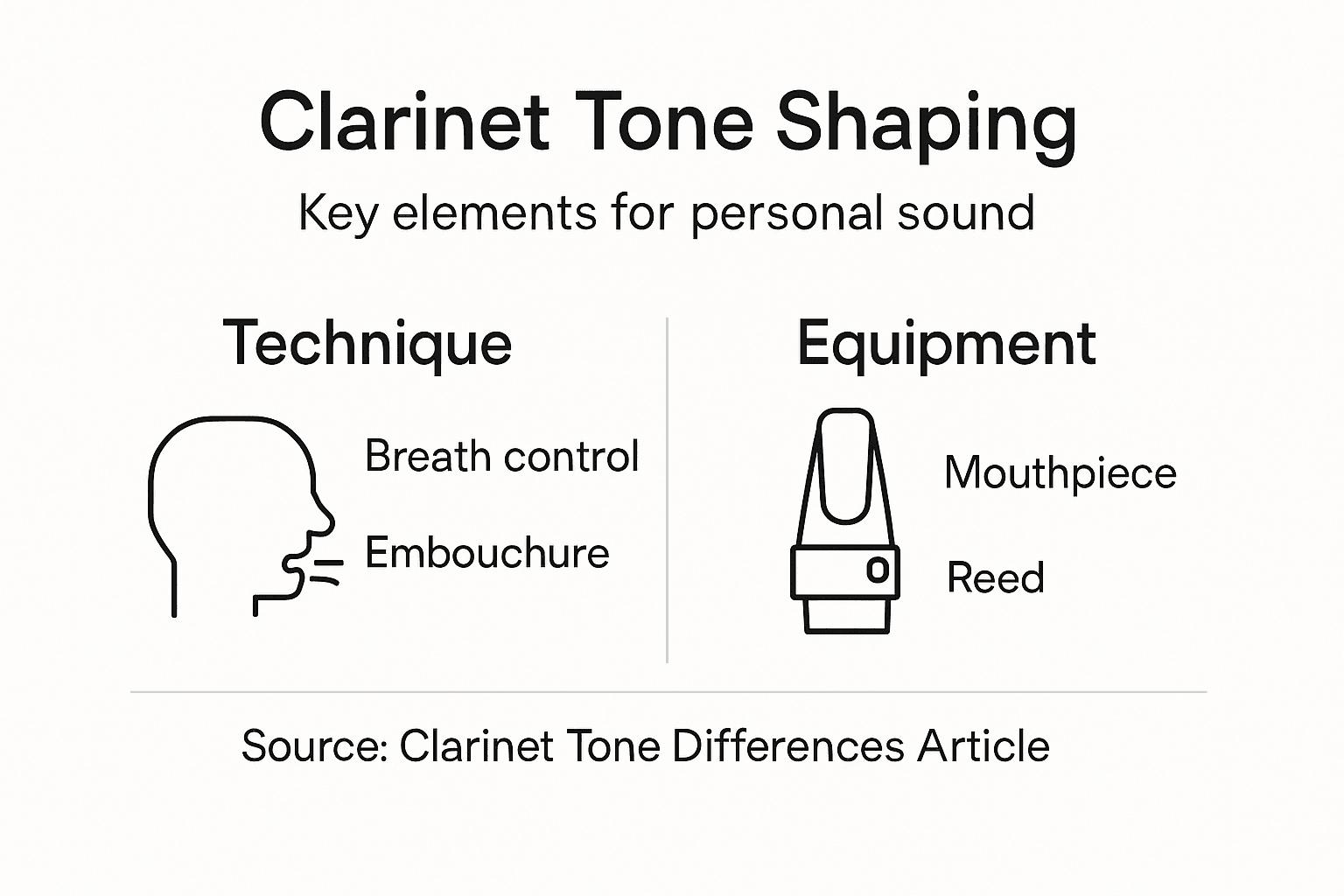
Technique development is a continuous journey of refinement. Muscle memory, breathing control, and fingering precision interact dynamically, requiring dedicated practice and mindful attention to subtle physical adjustments. Advanced players cultivate an intimate understanding of their instrument’s mechanical and acoustic characteristics, allowing them to diagnose and address potential issues before they compromise performance.
Pro tip: Develop a consistent maintenance routine, documenting instrument condition and performance characteristics to track incremental improvements.
Troubleshooting tone issues and misconceptions
Tone challenges represent complex interactions between player technique and instrument characteristics. Clarinet fundamentals expose common misconceptions that prevent musicians from achieving optimal sound quality by oversimplifying tone production.
Clarinetists frequently encounter several persistent tone problems:
- Inconsistent air support
- Uneven embouchure pressure
- Inappropriate reed selection
- Misaligned mouthpiece positioning
- Inadequate muscle control
The most pervasive myth is that tone quality stems exclusively from equipment. Professional musicians understand that technical fundamentals matter far more than expensive gear. Resonance fingering techniques demonstrate how precise air flow and support can transform challenging throat tones from weak and sharp to rich and controlled.
Troubleshooting requires systematic diagnosis. Players must distinguish between equipment limitations and technique deficiencies, understanding that most tone issues result from subtle physical adjustments rather than inherent instrument flaws. Advanced clarinetists develop keen self-awareness, continuously monitoring their physical approach and making microscopic corrections to maintain consistent sound quality.
The following table summarizes common tone problems and targeted troubleshooting strategies:
| Tone Problem | Likely Cause | Effective Solution |
|---|---|---|
| Thin, weak sound | Insufficient air support | Strengthen breath control |
| Unstable pitch | Uneven embouchure | Balance lip tension |
| Harsh tone | Hard reed, tight jaw | Try softer reed, relax jaw |
| Muffled or fuzzy notes | Dirty mouthpiece/reed | Clean/reseat components |
Pro tip: Record yourself playing and critically analyze tone production, focusing on air support and embouchure stability rather than blaming equipment.
Shape Your Clarinet Tone with Precision and Confidence
Mastering clarinet tone means understanding the subtle balance between embouchure, air support, and equipment choices discussed in the article. If you struggle with inconsistent sound, harsh tone, or unclear pitch, these challenges come down to technical finesse and the right gear. With concepts like mouthpiece resonance, barrel length impact, and reed strength playing key roles, it is essential to explore tailored equipment that responds to your unique playing style.

Discover a curated collection of professional-grade mouthpieces, barrels, and custom components at My Clarinet Stuff. Rooted in Viennese craftsmanship principles, our selection helps you experiment with tonal color and projection, enabling you to transform your personal sound effectively. Take advantage of personalized consultations and our detailed product descriptions to find your ideal setup that truly enhances your air control and embouchure technique. Begin your journey to the clarinet tone you imagine today—visit My Clarinet Stuff and unlock your best sound.
Frequently Asked Questions
What factors influence the tone quality of a clarinet?
Tone quality is influenced by multiple factors including consistent air control, embouchure precision, player technique, and equipment choices like mouthpieces, barrels, and reeds.
How can I improve my clarinet tone production?
Improving tone production involves practicing long, sustained notes while maintaining consistent breath support and minimal embouchure movement. Focus on mastering air control and muscle adjustments.
Why does my clarinet sound different with different mouthpieces and reeds?
Different mouthpieces and reeds have unique acoustic characteristics that affect resonance, vibration, and tonal quality. Experimenting with various combinations can help you discover the sound profile that best suits your playing style.
How does embouchure affect clarinet tone?
Embouchure plays a critical role in defining tone quality. Microscopic changes in lip tension, air pressure, and mouth positioning can significantly impact volume, tonal color, and harmonic richness in sound production.
Recommended
- Clarinet Sound Personalization—Achieving Signature Tone – My Clarinet Stuff
- Clarinet Sound Tradition: Shaping Your Tone Heritage – My Clarinet Stuff
- Clarinet Tone Customization: Achieving Your Signature Sound – My Clarinet Stuff
- Clarinet Sound Flexibility: Boosting Expressive Range – My Clarinet Stuff