


Every clarinetist aiming for a commanding presence in a concert hall soon learns that true projection is far more complex than simply playing louder. Misunderstandings about clarinet projection are common, with many players confusing volume for genuine sound transmission. Mastering acoustic projection demands a deep understanding of technique, breath support, embouchure, and equipment synergy. Discover expert-backed strategies to refine your sound and achieve remarkable clarity using the best tools and methods available.
Table of Contents
- Clarinet Projection Defined And Misconceptions
- Essential Embouchure And Breath Techniques
- Equipment Choices For Enhanced Projection
- Acoustic Principles And Performance Settings
- Common Projection Mistakes And How To Fix
Key Takeaways
| Point | Details |
|---|---|
| Understanding Clarinet Projection | Clarinet projection is about efficiently transmitting sound, not just volume, and involves breath control and embouchure mechanics. |
| Embouchure and Breath Techniques | Effective projection relies on proper lip positioning, diaphragmatic breathing, and minimizing muscle tension for optimal sound quality. |
| Equipment Selection | Choosing the right mouthpiece, reed strength, and instrument materials is crucial for enhancing projection in varied performance settings. |
| Common Mistakes in Projection | Addressing issues like inconsistent embouchure tension and improper breath support is essential to achieving a powerful and consistent sound. |
Clarinet Projection Defined and Misconceptions
Clarinet projection involves more than just generating sound volume; it represents the complex acoustic phenomenon of transmitting musical tone efficiently through space. Many musicians misunderstand this nuanced technical skill, often conflating loudness with true projection.
Traditional pedagogical approaches have frequently oversimplified projection techniques. Contemporary research on clarinet performance reveals that projection involves sophisticated interactions between breath control, embouchure mechanics, and acoustic resonance. Musicians must move beyond simplistic notions of “playing loudly” and instead understand the intricate physical dynamics of sound production.
Key misconceptions about clarinet projection include:
- Believing volume equals projection
- Assuming tongue position alone determines sound quality
- Thinking professional projection can be achieved without specialized technique
- Overlooking the role of internal resonance chambers
Sound production in clarinets depends on multiple interconnected factors. Doctoral research examining pedagogical approaches demonstrates that effective projection requires understanding both mechanical and acoustic principles. Successful clarinetists develop nuanced control over breath support, reed vibration, and embouchure tension.
Pro tip: Practice projection by recording yourself and analyzing the acoustic characteristics, not just the volume, of your sound.
Essential Embouchure and Breath Techniques
Embouchure mechanics represent the foundational skill for achieving powerful clarinet projection. Professional musicians understand that effective sound production requires precise lip positioning, controlled muscle tension, and strategic breath management.
Advanced embouchure techniques involve creating a balanced interface between the player’s lips and the mouthpiece. This delicate interaction determines the quality of sound transmission, with subtle adjustments capable of dramatically transforming tone and projection.
Key components of effective embouchure and breath techniques include:
- Maintaining consistent lip tension
- Developing diaphragmatic breathing
- Creating a centered, focused sound
- Controlling air pressure and speed
- Minimizing unnecessary muscle tension
Breath support remains critical in achieving professional-level projection. Clarinet performance resources emphasize that powerful sound emerges from coordinated diaphragm and abdominal muscle engagement. Successful clarinetists develop a nuanced approach to breath management, treating air as a dynamic instrument unto itself.
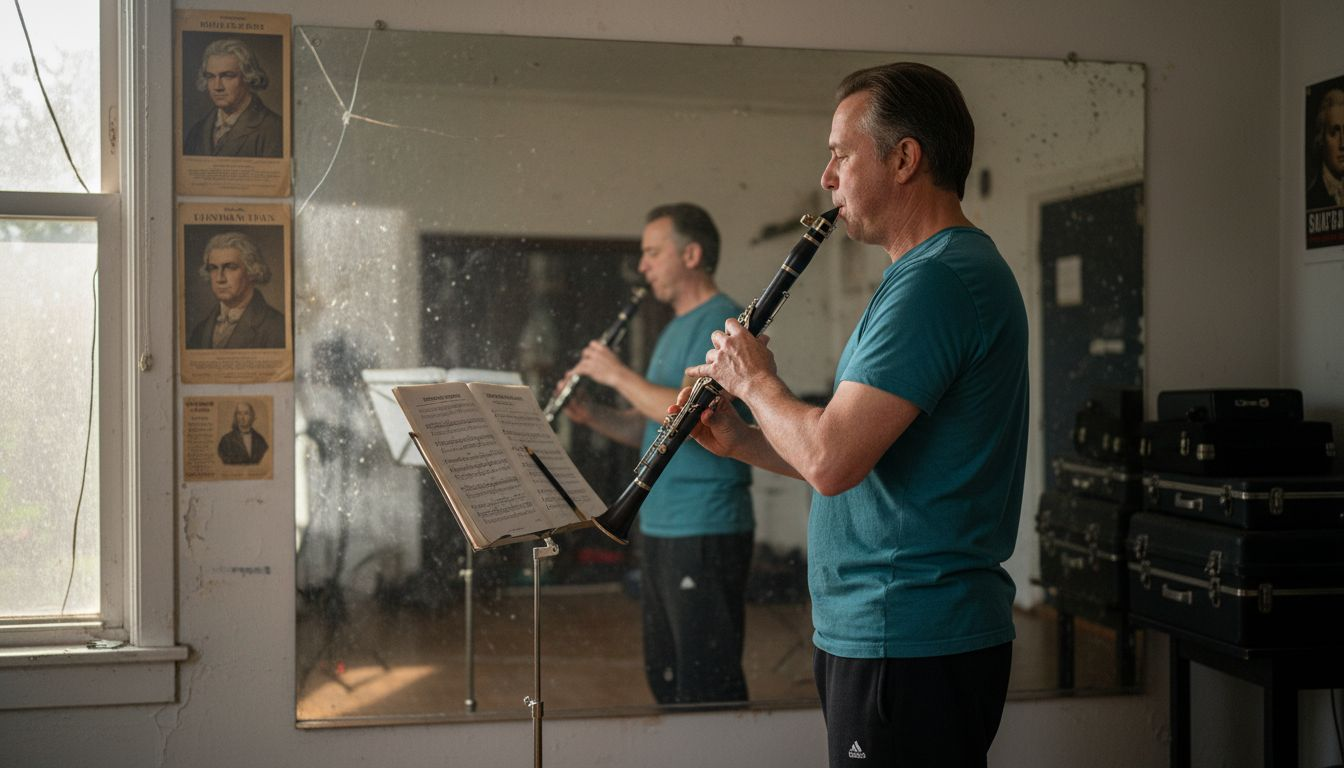
Understanding the physiological mechanics of breath and embouchure transforms amateur playing into professional-caliber performance. Musicians must treat their bodies as sophisticated acoustic instruments, carefully training muscle groups and developing refined sensory awareness.
Pro tip: Practice breath control by performing long-tone exercises while monitoring your diaphragm’s consistent engagement and maintaining steady air pressure.
Equipment Choices for Enhanced Projection
Clarinet projection demands strategic equipment selection that goes beyond basic instrument components. Professional musicians understand that each piece of equipment contributes fundamentally to sound quality and acoustic performance.
Acoustic research on clarinet design reveals how specific equipment choices dramatically influence sound radiation and projection. The interaction between mouthpiece, reed, and instrument body creates a complex acoustic system where minor adjustments can produce significant tonal changes.
Critical equipment considerations for enhanced projection include:
- Selecting appropriate mouthpiece geometry
- Choosing reed strength matching playing style
- Evaluating instrument material and construction
- Considering barrel length and internal dimensions
- Matching equipment to performance environment
Equipment selection research demonstrates that professional clarinetists carefully match their equipment to individual playing techniques. Different performance contexts—from intimate chamber settings to large concert halls—require nuanced equipment choices that optimize sound projection and tonal clarity.
Professional projection emerges from understanding how each equipment component interacts acoustically, not from purchasing the most expensive gear.
Musicians must approach equipment selection as a holistic process, recognizing that projection results from synergy between player technique and carefully chosen instruments and accessories.
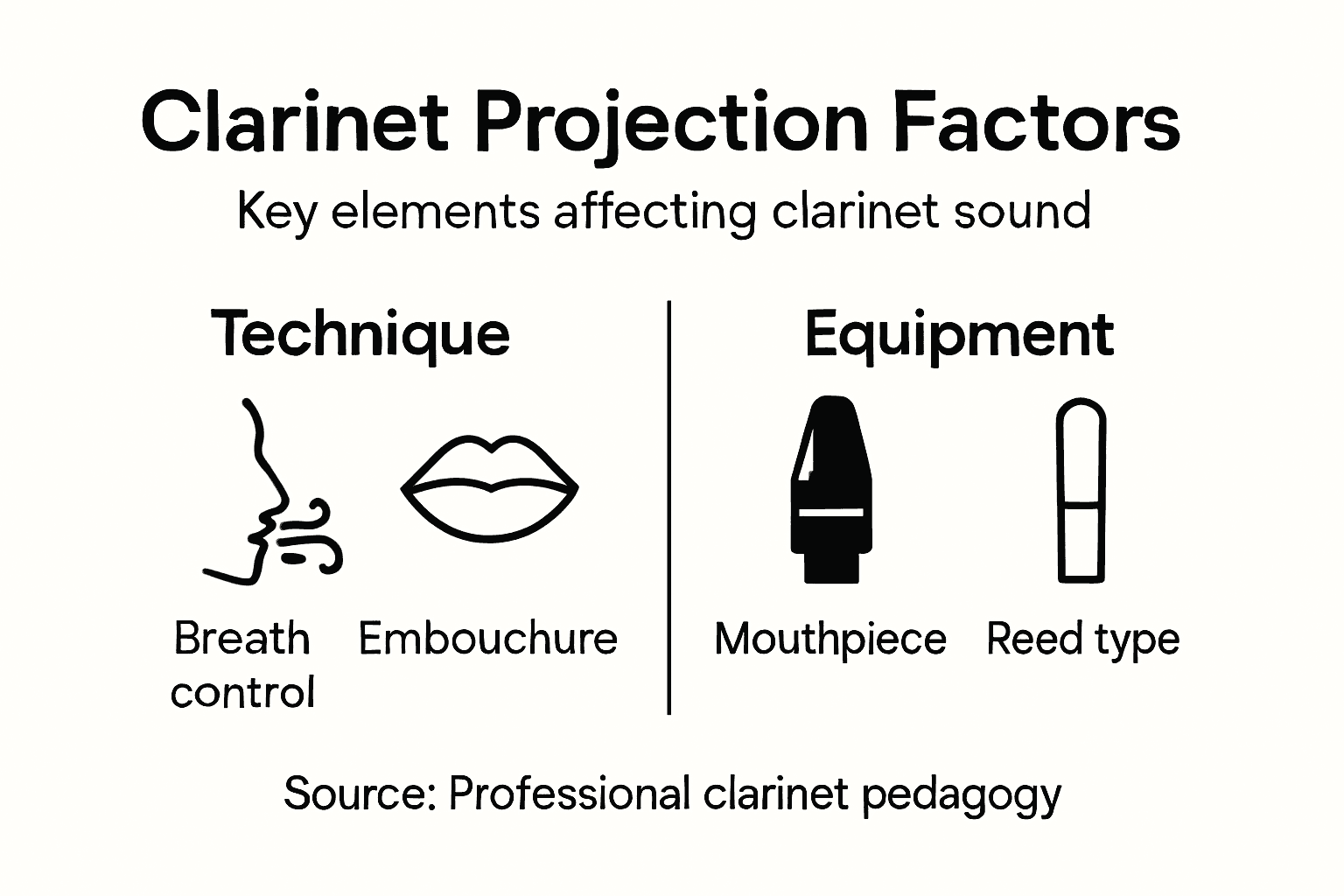
Here’s how player-related and equipment-related factors contribute to clarinet projection:
| Factor Type | Key Element | Impact on Projection |
|---|---|---|
| Player Technique | Breath support | Enables sustained, resonant projection |
| Player Technique | Embouchure control | Shapes tone focus and sound direction |
| Equipment | Mouthpiece design | Alters sound brightness and carry |
| Equipment | Reed strength | Affects vibration and tonal clarity |
| Equipment | Bore geometry | Modifies sound radiation and resonance |
Pro tip: Experiment with multiple mouthpiece and reed combinations, systematically testing their impact on your sound’s projection and consistency.
Acoustic Principles and Performance Settings
Acoustic principles form the foundation of understanding clarinet sound projection, revealing how physical properties interact to create musical expression. Professional musicians recognize that sound production is a complex interplay between instrument design, player technique, and environmental conditions.
Clarinet acoustic mechanics demonstrate the instrument functions as a sophisticated stopped cylindrical pipe, where bore dimensions and tone hole configurations critically shape sound transmission. Each component contributes to the overall acoustic signature, determining how sound waves propagate and project.
Key acoustic factors influencing clarinet projection include:
- Bore diameter and internal geometry
- Reed vibration characteristics
- Tone hole placement and size
- Material density of instrument body
- Sound wave reflection and absorption
Directional sound research reveals fascinating insights into how clarinet sounds radiate differently across various frequencies. Performance spaces dramatically influence sound perception, with acoustic properties determining how effectively a musician’s projection reaches listeners.
Acoustic mastery transcends technical skill—it’s about understanding how sound travels and transforms between instrument and audience.
Musicians must develop nuanced awareness of how acoustic principles interact with performance environments, adapting technique and equipment to maximize sound clarity and reach.
Pro tip: Practice in multiple acoustic environments to develop sensitivity to how room characteristics modify your clarinet’s projection and tonal qualities.
See below for a quick reference on how performance environments change clarinet projection:
| Venue Type | Acoustic Effect | Projection Challenge |
|---|---|---|
| Small chamber hall | More immediate sound | Maintaining subtlety |
| Large concert hall | Greater sound dispersion | Ensuring sound reaches back |
| Outdoor stage | Minimal sound reflection | Preventing sound loss |
| Practice room | Strong reflections, dry | Avoiding artificial brightness |
Common Projection Mistakes and How to Fix
Clarinet projection challenges even experienced musicians, with subtle technical errors dramatically undermining sound quality. Recognizing and addressing these common mistakes represents a critical pathway to developing a powerful, consistent musical voice.
Clarinet embouchure techniques reveal several fundamental errors that compromise projection. Musicians frequently constrict chin muscles, over-tension mouth corners, and misplace the mouthpiece, creating pinched, unfocused tones that lack resonance and clarity.
Most common projection mistakes include:
- Inconsistent embouchure tension
- Insufficient breath support
- Improper mouthpiece placement
- Excessive muscle tension in facial muscles
- Neglecting throat and oral cavity openness
- Inconsistent reed pressure
Technical performance research demonstrates that projection problems stem from complex interactions between physical technique and psychological approach. Successful correction requires systematic, patient practice focusing on muscle awareness and controlled breathing.
Projection is not about force, but about creating a balanced, resonant sound channel from breath to instrument.
Musicians must develop a holistic approach to technique, understanding that projection emerges from refined, relaxed control rather than muscular effort.
Pro tip: Use mirror exercises to visually monitor and gradually retrain your embouchure, focusing on maintaining a relaxed, open configuration during practice.
Unlock Your Best Clarinet Projection with Expert-Quality Gear
Achieving powerful clarinet projection depends on mastering breath support, embouchure control, and precise equipment choices as highlighted in the article. If you struggle with inconsistent tone or thin sound, it is often linked to mouthpiece and barrel selection. My Clarinet Stuff specializes in boutique clarinet accessories crafted to enhance sound clarity and projection, grounded in the Viennese sound tradition. Our selection includes professional Gleichweit mouthpieces and custom barrels designed to optimize resonance and focus.

Take your clarinet performance to the next level now by exploring our curated catalog. Whether you need personalized consultations or want to experiment with different mouthpiece and reed combinations for better projection, My Clarinet Stuff offers unique, high-quality solutions tailored for serious clarinetists. Discover how small changes in your equipment can produce big results by visiting us today and start your journey toward a richer, more powerful sound.
See our full range of custom mouthpieces and barrels and experience the difference professional-grade gear makes.
Frequently Asked Questions
What is clarinet projection and how is it different from loudness?
Clarinet projection refers to the effective transmission of musical tone through space, which involves complex acoustic phenomena, rather than simply producing loud sounds. True projection combines breath control, embouchure mechanics, and acoustic resonance to create a balanced and resonant sound.
What are some essential techniques for improving clarinet projection?
Key techniques for improving clarinet projection include maintaining consistent lip tension, developing diaphragmatic breathing, controlling air pressure and speed, and minimizing unnecessary muscle tension in the embouchure.
How does equipment choice affect clarinet projection?
Equipment choices significantly impact clarinet projection. Selecting the right mouthpiece geometry, reed strength, and considering the instrument’s material and bore geometry can enhance sound quality and overall acoustic performance, optimizing projection for different performance settings.
What common mistakes should I avoid to improve my clarinet projection?
Common mistakes that undermine clarinet projection include inconsistent embouchure tension, insufficient breath support, improper mouthpiece placement, and excessive tension in facial muscles. Addressing these issues through attentive practice can lead to better sound clarity and resonance.