


Choosing the right clarinet mouthpiece material can feel like an endless puzzle for musicians striving to shape their own sound. Each option, from wood to hard rubber and plastic, brings a unique blend of acoustic properties that directly affect tone, response, and playing comfort. For clarinetists in the United States who value personalized craftsmanship, understanding how these materials interact with individual technique is crucial for achieving the desired performance edge.
Table of Contents
- Clarinet Mouthpiece Material Defined and Debunked
- Key Mouthpiece Materials and Their Sound Profiles
- How Material Density Alters Tone and Response
- Durability, Maintenance, and Cost by Material
- Common Pitfalls When Selecting Your Mouthpiece
Key Takeaways
| Point | Details |
|---|---|
| Material Affects Sound | The choice of mouthpiece material significantly influences tone and response, with options like hard rubber, wood, and plastic each offering unique sonic qualities. |
| Consider Personal Style | Musicians should align mouthpiece selection with their playing style and genre to optimize performance and tonal expression. |
| Test and Experiment | It is crucial to test multiple mouthpieces in different environments to understand how material properties affect sound. |
| Balance Maintenance and Cost | Evaluate the durability and maintenance needs of materials against their cost to make informed purchasing decisions. |
Clarinet Mouthpiece Material Defined and Debunked
The material of a clarinet mouthpiece represents far more than a simple manufacturing choice – it fundamentally transforms sound production and player experience. Each material carries unique acoustic properties that interact directly with the reed, air column, and ultimately, the musician’s tonal expression.
Clarinetists encounter multiple material options, each with distinct characteristics. Acoustic engineering principles reveal how mouthpiece composition influences sound generation through complex interactions between reed vibration, air pressure, and resonance. Traditional materials like hard rubber, wood, and plastic each produce subtle yet meaningful variations in timbre and response.
Hard rubber remains the most prevalent mouthpiece material, prized for its consistent thermal properties and ability to maintain precise dimensional tolerances. Wood offers warmth and richness, while modern plastics provide durability and affordability. Research from specialized clarinet acoustics studies suggests that material differences, while nuanced, can significantly impact a player’s sonic palette and performance characteristics.
The selection process demands careful consideration of personal playing style, musical genre, and tonal preferences. Professional clarinetists often experiment with multiple materials to discover the precise sound profile that best matches their artistic vision.
Pro tip: When evaluating mouthpiece materials, always test multiple options in your specific performance environment to understand how acoustic properties translate across different acoustic settings.
Key Mouthpiece Materials and Their Sound Profiles
Clarinet mouthpieces represent a complex intersection of physics, acoustics, and musical craftsmanship, with each material contributing unique sonic characteristics that profoundly influence performance. Specialized acoustic research reveals the nuanced ways different materials interact with reed vibration and air column resonance, creating distinctive tonal landscapes for musicians.
Traditional materials like hard rubber, wood, and plastic each offer distinct sonic signatures. Mpingo wood, also known as African blackwood, stands out as a premier material in woodwind manufacturing, particularly prized for its exceptional sound projection and tonal warmth. Orchestration studies of woodwind acoustics highlight how this specific wood type contributes to the clarinet’s rich, complex sound profile.
Hard rubber dominates the professional market, offering consistent thermal stability and precise manufacturing tolerances. Wood mouthpieces provide warmth and depth, appealing to musicians seeking a more traditional, organic sound. Plastic materials have emerged as affordable, durable alternatives, particularly attractive to students and performers requiring robust, low-maintenance options.
Musicians must consider multiple factors when selecting a mouthpiece material: personal playing style, musical genre, performance environment, and desired tonal characteristics. Experimentation becomes key in discovering the material that best translates a musician’s artistic vision into sound.
Pro tip: Conduct blind sound tests with different mouthpiece materials to objectively evaluate their unique tonal qualities without preconceived expectations.
How Material Density Alters Tone and Response
The intricate relationship between material density and clarinet sound represents a sophisticated acoustic phenomenon that goes far beyond simple manufacturing choices. Clarinet acoustic research reveals how material mass fundamentally transforms vibration patterns, sound radiation, and overall tonal characteristics.
Material density directly influences mechanical vibration modes, affecting how energy transfers between the reed, mouthpiece, and air column. Density emerges as a critical factor in determining sound transmission efficiency, with denser materials producing more focused and concentrated tonal qualities. Engineering acoustics studies demonstrate that increased material density can modify air flow resistance and pressure distribution, ultimately shaping the instrument’s sonic output.
Different material densities create unique resonance characteristics. Heavier materials like hard rubber tend to produce more stable, centered tones with reduced harmonic complexity, while lighter materials such as certain plastics generate brighter, more responsive sound profiles. Professional clarinetists often select mouthpiece materials based on subtle variations in density that align with their desired tonal palette and performance requirements.
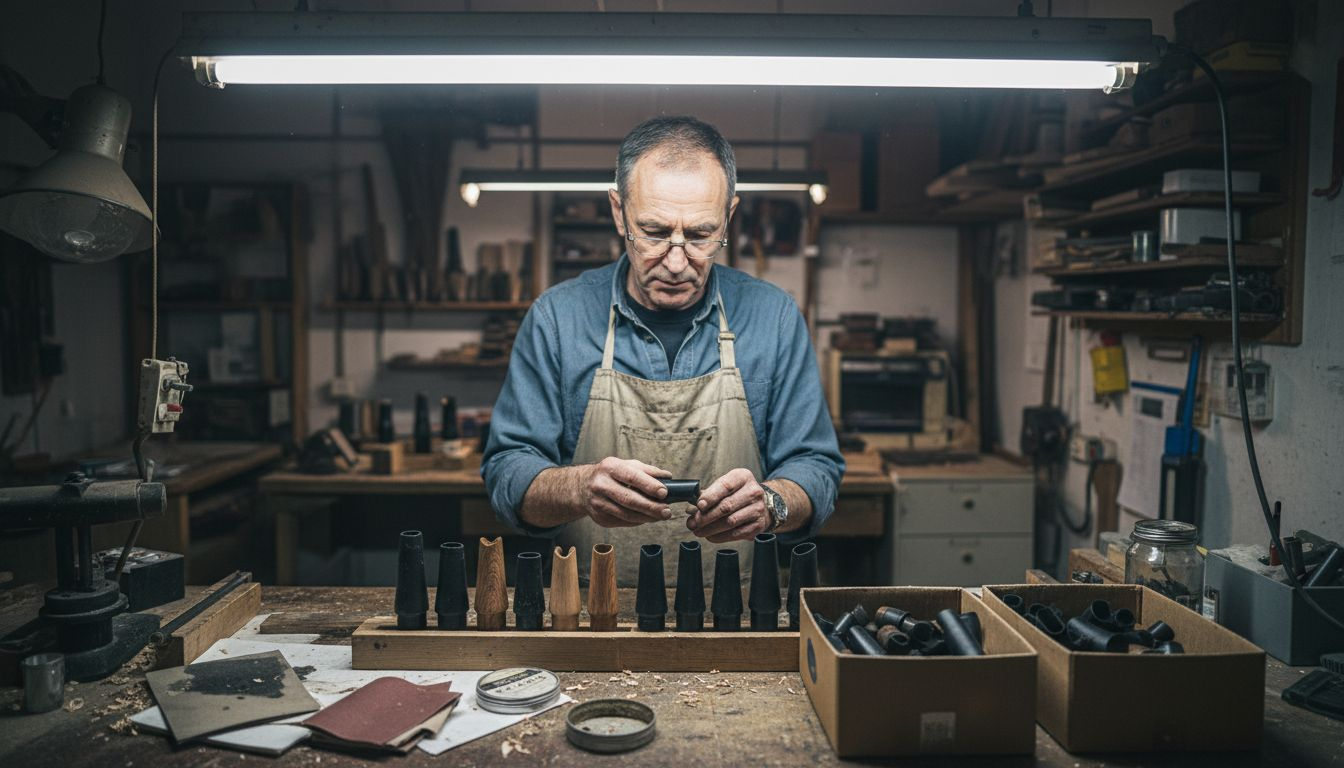
Understanding material density becomes a nuanced art, requiring musicians to balance technical acoustics with personal artistic expression. Each material’s unique density profile contributes to a complex interaction of sound generation, transmission, and perception.
Pro tip: Experiment with mouthpiece materials of varying densities across different playing contexts to develop a sophisticated understanding of their unique sonic characteristics.
Durability, Maintenance, and Cost by Material
Clarinetists must carefully evaluate the economic and practical considerations of mouthpiece materials, balancing performance potential with long-term investment. Research on clarinet materials reveals significant variations in durability, maintenance requirements, and associated costs across different material types.
Hard rubber emerges as the most pragmatic choice, offering an optimal balance between affordability, durability, and ease of maintenance. Wooden mouthpieces represent a more delicate investment, requiring meticulous care to prevent moisture damage and structural degradation. Instrument care guidelines emphasize the critical importance of proper cleaning and storage techniques to extend mouthpiece longevity across all material types.
Cost considerations vary dramatically. Plastic mouthpieces provide an economical entry point for students and amateur musicians, while professional-grade wooden and specialized hard rubber options command premium prices. Metal and ceramic mouthpieces occupy unique niches, with ceramic options being particularly fragile and expensive, and metal variants offering distinctive tonal characteristics at a higher price point.
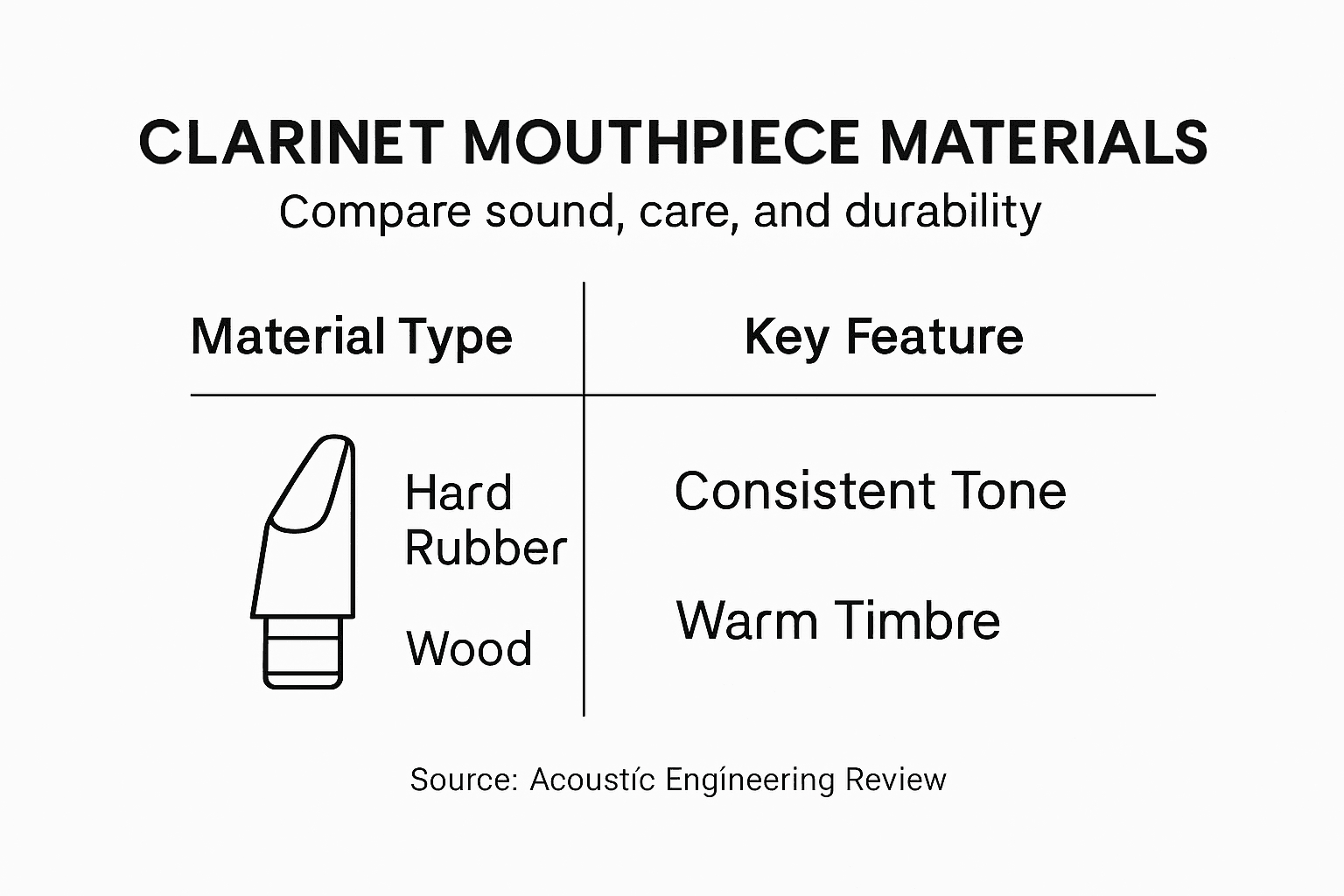
Here is a comparison of common clarinet mouthpiece materials and their key influences on sound and maintenance:
| Material | Typical Sound Character | Durability | Maintenance Needs |
|---|---|---|---|
| Hard Rubber | Centered, consistent, warm | High | Simple, regular cleaning |
| Wood | Warm, rich, complex | Moderate | Careful moisture control |
| Plastic | Bright, direct, less complex | Very high | Low, easy to clean |
| Metal | Bright, unique | High | Polishing, avoid dents |
| Ceramic | Focused, pure, fragile | Low | Gentle handling required |
The true value of a mouthpiece transcends its initial price tag, encompassing factors like tonal quality, durability, and individual playing characteristics. Professional musicians often view high-quality mouthpieces as critical investments in their artistic expression, willing to allocate significant resources to find their ideal sound.
Pro tip: Consider purchasing mouthpieces from reputable makers who offer warranty and restoration services, maximizing your long-term investment in instrument accessories.
Common Pitfalls When Selecting Your Mouthpiece
Mouthpiece selection represents a complex decision that extends far beyond simple visual appeal or price point. Instrument selection research reveals that musicians frequently make critical errors by overlooking fundamental compatibility factors between their playing style, skill level, and mouthpiece characteristics.
Beginners often fall into predictable traps when choosing mouthpieces. Many select equipment based on recommendations from peers or superficial attributes like appearance, without understanding the nuanced relationship between mouthpiece specifications and individual playing mechanics. Instrument care guidelines emphasize that improper mouthpiece selection can lead to significant technical challenges, including reduced tone quality, increased playing difficulty, and potential frustration.
Professional musicians recognize that mouthpiece selection requires a holistic approach. Critical factors include tip opening, material composition, facing length, and personal embouchure characteristics. Amateur players frequently underestimate the importance of these technical details, choosing mouthpieces that do not complement their specific playing technique or musical genre. The consequences can range from minor tonal inconsistencies to complete performance limitations.
Ultimately, successful mouthpiece selection demands patience, research, and a willingness to experiment. No single mouthpiece represents a universal solution, and musicians must approach their search with an open mind and systematic evaluation strategy.
Summary of factors to consider for effective mouthpiece selection:
| Factor | Why It’s Important | Common Oversight |
|---|---|---|
| Tip Opening | Affects ease of play | Ignored for appearance |
| Material Density | Alters tonal balance | Rarely considered deeply |
| Facing Length | Influences tone flexibility | Confused with tip opening |
| Embouchure Fit | Impacts comfort and control | Not matched to player |
Pro tip: Invest time in testing multiple mouthpieces through professional consultations or trial programs, documenting your subjective experience with each option.
Unlock Your True Clarinet Sound with the Right Mouthpiece Material
Choosing the ideal clarinet mouthpiece material goes beyond aesthetics or price. As the article explains, material density, tip opening, and facing length profoundly affect your tonal balance, response, and playing comfort. At My Clarinet Stuff, we understand the unique challenges clarinetists face when finding that perfect mouthpiece that matches their personal style and sound goals.

Explore our curated selection of professional-grade mouthpieces crafted in the spirit of Viennese sound tradition. Whether you seek the warm richness of hard rubber, the vibrant clarity of plastics, or custom solutions tailored to your embouchure, we provide detailed product descriptions and personalized consultations to guide your choice. Do not settle for standard when you can invest in your artistic voice today. Visit My Clarinet Stuff and experience the difference that the right mouthpiece material can make. Begin your journey toward an exceptional clarinet sound now.
Frequently Asked Questions
What materials are commonly used for clarinet mouthpieces?
Typical materials for clarinet mouthpieces include hard rubber, wood, plastic, metal, and ceramic. Each material has unique characteristics that influence sound and playability.
How does the material of a mouthpiece affect the sound produced by a clarinet?
The material affects sound production through its acoustic properties, influencing how the reed vibrates, how air flows, and the tonal qualities experienced by the player.
Why is material density important when choosing a clarinet mouthpiece?
Material density impacts vibration patterns and sound transmission. Denser materials typically produce focused tones, while lighter materials may offer brighter and more responsive sounds.
What are the maintenance requirements for different clarinet mouthpiece materials?
Hard rubber is generally low maintenance, requiring regular cleaning. Wood needs careful moisture management, while plastic is very durable and easy to clean. Metal should be polished, and ceramic is fragile and requires gentle handling.