
Every American clarinetist understands how the smallest detail can shape their sound, yet more than 80 percent underestimate the crucial impact of the reed. These thin wooden pieces are not just accessories, they are the heart of tone, responsiveness, and expression across classrooms, stages, and rehearsal halls. Discover how selecting the right reed transforms performance and unlocks the full artistry waiting inside every clarinet.
Table of Contents
- Clarinet Reeds And Their Essential Role
- Common Reed Types And Material Differences
- How Reed Strength Affects Sound And Playability
- Selecting, Adjusting, And Caring For Your Reeds
- Avoiding Common Reed Issues And Pitfalls
Key Takeaways
| Point | Details |
|---|---|
| Reed Selection Impacts Sound | Choosing the right reed type and strength is crucial for achieving desired tonal qualities and playability. Understanding personal style and the characteristics of various reeds aids this selection. |
| Material Differences Matter | The choice between cane and synthetic reeds affects durability, tonal characteristics, and playability, impacting the overall musical experience. Each material has distinct benefits and drawbacks to consider. |
| Maintenance is Essential | Proper care, including storage and regular maintenance, enhances reed longevity and performance, preventing common issues that can disrupt playing. |
| Awareness of Reed Issues | Recognizing potential problems like uneven vibration or rapid deterioration enables proactive management, ensuring consistent sound production during performances. |
Clarinet Reeds and Their Essential Role
Clarinet reeds represent the critical interface between musician and instrument, transforming player technique into rich, resonant sound. These thin wooden strips perform a remarkable acoustic function by vibrating precisely against the mouthpiece to generate musical tones across different registers and dynamics.
The anatomical structure of clarinet reeds plays a profound role in sound production. Specialized vascular bundles within the reed’s composition significantly influence its performance characteristics. Professional musicians understand that reed quality directly impacts an instrument’s responsiveness, tonal clarity, and overall expressive potential.
Clarinetists must recognize that reeds are not uniform components but nuanced instruments unto themselves. Different reeds exhibit unique vibrational properties that can dramatically alter sound production. Factors like wood density, grain structure, thickness, and manufacturing precision all contribute to a reed’s sonic personality. Serious musicians often spend considerable time selecting and testing reeds to find those that complement their individual playing style and instrument.
When choosing clarinet reeds, musicians typically consider several critical attributes:
- Hardness rating (strength)
- Material composition
- Manufacturing consistency
- Intended musical genre or performance context
By understanding these fundamental characteristics, clarinetists can make informed selections that enhance their musical expression and technical capabilities.
Common Reed Types and Material Differences
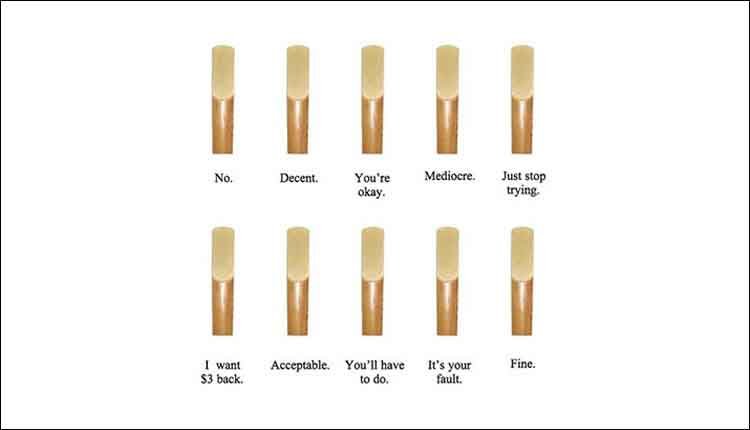
Clarinet players encounter two primary reed categories that fundamentally shape their musical experience: traditional cane and modern synthetic materials. Cane reeds derived from Arundo donax represent the classic choice, offering musicians a time-honored approach to sound production with nuanced tonal characteristics that many professional clarinetists prefer.
Source: https://banddirector.com/woodwinds/clarinet/raisin-cane-clarinet-reeds-facts-and-fiction/
Synthetic reed technologies have dramatically expanded musicians’ options in recent years. These innovative materials provide remarkable alternatives to traditional wooden reeds, delivering enhanced durability and consistent performance across different playing conditions. While some musicians argue that synthetic reeds lack the subtle tonal complexity of natural cane, technological advances continue to narrow this perceptual gap.
Researchers have explored fascinating alternative materials for clarinet reed construction, including experimental compositions like acetylated wood. These investigations aim to develop materials that balance the organic resonance of traditional reeds with improved mechanical properties such as moisture resistance and longevity.
The key material differences between reed types include:
- Tonal characteristics
- Moisture absorption
- Durability
- Manufacturing consistency
- Cost factors
- Environmental adaptability
Musicians must carefully evaluate these attributes when selecting reeds, recognizing that the right choice depends on individual playing style, musical genre, and personal acoustic preferences.
How Reed Strength Affects Sound and Playability
Clarinet players face a critical choice when selecting reed strength, a decision that profoundly impacts their musical performance. Reed strength fundamentally influences both playability and tonal quality, creating a delicate balance between technical ease and sonic complexity that challenges musicians at every skill level.
The reed strength spectrum ranges from soft to hard, with each point offering distinct advantages and challenges. Softer reeds provide greater initial playability, allowing newer musicians to produce sound more easily, but often compromise on tonal richness and projection. Harder reeds demand more advanced embouchure control, rewarding skilled players with a more focused, powerful sound that cuts through ensemble textures.
Professional clarinetists understand that reed strength is not a one-size-fits-all proposition. Factors like musical genre, personal playing technique, instrument design, and individual physical characteristics all interact to determine the ideal reed strength. Jazz musicians might prefer a more flexible reed, while classical performers often seek reeds with greater structural integrity and consistent tone.
Key considerations when selecting reed strength include:
- Player skill level
- Musical genre
- Performance requirements
- Personal embouchure strength
- Desired tonal characteristics
- Instrument specifications
Mastering reed selection requires experimentation, self-awareness, and a willingness to adapt one’s approach to changing musical demands.
Selecting, Adjusting, and Caring for Your Reeds
Proper reed selection and maintenance are critical skills that distinguish professional musicians from amateur players. The process requires careful attention to detail, understanding of individual playing characteristics, and a systematic approach to evaluating reed quality and performance potential.
Musicians can refine their reed performance through strategic adjustment techniques. Reed clippers provide precise tools for modifying reed tip characteristics, allowing players to customize their reeds’ response and tonal qualities. Experienced clarinetists often develop nuanced techniques for trimming and shaping reeds to match their specific embouchure and musical requirements.
Reed care extends beyond initial selection and adjustment. Professional musicians implement rigorous storage and rotation strategies to maximize reed longevity and consistency. This involves protecting reeds from extreme temperature variations, maintaining appropriate humidity levels, and systematically cycling through multiple reeds to prevent excessive wear on any single reed.
Essential reed maintenance practices include:
- Careful handling to prevent damage
- Consistent cleaning after performances
- Proper drying and storage techniques
- Regular inspection for structural integrity
- Systematic rotation between multiple reeds
- Controlled humidity environment
Successful reed management requires patience, technical skill, and a deep understanding of how individual physical characteristics interact with instrument performance.
Avoiding Common Reed Issues and Pitfalls
Clarinet players frequently encounter frustrating reed problems that can compromise musical performance. Synthetic reeds offer innovative solutions to traditional reed inconsistencies, addressing many long-standing challenges musicians have faced with natural cane materials.
The most prevalent reed issues include uneven vibration, rapid deterioration, and inconsistent sound production. Professional musicians develop keen diagnostic skills to identify early signs of reed failure, such as asymmetrical edges, unexpected stiffness, or diminished tonal clarity. Quick intervention can often salvage a struggling reed, preventing complete performance disruption.
Environmental factors play a significant role in reed quality and longevity. Humidity, temperature fluctuations, and improper storage can dramatically accelerate reed degradation. Musicians must create controlled environments that protect their reeds from extreme conditions, using specialized cases, humidity regulators, and systematic rotation strategies to maximize performance potential.
Common reed problems to watch for include:
- Warping and structural deformation
- Uneven vibration characteristics
- Rapid material breakdown
- Inconsistent sound production
- Unexpected changes in tonal quality
- Premature structural failure
Successful reed management requires proactive monitoring, strategic storage, and a willingness to replace reeds before they critically compromise musical performance.
Find the Perfect Clarinet Accessories to Elevate Your Reed Experience
Clarinet reeds play a crucial role in shaping your sound and playability as detailed in the article. Whether you struggle with selecting the right reed strength or crave the ideal mouthpiece that complements your reed’s tonal qualities, My Clarinet Stuff offers tailored solutions designed for serious clarinetists. Explore professional-grade mouthpieces and custom barrels that enhance your reed’s natural voice and address challenges like inconsistent vibration or limited tonal response.

Take control of your sound journey today by visiting My Clarinet Stuff to discover premium products crafted in the Viennese tradition. Benefit from personalized consultations for custom mouthpieces that perfectly match your playing style and reed preferences. Don’t wait to unlock new expressive possibilities and achieve that perfect balance between reed flexibility and instrument responsiveness.
Frequently Asked Questions
What are clarinet reeds made from?
Clarinet reeds are primarily made from two types of materials: traditional cane, typically derived from the Arundo donax plant, and modern synthetic materials that offer enhanced durability and consistent performance.
How does reed strength affect my playing experience?
Reed strength significantly influences playability and tonal quality. Softer reeds are easier to play but may compromise richness, while harder reeds require more control but provide a more focused sound.
What factors should I consider when selecting a clarinet reed?
When selecting a clarinet reed, consider attributes such as hardness rating, material composition, manufacturing consistency, and the intended musical genre or performance context.
How can I care for and maintain my clarinet reeds for optimal performance?
Proper care involves careful handling, regular cleaning, maintaining appropriate humidity levels, and systematic rotation between multiple reeds to maximize longevity and consistency.
Recommended
- The Essential Guide to Clarinet Mouthpiece Reeds – My Clarinet Stuff
- 7 Essential Examples of Clarinet Reeds for Every Player – My Clarinet Stuff
- Clarinet Reed Adjustment Guide for Enhanced Sound Quality – My Clarinet Stuff
- Clarinet Reed Compatibility: Complete Guide for Musicians – My Clarinet Stuff
- 7 Types of Acoustic Guitar: Essential Guide for Musicians