
Your clarinet mouthpiece is the heart of your sound, but improper care can quickly degrade its performance. Many clarinetists struggle with residue buildup, diminished tone quality, and premature wear simply because they lack a clear maintenance routine. Without proper cleaning and handling, even premium mouthpieces lose their projection and clarity. This comprehensive guide delivers expert-backed techniques for cleaning, maintaining, and protecting your mouthpiece to ensure optimal sound quality and longevity, whether you’re a student or professional player.
Table of Contents
- What You Need: Essential Tools And Materials For Mouthpiece Care
- Step-By-Step Guide: How To Clean And Maintain Your Clarinet Mouthpiece
- Best Practices: Daily And Occasional Mouthpiece Care Tips
- Troubleshooting And Common Mistakes To Avoid In Mouthpiece Care
- Explore Premium Clarinet Mouthpiece Care Products And Guides
Key takeaways
| Point | Details |
|---|---|
| Cleaning frequency varies by player type | Professionals should deep clean weekly, while students can maintain quality with monthly cleaning |
| Gentle handling preserves tone | Delicate rails and tip require soft brushes and mild solutions to maintain reed seating and sound quality |
| Proper storage prevents damage | Never store reeds on mouthpieces to avoid warping and sticking that degrades performance |
| Environmental factors matter | Outdoor performances introduce extra residue requiring adjusted cleaning schedules |
| Early inspection catches problems | Regular checks of rails and tip identify wear before it impacts your playing |
What you need: essential tools and materials for mouthpiece care
Before you start cleaning, gather the right supplies to protect your mouthpiece while removing buildup effectively. Using proper tools prevents damage to sensitive areas like the rails and tip, which directly impact your tone production and reed response.
Your essential toolkit should include a soft mouthpiece brush specifically designed for clarinet care, mild dish soap without harsh additives, a microfiber cloth for gentle drying, lukewarm water, and specialized clarinet cleaning tablets for deep cleaning sessions. Each tool serves a specific purpose in maintaining mouthpiece integrity. The soft brush reaches interior surfaces without scratching, while mild soap breaks down organic residue from saliva and reed material. Microfiber cloths absorb moisture without leaving lint, and lukewarm water prevents thermal shock that could warp synthetic or hard rubber materials.
Recommended cleaning supplies include gentle brushes, mild soap, and appropriate cleaning solutions to preserve mouthpiece integrity. Investing in quality supplies protects your instrument investment and maintains consistent performance.
| Supply Type | Best For | Pros | Cons |
| — | — | — |
| Soft mouthpiece brush | Daily and weekly cleaning | Reaches interior surfaces, gentle on rails | Requires replacement when bristles wear |
| Mild dish soap | Regular maintenance | Effective on organic residue, safe for all materials | Must rinse thoroughly to avoid taste |
| Microfiber cloth | Drying and polishing | Lint-free, highly absorbent, reusable | Needs regular washing to stay clean |
| Clarinet cleaning tablets | Deep cleaning sessions | Powerful against stubborn buildup, sanitizing | More expensive than soap, requires soaking time |
| Filtered water | All cleaning tasks | Prevents mineral deposits, pure rinse | Requires water filtration system |
Pro Tip: Avoid household cleaners, alcohol-based solutions, or abrasive materials that can damage mouthpiece surfaces and alter tonal characteristics. Stick to products designed specifically for musical instruments, and always use filtered water to prevent mineral deposits that accumulate over time and affect the facing curve.
Step-by-step guide: how to clean and maintain your clarinet mouthpiece
With your supplies ready, follow this tested process to safely clean your mouthpiece without compromising its delicate structure. This method works for both routine maintenance and deeper cleaning sessions after illness or outdoor performances.
- Remove the reed and ligature completely, inspecting the mouthpiece for visible residue or discoloration that indicates buildup.
- Rinse the mouthpiece under lukewarm water for 30 seconds to loosen surface debris and prepare it for cleaning.
- Apply a small amount of mild dish soap to your soft mouthpiece brush, creating gentle suds without excessive foam.
- Gently scrub the interior chamber, rails, and tip using circular motions, paying special attention to areas where saliva and reed material accumulate. Gentle scrubbing preserves delicate rails and tip shape, which is critical for reed seating and tone quality.
- Rinse thoroughly under lukewarm water for at least one minute, ensuring all soap residue is completely removed to prevent taste issues.
- Shake out excess water and pat dry with a clean microfiber cloth, then allow the mouthpiece to air dry completely before storage.
- Inspect the rails, tip, and facing for any signs of wear, chips, or damage that could affect performance.
Never use hot water during cleaning, as temperature extremes can warp materials and alter the precise dimensions that define your mouthpiece’s playing characteristics. Similarly, never store reeds on the mouthpiece between playing sessions, as this practice causes reed warping and can damage the delicate tip and rails.
For deep cleaning after illness or outdoor performances, extend soaking time with clarinet cleaning tablets according to package directions. These situations introduce bacteria or environmental contaminants that require more thorough sanitization than routine maintenance provides. Professional players performing daily should follow this comprehensive maintenance workflow weekly, while students can maintain quality with monthly deep cleaning.
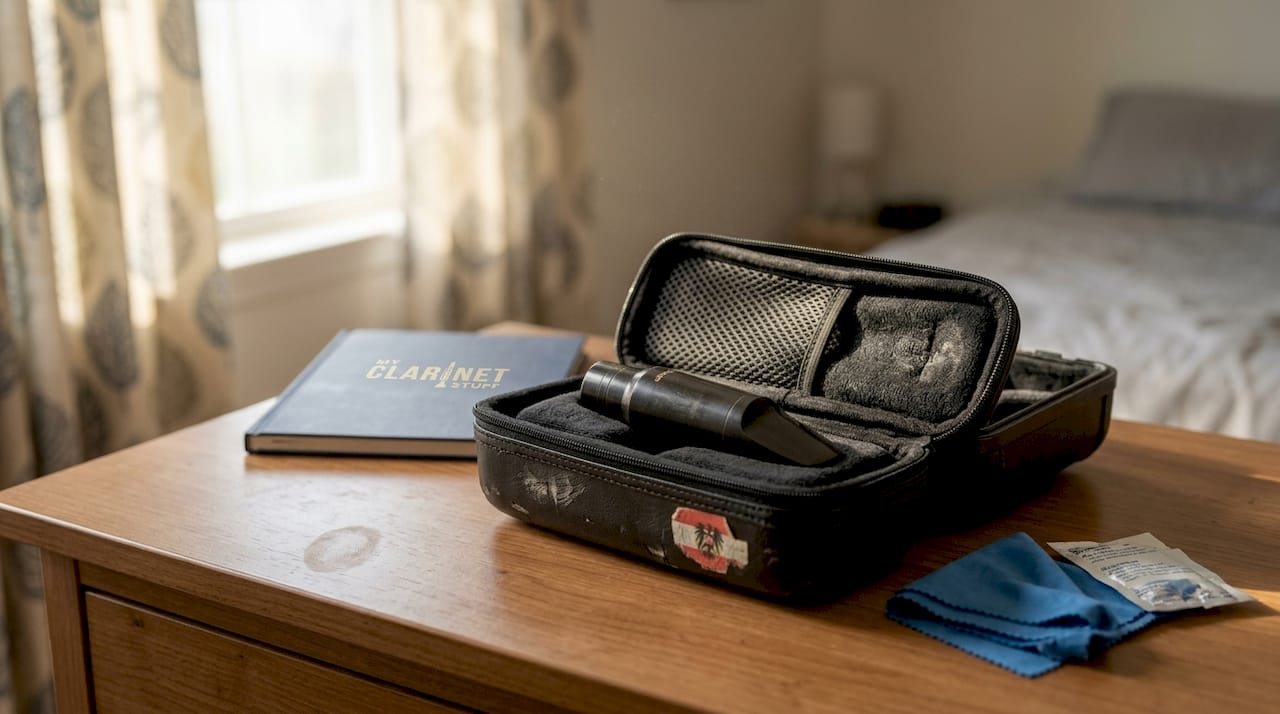
Pro Tip: After drying, store your mouthpiece in a ventilated case or mouthpiece pouch rather than sealed containers. Proper air circulation prevents moisture buildup that creates mold growth and unpleasant odors, especially in humid climates or during summer months.
Best practices: daily and occasional mouthpiece care tips
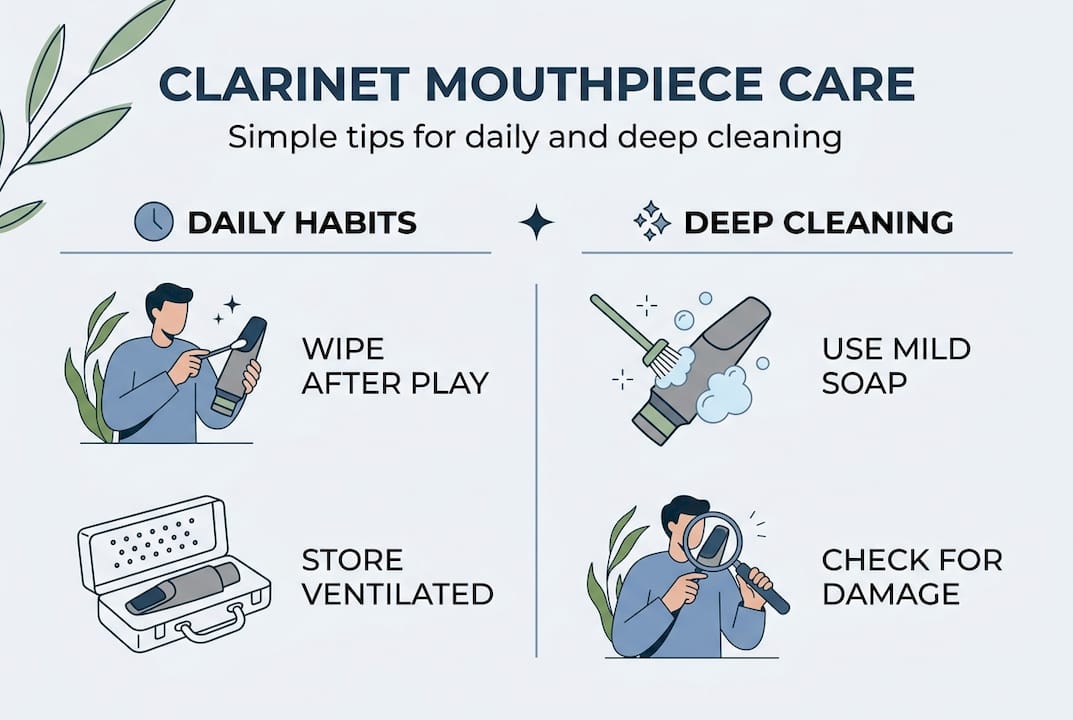
Consistent daily habits prevent major buildup and extend the time between deep cleaning sessions. These simple practices take minutes but significantly impact your mouthpiece’s longevity and sound quality.
After every playing session, wipe down the exterior and interior surfaces with a clean, dry cloth to remove fresh saliva and moisture. This quick step prevents residue from hardening and becoming difficult to remove later. Allow the mouthpiece to air dry completely before storing it in your case, ensuring no moisture remains trapped against other components. Handle reeds separately, using a reed case with proper ventilation rather than leaving them attached to the mouthpiece. Keep your mouthpiece away from extreme temperatures, direct sunlight, and humid environments that accelerate material degradation.
Professional players may need weekly deep cleans versus monthly for students; marching and outdoor play increases residue requiring more frequent cleaning. Adjust your schedule based on playing intensity and environmental exposure. Orchestra musicians in climate-controlled halls face different challenges than marching band members exposed to dust, pollen, and temperature fluctuations.
The delicate nature of mouthpiece rails and tip demands gentle, consistent care to preserve tonal quality and reed response. Even minor damage to these precision-crafted surfaces can noticeably affect your sound projection and articulation clarity.
Environmental factors play a larger role than many clarinetists realize. Outdoor performances introduce pollen, dust, and temperature variations that accelerate residue accumulation and material stress. Similarly, playing in dusty rehearsal spaces or storing your instrument in non-climate-controlled areas requires more vigilant maintenance. Follow this essential maintenance checklist to track your care routine and identify when your mouthpiece needs attention. Regular inspection helps you catch problems early, before they require professional intervention or mouthpiece replacement.
Troubleshooting and common mistakes to avoid in mouthpiece care
Even experienced players sometimes develop habits that unknowingly harm their mouthpieces. Recognizing these mistakes helps you protect your investment and maintain consistent performance.
The most common errors include using harsh household cleaners or alcohol-based solutions that strip protective finishes and alter surface characteristics. Over-scrubbing with stiff brushes damages rails and facing curves, changing how reeds vibrate and respond. Storing reeds on the mouthpiece leads to warping and sticking, affecting reed and mouthpiece performance simultaneously. Neglecting regular cleaning allows buildup to harden into deposits that resist removal and harbor bacteria. Using hot water or exposing mouthpieces to temperature extremes causes warping that permanently alters playing characteristics.
| Practice | Proper Technique | Improper Technique | Effect on Performance |
|---|---|---|---|
| Cleaning frequency | Weekly for pros, monthly for students | Sporadic or only when visibly dirty | Improper: Hardened buildup, bacterial growth, diminished tone |
| Cleaning solutions | Mild soap or clarinet tablets | Household cleaners, alcohol, bleach | Improper: Surface damage, altered tonal characteristics |
| Brushing pressure | Gentle circular motions | Aggressive scrubbing with stiff brushes | Improper: Scratched rails, damaged tip, poor reed seating |
| Reed storage | Separate ventilated reed case | Left attached to mouthpiece | Improper: Reed warping, mouthpiece tip damage, tone issues |
| Drying method | Air dry with microfiber pat | Sealed storage while damp | Improper: Mold growth, unpleasant odors, material degradation |
Recognize warning signs that indicate your mouthpiece needs immediate attention. Persistent unpleasant odors suggest bacterial growth requiring deep sanitization. Visible discoloration or white deposits indicate mineral buildup from hard water or inadequate rinsing. Changes in tone quality, response, or articulation clarity often stem from rail damage or tip wear rather than reed issues. Difficulty achieving consistent sound across registers may indicate facing curve alterations from improper cleaning or storage.
Pro Tip: Inspect your mouthpiece rails and tip under good lighting every two weeks, looking for chips, scratches, or wear patterns. Catching damage early allows for professional refacing or timely replacement before it significantly impacts your playing. Small investments in preventive care save money compared to emergency repairs or premature mouthpiece replacement. Avoid these common mouthpiece care mistakes by staying informed about proper maintenance techniques.
Explore premium clarinet mouthpiece care products and guides
Maintaining your mouthpiece properly extends its life and preserves the sound quality you depend on for performances and practice. My Clarinet Stuff offers comprehensive resources to help you select, maintain, and optimize your clarinet mouthpiece for peak performance.

Whether you’re exploring new mouthpiece options or refining your current setup, our curated guides provide expert advice tailored to clarinetists at every level. Discover which mouthpiece characteristics match your playing style with our clarinet mouthpiece matchmaker, explore the full range of available designs in our essential mouthpiece types list, or refine your selection process with proven mouthpiece selection tips. Our precision Austrian-made Gleichweit mouthpieces deliver consistent performance without the variability of traditional materials, backed by personalized support and an exclusive at-home test box program.
FAQ
How often should I deep clean my clarinet mouthpiece?
Cleaning frequency depends on your playing intensity and environment. Professionals performing daily should deep clean weekly, while students can maintain quality with monthly cleaning, with extra care after illness or outdoor performances. Marching band members and outdoor performers need more frequent cleaning due to dust and environmental exposure. Follow this maintenance workflow to establish a schedule that matches your playing routine and keeps your mouthpiece in optimal condition.
Can I use any cleaning solution on my clarinet mouthpiece?
No, stick to mild dish soap or specialized clarinet cleaning tablets designed for musical instruments. Use mild soap and water or clarinet-specific cleaning tablets; avoid harsh chemicals which can damage the mouthpiece. Household cleaners, alcohol, bleach, and abrasive products strip protective finishes and alter the precise surface characteristics that define your mouthpiece’s tonal properties. Filtered water prevents mineral deposits that accumulate with repeated cleaning. Check this maintenance checklist for approved cleaning products and techniques.
Why should I avoid storing reeds on my mouthpiece?
Storing reeds on the mouthpiece can lead to warping and sticking, affecting reed and mouthpiece performance simultaneously. The constant pressure damages delicate mouthpiece rails and tips while causing reeds to conform to the table unevenly, creating response issues and tonal inconsistencies. This practice also traps moisture between surfaces, promoting bacterial growth and unpleasant odors. Always use a separate, ventilated reed case that allows proper drying and maintains reed flatness for optimal performance.
What are signs my mouthpiece needs immediate cleaning?
Watch for persistent unpleasant odors indicating bacterial growth, visible white deposits or discoloration from mineral buildup, and noticeable changes in tone quality or response. Difficulty achieving consistent sound across registers, sluggish articulation, or reduced projection often stem from residue accumulation rather than reed problems. If your mouthpiece feels sticky or tacky to the touch, or if you notice visible residue in the interior chamber, schedule a deep cleaning immediately to prevent permanent damage and maintain playing quality.
How do I know when to replace rather than clean my mouthpiece?
Inspect for physical damage that cleaning cannot fix, including chips or cracks in the tip or rails, visible wear patterns that alter the facing curve, or persistent playing issues despite thorough cleaning and proper reed selection. If your tone quality has permanently changed, response has become inconsistent across registers, or you struggle with intonation that wasn’t problematic before, professional evaluation or replacement may be necessary. Consult our mouthpiece replacement guide to assess whether repair or replacement offers the best solution for your situation.
One Response