
Over 85 percent of American clarinet players agree that finding the perfect mouthpiece dramatically shapes your sound and playing experience. Whether you are a student or a seasoned performer, selecting and testing mouthpieces can influence every note you play. By using a systematic approach and a controlled environment, you can confidently compare options and discover which mouthpiece truly elevates your American clarinet sound.
Table of Contents
- Step 1: Prepare Your Clarinet and Testing Area
- Step 2: Select Mouthpieces for Direct Comparison
- Step 3: Warm Up and Play Identical Passages
- Step 4: Assess Response, Tone, and Comfort
- Step 5: Record and Review Your Impressions
Quick Summary
| Key Point | Explanation |
|---|---|
| 1. Create a Controlled Testing Environment | Select a quiet, well-lit space to evaluate mouthpieces without external distractions, ensuring consistent conditions for accurate comparisons. |
| 2. Choose Diverse Mouthpieces for Comparison | Gather mouthpieces across various resistance levels and designs to understand different tonal characteristics and sound production effectively. |
| 3. Perform a Systematic Warm-Up | Engage in consistent warm-up exercises before testing to establish a uniform playing condition across all mouthpieces for better assessment. |
| 4. Assess Response and Tone Thoroughly | Examine how each mouthpiece responds across registers and different dynamics to identify subtle differences in tone quality and playability. |
| 5. Document Observations for Future Reference | Record detailed evaluations and audio samples of mouthpiece performances to make an informed choice after adequately considering all factors. |
Step 1: Prepare Your Clarinet and Testing Area
Successfully testing clarinet mouthpieces requires a systematic approach and a controlled environment. Your goal is to create an optimal setup that allows you to objectively evaluate each mouthpiece’s performance and tone quality.
Start by selecting a quiet, well-lit space where external noise won’t interfere with your assessment. Place a clean, flat surface like a sturdy table or music stand where you can comfortably set up your testing materials. Gather essential tools including your clarinet, multiple mouthpieces, a soft cleaning cloth, a reed selection appropriate for each mouthpiece, and preferably a Gleichweit Test Box to help standardize your testing process.
Prepare your clarinet by ensuring it is clean and properly assembled. Inspect the mouthpiece connection point for any dust or debris that might affect sound quality. According to the Clarinet Master Class guide, a quality mouthpiece is more crucial than the instrument itself, so take time to carefully examine each component. Have multiple reeds ready to swap out, as reed quality significantly impacts your tone and can help you isolate mouthpiece characteristics.
Warning: Avoid testing in areas with temperature extremes or high humidity, as these conditions can subtly alter reed performance and mouthpiece responsiveness. Keep your testing environment consistent to ensure accurate comparisons between different mouthpieces.
Once your workspace is prepared, you are ready to begin the systematic evaluation of each clarinet mouthpiece for optimal tone quality.
Step 2: Select Mouthpieces for Direct Comparison
Careful mouthpiece selection is crucial for achieving optimal tone quality and ensuring a comprehensive comparison. Your objective is to gather a range of mouthpieces that will help you understand subtle variations in sound production and performance characteristics.
According to the Clarinet Master Class guide, mouthpieces can be categorized by resistance levels, which significantly impact tone and playability. Start by selecting mouthpieces from different resistance categories low, medium, and high resistance. For example, consider including a low resistance mouthpiece like the Hite Premiere, a medium resistance option such as the Vandoren B45, and a high resistance model like the Garret D.
Choose mouthpieces with slightly different tip openings and chamber designs to maximize your comparative analysis. Pay attention to the material construction wood, hard rubber, or synthetic materials as each will produce unique tonal characteristics. While comparing, focus on consistent factors like reed strength, embouchure pressure, and playing technique to ensure a fair assessment.
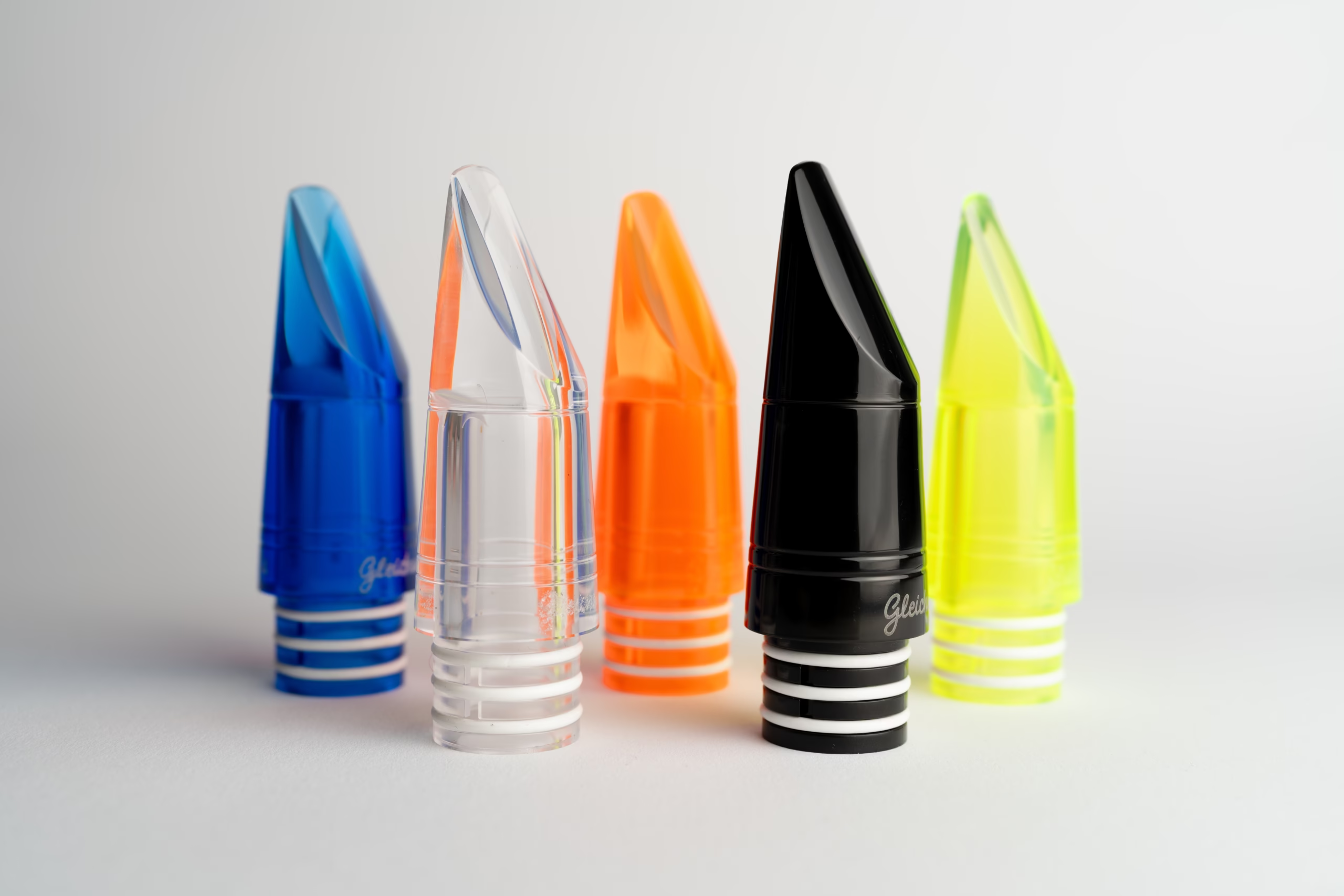
Gleichweit Mouthpieces
Warning: Resist the temptation to make immediate judgments. Each mouthpiece requires time and patient exploration to fully understand its tonal potential. Some mouthpieces might need minor adjustments or custom re-facing to unlock their best performance.
With your selected mouthpieces prepared, you are now ready to move forward with systematic testing and detailed tone quality evaluation.
Step 3: Warm Up and Play Identical Passages
Preparing to evaluate mouthpiece performance requires a systematic warm up process that establishes consistent playing conditions across all test pieces. Your primary goal is to create a controlled environment where each mouthpiece can be assessed under nearly identical circumstances.
Proper breath support and control techniques are critical for achieving accurate mouthpiece comparisons. Begin by establishing a relaxed, upright posture with feet flat on the floor and hands positioned naturally over the clarinet keys. Take several deep breaths to center yourself, then perform standardized warm up exercises. Practice inhaling for four counts and exhaling while maintaining a steady note to develop consistent breath control and embouchure stability.
Select a series of identical musical passages that will serve as your comparative benchmark. These should be technically similar sequences that highlight tonal qualities across different registers of the clarinet. Play each passage multiple times on each mouthpiece, focusing intently on subtle variations in tone, resistance, and overall sound production. Pay close attention to how different mouthpieces respond to identical playing techniques subtle differences in projection, warmth, and clarity will become more apparent through repeated execution.
Warning: Fatigue can significantly impact your perception. Take short breaks between mouthpiece trials to reset your ears and maintain objective listening. Hydrate, rest your embouchure, and approach each test with fresh ears and consistent playing technique.
With your warm up complete, you are now prepared to conduct a precise and methodical comparison of each mouthpiece’s unique sonic characteristics.
Step 4: Assess Response, Tone, and Comfort
Evaluating clarinet mouthpieces requires a comprehensive approach that goes beyond simple sound comparison. Your objective is to conduct a thorough analysis that examines three critical dimensions: response, tone quality, and physical comfort during extended playing.
Begin by systematically testing each mouthpiece across different musical registers low, middle, and high. Play long sustained notes, scales, and melodic passages to reveal each mouthpiece’s unique characteristics. Pay attention to how quickly the mouthpiece responds to your initial breath attack the speed, clarity, and precision of tone initiation can dramatically impact your overall playing experience. Some mouthpieces will feel more immediate and responsive, while others might require slightly more air pressure to produce a consistent sound.
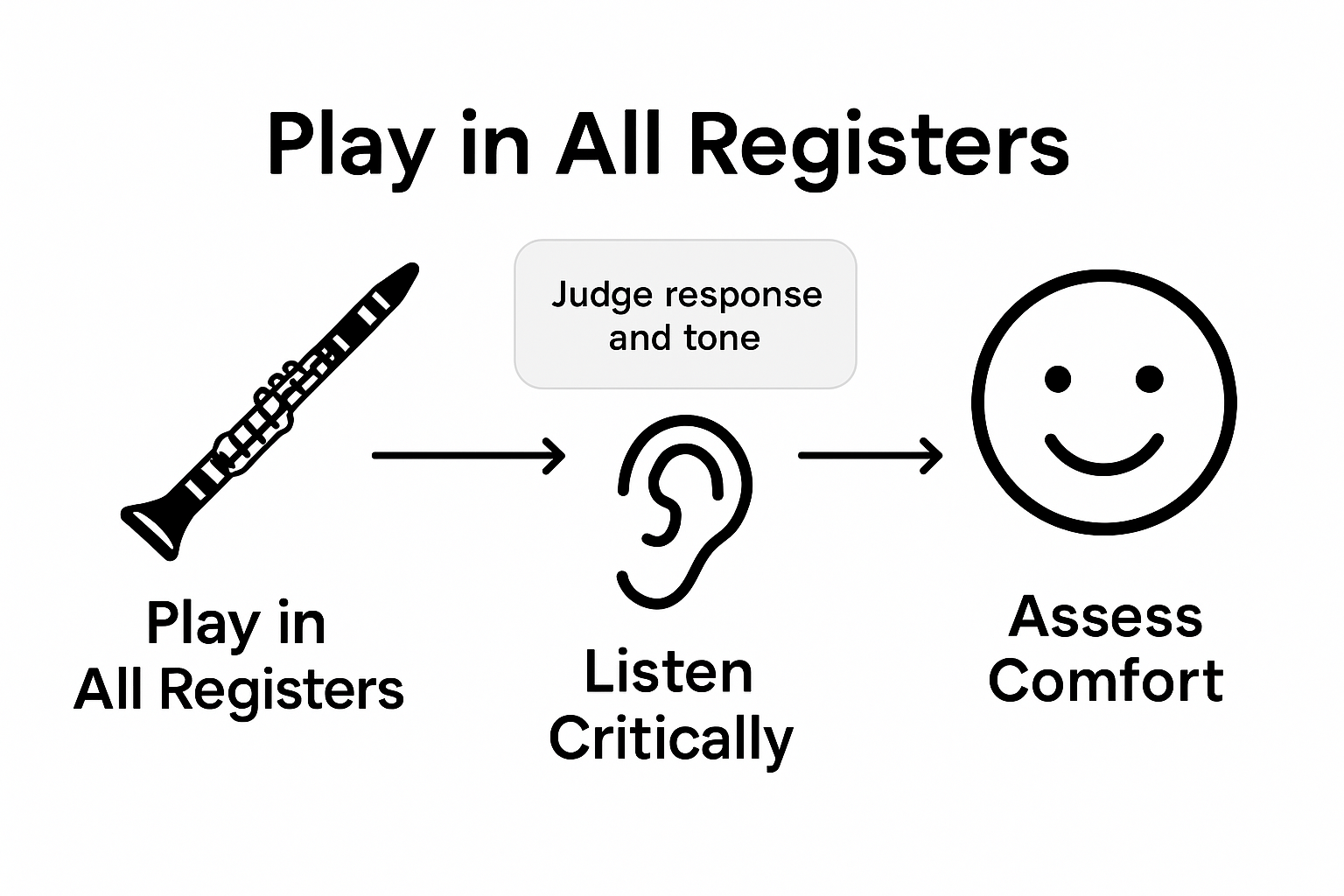
Tonal quality assessment demands critical listening skills. Close your eyes and focus on the sound produced by each mouthpiece. Evaluate warmth, brightness, depth, and projection. Consider how the mouthpiece performs across different dynamics soft pianissimo passages versus powerful fortissimo sections. Note any subtle variations in harmonic complexity, overtone richness, and overall timbral characteristics. Physical comfort is equally important some mouthpieces might feel more ergonomic, with a more natural embouchure fit that reduces fatigue during extended playing sessions.
Warning: Your initial impressions can be misleading. What sounds or feels different initially might require several playing sessions to fully understand. Give each mouthpiece multiple opportunities to reveal its true potential.
With a comprehensive assessment complete, you are now ready to make an informed decision about which mouthpiece best suits your musical goals and playing style.
Step 5: Record and Review Your Impressions
Documenting your mouthpiece evaluation process is crucial for making an objective and well informed selection. Your goal is to create a systematic record that captures nuanced observations about each mouthpiece performance and your subjective experience.
Prepare a detailed evaluation form or digital spreadsheet with specific categories for assessment. Create columns or sections to rate critical aspects such as response time, tonal warmth, projection, dynamic range, and physical comfort. Use a consistent numerical scale perhaps 1 to 10 to quantify your observations. Record specific notes about each mouthpiece including how it feels during extended playing, any resistance characteristics, and unique sound qualities that distinguish it from other options.
Consider using audio or video recording as an additional assessment tool. Make high quality recordings of identical musical passages played on each mouthpiece. This allows you to review performances later with fresh ears and potentially discover subtle differences that might have been missed during initial testing. Listen to these recordings in a quiet environment using neutral audio equipment to ensure you can critically analyze tonal variations without immediate playing fatigue.
Warning: Avoid making immediate decisions based on first impressions. Allow at least 24 to 48 hours between testing and final review to ensure your assessment remains objective and unbiased.
With comprehensive documentation complete, you are now prepared to make an informed and thoughtful selection of the ideal clarinet mouthpiece for your musical needs.
Elevate Your Clarinet Sound with Precision Mouthpieces
Testing clarinet mouthpieces for optimal tone quality can be challenging without the right tools and expert guidance. The article highlights key issues such as ensuring consistent testing conditions, comparing resistance levels, and assessing response, tone, and comfort. Your goal is to make an informed choice that truly matches your unique playing style and sound preferences. Achieving this requires access to professional-grade mouthpieces and reliable testing equipment that reveal subtle sonic details.
At My Clarinet Stuff, you will find a curated selection of high-quality mouthpieces, including custom options crafted in the Viennese sound tradition. Our offerings like the Gleichweit Test Box and specialized accessories help you rigorously evaluate mouthpieces under consistent conditions just as described in the article. Take control of your clarinet tone today with gear designed for serious musicians seeking personalized sound experiences.

Explore our exclusive collection and expert consultation services now at My Clarinet Stuff. Don’t wait to discover the mouthpiece that unlocks your clarinet’s full potential. Visit us and start your journey toward superior tone quality with confidence.
Frequently Asked Questions
How can I prepare my clarinet and testing area for evaluating mouthpieces?
To prepare your clarinet and testing area, choose a clean, quiet space with good lighting, and set up a flat surface. Gather your clarinet, various mouthpieces, reeds, and a cleaning cloth to ensure a controlled and optimal testing environment.
What mouthpiece characteristics should I consider for direct comparison?
When selecting mouthpieces for comparison, consider their resistance levels, tip openings, and chamber designs. Choose a variety of mouthpieces that represent low, medium, and high resistance to accurately assess their differences in sound production and performance.
How should I warm up before testing clarinet mouthpieces?
Warm up by maintaining a relaxed posture and engaging in standardized exercises that develop breath control and embouchure stability. Practice inhaling for four counts and sustaining a note to ensure that you are consistent across your evaluations.
What should I focus on when assessing response, tone, and comfort?
Focus on how each mouthpiece responds across different musical registers and how it feels during extended play. Evaluate response time, tone quality such as warmth and clarity, and physical comfort to make a comprehensive assessment of each mouthpiece.
How can I effectively document my mouthpiece evaluations?
Document your evaluations using a detailed form with categories like response time, tonal warmth, and physical comfort, rating each from 1 to 10. Consider recording your playing sessions to review the sound quality later and gain further insights into each mouthpiece’s performance.
How long should I wait before making a decision on a mouthpiece?
It’s best to wait at least 24 to 48 hours between testing and making a final decision. This allows you to approach your assessment with fresh ears and ensures your evaluation remains objective and thorough.
4 Responses