


TL;DR:
- Material influences tone, response, durability, and player confidence, with plastic suited for beginners and hard rubber for professionals.
- Hard rubber produces warmer, more complex sound and faster response, while plastic offers brighter tone and durability.
- Choosing the right mouthpiece depends on playing level, goals, comfort, and timing for upgrades to improve musical development.
The material your clarinet mouthpiece is made from changes more than just how it feels in your hands. It shapes your tone, your response, your endurance, and even your confidence on stage. Most players pick a mouthpiece based on price or what came in the case, without realizing that a simple material swap could unlock a noticeably different sound. Whether you are a student just getting started, a teacher building a recommendation list, or a serious player chasing a better tone, understanding plastic versus hard rubber is one of the most practical things you can do for your playing.
Table of Contents
- Understanding clarinet mouthpiece materials
- Tone, response, and playability: What sets them apart
- Durability, maintenance, and cost
- Which is right for you? Use cases for students, educators, and advancing players
- What most clarinetists miss when choosing mouthpiece material
- Find your ideal clarinet mouthpiece setup
- Frequently asked questions
Key Takeaways
| Point | Details |
|---|---|
| Material shapes tone | Plastic mouthpieces sound brighter; hard rubber gives warmer, fuller tone. |
| Durability vs nuance | Plastic is tougher and cheaper, but hard rubber often wins on playability and musical expression. |
| Best fit evolves | Begin with plastic as a student and consider hard rubber as your skills and tone priorities grow. |
| Maintenance matters | Hard rubber demands gentler cleaning and care to last and sound its best. |
Understanding clarinet mouthpiece materials
Before comparing how these mouthpieces play, it helps to understand what they actually are. The two most common materials are ABS plastic and hard rubber, and they behave very differently from the moment they leave the factory.
Plastic mouthpieces are injection-molded from ABS or similar thermoplastic materials. This process is fast, repeatable, and inexpensive, which is why plastic mouthpieces dominate the beginner market. The molds produce consistent shapes, but the material itself is lighter and less dense than hard rubber.
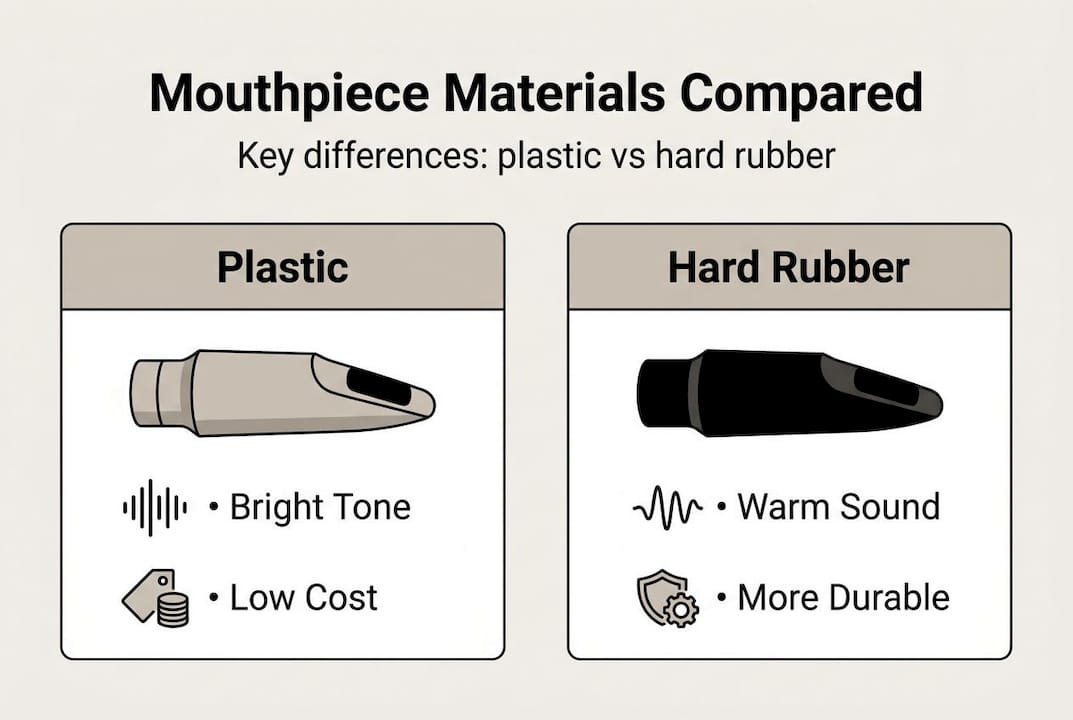
Hard rubber, also called ebonite, is a vulcanized rubber blend that has been used in professional mouthpieces for over a century. It is denser, heavier, and more acoustically complex than plastic. The manufacturing process is more labor-intensive, which is reflected in the price. Most clarinet mouthpiece types at the professional level use hard rubber as the baseline material.
Here is a quick side-by-side of the core material properties:
| Property | Plastic (ABS) | Hard rubber (ebonite) |
|---|---|---|
| Weight | Light | Heavier |
| Density | Low | High |
| Manufacturing | Injection molded | Vulcanized, hand-finished |
| Typical user | Students, beginners | Intermediate to professional |
| Price range | $10 to $60 | $60 to $300+ |
Plastic mouthpiece pros and cons:
- Pros: Affordable, durable against drops, consistent shape out of the box, easy to find replacements
- Cons: Less tonal complexity, can warp under heat, may feel less responsive at advanced levels
Hard rubber mouthpiece pros and cons:
- Pros: Richer tone, better projection, preferred by professionals, longer lifespan with proper care
- Cons: Higher cost, can discolor over time, more sensitive to cleaning chemicals
Understanding these professional mouthpiece features gives you a real framework for evaluating what you are actually buying, not just what the label says.
Tone, response, and playability: What sets them apart
With basic materials covered, it is time to address the heart of the issue: how these mouthpieces actually play and sound.
Hard rubber mouthpieces produce warmer, more complex tones that respond well to dynamic shaping. When you push for a forte or pull back to a soft pianissimo, a hard rubber mouthpiece tends to follow your intent more closely. This is why orchestral and chamber players almost universally prefer it.
Plastic mouthpieces tend to sound brighter and more direct, which is not always a disadvantage. For beginners, a bright, projecting tone is actually easier to hear and self-correct. The problem is that plastic offers less nuance, so as your ear and technique develop, the mouthpiece starts to feel like a ceiling rather than a tool.
Here is how the two materials compare across the key performance factors:
| Factor | Plastic | Hard rubber |
|---|---|---|
| Tone color | Bright, direct | Warm, complex |
| Projection | Moderate | Strong |
| Articulation response | Acceptable | Precise |
| Dynamic range | Limited | Wide |
| Recommended use | Practice, beginners | Performance, advancing players |
Response time is another underrated factor. Hard rubber mouthpieces respond faster to tongue and air changes, which matters enormously for fast passages, jazz articulation, or any style that demands clean note separation. Plastic mouthpieces can feel slightly sluggish in comparison, though most beginners will not notice this until they try something better.
Endurance also differs between the two. Because hard rubber is denser, it tends to create a more stable embouchure platform. Many players report less jaw fatigue during long rehearsals when using a well-fitted hard rubber mouthpiece.
“The mouthpiece is the engine of your sound. Matching it to your embouchure and musical goals is more important than matching it to your instrument brand.”
Pro Tip: Before committing to any mouthpiece, play long tones on both materials back to back. Your ear will tell you more in five minutes than any spec sheet. Use the mouthpiece selection tips at MyClarinetStuff.com to build a structured testing framework.
Durability, maintenance, and cost
Let us move from sound to essential practical matters: which mouthpiece stands up best to real-world use and how your investment compares.
Plastic mouthpieces are tough against drops, easy to clean, and inexpensive to replace. They resist most cleaning solutions without reacting. The main risk is heat. Leave a plastic mouthpiece in a hot car or expose it to direct sunlight for extended periods, and the facing (the flat surface where the reed sits) can warp. A warped facing makes a proper reed seal impossible, and the mouthpiece becomes unusable.
Hard rubber mouthpieces can discolor or oxidize over time, turning greenish or brownish on the surface. This is a cosmetic issue, not a structural one, and it can often be polished out. Hard rubber is more sensitive to alcohol-based cleaners, which can dry out the material. With proper care, a quality hard rubber mouthpiece can last decades.
Here is a straightforward maintenance routine that works for both materials:
- Rinse the mouthpiece with lukewarm water after every playing session.
- Use a soft mouthpiece brush to clean the inside chamber and bore.
- Dry thoroughly before storing. Never leave moisture trapped inside.
- For hard rubber, use a mouthpiece-specific cleaner or mild soap. Avoid alcohol.
- For plastic, a diluted mouthpiece sanitizer works well. Check for warping regularly.
- Store the mouthpiece in a protective cap or case, away from direct heat or sunlight.
- Inspect the facing and tip rail every few months for chips, uneven wear, or damage.
For more detail on keeping your equipment in top condition, the guide on caring for mouthpieces at MyClarinetStuff.com covers every step.
Pro Tip: If you play in a school or ensemble setting, label your mouthpiece clearly and store it separately from your ligature and reed. Shared instrument cases are the number one cause of accidental mouthpiece damage.
Cost is straightforward. Plastic mouthpieces typically run between $10 and $60. Decent hard rubber mouthpieces start around $60 and can exceed $300 for hand-finished professional models. The price gap reflects real differences in materials, manufacturing precision, and acoustic performance.
Which is right for you? Use cases for students, educators, and advancing players
With pros and cons in hand, how do you decide which mouthpiece fits your current and future needs?
Beginners often start with plastic mouthpieces, and for good reason. The lower cost means less financial risk during the early months when students are still figuring out if they want to stick with the instrument. Plastic is also more forgiving of the rough handling that comes with school bags and shared lockers.
The common mistake students make is staying on plastic too long. Once a player can reliably produce a consistent tone, control basic dynamics, and articulate cleanly, the plastic mouthpiece starts to hold them back. The ceiling on tonal development is real, and many students plateau without realizing the mouthpiece is the limiting factor.
Educators face a different challenge. When recommending mouthpieces for a class or ensemble, teachers need to balance cost, consistency, and longevity. Many experienced teachers recommend a quality plastic mouthpiece for the first year, then a hard rubber upgrade at the start of year two or three, timed with the student’s first serious repertoire.
Here is a breakdown of who benefits most from each type:
Plastic mouthpieces work best for:
- Brand new beginners in their first six to twelve months
- Students in high-traffic school settings where loss or damage is likely
- Players on a strict budget who need a functional, reliable option
- Doubling situations where a second mouthpiece is needed as a backup
Hard rubber mouthpieces work best for:
- Intermediate players working on tone color and projection
- Students preparing for auditions, competitions, or solo performances
- Educators who want to model professional sound for their students
- Advanced players exploring classical, jazz, or chamber repertoire
Knowing when to upgrade your mouthpiece is one of the most valuable decisions you can make for your long-term development. The right material at the right time accelerates progress in ways that extra practice hours alone cannot.
What most clarinetists miss when choosing mouthpiece material
All these specifics matter, but here is what most guides do not tell you.
The majority of players choose a mouthpiece based on price, brand recognition, or what their teacher used twenty years ago. Very few players stop to ask how the mouthpiece actually feels against their embouchure. That physical comfort is not a minor detail. It is the foundation of your confidence, and confidence directly affects tone.
Here is the counterintuitive part: many players who switch from plastic to hard rubber and report a dramatic tonal improvement are not just hearing the material difference. They are hearing what happens when a mouthpiece fits their embouchure well enough that they stop fighting it. The perceived improvement is real, but the cause is often fit and feel as much as material.
This is why professional advice and hands-on trials outweigh any written specification. No table can tell you how a mouthpiece will interact with your jaw shape, your reed strength, or your air support. Use the advanced selection tips as a guide, but trust your ears and your body over the spec sheet. Stay open to surprises. The best mouthpiece for you might not be the most expensive one, but it will be the one you stop thinking about while you play.
Find your ideal clarinet mouthpiece setup
Ready to take the next step? At MyClarinetStuff.com, we have built a set of tools specifically for clarinetists who want to stop guessing and start playing with confidence.

Start with the clarinet mouthpiece matchmaker to get a personalized recommendation based on your playing level, style, and goals. From there, the accessory guide helps you build a complete setup around your new mouthpiece. If you want a deeper look at the decision-making process, the full mouthpiece selection tips resource walks you through every variable. Gleichweit mouthpieces are CNC-crafted in Austria for consistent performance that eliminates the variability players often struggle with in traditional hard rubber options.
Frequently asked questions
Are plastic or hard rubber mouthpieces better for beginners?
Beginners often start with plastic mouthpieces because they are affordable and durable. Hard rubber becomes the better choice once a student is developing tone control and preparing for more advanced playing.
How does mouthpiece material actually affect my clarinet’s sound?
Hard rubber offers warm, complex sounds with a wide dynamic range, while plastic produces a brighter, more direct tone that suits early-stage practice but limits tonal nuance over time.
What are the maintenance differences between plastic and hard rubber mouthpieces?
Plastic requires less maintenance than hard rubber and tolerates more cleaning solutions. Hard rubber needs gentler care to prevent discoloration and surface oxidation.
When should I upgrade from a plastic to a hard rubber mouthpiece?
Advancing students benefit from upgrading to hard rubber when they are developing tone color, working on projection, or preparing for auditions and ensemble performances.