
Most american clarinetists face a surprising challenge when selecting the right setup, as even small accessory choices can have a huge impact on performance. Research shows that tone, comfort, and technique are shaped by gear as much as by skill. This guide cuts through the noise, helping you pinpoint your personal requirements and navigate the wide selection of options available, so you can build a setup that matches your unique sound and playing style.
Table of Contents
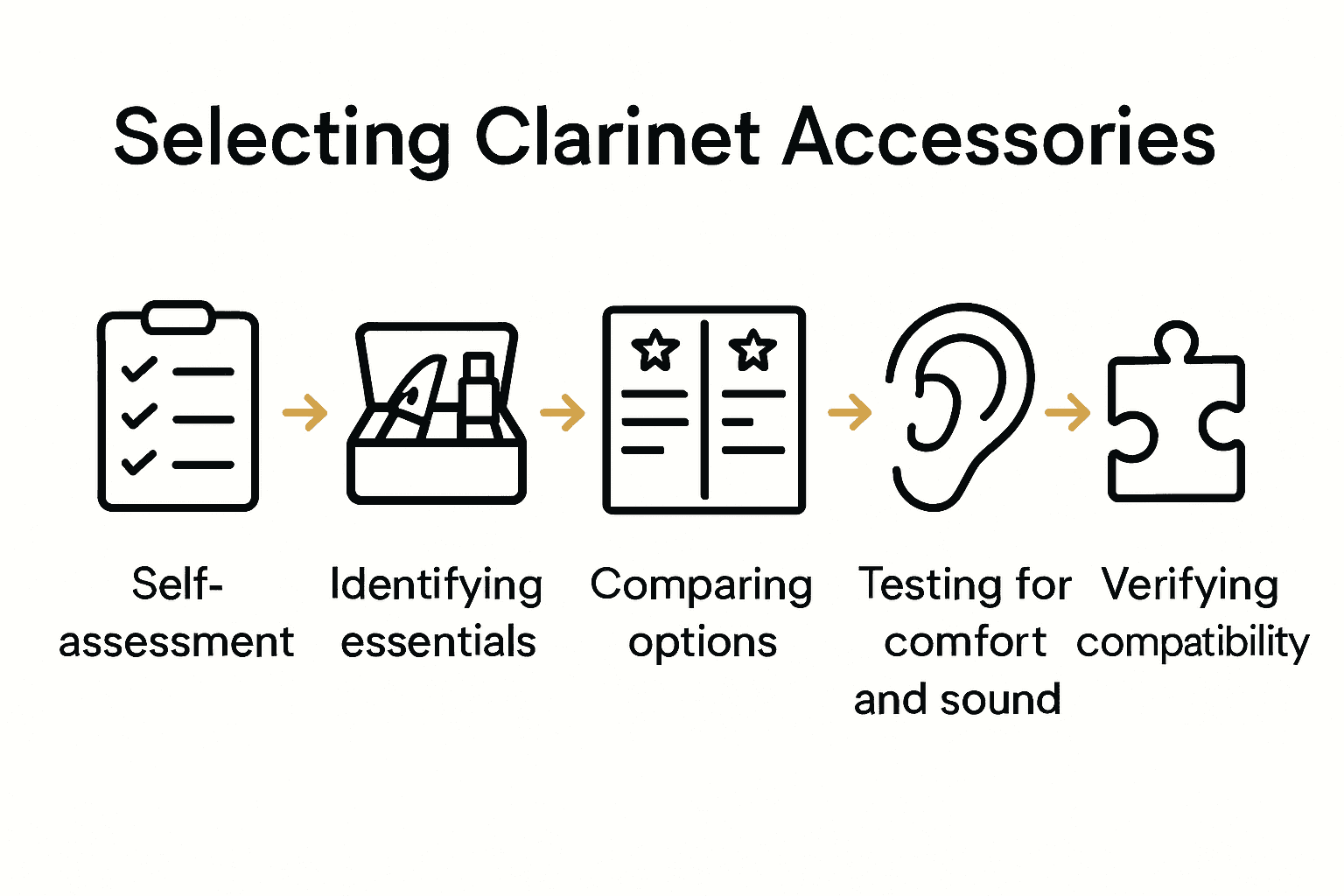
- Step 1: Assess Your Clarinet Playing Needs
- Step 2: Identify Essential Accessories For Your Setup
- Step 3: Compare Mouthpiece And Barrel Options
- Step 4: Test Accessories For Sound And Comfort
- Step 5: Verify Compatibility And Make Final Choices
Quick Summary
| Key Point | Explanation |
|---|---|
| 1. Assess Your Musical Needs | Conduct a self-assessment to understand your playing style and goals, guiding your accessory choices effectively. |
| 2. Identify Essential Accessories | Compile a kit of crucial clarinet accessories like mouthpieces and reeds, tailored to enhance your performance. |
| 3. Test for Sound and Comfort | Systematically evaluate accessories for both comfort and sound quality, using various techniques during tests. |
| 4. Verify Compatibility | Check compatibility between your chosen accessories and instrument, ensuring seamless integration without complications. |
| 5. Consult Experts | Seek advice from experienced clarinetists or technicians for insights on optimizing your accessory setup. |
Step 1: Assess Your Clarinet Playing Needs
Before diving into clarinet accessories, you need a strategic self assessment that pinpoints your unique musical requirements. Understanding your personal playing style, skill level, and performance goals will guide you toward the perfect equipment setup.
According to the Technological Society of Music Professionals, multiple technical factors influence your clarinet performance, including embouchure quality, instrument dynamics, and reed interaction. Professional musicians recognize that individual playing needs vary dramatically based on musical genre, ensemble type, and personal sound preferences. Your assessment should explore critical dimensions like your typical performance environment, musical repertoire, playing intensity, and technical skill level.
To conduct a comprehensive evaluation, focus on these key areas: current instrument limitations, desired sound characteristics, playing frequency, and performance contexts. For serious musicians, faculty research highlights how factors like embouchure control and dynamic range significantly impact instrument selection. Consider creating a detailed inventory of your musical requirements, noting specific challenges or aspirations that might necessitate specialized accessories or equipment modifications.
A strategic self assessment transforms accessory shopping from guesswork to precision targeting. Your goal is discovering equipment that elevates your musical expression, not just filling your instrument case with random gear.
Step 2: Identify Essential Accessories for Your Setup
Now that you have assessed your playing needs, it is time to build the perfect clarinet accessory kit that will enhance your musical performance. Understanding which accessories are truly essential can transform your sound and playing experience.
According to the American School Band Orchestra Association, professional musicians rely on several critical accessories to optimize their instrument’s performance. These core components include high quality mouthpieces, precision ligatures, specialized barrels, and carefully selected reeds. Each accessory plays a strategic role in producing your desired tone and maintaining consistent sound quality across different performance environments.
The Brass Performers Organization suggests developing a comprehensive accessory strategy that balances personal preference with technical requirements. Your essential kit should include multiple reed strengths, backup mouthpieces, specialized cleaning tools, and protective cases. Professional musicians understand that versatility and preparedness are key to maintaining peak performance. Pro tip: invest in accessories that offer flexibility and match your specific playing style rather than purchasing generic equipment.
With your essential accessories identified, you are now ready to explore detailed specifications and make informed purchasing decisions that will elevate your musical journey.
Step 3: Compare Mouthpiece and Barrel Options
Navigating the world of clarinet mouthpieces and barrels requires a strategic approach that balances technical performance with personal musical expression. Your goal is to find accessories that not only complement your instrument but also enhance your unique playing style.
According to Prime Sound, the material and design of mouthpieces and barrels significantly impact sound quality and overall playability. Professional clarinetists recognize that these components are more than simple attachments they are critical sound shapers that can dramatically transform your instrument’s tonal characteristics. Different materials like hard rubber, wood, or synthetic composites offer distinct acoustic properties. Some produce warmer tones, while others provide brighter, more projection focused sounds.
Docs Library research highlights the nuanced differences between international clarinet system designs, revealing how mouthpiece and barrel variations can influence tone and playing techniques. When comparing options, consider factors like tip opening, chamber shape, length, and material density. Pro tip: test multiple configurations and pay attention to how slight changes affect your sound quality, response, and comfort. Your perfect setup will feel like a natural extension of your musical voice.
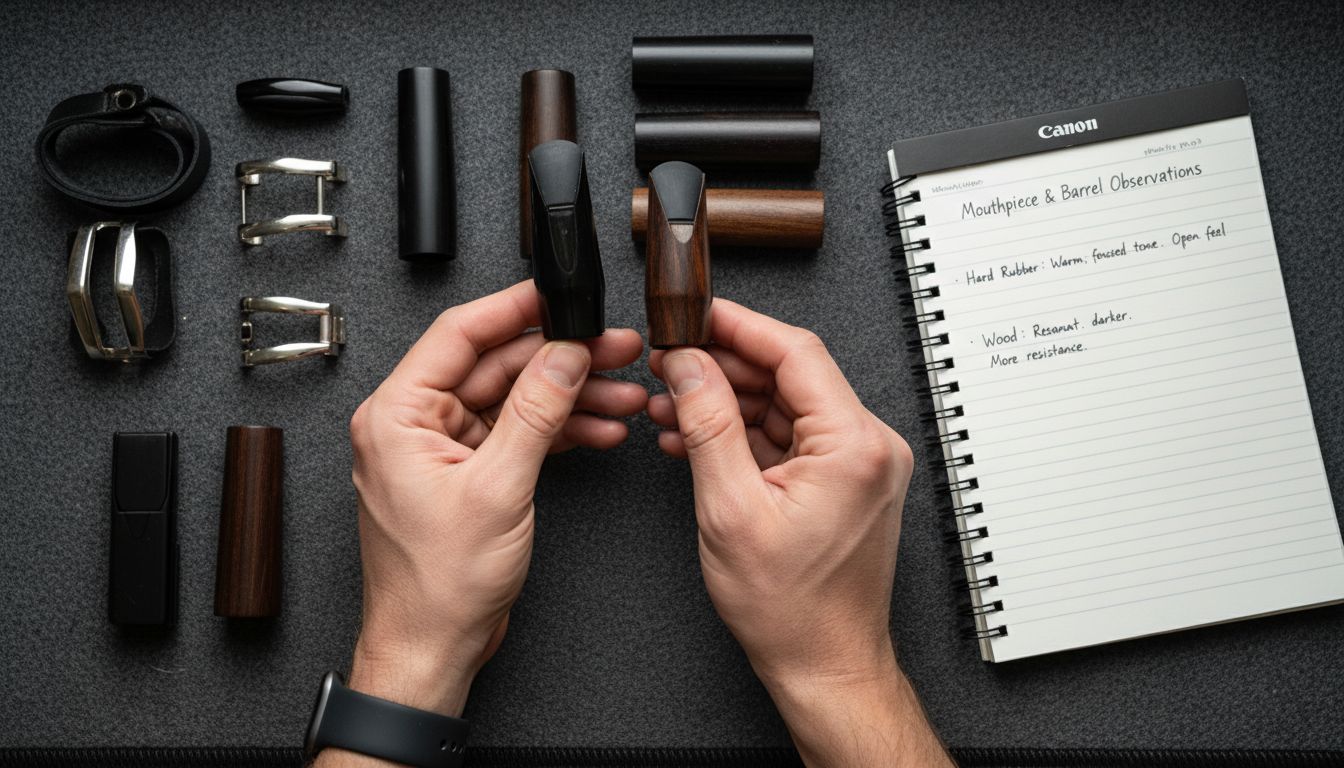
With a comprehensive understanding of mouthpiece and barrel options, you are now prepared to make an informed selection that will elevate your clarinet playing experience.
Step 4: Test Accessories for Sound and Comfort
Testing clarinet accessories is a critical process that requires methodical evaluation and personal exploration. Your goal is to discover accessories that not only sound exceptional but also feel comfortable during extended playing sessions.
Research from the Texas Band Masters Association emphasizes the importance of comprehensive accessory testing. Professional musicians recommend creating a systematic approach that involves multiple evaluation stages. Start by assessing the physical comfort of each mouthpiece and barrel. Pay attention to weight distribution, how the accessory feels against your embouchure, and whether it allows natural, relaxed playing. Sound quality matters equally test each configuration by playing scales, arpeggios, and musical passages across different dynamic ranges to understand how the accessory influences your instrument’s tonal characteristics.
According to Northern Illinois University, evaluating clarinet accessories requires patience and critical listening. Pro tip: record yourself playing with different accessories and listen back critically. This approach allows you to hear subtle nuances that might be difficult to perceive while playing. Focus on aspects like tone consistency, projection, ease of articulation, and overall sound quality. Remember that your perfect accessory combination is a personal journey a setup that works brilliantly for one musician might not suit another.
With a strategic testing approach, you are now equipped to make an informed selection that will transform your clarinet playing experience.
Step 5: Verify Compatibility and Make Final Choices
With multiple accessory options evaluated, the final step involves carefully verifying compatibility and making strategic selections that will optimize your clarinet performance. This critical phase transforms your testing insights into a cohesive, high performing setup.
The American School Band Orchestra Association emphasizes the importance of meticulous component compatibility. Professional musicians recommend conducting thorough checks between your chosen mouthpiece, barrel, and existing instrument. Pay close attention to physical dimensions, connection points, and potential mechanical interactions. Verify that each accessory creates a seamless interface without creating undue stress on connection points or compromising your instrument’s structural integrity.
According to the Brass Performers Organization, final accessory selection requires balancing technical specifications with personal playing experience. Pro tip: consult with experienced clarinetists or professional music technicians who can provide nuanced insights into your specific configuration. They can help identify potential compatibility issues that might not be immediately apparent during initial testing. Remember that your perfect setup is a personalized combination that reflects your unique musical voice and technical requirements.
With careful verification complete, you are now prepared to confidently integrate your new clarinet accessories and elevate your musical performance.
Find Your Perfect Clarinet Setup with Expert Accessories
Selecting the right clarinet accessories can feel overwhelming when faced with countless options and technical details like mouthpiece tip openings, barrel lengths, and reed strengths. This guide highlights the challenge many clarinetists face in achieving a personalized sound that matches their skill level and musical goals without guesswork or compromise. If you are striving to overcome these obstacles and elevate your playing, understanding the importance of tailored components and compatibility is key.

Discover a curated collection of high quality mouthpieces, barrels, and essential clarinet accessories at My Clarinet Stuff. Our boutique online store specializes in professional grade equipment crafted with exacting Viennese sound tradition to help you achieve a refined tone that fits your unique style. Get personalized consultations for custom mouthpieces and browse detailed product descriptions designed to guide you through selecting the ideal gear. Don’t let uncertainty hold back your musical expression. Start building your precision setup today at My Clarinet Stuff and experience the difference of expertly chosen clarinet accessories tailored just for you.
Frequently Asked Questions
How can I assess my clarinet playing needs effectively?
To assess your clarinet playing needs effectively, evaluate factors like your skill level, musical goals, and typical performance environments. Identify any limitations of your current instrument and consider what sound characteristics you desire. Create a checklist of these factors to guide your accessory selections.
What essential accessories should I include in my clarinet setup?
Your essential clarinet accessory kit should include high-quality mouthpieces, precision ligatures, specialized barrels, and various reed strengths. Make sure to also include cleaning tools and protective cases to keep your equipment in great condition. Prioritize accessories that align with your personal playing style.
How do I compare different mouthpiece and barrel options for my clarinet?
To compare mouthpiece and barrel options, focus on the materials, tip openings, and chamber shapes to understand how they will affect your sound. Test different combinations and pay attention to nuances in tone and playability. Document your findings to help narrow down your best choices.
What steps should I take when testing clarinet accessories for sound and comfort?
When testing clarinet accessories, assess their physical comfort by checking their fit and feel during play. Play various scales and musical passages to evaluate sound quality. Record your sessions to capture subtle differences that may impact your overall performance.
How can I ensure the compatibility of my clarinet accessories?
To ensure compatibility of your clarinet accessories, check the physical dimensions and connection points of each item with your instrument. Confirm that the accessories fit well and function together without causing stress or mechanical issues. If possible, consult with experienced musicians or technicians for additional guidance.
What should I consider when making my final accessory selections?
When making final accessory selections, balance technical specifications with your personal playing experience. Review the insights from your testing to identify which accessories enhance your sound and comfort. Choose accessories that feel intuitive and align with your musical identity.
One Response