


Have you ever struggled with sticky clarinet keys mid-performance? You’re not alone. Proper clarinet maintenance dramatically reduces such issues and extends your clarinet’s life. This guide covers essential cleaning, lubrication, pad and cork care, environmental effects, and common misconceptions that could be sabotaging your instrument’s performance right now.
Table of Contents
- Introduction To Clarinet Maintenance
- Daily Cleaning And Moisture Management
- Mechanical Key Maintenance And Lubrication
- Pad And Cork Maintenance
- Environmental Factors Affecting Clarinet Materials
- Common Misconceptions And Maintenance Risks
- Maintenance Routine And Scheduling For All Levels
- Discover Essential Clarinet Accessories To Enhance Maintenance
- Frequently Asked Questions About Clarinet Maintenance
Key Takeaways
| Point | Details |
|---|---|
| Daily swabbing | Removes up to 90% of moisture to prevent pad damage and mold. |
| Monthly key oiling | A few drops cuts sticky key incidents by 80%. |
| Weekly cork grease | Keeps seals airtight and prevents tuning issues. |
| Pad lifespan | Typically lasts 3-5 years and must be inspected regularly. |
| Humidity control | Levels over 60% cause wood swelling affecting tuning and key response. |
Introduction to Clarinet Maintenance
Maintaining your clarinet isn’t just about keeping it looking good. It preserves tonal quality and mechanical reliability, ensuring you sound your best every time you play. Neglect leads to sticky keys, air leaks, and inconsistent tone that frustrate players at every level.
Your maintenance needs vary based on experience and instrument type. Beginners benefit from simpler routines focused on basic cleaning and moisture management. Professionals require more detailed care, including precise lubrication schedules and environmental monitoring. Understanding these differences helps you build habits that match your playing intensity.
Different clarinet types demand specific attention. Bb clarinets face different challenges than bass clarinets. Wooden instruments respond to humidity differently than synthetic ones. Even within wooden clarinets, grenadilla wood behaves differently from rosewood.
Poor maintenance compounds over time. A small air leak today becomes a major repair tomorrow. Pads that seem fine can silently degrade, affecting your tone before you notice the problem. For comprehensive guidance on clarinet setup essentials, understanding these fundamentals prevents costly repairs.
- Sticky keys from grime buildup
- Air leaks from worn pads
- Tone inconsistencies from moisture damage
- Tuning problems from cork deterioration
- Metal key corrosion from improper storage
Daily Cleaning and Moisture Management
Swabbing your clarinet immediately after playing is the single most effective maintenance habit you can develop. Using quality swabs removes 90% of moisture after playing, preventing mold and pad damage that silently degrades your instrument between sessions.
Choose the right swab for your instrument. Silk swabs work well for Bb clarinets, while thicker cotton swabs suit bass clarinets. The material matters because it affects moisture absorption and prevents scratching your bore. Size matters too. A swab too small misses moisture pockets, while one too large risks getting stuck.
Avoid excessive wiping that damages finishes or bends keys. Two or three gentle passes through each joint suffice. Start from the bell end and pull through smoothly. Never push a swab from the mouthpiece end, as it can lodge in the narrow bore.
Safe drying prevents mold growth inside your bore. After swabbing, leave your case open for 30 minutes to allow remaining moisture to evaporate. Store your clarinet in a well-ventilated area, never in direct sunlight or near heat sources.
Pro Tip: Keep a dedicated swab in your instrument case so you never skip this crucial step. Mark it with tape to distinguish it from other swabs in your collection.
Regular cleaning extends beyond moisture removal. Natural cleaning methods for your mouthpiece include warm water and mild soap weekly. For a detailed routine, check this clarinet maintenance checklist.
- Swab immediately after every playing session
- Use the correct swab type and size for your model
- Pull swabs through gently from bell to barrel
- Air dry your case for 30 minutes post-play
- Clean your mouthpiece weekly with warm soapy water
Mechanical Key Maintenance and Lubrication
Sticky keys frustrate players, but 80% of sticky key issues are preventable with proper cleaning and optimal lubrication. Most problems stem from grime buildup and over-oiling, not mechanical failure. Understanding the cause helps you apply the right solution.
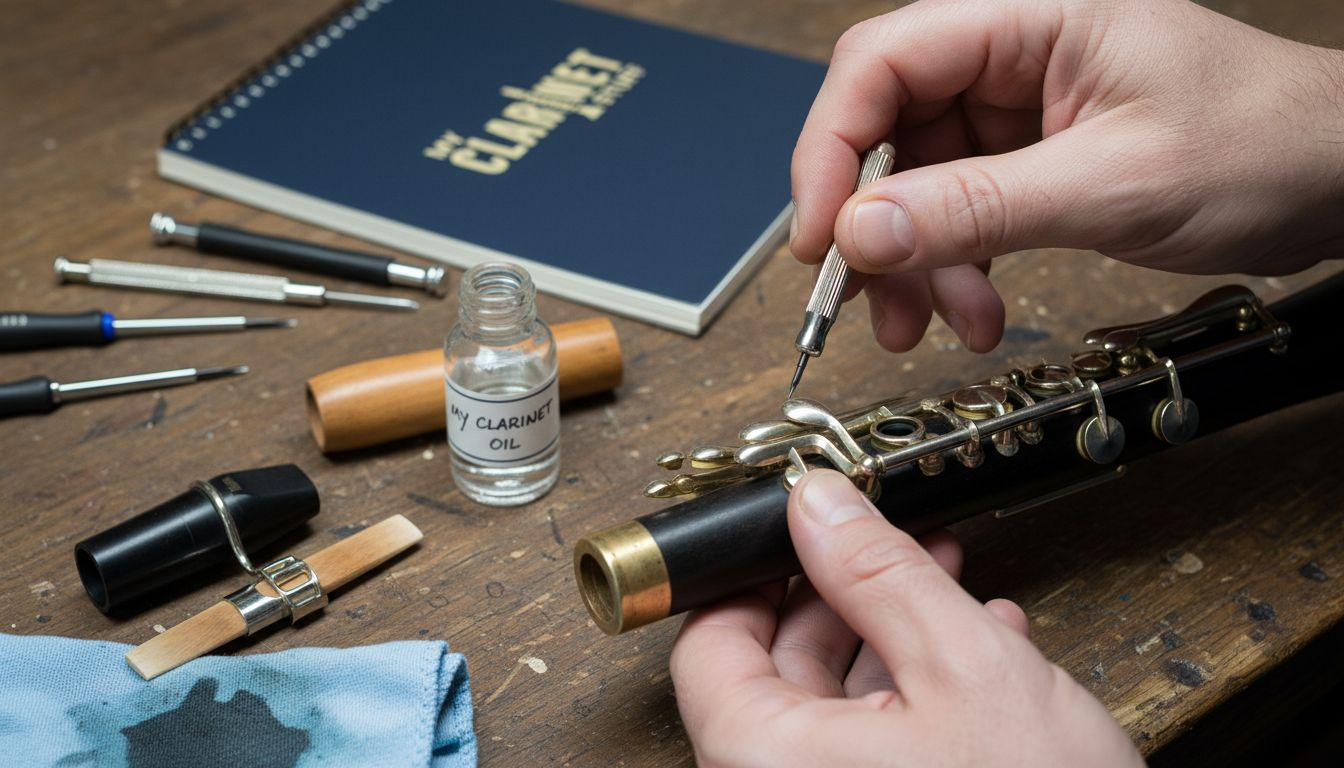
Only a few drops of proper key oil monthly keep mechanisms smooth. More isn’t better. Excess oil attracts dust and creates a sticky paste that gums up your action. Apply one small drop to each pivot screw, then work the key gently to distribute the lubricant.
Different lubricants suit different situations. Mineral oil works for most routine maintenance. Synthetic oils last longer but cost more. Graphite sprays excel for spring mechanisms but require precise application to avoid overspray.
| Lubricant Type | Best For | Pros | Cons |
|---|---|---|---|
| Mineral Oil | Pivot screws, hinges | Affordable, widely available | Requires frequent reapplication |
| Synthetic Oil | High-use keys | Long-lasting, stable | Higher cost |
| Graphite Spray | Springs, tight mechanisms | No residue buildup | Easy to over-apply |
Proper cleaning precedes oiling. Remove visible dirt with a soft cloth before applying lubricant. If keys remain sticky after oiling, grime has likely built up underneath. This requires professional cleaning, not more oil.
Pro Tip: Avoid DIY disassembly beyond removing the barrel and bell. Amateur attempts to remove keys cause 15% of professional repair damages. If your keys need deep cleaning, visit a qualified technician.
For persistent issues beyond simple lubrication, consult our clarinet sound troubleshooting guide for comprehensive diagnostic steps.
- Apply only 1-2 drops of key oil per mechanism
- Oil pivot screws monthly, not weekly
- Clean dirt before adding fresh lubricant
- Work keys gently after oiling to distribute
- Never disassemble keys yourself without training
Pad and Cork Maintenance
Your tenon corks need weekly attention to maintain airtight seals. Apply cork grease every seven days to prevent drying and cracking. This simple habit preserves tuning stability by ensuring consistent joint fit. Without lubrication, corks shrink and crack, creating air leaks that ruin your sound.
Cork lubrication directly impacts tuning. Dry corks require excessive force to assemble, risking wood cracks. They also fail to seal properly, causing pitch instability. Well-greased corks slide together smoothly and maintain consistent positioning.
Pads typically last 3-5 years; neglect causes air leaks and buzzing. Natural pad wear happens gradually. Leather dries out, adhesive weakens, and impressions from tone holes become permanent. You might not notice the degradation until tone problems emerge.
Regular inspection every six months catches pad wear before it affects your playing. Look for visible gaps between pads and tone holes. Listen for hissing sounds when playing softly. Test individual keys by covering tone holes and blowing gently through the instrument.
- Inspect all pads biannually for visible wear, tears, or hardening.
- Apply cork grease weekly to all tenon joints using a thin, even layer.
- Test pad sealing by covering keys and listening for air leaks.
- Replace pads showing gaps, tears, or loss of springiness immediately.
- Schedule professional pad replacement every 3-5 years regardless of visible wear.
- Clean pads gently with cigarette paper to remove moisture buildup between sessions.
For complete maintenance protocols, reference this clarinet maintenance checklist covering timing and techniques.
Environmental Factors Affecting Clarinet Materials
Humidity above 60% causes wooden clarinet barrels and bells to swell by about 1-2%, affecting tuning and key responsiveness. This expansion changes bore dimensions, altering pitch and resistance. Winter heating dries air below 30%, causing wood to contract and crack.
Temperature fluctuations stress both wood and metal components. Rapid changes warp pads and loosen key posts. Metal keys expand and contract at different rates than wood bodies, creating alignment issues. Even synthetic clarinets face pad and spring problems from extreme temperature swings.
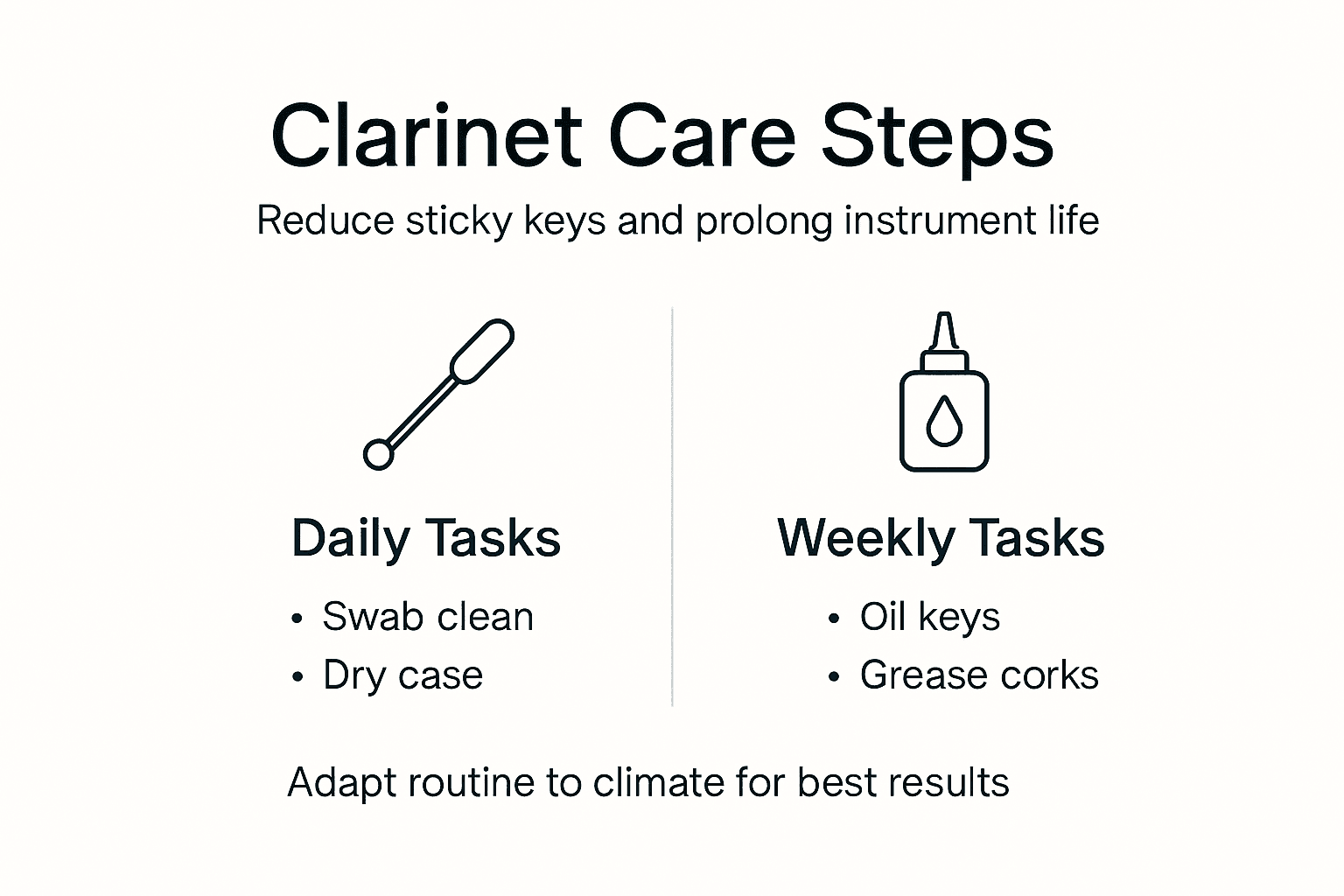
U.S. climates vary dramatically. Arizona’s dry heat requires different strategies than Florida’s humidity. Northern states face harsh seasonal swings. Coastal regions battle salt air and moisture. Tailoring your approach to local conditions prevents damage.
Using hygrometers and climate-controlled cases helps mitigate environmental effects. Portable hygrometers cost under $20 and provide instant readings. Humidity-controlled cases maintain stable environments regardless of external conditions. For severe climates, invest in both.
| Humidity Range | Effect on Wood | Key Response | Maintenance Action |
|---|---|---|---|
| Below 30% | Contraction, cracking risk | Keys bind from misalignment | Use humidifiers, limit exposure |
| 30-50% | Optimal stability | Smooth action | Monitor regularly |
| 50-60% | Slight expansion | Minor resistance changes | Increase monitoring frequency |
| Above 60% | Significant swelling | Sticky keys, tuning shifts | Dehumidify storage, check weekly |
Managing indoor humidity control in your practice space protects your investment. Use room dehumidifiers in humid climates or humidifiers in dry ones. Store your clarinet away from heating vents, air conditioners, and windows.
Common Misconceptions and Maintenance Risks
More key oiling doesn’t mean smoother keys. This myth causes more problems than it solves. Excessive key oiling increases sticky keys by 25% because surplus oil traps dust and grime. The sticky paste that forms requires professional cleaning to remove.
Pads don’t last forever, yet many players ignore replacement schedules. Leather degrades within 3-5 years regardless of playing frequency. Old pads leak air even when they look fine. This creates tone inconsistencies and tuning problems that players wrongly attribute to technique.
DIY disassembly during cleaning leads to 15% of professional repair damages. Enthusiastic players remove keys without understanding spring tension or alignment. Bent rods and misaligned mechanisms result. What seems like a simple cleaning task becomes an expensive repair.
Replacing pads and reeds too infrequently harms playability. Players adapt to gradually degrading equipment, not realizing how much their sound has suffered. Fresh pads and reeds often reveal how compromised your tone had become.
Professional technician warning: “Over-oiling and amateur disassembly account for nearly half the repair jobs I see. Players with good intentions cause more damage trying to save money. A $30 professional cleaning prevents a $300 repair.”
For identifying and fixing common issues before they require professional help, explore our clarinet maintenance mistakes guide.
- Oil keys only once monthly, never weekly
- Replace pads every 3-5 years regardless of appearance
- Never remove keys without professional training
- Schedule annual professional maintenance checks
- Replace reeds showing visible wear immediately
Maintenance Routine and Scheduling for All Levels
Beginners should focus on simplified routines that build consistent habits. Daily swabbing and weekly cork greasing form your foundation. These two tasks prevent 70% of common maintenance problems. Master these before adding complexity.
Professionals need comprehensive schedules addressing every component. Weekly routines reduce mechanical issues by 40% for professional clarinetists who play multiple hours daily. Your instrument works harder and needs proportional attention.
- Daily: Swab all joints thoroughly after every playing session.
- Daily: Wipe down keys with a soft cloth to remove fingerprints and moisture.
- Weekly: Apply cork grease to all tenon joints evenly.
- Monthly: Oil key mechanisms with 1-2 drops per pivot point.
- Biannually: Inspect all pads for wear, gaps, or deterioration.
- Annually: Schedule professional cleaning and adjustment service.
Planning maintenance prevents emergency repairs that sideline you before performances. A simple calendar reminder system keeps you on schedule. Set phone alerts for weekly cork greasing and monthly oiling.
Players in humid areas must add environment control checks. Monitor humidity daily during summer months. Adjust storage conditions immediately when readings exceed 55%. Coastal players should inspect metal components monthly for early corrosion signs.
For a complete maintenance protocol at every skill level, download this clarinet maintenance checklist with printable schedules.
Discover Essential Clarinet Accessories to Enhance Maintenance
Maintaining your clarinet properly requires the right tools. Quality swabs, properly formulated cork grease, and appropriate key oils make maintenance easier and more effective. Our clarinet accessory selection guide helps you identify which products match your instrument type and playing level.

Choosing accessories shouldn’t be guesswork. Our clarinet mouthpiece matchmaker tool connects you with precision-crafted Austrian Gleichweit mouthpieces that complement your maintenance routine with consistent performance. These CNC-manufactured synthetic mouthpieces eliminate the variability of traditional materials, maintaining tonal characteristics regardless of environmental conditions.
Whether you’re upgrading from student to professional equipment or refining your existing setup, our mouthpiece selection tips provide expert guidance. Gleichweit USA offers fast shipping across the United States, plus personalized support for students, educators, and professionals seeking reliable equipment that performs consistently through proper care.
Frequently Asked Questions About Clarinet Maintenance
How often should I oil my clarinet keys?
Apply just 2-3 drops of key oil monthly to each mechanism. More frequent oiling attracts dust and creates sticky buildup. If keys feel sluggish before your monthly schedule, clean visible dirt first before adding oil.
What is the best way to store reeds to extend their life?
Rotate between 3-4 reeds instead of using one until it dies. Store them in a proper reed case with ventilation slots that prevents warping. For complete reed longevity strategies, see our clarinet reed care workflow.
How do I know when to replace my pads or corks?
Inspect pads biannually for visible gaps, tears, or loss of resilience. Replace pads every 3-5 years regardless of appearance, as leather degrades invisibly. Air leaks and buzzing sounds indicate immediate replacement needs.
Can I disassemble my clarinet for deep cleaning?
Limit disassembly to standard joints only. Never remove keys, springs, or adjustment screws yourself. Amateur disassembly causes expensive damage requiring professional correction. Schedule annual technician cleanings instead.
When should I replace my mouthpiece?
Mouthpieces showing chips, cracks, or changes in facing geometry need replacement. Even small damage affects tone and response. Learn the signs at when to replace clarinet mouthpiece to maintain optimal performance.
Recommended
- Clarinet Sound Troubleshooting: Fix 90% of Issues Fast
- 7 Essential Steps for a Clarinet Maintenance Checklist – My Clarinet Stuff
- 7-Step Clarinet Sound Improvement Checklist for Experts – My Clarinet Stuff
- Clarinet Reed Care Workflow for Optimal Sound Quality – My Clarinet Stuff
- How to Clean and Maintain Your Pocket Knife – propswords