


TL;DR:
- Mouthpieces significantly influence clarinet tone, projection, and flexibility due to their unique acoustic properties.
- Design features like tip opening, chamber shape, and baffle height, along with material choice, shape the instrument’s sound.
- Continual experimentation with different mouthpieces is essential for artistic growth and finding your ideal sound.
Most clarinetists spend years perfecting their embouchure, breath support, and finger technique, yet overlook the single piece of equipment that shapes their sound more than any other. Swap two players’ mouthpieces, and you will often hear dramatically different results, even on the same clarinet with the same reed. The mouthpiece is not just a tube you blow air through. It is an acoustic instrument in its own right, and understanding what makes each one distinct will change how you think about tone, projection, and musical expression at every stage of your playing.
Table of Contents
- Why mouthpiece uniqueness matters for your sound
- Core features that define mouthpiece uniqueness
- Material matters: How what it’s made of sets it apart
- Choosing the right unique mouthpiece: A clarinetist’s decision guide
- Why the search for the “perfect” mouthpiece is a lifelong journey
- Ready to find your unique mouthpiece?
- Frequently asked questions
Key Takeaways
| Point | Details |
|---|---|
| Mouthpiece design shapes tone | Small differences in design can dramatically impact your clarinet’s sound and playability. |
| Material choice matters | The mouthpiece material can alter timbre, responsiveness, and comfort to suit different playing needs. |
| No permanent perfect fit | Your ideal mouthpiece may change as your style and skill level evolve over time. |
| Experimentation is key | Trying various mouthpieces helps you find the unique qualities that suit your performance goals. |
Why mouthpiece uniqueness matters for your sound
Here is a misconception worth addressing head on. Many players, especially students, assume that mouthpieces are essentially interchangeable commodities, that one piece of molded plastic or rubber plays much like another. That belief often leads to frustrating practice sessions where the player blames their embouchure, their reeds, or their air support when the real culprit is sitting right at the top of their instrument.
Every mouthpiece carries a distinct acoustic personality. It influences projection (how well your sound carries across a concert hall or rehearsal room), richness (the harmonic complexity of your tone), and flexibility (how easily you can bend pitches, shape phrases, and move between registers). A mouthpiece that works brilliantly for a classical orchestral player may feel completely wrong in the hands of a jazz clarinetist reaching for a brighter, edgier sound. These are not minor stylistic preferences. They are fundamental performance outcomes driven by physical design.
Research confirms this. Studies demonstrate that timbre descriptors vary monotonically with blowing pressure and reed aperture, directly linking the mechanics of the mouthpiece setup to the resulting tone color. In plain terms, tiny physical changes at the mouthpiece level cause measurable shifts in the acoustic spectrum of what you hear. This is science supporting what experienced players have known through feel for generations.
Here are the core tonal qualities that mouthpieces directly influence:
- Projection: How far and how clearly your sound travels
- Warmth vs. brightness: The ratio of lower to upper harmonics in your tone
- Resistance: How much physical effort is required to produce a stable note
- Dynamic range: The span from your softest pianissimo to your loudest fortissimo
- Register clarity: How cleanly the instrument speaks in the chalumeau, clarion, and altissimo registers
“The mouthpiece is where the sound begins. Everything downstream, the barrel, the bore, the bell, shapes what that sound becomes. But origin matters most.” This is a principle we hold deeply at Gleichweit USA, and it drives every design decision behind our Austrian-crafted mouthpieces.
Understanding these sound quality factors before you shop will save you time, money, and a great deal of frustration. The better you understand what you are listening for, the faster you can identify the right tool for your playing.
Core features that define mouthpiece uniqueness
Understanding the importance of mouthpiece uniqueness, the next step is breaking down the exact features that create those differences. Think of a mouthpiece like a tiny acoustic chamber with several carefully calibrated variables. Change one variable, and everything shifts. Change two, and the cumulative effect can be dramatic.
The four primary design elements are tip opening, facing curve, chamber shape, and baffle height. Here is a quick comparison of how these features affect your playing:
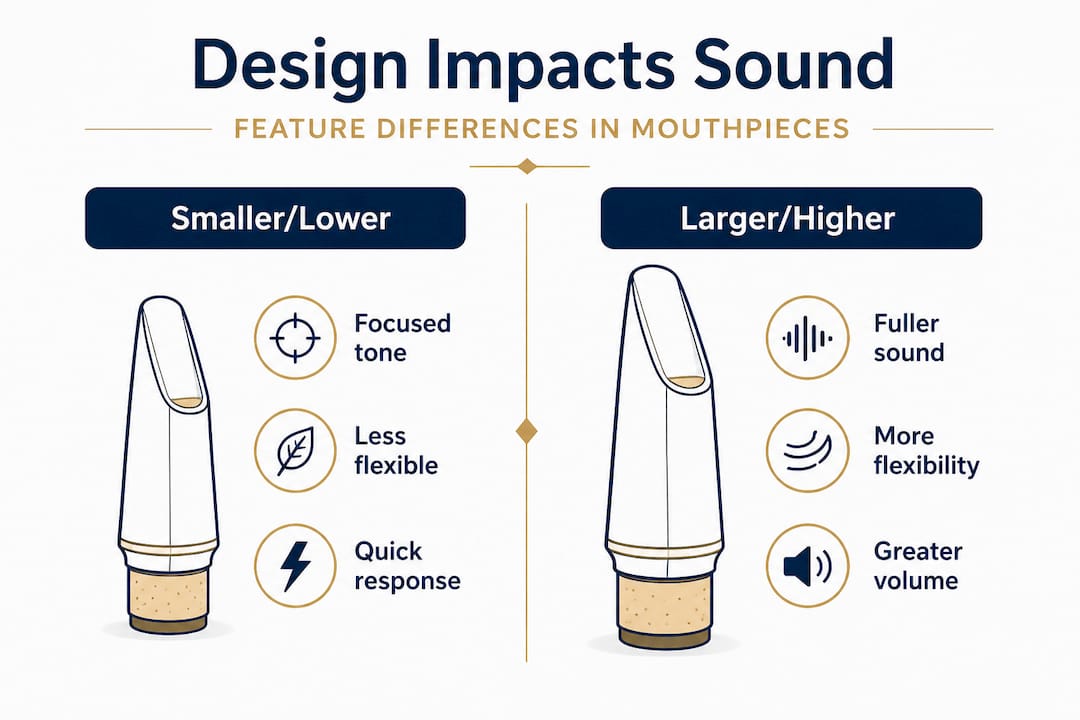
| Feature | Smaller/Shorter/Lower | Larger/Longer/Higher |
|---|---|---|
| Tip opening | Focused tone, less flexibility | Greater volume, wider dynamic range |
| Facing curve | Stiffer feel, more resistance | Easier blow, faster response |
| Chamber size | Brighter, more projected sound | Darker, fuller, warmer sound |
| Baffle height | Mellower, rounder tone | Brighter, more cutting edge |
These variables interact with each other constantly. A large tip opening paired with a long facing curve and a low baffle creates an entirely different experience than a large tip opening with a high baffle and a small chamber. This is why two mouthpieces with the same tip opening measurement can sound and feel completely different in practice.
Here is a numbered breakdown of the four features and what to listen for when evaluating each:
- Tip opening: Measured in millimeters or fractions of an inch, this is the gap between the tip of the mouthpiece and the tip of the reed at rest. The empirical connection between tip opening and timbre is well documented. Wider openings generally favor jazz or contemporary styles; narrower openings suit classical playing.
- Facing curve: The shape of the rail along which the reed vibrates. A shorter, steeper curve creates more resistance and may help players who struggle with embouchure control. A longer, flatter curve gives the reed more freedom to vibrate and can increase dynamic flexibility.
- Chamber shape: Round chambers produce warmer sounds by amplifying lower harmonics. Rectangular or asymmetrical chambers add brightness by boosting higher frequencies. This single variable can shift your entire tonal character.
- Baffle height: The slope behind the tip opening inside the mouthpiece. A high baffle pushes air more directly at the reed, creating a brighter, more aggressive sound that cuts through in pop and jazz settings.
Pro Tip: Before testing a new mouthpiece, record a short passage on your current setup so you have a tonal baseline. Then test the new piece with the exact same passage and reed strength. Your ears adapt quickly, and the recording removes guesswork.
For a deeper look at how these design choices play out in real models, the resource on professional mouthpiece features walks through specific examples worth studying. When you are ready to choose, the mouthpiece selection tips guide gives you a practical framework.
Material matters: How what it’s made of sets it apart
With design features in mind, let us dig deeper into why the material itself plays such a crucial role. Two mouthpieces with identical tip openings and facing curves can still sound and respond very differently because of the material from which they are made. This surprises many players who assume that the acoustic work happens entirely through geometry.
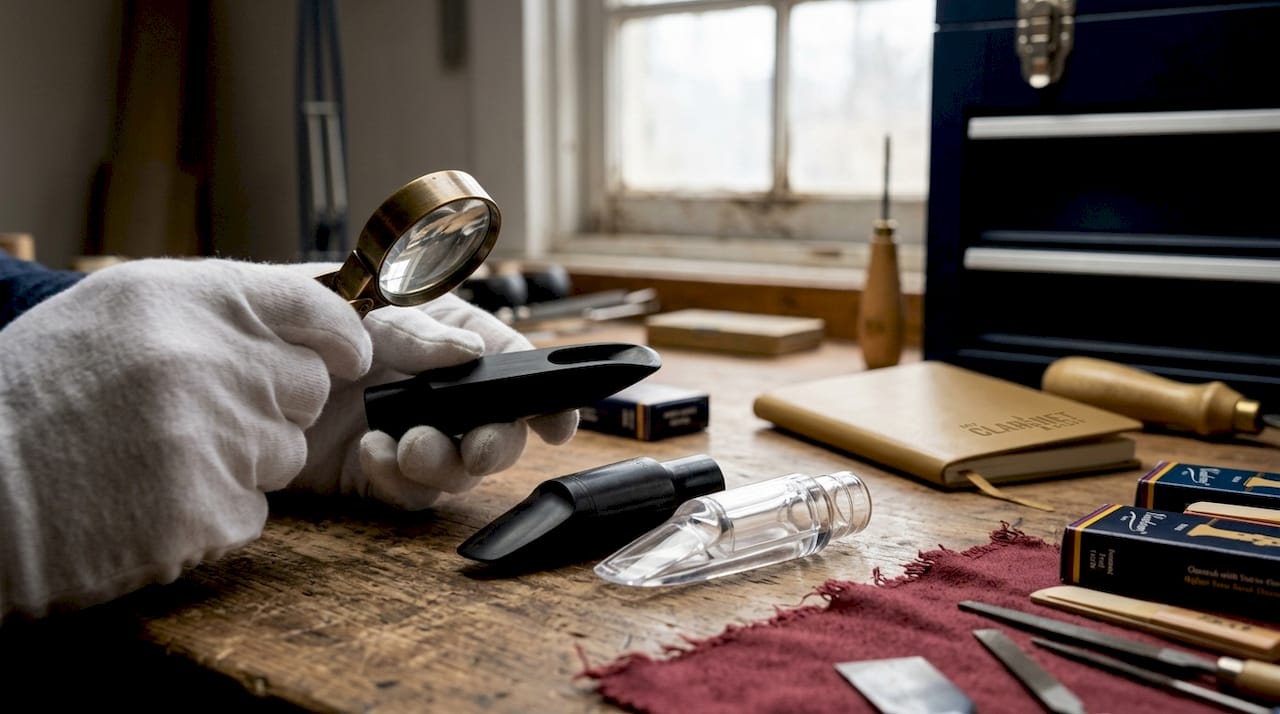
Material affects tone in several ways: through density (how much the material absorbs versus reflects vibrations), through surface texture (how the reed seals against the table), and through thermal behavior (how the piece changes with temperature during a long performance or rehearsal). Here is a practical overview of the most common materials:
| Material | Tonal character | Durability | Common use |
|---|---|---|---|
| Hard rubber (ebonite) | Dark, warm, rich | High | Classical, orchestral |
| Plastic | Bright, clear | High | Students, beginners |
| Synthetic (CNC-machined) | Consistent, versatile | Very high | All levels and genres |
| Metal | Bright, highly projecting | Very high | Jazz, commercial, big band |
| Wood | Very warm, complex | Lower | Specialty/folk players |
Hard rubber, also known as ebonite, has been the benchmark material for professional mouthpieces for well over a century. Players often describe its sound as darker and more complex, partly because the dense material absorbs some of the brighter upper harmonics while allowing the fundamental and lower overtones to ring clearly. The catch is consistency. Natural hard rubber varies from batch to batch, and it is sensitive to UV light, temperature swings, and oxidation over time.
Plastic mouthpieces are affordable, durable, and produce a brighter sound. They are perfectly appropriate for students and beginners, but they rarely satisfy advanced players who want nuanced tonal control. The difference between plastic and hard rubber is noticeable within minutes of playing side by side.
Precision mouthpiece materials like CNC-machined synthetics represent a significant leap forward. The manufacturing process allows tolerances that traditional molding simply cannot achieve, meaning every piece in a production run behaves the same way. For players who have experienced the frustration of buying three mouthpieces labeled identically but sounding completely different, this consistency is genuinely life-changing. It also means that timbre descriptors stay predictable because the physical variables are controlled precisely from the start.
Here are the key material considerations to factor into your decision:
- Climate sensitivity: Hard rubber warps or discolors in heat and sunlight. Synthetics handle temperature fluctuations much better.
- Long-term oxidation: Hard rubber can develop a surface film over years. Synthetic materials do not oxidize the same way.
- Consistency across units: Synthetic CNC-machined pieces offer near-identical measurements across batches. Hard rubber does not.
- Reed seal quality: The flatness and texture of the table surface affects how the reed seals, which directly impacts response and tone.
Choosing the right unique mouthpiece: A clarinetist’s decision guide
Now that you understand the features and materials shaping uniqueness, here is how to apply that knowledge when choosing your own mouthpiece. The options can feel overwhelming when you first look at the full range available, but narrowing your focus to three or four key questions makes the process manageable.
Start with your genre and ensemble context. A clarinetist playing principal chair in a symphony orchestra needs a mouthpiece built for blend, projection across a large hall, and tonal evenness across all registers. A jazz clarinetist performing in a club setting needs edge, flexibility, and a sound that can cut through without electronic amplification. A folk or klezmer player wants something responsive enough to bend notes freely and handle ornaments and glissandos with ease. These are genuinely different tonal targets, and no single mouthpiece serves all of them equally well.
Next, consider your physical comfort. Resistance matters enormously. A mouthpiece that requires excessive effort to play in tune will tire your embouchure quickly and encourage poor technique as compensation. Newer players often benefit from slightly more resistance because it helps stabilize the embouchure. More advanced players frequently want a freer blow that rewards fine control. This is where trial becomes essential. Reading specifications is useful preparation, but the only reliable test is playing the mouthpiece yourself with your instrument and your reeds.
Here are the key questions to guide your selection:
- What genre or style do I play most often?
- Do I need a sound that blends or one that projects and leads?
- What tip opening range has felt comfortable and productive in the past?
- Am I playing in a large hall, a small ensemble, or amplified settings?
- How sensitive am I to resistance and physical effort?
- Do I want a brighter or darker tonal character overall?
The empirical relationship between reed aperture and timbre means that your reed choice and mouthpiece choice need to be made together, not in isolation. A hard reed on a wide tip opening plays and sounds completely differently than the same hard reed on a narrow tip opening. Always test new mouthpieces with the reed strength you actually use in practice.
Explore the mouthpiece types for players resource for a detailed breakdown organized by playing style and skill level. It takes the guesswork out of narrowing your list before you spend money on trials.
Pro Tip: If possible, use a mouthpiece trial program that lets you test several pieces at home with your own instrument before committing. Your acoustic environment, your specific clarinet, and your individual embouchure shape the result far more than any showroom demonstration can reveal.
Why the search for the “perfect” mouthpiece is a lifelong journey
Here is something most gear-focused articles will not tell you: the mouthpiece that feels perfect today may not be the right choice in five years, and that is not a problem. It is actually one of the most exciting aspects of being a clarinetist.
Many working professionals quietly revisit their mouthpiece setup at different career stages. A player moving from chamber music into orchestral work often discovers that the bright, flexible mouthpiece they loved in small ensembles no longer serves them in a large hall where blend and warmth matter more. A teacher who spends years playing at reduced volume to demonstrate technique may find their embouchure has shifted enough to need a different resistance level. These are not failures of the original choice. They are signs of artistic growth.
Technical development also changes what a mouthpiece feels like. As your embouchure strengthens and your air support deepens, a mouthpiece that once felt demanding may start to feel too easy, too neutral, or just flat. Your ear becomes more refined, and you start hearing nuances that simply were not audible to you before. This is when players often discover entirely new tonal territories by trying something they previously dismissed.
Being open to continual experimentation leads to genuine artistic discovery. We have seen players at top mouthpiece choices make transformative changes after decades on the same setup. The key is approaching each trial with curiosity rather than brand loyalty. The goal is always your sound, not a logo.
The uncomfortable truth is this: there is no shortcut. Reading reviews helps. Asking your teacher helps. But at the end of the process, you need to blow air through the mouthpiece yourself and listen. Trust what you hear, not what the specifications promise.
Ready to find your unique mouthpiece?
You now have the knowledge to make a genuinely informed mouthpiece decision, one based on design, material, tonal goals, and playing context rather than brand name alone. The next step is putting that knowledge into action.

At MyClarinetStuff.com, we make the trial process straightforward for clarinetists at every level. Start with our mouthpiece matchmaker tool to identify the models most likely to match your style, genre, and tonal preferences. From there, explore our full range of Gleichweit Austrian-crafted synthetic mouthpieces, designed to deliver consistent, professional-grade performance without the variability of traditional hard rubber. Our at-home test box program lets you play the pieces with your own instrument before committing. For additional guidance, our mouthpiece tips resource gives you a checklist to evaluate each piece systematically.
Frequently asked questions
How does mouthpiece tip opening affect clarinet tone?
A larger tip opening typically allows for greater volume and flexibility in your tone, while a smaller tip promotes stability and focus. Research confirms the link between aperture and timbre, so matching tip opening to your genre and embouchure strength is critical.
What’s the difference between plastic and hard rubber mouthpieces?
Hard rubber mouthpieces usually create a darker, richer sound with more harmonic complexity, while plastic mouthpieces tend to produce a brighter tone and are generally more affordable. The tonal profile difference between these materials becomes especially noticeable when playing in an ensemble context.
Do professional clarinetists always use custom mouthpieces?
Not always. Many professionals play on well-crafted production models that suit their needs precisely. Custom mouthpieces become relevant when a player has very specific tonal or physical requirements that standard models cannot fully address.
How can I tell if a mouthpiece is the right fit for my clarinet?
Play it with your actual instrument, your usual reeds, and your normal repertoire in your normal acoustic environment. Tonal response, ease of playing in tune, and register evenness are the most reliable indicators. A teacher or specialist can help you identify what you are hearing.
Will changing my mouthpiece improve my playing immediately?
You may hear a tonal difference right away, but real improvement takes time. Your embouchure needs to adapt to new resistance and facing, and your ear needs time to calibrate to a different tonal character. Give any new mouthpiece at least two or three focused practice sessions before drawing conclusions.
Recommended
- Why Mouthpiece Material Matters for Clarinetists – My Clarinet Stuff
- Important 5 Things You Need to Pay Attention to When Choosing the Best Clarinet Mouthpiece – My Clarinet Stuff
- 7 Essential Mouthpiece Selection Tips for Clarinetists – My Clarinet Stuff
- 7 Essential Clarinet Mouthpiece Types List for Every Player – My Clarinet Stuff