


TL;DR:
- A consistent clarinet mouthpiece is essential for beginners to produce stable sound and improve quickly.
- Using high-quality, CNC-machined mouthpieces helps teachers standardize instruction and avoid equipment-related issues.
- A systematic assembly routine and regular pitch checks further ensure consistent tone, intonation, and student progress.
A consistent clarinet mouthpiece is the single most controllable variable in a beginner’s sound production, and teachers who ignore it spend lesson time fixing equipment problems instead of building technique. Why consistent mouthpiece matters in teaching comes down to one principle: when the equipment behaves predictably, the student can focus on embouchure, breath, and musicality. Consistent manufacturing is more critical for beginners than for advanced players because beginners cannot compensate for equipment variability. The result of inconsistent gear is thin tone, poor intonation, and a frustrated student who blames themselves for problems the mouthpiece is causing.
Why consistent mouthpiece matters in teaching tone and intonation
Tone quality and intonation accuracy are the first two things a clarinet teacher addresses in every lesson. Both depend heavily on the mouthpiece. A mouthpiece with inconsistent manufacturing tolerances produces unpredictable resistance, which forces the student’s embouchure to constantly adjust just to get a sound out. That adjustment becomes a bad habit.
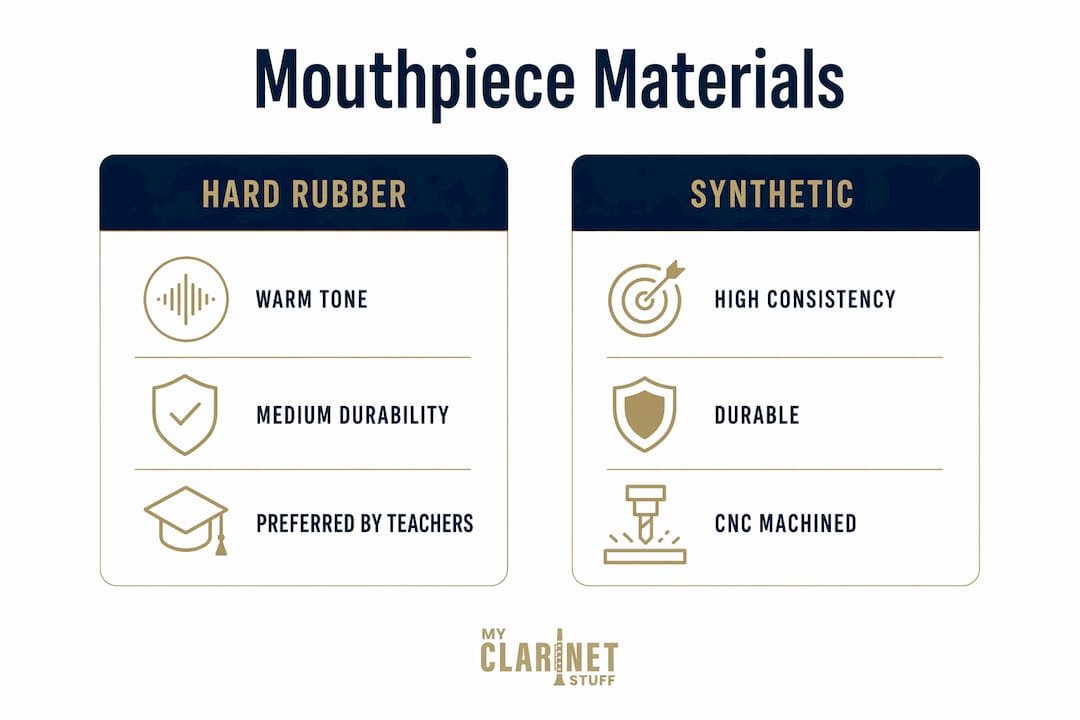
Hard rubber and ebonite mouthpieces produce warmer, more resonant, and more consistent tones than plastic alternatives. This material stability matters because it gives the student the same response every time they put the mouthpiece to their lips. Plastic mouthpieces, common in rental instrument packages, vary significantly in tip opening and rail geometry from unit to unit. That variation is invisible to the student but audible in every note.
The Vandoren JUNO J5, priced in the $30–40 range, is a widely recommended entry point for teachers who want to standardize their studio. A high-quality beginner mouthpiece enables new students to produce sound up to 30% faster by reducing resistance and frustration. That speed of progress is not a minor convenience. It determines whether a student stays motivated through the first three months of lessons.
Pro Tip: Require every new student to bring their mouthpiece to the first lesson. Play it yourself before the student does. If the tone is thin or the resistance feels off, the mouthpiece is the problem, not the student.
| Mouthpiece type | Tone consistency | Durability | Recommended for |
|---|---|---|---|
| Plastic (stock rental) | Low | Moderate | Not recommended for teaching |
| Hard rubber / ebonite | High | High | Beginner and intermediate students |
| Synthetic (CNC-crafted) | Very high | Very high | Students and professional use |
Synthetic mouthpiece tonal consistency is the highest available because CNC manufacturing eliminates the hand-finishing variation found in traditional hard rubber production. Gleichweit mouthpieces, made in Austria and distributed by Myclarinetstuff, use this process to deliver the same geometry across every unit. For a teacher running a studio with multiple students, that uniformity means the same instruction works for every student using the same model.
How does assembly consistency affect embouchure development?
Assembly consistency is the part of mouthpiece teaching that most instructors underestimate. Many teachers overlook that reed position, ligature tightness, and mouthpiece angle are as critical as the mouthpiece choice itself. A misaligned reed or an overtightened ligature disrupts the vibrations that produce tone, and the student experiences this as a squeaky or airy sound they cannot explain.
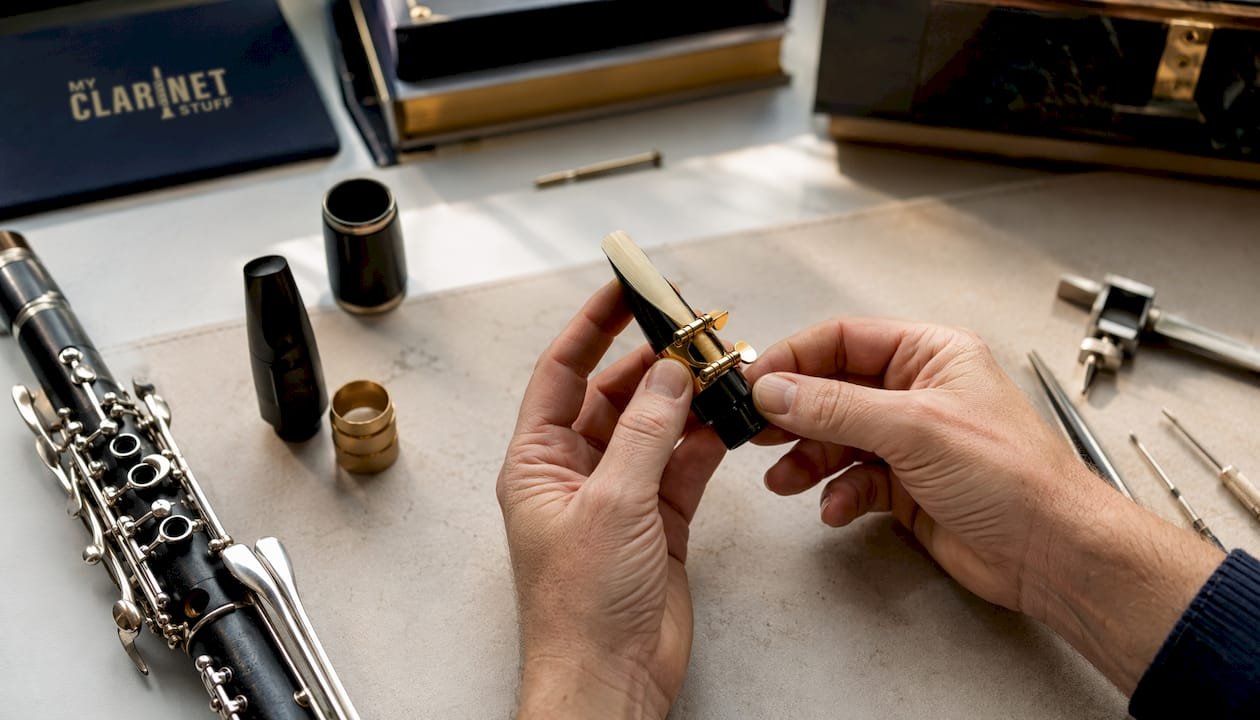
Poor assembly or inconsistent setup commonly causes squeaky or airy sounds that hinder student progress. The student assumes they are doing something wrong with their embouchure. The teacher spends time correcting technique that is actually fine. The real problem is a reed sitting 1mm too high or a ligature screw tightened unevenly.
Teaching a systematic assembly routine solves this. The routine removes the variable before the lesson starts, so every sound problem the student produces during practice is a technique problem, not an equipment problem. That distinction is what makes teaching with mouthpiece consistency so productive.
Here is a four-step assembly routine to teach every beginner from day one:
- Wet the reed. Soak the reed in water or saliva for 30 seconds before placing it. A dry reed vibrates unevenly and produces a thin, resistant tone.
- Align the reed to the tip rail. The tip of the reed should sit just below the tip of the mouthpiece. Even 1mm of misalignment changes the resistance and tone color.
- Set ligature tightness. Tighten the ligature screws until snug, not tight. The reed should hold firmly but still vibrate freely. Overtightening kills resonance.
- Check mouthpiece angle. The mouthpiece should enter the barrel straight, not cocked to one side. A crooked angle changes the air column and produces flat or sharp notes.
Pro Tip: Print this four-step checklist and give it to every student as a physical card. Ask them to run through it before every practice session at home. Consistent setup at home means fewer surprises at the lesson.
Teaching a systematic assembly checklist reduces errors, builds student confidence, and accelerates practice efficiency. Consistency is built through routine. When setup becomes automatic, the student’s mental energy goes entirely to playing.
How do mouthpiece pitch checks work as a teaching tool?
Mouthpiece pitch checks are one of the most underused diagnostic tools in clarinet pedagogy. The method is simple: the student plays only the mouthpiece, without the barrel or body of the clarinet, and the teacher listens to the pitch produced. Regular mouthpiece pitch checks target F# for Bb clarinet and G for A clarinet to improve intonation and diagnose tuning issues early.
The pitch check separates two completely different problems. If the mouthpiece alone produces the correct pitch, any intonation issues during full playing are embouchure or breath problems. If the mouthpiece alone plays flat or sharp, the setup or the mouthpiece itself is the source of the problem. This diagnostic method allows teachers to distinguish whether poor intonation results from setup or embouchure issues, enabling focused instruction.
Teachers who use pitch checks regularly report faster progress in ensemble settings. Students who understand why they are sharp or flat can correct the actual cause instead of guessing. The long-term benefit is better tone control and stronger audition results.
Practical steps for running a pitch check in lessons:
- Have the student play the mouthpiece alone, using their normal embouchure and air support.
- Use a tuner or a piano to identify the pitch produced.
- Compare it to the target: F# for Bb clarinet, G for A clarinet.
- If the pitch is correct, redirect attention to embouchure and breath during full playing.
- If the pitch is wrong, check reed alignment and ligature tightness before adjusting technique.
This process takes under two minutes. Run it at the start of every lesson for the first six months of a student’s study. The habit builds intonation awareness faster than any other single exercise.
What mouthpiece materials work best for teaching settings?
Material choice determines how reliably a mouthpiece performs across different students, temperatures, and playing conditions. Plastic mouthpieces that come standard with rental instruments are manufactured to a price point, not a performance standard. The geometry varies between units, which means two students using “the same” mouthpiece may actually be playing very different instruments.
Hard rubber and ebonite mouthpieces solve this problem. They are machined to tighter tolerances and produce a warmer, more stable tone. For teachers who want to select reliable mouthpieces for their studio, hard rubber is the minimum standard. The Vandoren JUNO J5 sits in the $30–40 price range and represents the entry point where consistency becomes reliable enough to teach from.
Synthetic mouthpieces go further. CNC manufacturing produces identical geometry across every unit, which means synthetic mouthpiece tonal consistency is not dependent on the skill of a hand-finisher. Gleichweit mouthpieces from Myclarinetstuff are built to this standard in Austria. Teachers who standardize their studio on one Gleichweit model can give every student the same instruction with confidence that the equipment will respond the same way.
For teachers advising parents on beginner mouthpiece selection, the guidance is straightforward. Avoid stock plastic mouthpieces from rental packages. Spend $30–100 on a hard rubber or synthetic option. The investment pays back in faster student progress and fewer lesson hours spent diagnosing equipment problems.
Managing a studio with multiple students also involves tracking which students are using which equipment. A resource like a student roster management guide can help teachers organize this information alongside lesson notes and progress records.
Key Takeaways
A consistent mouthpiece removes equipment variables from the teaching equation, letting students focus entirely on technique, tone, and musicality.
| Point | Details |
|---|---|
| Consistency accelerates progress | Beginners using quality mouthpieces produce sound up to 30% faster than those using inconsistent stock equipment. |
| Assembly routine matters as much as mouthpiece choice | Reed alignment, ligature tightness, and mouthpiece angle each affect tone and must be taught as a checklist. |
| Pitch checks diagnose the real problem | F# for Bb clarinet and G for A clarinet are the targets; deviations reveal setup or embouchure issues separately. |
| Material determines reliability | Hard rubber and synthetic mouthpieces outperform plastic in consistency, durability, and tonal stability for teaching. |
| Standardizing the studio saves teaching time | When all students use the same mouthpiece model, the same instruction applies to every student without adjustment. |
What I’ve learned from watching students fight their equipment
After years of watching students struggle with clarinet, the pattern is always the same. The student who sounds thin and plays sharp is almost never doing something wrong with their embouchure. They are fighting a mouthpiece that was never designed to produce a good sound. The rental package mouthpiece is a placeholder, not a teaching tool.
The shift I see when a student moves to a consistent, quality mouthpiece is immediate and sometimes dramatic. The tone opens up. The intonation centers. The student stops tensing their jaw because the resistance is finally predictable. That change in the student’s face, the moment they realize the clarinet can actually sound good, is the moment real teaching starts.
What I tell every teacher who asks about equipment: the mouthpiece is not a secondary concern. It is the first decision that shapes everything else. A student who spends six months fighting a bad mouthpiece develops compensating habits that take years to undo. A student who starts on a consistent mouthpiece builds real technique from lesson one.
The assembly routine is the part most teachers skip, and it is the part that causes the most confusion. When I started teaching the four-step checklist as a non-negotiable part of every lesson, the number of “mystery squeaks” in my studio dropped immediately. Students who set up their instrument the same way every time arrive at lessons ready to play, not ready to troubleshoot.
Prioritize the mouthpiece. Teach the routine. Run the pitch check. The rest of the lesson takes care of itself.
— Milos
Myclarinetstuff has tools to help you standardize your studio
Teachers who want to stop guessing about mouthpiece quality have a direct path forward with Myclarinetstuff. Gleichweit mouthpieces, CNC-crafted in Austria and distributed exclusively in the U.S. through Myclarinetstuff, deliver the manufacturing consistency that makes studio standardization possible.
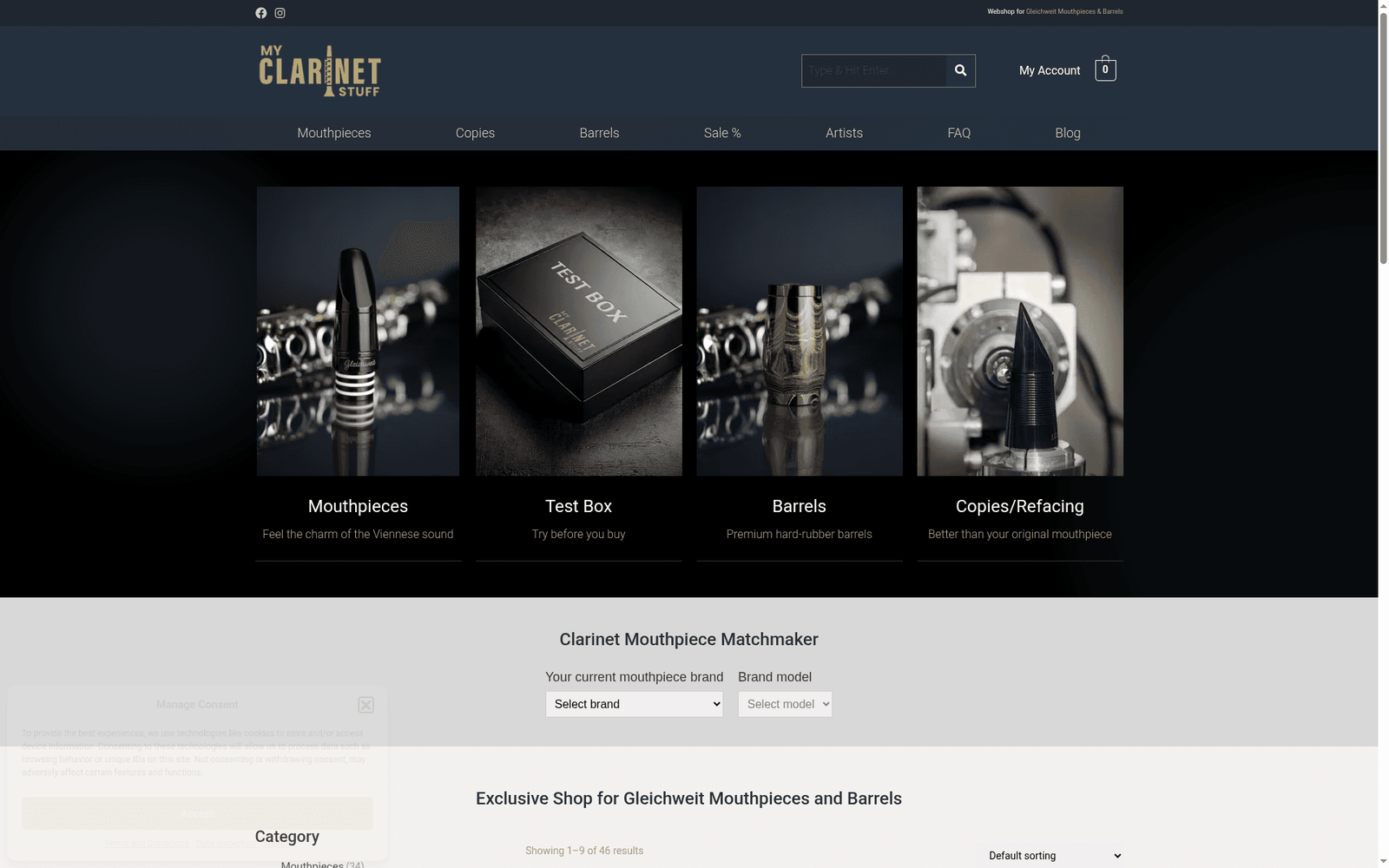
The Clarinet Mouthpiece Matchmaker helps teachers identify the right Gleichweit model for each student’s level and playing style. For teachers who want students to try before committing, the at-home test box program lets students play multiple mouthpieces in their own practice environment. You can also browse the full clarinet mouthpiece FAQ for answers to the questions your students will ask. Myclarinetstuff ships fast across the U.S. and offers personalized support for educators building consistent, productive studios.
FAQ
Why does mouthpiece consistency matter more for beginners?
Beginners cannot adjust their embouchure to compensate for equipment inconsistencies the way advanced players can. Inconsistent mouthpieces produce thin tone and poor intonation that beginners interpret as their own failure.
What pitch should a Bb clarinet mouthpiece produce alone?
A Bb clarinet mouthpiece played alone should produce F#. Deviations from this target indicate a setup problem or a mouthpiece that is out of specification.
How does assembly routine improve student outcomes?
A consistent assembly routine, covering reed alignment, ligature tightness, and mouthpiece angle, removes variable errors before the lesson starts. Students then spend practice time developing technique rather than diagnosing equipment problems.
Are synthetic mouthpieces better than hard rubber for teaching?
Synthetic mouthpieces manufactured by CNC machining deliver higher unit-to-unit consistency than hand-finished hard rubber. For teachers standardizing a studio, that consistency means the same instruction produces the same result across all students.
How often should teachers run mouthpiece pitch checks?
Run pitch checks at the start of every lesson for the first six months of a student’s study. After that, use them whenever intonation problems appear to quickly identify whether the cause is setup or embouchure.