


TL;DR:
- The Myclarinetstuff Gleichweit test box offers U.S. clarinetists a convenient way to evaluate CNC synthetic and ebonite mouthpieces at home. Testing in familiar environments over several sessions helps players assess dynamic control, response, and tonal qualities more accurately than store trials. The program includes a curated selection of mouthpieces, detailed testing routines, and supportive customer service to aid in selecting the best fit.
The Myclarinetstuff Gleichweit test box is the strongest at-home mouthpiece trial option available to U.S. clarinetists today, whether you’re an advancing student, an educator building a classroom setup, or a professional exploring a tonal upgrade. You receive a curated selection of precision CNC-crafted Gleichweit mouthpieces, try them on your own instrument in your own space, and return what you don’t keep. The full ordering details are in the promo section below.
Table of Contents
- What is an at-home clarinet mouthpiece test box?
- Why a test box beats a quick store trial
- The most revealing metrics when you test mouthpieces at home
- How to test clarinet mouthpieces at home: a step-by-step routine
- What the Myclarinetstuff / Gleichweit test box includes and how ordering works
- How to interpret your test results and choose the right mouthpiece
- Who should use an at-home test box?
- Key Takeaways
- What the test-box experience actually teaches you
- Order the Myclarinetstuff / Gleichweit test box
- Primary sources and further reading
What is an at-home clarinet mouthpiece test box?
A test box is a curated set of clarinet mouthpieces shipped directly to your home so you can evaluate each one on your own instrument, with your own reeds, across multiple practice sessions. The Myclarinetstuff version typically includes a selection of Bb clarinet and bass clarinet mouthpieces spanning a range of tip openings, along with ligature options, protective mouthpiece patches, and sanitizing instructions for safe handling between players.
Mouthpieces in the box come in two primary materials: CNC-machined synthetic and ebonite (hard rubber). The CNC synthetic pieces offer piece-to-piece consistency that hand-finished ebonite can’t always match, while ebonite tends to produce a warmer, richer tonal character. Both types are represented so you can compare them directly.
One clarification worth making upfront: this article covers mouthpiece trial programs in the style of the Myclarinetstuff/Gleichweit test box only. It does not cover mechanical reed testers, leak-detection tools, or school instrument inspection kits.
Why a test box beats a quick store trial
A single store session rarely tells you what a mouthpiece will actually do for your playing. You’re in an unfamiliar room, using a reed you didn’t break in, and you’ve had maybe five minutes to warm up. The acoustic context alone skews your impression.
An at-home trial changes that entirely. You test in the room where you practice, with the reeds and ligature you already trust, and you can return to each mouthpiece across several days. That repeated exposure is what separates a genuine fit from a first-impression guess.
The practical advantages are real:
- Your acoustics matter. A mouthpiece that sounds bright in a carpeted store may sound balanced in your practice room, or vice versa.
- Your embouchure needs time. Subtle differences in facing length and tip opening only reveal themselves after your muscles have adjusted.
- Comparison is cumulative. A conservatory student comparing three tip openings across a two-week practice cycle will notice intonation tendencies and soft-dynamic behavior that a 10-minute store trial would never expose.
- No pressure to decide on the spot. You can sleep on it, record yourself, and ask your teacher before committing.
Home trials improve selection outcomes precisely because the variables that matter most to your playing are the ones only you can control.
The most revealing metrics when you test mouthpieces at home
Dynamic range and controlled pianissimo are the single most revealing attributes of any mouthpiece. A piece that sounds full at forte but collapses or goes sharp at piano is telling you something important about its facing and chamber design. Response during fast passages and interval leaps comes second: a mouthpiece that hesitates or cracks under articulation pressure will frustrate you in repertoire, no matter how good it sounds on long tones.
Here’s what each metric actually shows you in practice:
- Dynamic range: Can you sustain a true, controlled pp without the tone thinning or the pitch rising? That’s the test.
- Fast-passage response: Play a familiar technical run. Does the mouthpiece track cleanly, or do notes smear under speed?
- Intonation: Check overall pitch against a reliable tuner and verify the interval of the 12th. Internal chamber dimensions affect tuning in ways that aren’t obvious until you measure.
- Tonal color: Is the sound centered and projecting, or spread and diffuse? Chamber size and baffle height both influence this.
- Tip-opening playability: Larger openings demand more air support and embouchure strength; medium openings are the most versatile starting point for most players.
- Reed pairing behavior: Does the mouthpiece respond consistently across a range of reed strengths, or does it only work with one specific cut?
Pro Tip: Use the same brand and strength of reed for every mouthpiece you test. Reed shape bias is real: a reed that has molded to one mouthpiece’s facing will give a false impression on the next one. Fresh reeds keep the comparison honest.
How to test clarinet mouthpieces at home: a step-by-step routine
Follow this routine for each mouthpiece, then compare your notes. Limit each session to three mouthpieces at most to avoid choice overload.
- Setup. Fit the mouthpiece with a fresh reed of your standard strength. Use the same ligature throughout all tests. Check that your instrument is in good mechanical condition before you start.
- Warm-up with long tones. Spend five minutes on slow, sustained notes across the full range. This settles your embouchure and gives you a baseline tonal impression.
- Dynamic sweep. Play a single note from pp to ff and back. Repeat across several registers. Note where the tone breaks down or the pitch drifts.
- Scales and arpeggios. Run through a few scales you know by memory, including passages that cross the break. Familiar material yields better comparative data than sight-reading because your attention stays on the mouthpiece, not the notes.
- Articulation test. Play a staccato passage and a fast slurred run. Listen for clarity, evenness, and any tendency to crack.
- Interval leaps and 12th check. Play octaves and 12ths slowly with a tuner running. Record the pitch deviation.
- Endurance check. Play for 15–20 minutes continuously. Does the response stay consistent, or does it change as you fatigue?
Timing guidance: Give each mouthpiece at least two full practice sessions before forming a judgment. For a three-mouthpiece comparison, a six-day cycle works well: two days per piece, then a final day revisiting your top two.
Recording tips:
- Place your phone or a small condenser microphone at roughly 6–8 feet in front of you, at ear height.
- Record each session with the same setup so playback comparisons are valid.
- Listen back the next day. Distance from the playing moment reduces bias and lets you hear tonal color and dynamic control more objectively.
What the Myclarinetstuff / Gleichweit test box includes and how ordering works
Myclarinetstuff is the official U.S. distributor for Gleichweit mouthpieces, manufactured in Austria to tight CNC tolerances. The test box program ships a selection of Bb clarinet mouthpieces and, depending on your request, bass clarinet options as well. Tip openings span from closed to medium-open facings, covering the range most relevant to classical, jazz, and folk players.
Material choices in the box reflect the full Gleichweit lineup: CNC synthetic pieces for players who prioritize consistency and projection, and ebonite options for those drawn to a warmer tonal character. Ligature recommendations and protective patches are included, along with clear sanitization instructions for safe handling.
For U.S. customers, ordering involves a deposit or trial fee at checkout, and Myclarinetstuff ships promptly with support available for tip-opening selection questions. The trial window follows industry-standard practice: some retailers offer 14-day home approval periods because daily practice in your own acoustic environment is the only reliable way to choose. Myclarinetstuff’s return and hygiene policy covers sanitization procedures and the expected return timeline. Check the live pricing, current shipping estimates, and return conditions directly on the product page before ordering, as these details can change.
Use the Clarinet Mouthpiece Matchmaker tool on the site to narrow your tip-opening candidates before the box ships. It saves time and helps you receive the most relevant options for your playing style and level.
How to interpret your test results and choose the right mouthpiece
Prioritize dynamic control and response over brightness alone. A mouthpiece that sounds exciting at full volume but loses control in soft passages will limit your musical expression far more than a slightly less brilliant tone ever would.
Work through this decision checklist before committing:
- Embouchure comfort: Does the mouthpiece feel natural after 20 minutes, or are you fighting it?
- Intonation consistency: Is the pitch stable across registers without constant embouchure correction?
- Soft dynamics: Can you play a reliable pp in the upper register without the tone collapsing?
- Fast-passage clarity: Do technical runs speak cleanly at tempo?
- Reed compatibility: Does the mouthpiece work with at least two different reed strengths you already use?
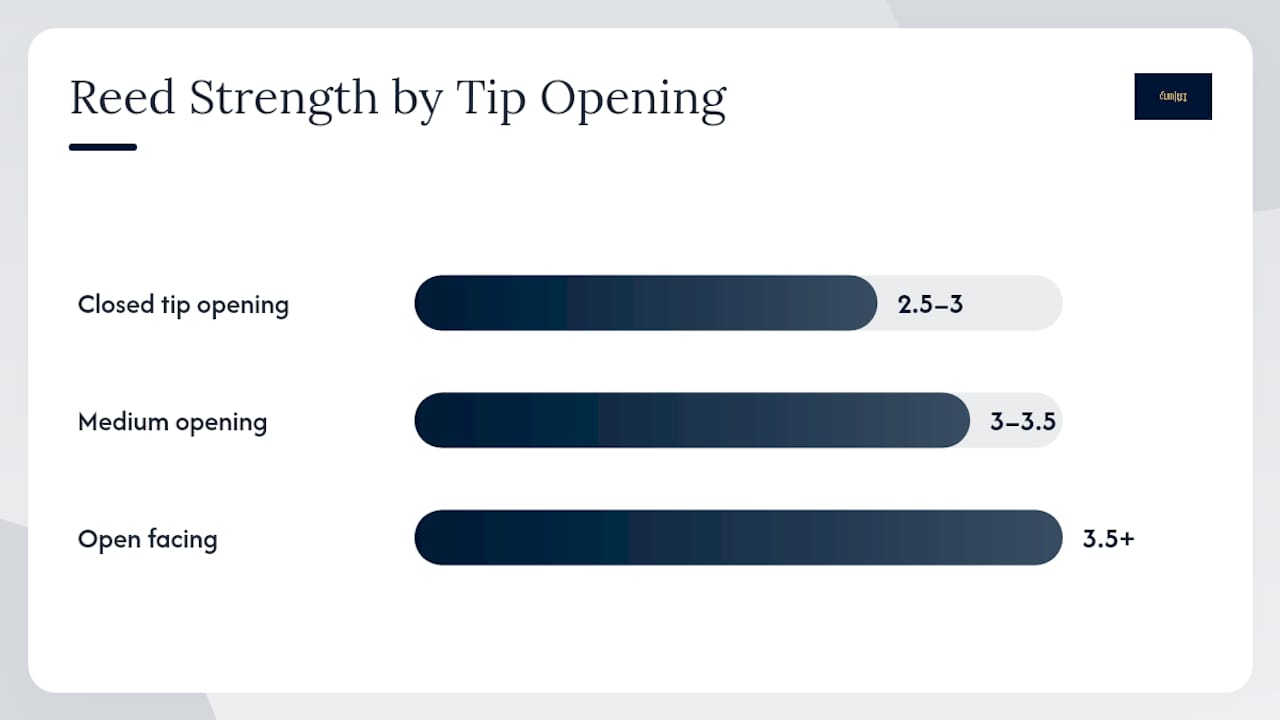
On reed pairing: closed tip openings generally pair well with softer reeds (strength 2.5–3), medium openings with 3–3.5, and more open facings with 3.5 and above. Ligature choice affects response too; a lighter ligature tends to free up the reed’s vibration and can make a slightly resistant mouthpiece feel more open.
If you’re still undecided after your full trial cycle, that’s useful information. An unresolved trade-off between two candidates usually means neither is a perfect fit. Contact Myclarinetstuff’s support team to discuss whether a different tip opening or material would serve you better before purchasing.
Who should use an at-home test box?
The test-box model fits three player types particularly well. Advancing students who have outgrown a beginner plastic mouthpiece and want to compare ebonite and synthetic options before spending on an upgrade. Educators selecting mouthpieces for a studio or ensemble, where consistency across multiple instruments matters. Professional players exploring a tonal shift or a different tip opening for a specific repertoire or recording project.
A test box is less suited to urgent situations. If you need a replacement mouthpiece before a performance next week, the trial timeline won’t work in your favor. Similarly, players who benefit most from in-person manufacturer fitting or teacher-guided store trials may find that a hands-on specialist session answers questions a home trial can’t. Those are valid paths too: a local woodwind specialist or a teacher who knows your embouchure well can offer real-time feedback that recordings don’t capture.
Key Takeaways
The Myclarinetstuff Gleichweit test box gives U.S. clarinetists a structured, hygienic way to compare CNC synthetic and ebonite mouthpieces at home across multiple practice sessions before buying.
| Point | Details |
|---|---|
| Prioritize dynamic control | Controlled pianissimo and fast-passage response reveal more about a mouthpiece than tone at full volume. |
| Use fresh reeds for every test | Reed shape bias skews comparisons; start each mouthpiece with a new reed of your standard strength. |
| Limit sessions to three mouthpieces | Testing more than three at once leads to choice overload and unreliable impressions. |
| Allow at least two full sessions per piece | A six-day cycle for three mouthpieces gives each candidate a fair, embouchure-settled evaluation. |
| Myclarinetstuff test box | Gleichweit USA LLC ships CNC synthetic and ebonite Bb and bass mouthpieces to U.S. players with a clear trial, hygiene, and return policy. |
What the test-box experience actually teaches you
Most clarinetists approach mouthpiece selection the wrong way. They focus on the first impression, the tone at forte in a bright room, and call it a decision. What a well-run home trial reveals is something more useful: how a mouthpiece behaves when you’re tired, when you’re playing softly in a concert hall acoustic, when you’re pushing through a fast clarinet run in the third hour of a rehearsal.
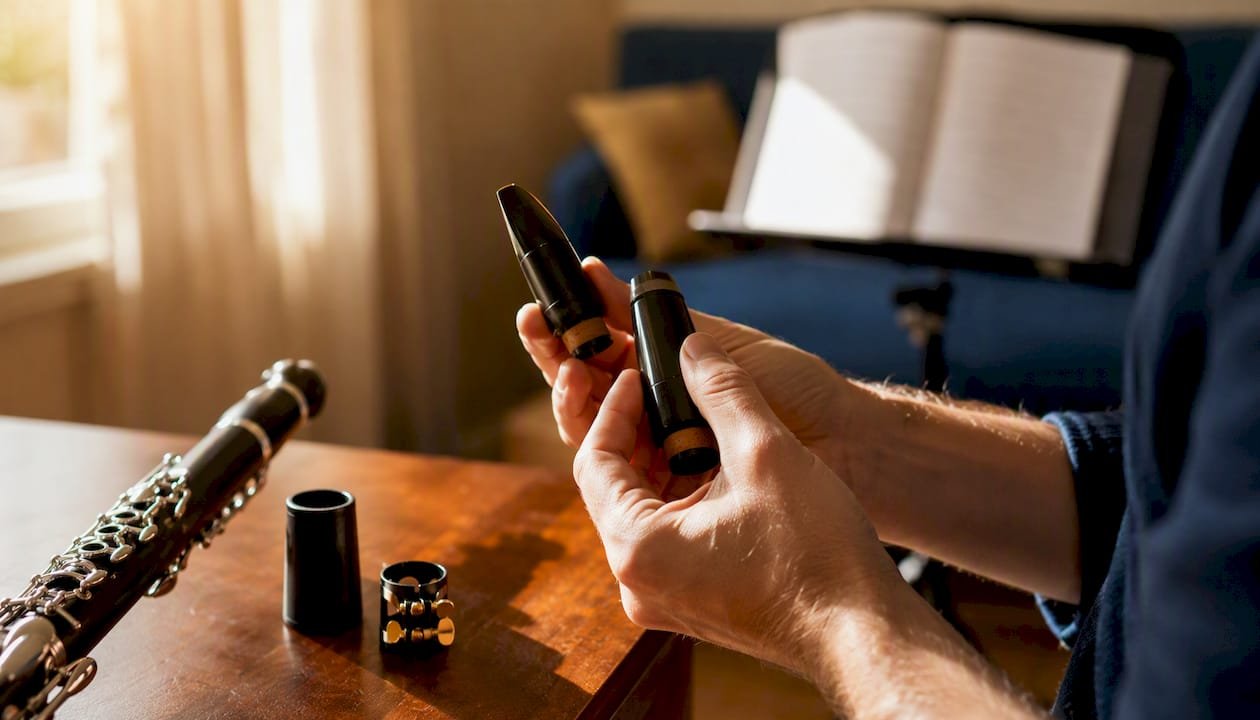
The Gleichweit CNC manufacturing process matters here in a specific way. Because each piece is machined to consistent tolerances rather than hand-finished, the differences you hear between tip openings in the test box are genuine design differences, not manufacturing variation. That makes your comparison data actually reliable. You’re not choosing between two mouthpieces that happen to have been finished differently on the same day; you’re choosing between two deliberate tonal profiles.
The test-box format also forces a discipline that most players skip: structured, repeated evaluation over time. That discipline is what separates a confident purchase from a regretted one.
Order the Myclarinetstuff / Gleichweit test box
Trying before buying is the smartest move you can make with a mouthpiece, and Myclarinetstuff makes that straightforward for U.S. players. The Gleichweit test box ships a curated selection of Bb and bass clarinet mouthpieces directly to your door, with sanitization instructions, ligature notes, and customer support included.
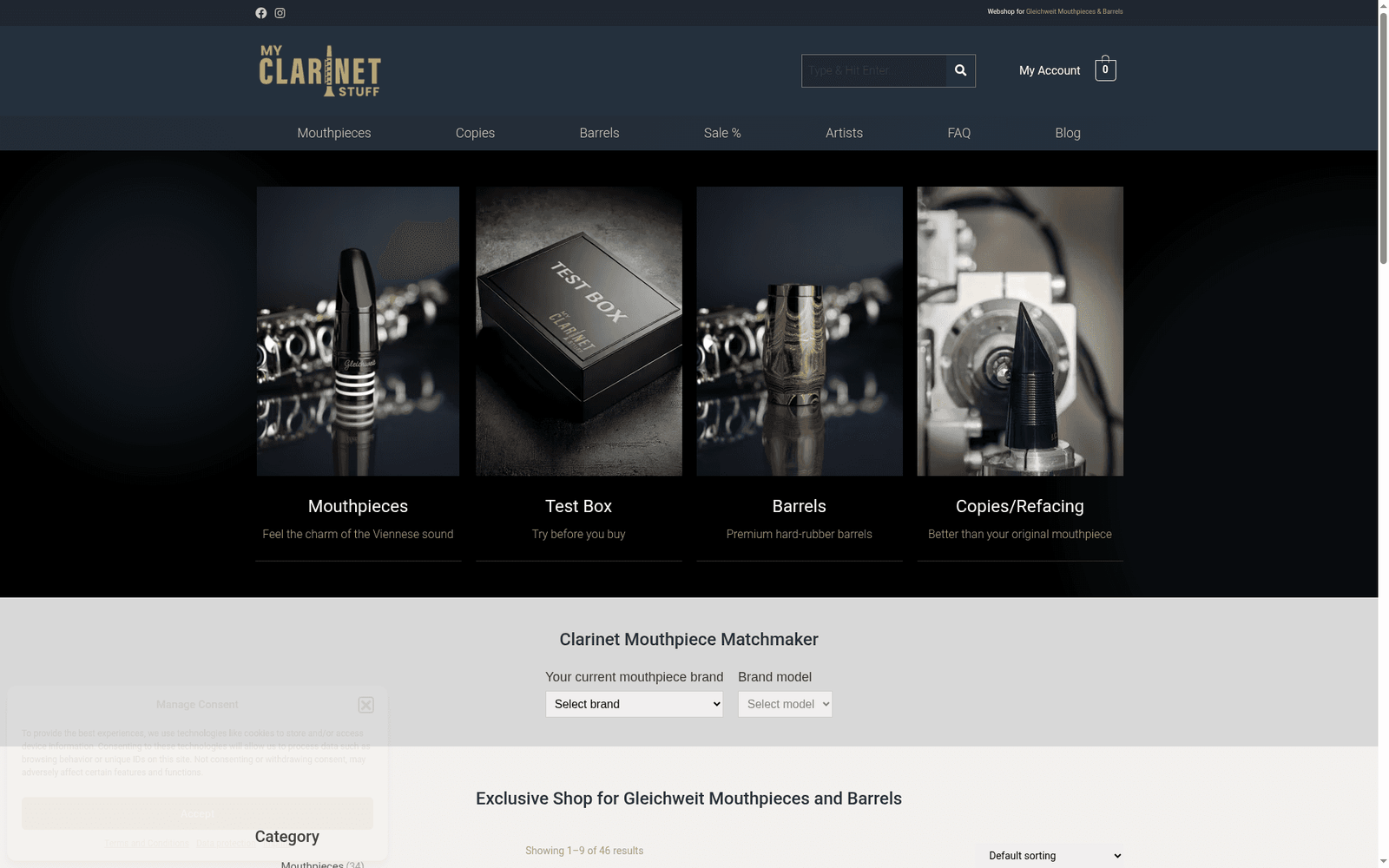
Start with the Clarinet Mouthpiece Matchmaker to identify the tip openings and materials most relevant to your playing style. Then visit the Gleichweit test box product page to select your box, complete the deposit or trial fee at checkout, and confirm current shipping times and return conditions before ordering. The support team is available to help you choose between tip openings if you’re uncertain. Prices, shipping estimates, and return windows are listed live on the site and should be verified at the time of ordering.
Primary sources and further reading
The following sources informed the testing guidance and evaluation criteria in this article:
- Clarinet Mouthpieces: How to Test | Dawkes Music — practical testing methodology, dynamic range criteria, and intonation checks.
- Here’s What to Look for When Buying a Clarinet Mouthpiece | Yamaha — tip-opening playability guidance for different player levels.
- Small but Mighty: A Guide to Clarinet Mouthpieces | Presto Music — material comparisons (CNC synthetic vs. ebonite) and tonal character.
- My Clarinet Stuff — Gleichweit test box program, product pages, Matchmaker tool, and FAQs for U.S. ordering.