
Most American clarinetists know that subtle equipment changes can drastically shape their signature sound. Whether you perform in a major orchestra, lead jazz sessions, or teach advanced students, finding mouthpieces and accessories that match your tone goals is never a one-size-fits-all process. With over 80 percent of professional players regularly customizing gear for performance, mastering your selection strategy matters. This guide highlights smart ways to assess, compare, and refine your clarinet setup so every note truly reflects your artistry.
Table of Contents
- Step 1: Assess Your Clarinet Sound Goals
- Step 2: Gather Essential Clarinet Equipment Options
- Step 3: Compare Mouthpieces, Barrels, And Accessories
- Step 4: Test Selected Components For Tonal Quality
- Step 5: Verify Comfort And Personalization Fit
- Step 6: Finalize Choices For Consistent Performance
Quick Summary
| Key Takeaway | Explanation |
|---|---|
| 1. Define Your Sound Goals | Identify the tonal qualities you want, such as warmth for classical or brightness for jazz. |
| 2. Prioritize Quality Equipment | Focus on high-quality tools that enhance your sound production, rather than acquiring many lower-quality items. |
| 3. Systematically Compare Components | Evaluate mouthpieces, barrels, and accessories based on their impact on sound quality and compatibility with your style. |
| 4. Test Components for Tonal Quality | Use both subjective listening and objective analysis to assess how each component affects your sound. |
| 5. Document Your Equipment Choices | Keep detailed notes on your equipment selection and its impact on comfort and performance for future reference. |
Step 1: Assess your clarinet sound goals
Defining your clarinet sound goals requires a strategic approach rooted in understanding your musical aspirations and technical capabilities. Professional musicians and serious amateurs recognize that sound quality emerges from precise interactions between equipment, technique, and personal artistic vision. Acoustic analysis techniques provide objective methods for evaluating sound characteristics like attack slope, spectral centroid, and sonic consistency.
To assess your clarinet sound goals effectively, begin by identifying the specific tonal qualities you want to achieve. Are you seeking a warm, rounded tone for classical performance? A crisp, bright sound for jazz improvisation? A neutral timbre suitable for orchestral ensemble playing? Each musical context demands unique sonic parameters. Consider recording yourself playing different pieces and critically analyzing the playback. Listen for aspects like pitch stability, tonal warmth, dynamic range, and overall projection. Pay attention to how your current equipment supports or limits your desired sound.
The process of sound goal assessment is inherently personal yet technical. Professional clarinetists often work with acoustic specialists or experienced mentors to refine their understanding of sound production. By combining subjective artistic preferences with objective measurement techniques, you can develop a clear roadmap for equipment selection and technical improvement.
Pro Tip: Keep a detailed sound journal documenting your practice sessions, noting specific tone qualities and equipment interactions to track your sonic development over time.
Here is a summary of common clarinet sound goals and their musical impact:
| Sound Goal | Musical Context | Key Impact on Performance |
|---|---|---|
| Warm, rounded tone | Classical solo | Enhances lyrical phrasing |
| Bright, crisp sound | Jazz improvisation | Improves clarity for solos |
| Neutral timbre | Orchestral ensemble | Blends with section, avoids extremes |
| Powerful projection | Marching band | Maximizes audibility outdoors |
Step 2: Gather essential clarinet equipment options
Preparing your clarinet equipment toolkit involves strategic selection of components that support your unique sound goals and performance requirements. Professional reedmaking equipment plays a critical role in customizing your instrument’s sonic capabilities. Understanding the essential tools will help you build a comprehensive setup that enhances your musical expression.
Your equipment collection should include fundamental items across several categories. For precision reed preparation, consider acquiring tools like cane splitters, planers, and measuring instruments that allow fine tuning of reed characteristics. Maintenance accessories are equally important check out the comprehensive guide to clarinet performance accessories to understand the full range of necessary items. Focus on acquiring high quality cork grease, key oil, cleaning materials, and specialized maintenance tools that protect your instrument and optimize its performance potential.
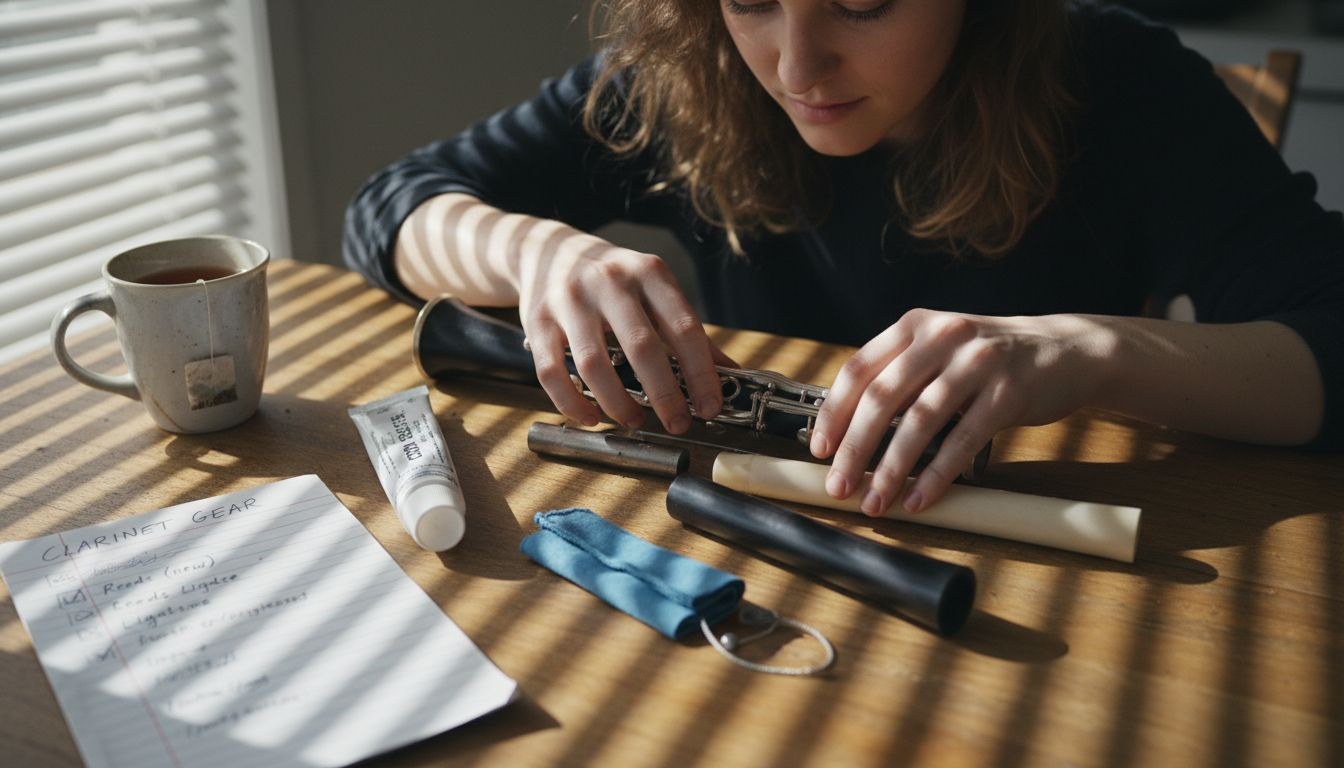
When gathering equipment, prioritize quality over quantity. Research specific tools that align with your musical style and technical skill level. Professional clarinetists often recommend investing in versatile, durable equipment that can adapt to different performance contexts. Consider consulting with experienced musicians or acoustic specialists to refine your equipment selection strategy.
Pro Tip: Create a personalized equipment checklist that categorizes tools by their specific function and frequency of use to streamline your maintenance and preparation process.
Step 3: Compare mouthpieces, barrels, and accessories
Comparing clarinet accessories requires a systematic approach that evaluates each component’s potential impact on your overall sound quality. Comprehensive mouthpiece analysis reveals critical factors musicians must consider during their selection process, including material composition, tip size, and reed compatibility.
When examining mouthpieces, focus on understanding how different materials like hard rubber, plastic, and crystal influence tonal characteristics. Professional clarinet equipment resources suggest that barrel design and ligature selection are equally important in shaping your instrument’s sonic profile. Pay close attention to how each accessory interacts with your specific clarinet model and playing style. Consider factors such as tip opening, chamber design, and material density that directly impact sound projection, response, and tonal warmth.
Professional clarinetists recommend creating a systematic comparison framework. Test multiple mouthpieces and accessories side by side, recording your playing to objectively analyze subtle differences. Evaluate each component’s performance across various musical contexts from classical orchestral pieces to jazz improvisation. Remember that the perfect combination of accessories is deeply personal and requires patient experimentation.
Use this comparison to understand how mouthpiece materials alter clarinet sound:
| Material | Tonal Characteristic | Durability Level | Typical Price Range |
|---|---|---|---|
| Hard rubber | Warm, rich, flexible | High | Moderate to high |
| Plastic | Bright, consistent | Moderate | Budget friendly |
| Crystal | Brilliant, focused | Fragile | Premium |
Pro Tip: Create a detailed scoring system that rates each mouthpiece and accessory across multiple performance criteria to facilitate objective comparison.
Step 4: Test selected components for tonal quality
Testing clarinet components demands a strategic approach that blends subjective listening with objective acoustic analysis. Comprehensive tonal evaluation methods provide musicians with scientific techniques to assess sound characteristics beyond mere intuition, focusing on precise acoustic parameters like attack slope, spectral centroid, and sonic flux.
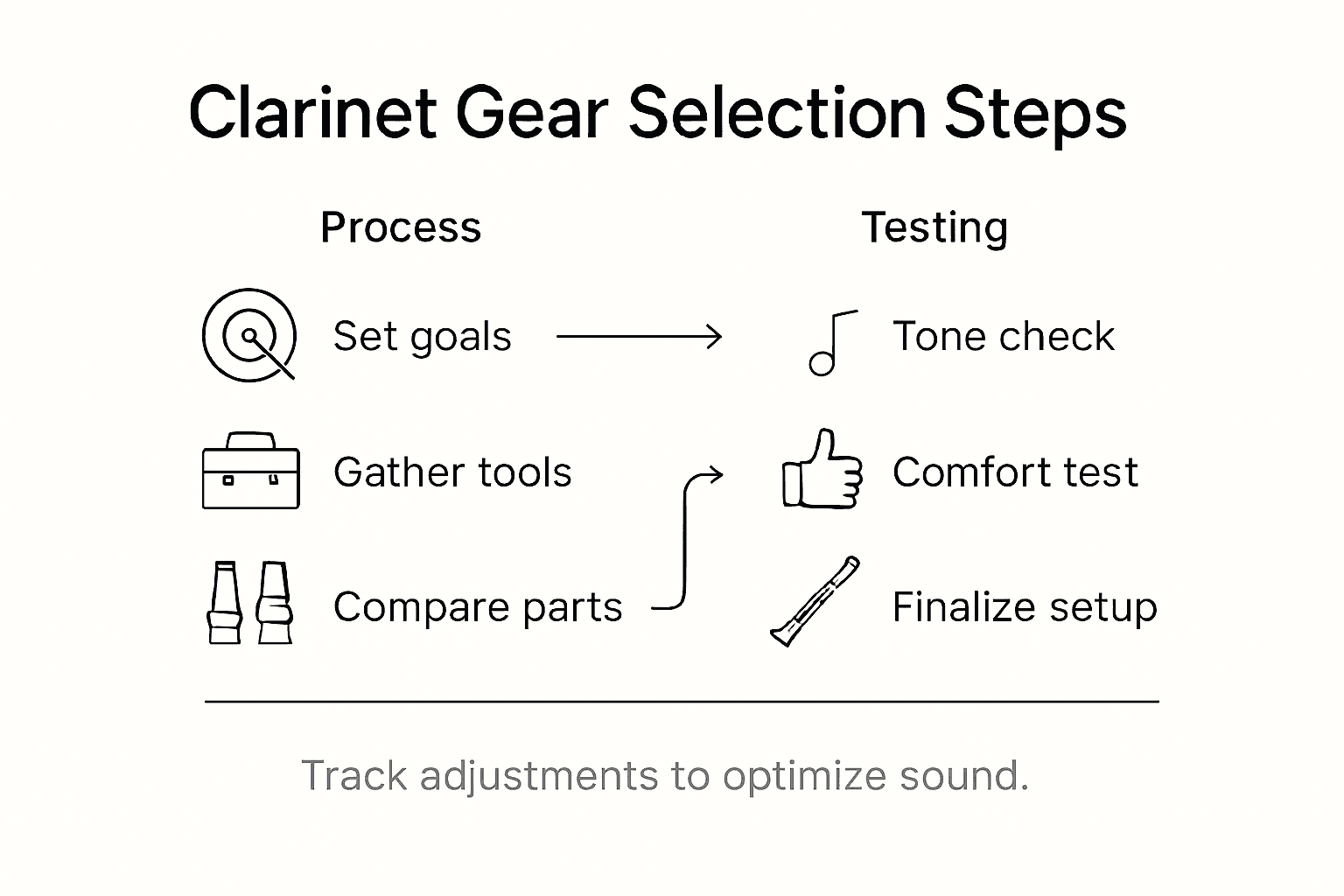
The testing process involves multiple stages of critical evaluation. Clarinet acoustic principles reveal that tonal quality emerges from complex interactions between the mouthpiece reed system, instrument bore, and resonator properties. Set up a controlled testing environment with high quality recording equipment to capture nuanced sound variations. Play consistent musical passages across different components, paying attention to subtle changes in tone projection, warmth, responsiveness, and overall sonic character. Record these performances to enable detailed comparative analysis.
Professional musicians recommend developing a structured assessment framework that goes beyond simple subjective impressions. Create a scoring system that rates each component across multiple dimensions such as tonal clarity, dynamic range, articulation precision, and ensemble compatibility. Consider testing components in various acoustic environments and musical contexts to understand their full performance potential.
Pro Tip: Use calibrated microphones and spectral analysis software to transform your subjective listening into quantifiable acoustic measurements.
Step 5: Verify comfort and personalization fit
Ensuring optimal clarinet equipment comfort requires a meticulous approach that addresses both physical ergonomics and personal playing characteristics. Instrument maintenance and repair guidelines emphasize the critical importance of tailoring equipment to prevent fatigue and potential playing injuries.
Clarinet performance ergonomics reveal that comfort extends far beyond simple physical adjustment. Focus on evaluating how each component interacts with your unique physiology and playing style. Check mouthpiece dimensions against your embouchure shape, assess cork and padding for precise mechanical fit, and experiment with different positioning angles. Pay attention to subtle sensations during extended playing sessions such as jaw tension, lip fatigue, and overall muscular comfort. A perfectly fitted instrument should feel like a natural extension of your body rather than an external object.
Professional musicians recommend conducting comprehensive comfort tests that simulate real performance scenarios. Practice extended passages in multiple positions, record your physical responses, and make incremental adjustments. Consider consulting with acoustic specialists or experienced clarinetists who can provide personalized insights into equipment customization.
Pro Tip: Document your equipment fit assessment with detailed notes and photographs to track subtle adjustments and their impact on playing comfort.
Step 6: Finalize choices for consistent performance
Finalizing your clarinet equipment selection requires a systematic approach that integrates technical precision with musical artistry. Clarinet performance fundamentals emphasize the critical connection between equipment choices and consistent technical execution across key areas like air control, intonation, and articulation.
Professional performance strategies highlight the importance of establishing a reliable setup that supports your unique playing style. Create a structured evaluation process that goes beyond initial impressions. Schedule multiple practice sessions with your selected equipment, focusing on how each component contributes to your overall sound and technical capabilities. Assess consistency in tone production, dynamic range, and technical responsiveness across different musical contexts and playing techniques. Pay close attention to how your chosen components interact harmoniously to support your musical goals.
Professional musicians recommend implementing a deliberate performance validation process. Record yourself playing complex passages that challenge different technical aspects of your instrument. Analyze these recordings critically, looking for nuanced improvements in sound quality, technical stability, and overall musical expression. Be prepared to make minor adjustments or potentially reconsider components that do not fully support your performance objectives.
Pro Tip: Create a detailed performance log that tracks equipment performance metrics across multiple practice and performance scenarios to objectively validate your final selections.
Unlock Your Ideal Clarinet Sound with Expert Equipment Choices
Navigating the complex clarinet equipment selection process can feel overwhelming when seeking that perfect tone, projection, and comfort. The article highlights key challenges like identifying your unique sound goals, comparing mouthpiece materials, and rigorously testing components for tonal quality and fit. At My Clarinet Stuff, we understand the critical importance of aligning professional-grade mouthpieces, barrels, and accessories with your personal playing style to achieve consistent and expressive performances.

Explore our curated collection rooted in the Viennese sound tradition to find specialized gear crafted for serious musicians and amateurs alike. Whether you are aiming for a warm, rounded tone or bright, crisp clarity, our customizable options and personalized consultations empower you to take control of your sound development. Don’t wait to transform your clarinet experience. Visit My Clarinet Stuff today, and let us help you finalize your equipment choices with confidence. Discover how precision-crafted clarinet accessories can elevate your performance and bring your musical aspirations to life.
Frequently Asked Questions
How can I assess my clarinet sound goals effectively?
To effectively assess your clarinet sound goals, start by identifying the specific tonal qualities you want to achieve, such as a warm tone for classical music or a bright sound for jazz. Record yourself playing different pieces, then listen critically to the playback to evaluate aspects like pitch stability and dynamic range.
What essential items should I gather for my clarinet equipment toolkit?
Gather essential items such as precision reed preparation tools, high-quality cork grease, and maintenance accessories. Consider creating a categorized checklist to streamline your preparation process and ensure you have all necessary components.
How do I compare mouthpieces, barrels, and accessories for my clarinet?
To compare mouthpieces, barrels, and accessories, focus on factors like material composition, tip size, and reed compatibility. Test multiple components side by side, recording your playing to objectively evaluate differences in tonal quality and responsiveness.
What methods should I use to test clarinet components for tonal quality?
Test clarinet components by setting up a controlled environment and using quality recording equipment to capture sound variations. Play consistent musical passages with different components, then analyze recordings to assess tonal clarity and dynamic range objectively.
How do I ensure optimal comfort with my clarinet equipment?
To ensure optimal comfort, evaluate how each component fits with your unique physical characteristics and playing style. Experiment with adjustments while practicing extended passages, and document your physical responses to identify any areas that may need further customization.
What steps can I take to finalize my clarinet equipment choices?
Finalize your equipment choices by scheduling multiple practice sessions with your selected components to assess overall sound and technical execution. Create a performance log to track equipment performance metrics and make necessary adjustments to enhance your playing experience.