
Finding the perfect clarinet setup can challenge even seasoned American players striving for expressive sound in both classical and jazz. The right mouthpiece does more than improve tone, it can reduce strain and unlock artistic nuance, helping musicians navigate demanding scores. With over 90 percent of top professionals regularly adjusting their gear for optimal playability, understanding technical factors is essential for clarinetists seeking comfort, control, and a truly personalized sound.
Table of Contents
- What Clarinet Playability Really Means
- Variable Factors Impacting Playability
- Mouthpieces, Barrels, and Accessories Explained
- How Playability Affects Performance
- Choosing Setup for Optimal Comfort and Tone
Key Takeaways
| Point | Details |
|---|---|
| Understanding Playability | Clarinet playability encompasses the interaction between the musician and their instrument, affecting sound quality and performance comfort. |
| Impact of Equipment Adjustments | Proper setup of mouthpieces, reeds, and other components is essential for minimizing physical strain and maximizing artistic expression. |
| Personalization in Setup | Each musician should systematically experiment with their clarinet setup to find configurations that enhance comfort, tone quality, and performance effectiveness. |
| Regular Assessment Importance | Frequent evaluations of equipment compatibility can lead to significant improvements in playability and overall performance satisfaction. |
What Clarinet Playability Really Means
Clarinet playability represents the seamless interaction between a musician and their instrument, where technical equipment and performance technique converge to produce exceptional sound quality. At its core, playability goes beyond mere instrument functionality and delves into how equipment enables musicians to perform with minimal physical strain and maximum artistic expression.
True playability emerges from a complex interplay of factors, including instrument setup, mouthpiece characteristics, and the musician’s technical proficiency. Efficient vibration fundamentals depend critically on equipment condition and precise adjustments. When a clarinet is properly configured, musicians can achieve resonance with less physical effort, reducing tension in the hands, throat, and embouchure while maintaining superior tone production.
The primary components of clarinet playability include air control, finger motion, hand positioning, intonation, and articulation. Professional musicians understand that these technical elements are interconnected, requiring systematic development through targeted practice. Mastering long tones, scales, arpeggios, and articulation exercises allows musicians to expand their technical capabilities and minimize performance limitations.
Pro tip: Regularly assess your clarinet’s setup and equipment compatibility to ensure optimal playability, as even minor adjustments can significantly improve your overall performance comfort and sound quality.
Variable Factors Impacting Playability
Clarinet playability is a nuanced performance attribute influenced by multiple interconnected variables that extend far beyond simple instrument mechanics. Musicians must carefully consider each component’s potential impact on overall sound production, comfort, and technical execution. Playability maps created through physical modeling demonstrate how complex these interactions can become.
The primary variable factors include instrument adjustment, reed characteristics, mouthpiece configuration, and player technique. Precise sealing of pinky keys, proper ligature alignment, and optimal reed strength matching become critical determinants of performance quality. Professional clarinetists understand that even minor equipment misalignments can introduce significant tension, potentially compromising tone production and causing physical discomfort during extended playing sessions.
Specifically, reed selection represents a crucial variable influencing playability. Different reed strengths interact uniquely with mouthpiece openings, creating distinct response characteristics. Advanced musicians systematically experiment with various reed and mouthpiece combinations, understanding that individual playing styles demand personalized equipment configurations. Factors like blowing pressure, reed stiffness, and embouchure control dynamically intersect to define the instrument’s responsive range and sound quality.
Pro tip: Create a detailed equipment log tracking your reed, mouthpiece, and instrument adjustments to systematically identify your optimal playability configuration.
Mouthpieces, Barrels, and Accessories Explained
Clarinetists understand that every component of their instrument contributes to its overall performance and sound quality. Mouthpiece-reed systems generate essential sound production through complex interactions of air pressure and vibration, making each accessory a critical element in musical expression.
Mouthpiece materials play a significant role in defining instrument characteristics. Manufacturers craft these essential components from diverse materials including wood, hard rubber, plastic, glass, ceramic, and metal. Each material introduces subtle variations in tone, resonance, and playability. Critical dimensions like tip opening, facing curve, and baffle shape fundamentally influence the clarinet’s sound, allowing musicians to fine-tune their unique sonic signature.
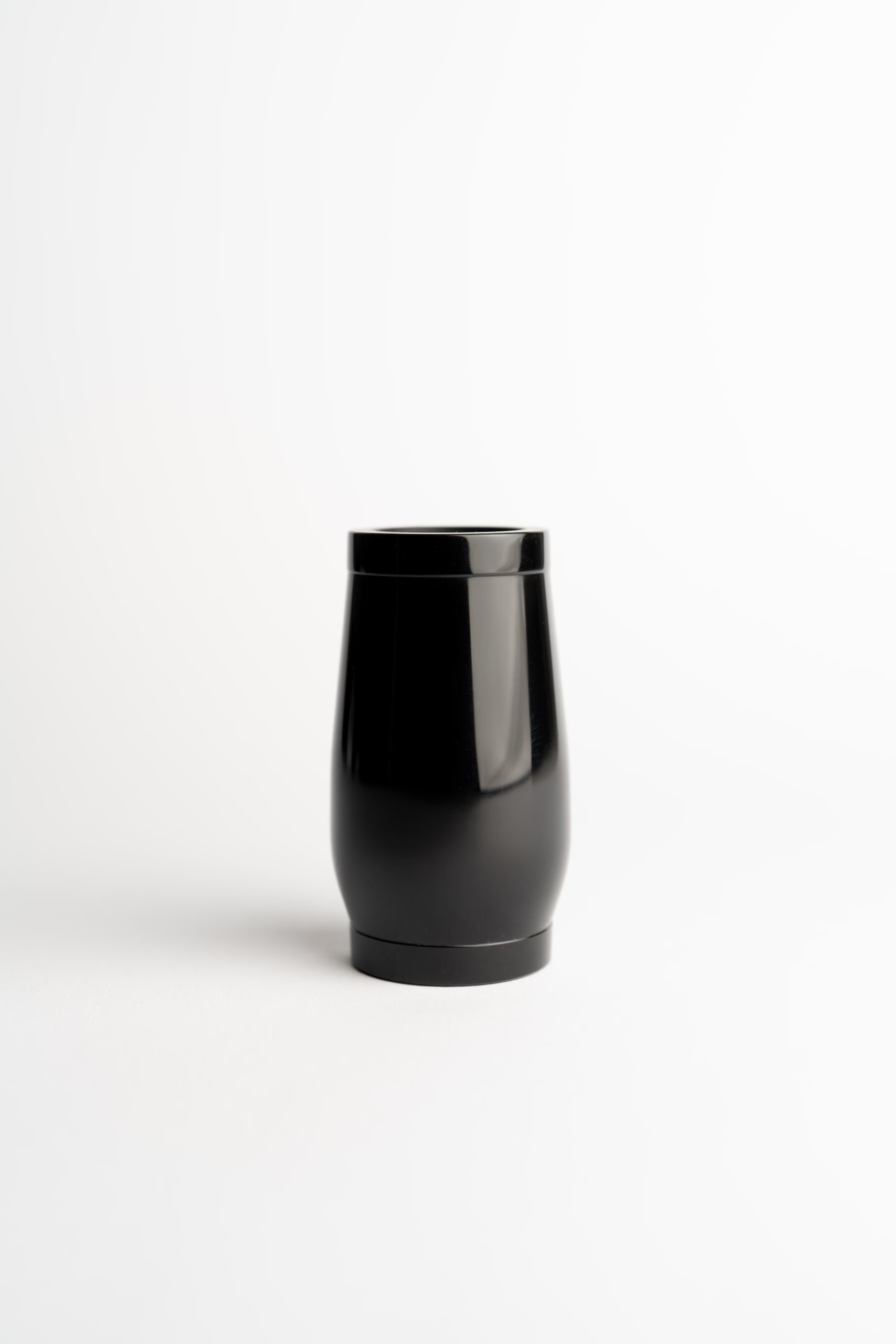
Accessories such as barrels and ligatures might seem minor, but they dramatically impact performance. Barrels modify the instrument’s air column length, enabling precise tuning adjustments and tonal modifications. Ligatures, which secure the reed to the mouthpiece, directly influence reed vibration characteristics, thereby affecting response, articulation, and overall sound quality. Professional musicians meticulously select and adjust these components to achieve optimal instrument performance.
Here’s a comparison of how key clarinet accessories influence playability attributes:
| Accessory | Influences | Typical Adjustment Benefits |
|---|---|---|
| Mouthpiece | Tone, response, flexibility | Enhances clarity or warmth |
| Barrel | Intonation, tonal color | Refines tuning, depth of sound |
| Ligature | Reed vibration, articulation | Improves attack and reed response |
| Reed Selection | Resistance, dynamic range | Balances flexibility and stability |
Pro tip: Experiment systematically with different mouthpiece materials and ligature configurations to discover the unique sound profile that best matches your playing style.
How Playability Affects Performance
Clarinetists understand that playability directly translates into performance quality, influencing every aspect of musical expression. Playability maps demonstrate critical performance parameters that reveal how precise equipment configuration impacts sound production and musical dynamics.
Physical strain represents a significant consequence of poor playability. Ill-fitting equipment or improper setup can introduce unintended muscular tension, compromising a musician’s ability to produce consistent, high-quality sound. Professional musicians recognize that optimal playability requires careful attention to instrument configuration, reducing unnecessary physical effort and allowing more nuanced musical interpretation.
The relationship between playability and performance extends beyond physical comfort. Musicians must navigate complex interactions between blowing pressure, reed stiffness, and instrument response. Selecting equipment that minimizes resistance while maximizing tonal control enables performers to express musical intentions with greater precision. Advanced clarinetists systematically experiment with different setups, understanding that subtle adjustments can dramatically transform their ability to communicate through music.
Pro tip: Develop a systematic equipment evaluation process that assesses not just sound quality, but also physical comfort and performance sustainability.
Choosing Setup for Optimal Comfort and Tone
Clarinetists know that finding the perfect instrument setup requires careful, systematic experimentation. Proper equipment configuration supports long-term performance health by minimizing physical strain and maximizing musical potential.
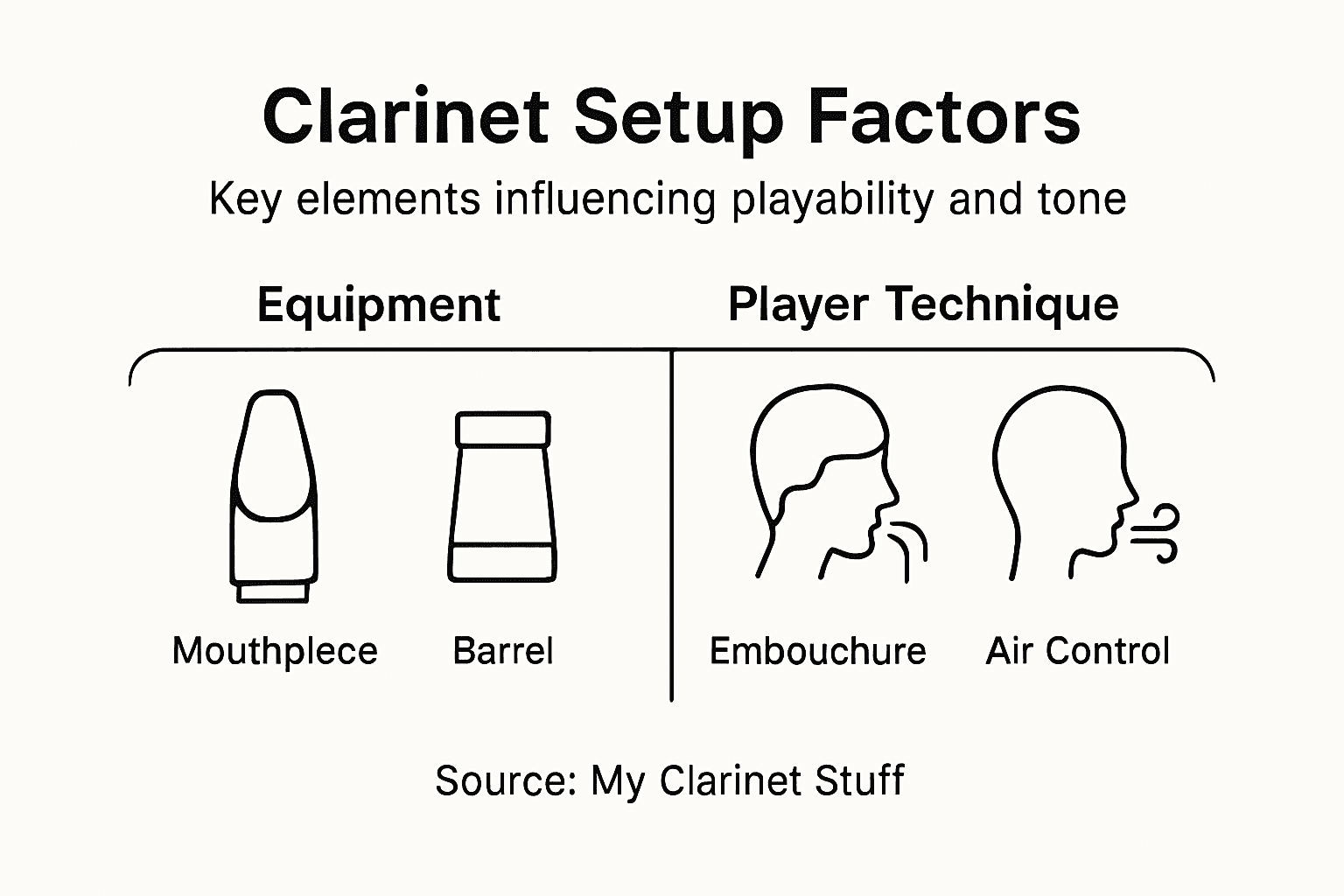
Each component of the clarinet setup plays a critical role in overall performance. The embouchure, mouthpiece angle, reed selection, and instrument positioning must work together harmoniously to create optimal sound production. Professional musicians understand that seemingly minor adjustments can dramatically transform tone quality, intonation, and playing comfort. Careful attention to details like reed hardness, ligature symmetry, and key seal can reduce unnecessary muscular tension and improve musical expression.
Selecting the right setup is a personal journey that combines technical knowledge with individual physical characteristics. Advanced players develop nuanced approaches to equipment selection, understanding that no single configuration works universally. Factors such as hand size, mouth shape, breathing technique, and musical genre all influence the ideal clarinet setup. Systematic experimentation, guidance from experienced teachers, and a willingness to make incremental adjustments are key to discovering a setup that feels natural and sounds exceptional.
This summary outlines key factors to consider when experimenting with clarinet setups:
| Factor | Personalization Impact | Common Variables |
|---|---|---|
| Embouchure Technique | Affects comfort and flexibility | Jaw shape, lip pressure |
| Mouthpiece Angle | Alters airflow and response | Instrument position, neck angle |
| Reed Strength | Modifies resistance and tone | Player’s breath support |
| Ligature Placement | Impacts articulation and resonance | Material, tightness |
Pro tip: Create a detailed equipment log documenting each setup variation, noting changes in comfort, tone quality, and overall playing experience to track your progress and discoveries.
Elevate Your Clarinet Playability with Expertly Crafted Equipment
Understanding how equipment transforms your clarinet’s sound and comfort is just the first step toward mastering your instrument. If you have struggled with finding the perfect mouthpiece or barrel that matches your unique playing style and reduces physical strain, you are not alone. As the article highlights, even small adjustments in setup can dramatically impact tone, response, and overall playability.

At My Clarinet Stuff, we specialize in high-quality clarinet accessories designed to unlock your full musical potential. Our carefully curated selection includes professional-grade Gleichweit mouthpieces, barrels, and custom components crafted with a dedication to the Viennese sound tradition. Whether you want to experiment with different reed and mouthpiece combinations or need personalized consultations to find your ideal setup, we provide tools that help you achieve superior tone and effortless playability. Don’t let equipment limitations hold back your artistry. Explore our collection today and discover how the right gear can transform both your comfort and sound.
Visit our product catalog and start your journey to optimal clarinet playability now.
Frequently Asked Questions
What does clarinet playability mean?
Clarinet playability refers to how well the instrument allows a musician to perform with ease, reducing physical strain and enabling artistic expression through factors like instrument setup, mouthpiece characteristics, and the musician’s technical proficiency.
How do mouthpieces affect the playability of a clarinet?
Mouthpieces influence tone, response, and flexibility by affecting air pressure and vibration characteristics. Different materials and dimensions of mouthpieces can significantly alter the performance and sound quality of the clarinet.
Why is reed selection important for clarinet playability?
Reed selection is crucial because different strengths and types of reeds interact uniquely with mouthpiece openings, impacting response, resistance, and overall sound quality. Proper reed selection ensures that musicians can achieve optimal performance based on their individual playing style.
How can I systematically improve my clarinet setup for better playability?
To improve your clarinet setup, regularly assess equipment compatibility and make adjustments. Keep a detailed log of your reed, mouthpiece, and instrument settings, and experiment with different configurations to identify the optimal setup for comfort and sound quality.
Recommended
- Repairs – My Clarinet Stuff
- Clarinet Mouthpiece Refacing Explained: Complete Guide – My Clarinet Stuff
- Clarinet Mouthpiece History: The Essential Guide – My Clarinet Stuff
- When to Replace Your Clarinet Mouthpiece
- Enhancing Engagement Through Audio: The Role of Music and Sound in Playable Ads – playablemaker.com Enhancing Engagement Through Audio: The Role of Music and Sound in Playable Ads