


Start with Mozart’s Clarinet Concerto in A major, K.622, then move to Weber’s concertos, Brahms’s clarinet sonatas, and Copland’s Clarinet Concerto for the classical foundation. On the jazz side, Benny Goodman’s Carnegie Hall concert, Buddy DeFranco’s postwar recordings, Artie Shaw’s “Begin the Beguine,” and Sidney Bechet’s early New Orleans sides round out this iconic clarinet recordings list. Each entry below explains why it still matters and what to listen for.
TL;DR:
- Most iconic clarinet recordings since Mozart focus on tone, phrasing, and technical control, making them essential practice references rather than mere historical artifacts.
- Listening for vibrato variations and style differences between jazz and classical performances enhances interpretive flexibility and technical awareness.
- Comparing early recordings with contemporary performances reveals shifts in vibrato, tempo, and phrasing styles that influence stylistic choices.
- Choosing the right mouthpiece and equipment is crucial to replicate the tone and response of these benchmark recordings accurately.
- Studying recordings from specific artists across genres, such as Goodman, DeFranco, and Cohen, provides targeted insights into stylistic techniques and genre blending.
Table of Contents
- The Shortlist: Iconic Clarinet Recordings Worth Studying
- How to Actually Listen and Study These Recordings
- Why These Recordings Became the Standard
- Further Listening by Style
- Why This List Looks the Way It Does
- Matching Your Sound to the Recordings You Study
- Sources
The Shortlist: Iconic Clarinet Recordings Worth Studying
This is the core of any serious clarinet listening education, split evenly between the concert hall and the bandstand. We picked recordings that reward repeated listening, not just historical trivia.
Mozart, Clarinet Concerto in A major, K.622. Thea King’s recording on the basset clarinet restores notes Mozart wrote for an instrument that barely survived him, and it remains a benchmark alongside historically favored performances from Jack Brymer and Reginald Kell. Listen closely to the second movement Adagio. Notice how little vibrato King uses and how the phrasing breathes instead of pushing forward.
Copland, Clarinet Concerto. Benny Goodman commissioned the piece and gave its early performances, including a 1950 broadcast with Fritz Reiner and the NBC Symphony that still circulates in archives. The jazz inflected second half is the reason to hear this recording. Goodman treats the syncopation like it was written for him, because in some sense it was.
Weber, Clarinet Concertos Nos. 1 and 2. Weber wrote idiomatically for the clarinet in ways Mozart’s generation never attempted, and period-informed recordings capture the instrument’s full range of color, confirmed by recorded documentation of major orchestral releases. Study the first concerto’s finale for its rapid arpeggios and staccato control.
Brahms, Clarinet Sonatas Op. 120. Written late in Brahms’s life for clarinetist Richard Mühlfeld, these sonatas demand a dark, covered tone and enormous legato control. Use the first sonata’s opening movement to study how a clarinetist matches a piano’s dynamic shading without losing warmth.
Benny Goodman, Carnegie Hall Concert (1938). This concert is often cited as the moment jazz earned a permanent seat in American concert halls, and Goodman’s clarinet work throughout is a masterclass in swing articulation. “Sing, Sing, Sing” is the obvious highlight, but the quieter trio numbers reveal more about his tone control.
Buddy DeFranco, various postwar recordings. DeFranco pushed bebop harmony onto an instrument that had mostly stayed in swing, and his collaborations remain essential listening for anyone studying jazz clarinet technique, a point jazz historians and the ICA committee both make. His fast passages show remarkable finger independence at tempos most players avoid entirely.
Artie Shaw, “Begin the Beguine.” Shaw’s 1938 recording turned a forgotten Cole Porter tune into a hit and showcased a cleaner, more legato style than Goodman’s. Compare the two clarinetists back to back and the stylistic differences become obvious within seconds.
Sidney Bechet, early New Orleans recordings. Bechet actually played more soprano saxophone later in his career, but his early clarinet work defined New Orleans jazz phrasing before swing existed. His vibrato is wider and more vocal than anything that came after him.
Richard Stoltzman, various chamber and crossover recordings. Stoltzman built a career bridging classical technique and jazz-influenced phrasing, making his recordings useful for players who want to hear both worlds from a single artist.
Anat Cohen, contemporary jazz and world-music recordings. Cohen’s work draws on Brazilian and Middle Eastern traditions alongside jazz, and the ICA’s jazz committee recommends her recordings as a modern entry point.
Martin Fröst, Mozart K.622 and contemporary repertoire. Fröst’s technical precision and willingness to take interpretive risks make his recordings a useful contrast to older, more restrained versions of the same repertoire.
Thea King, Weber and chamber repertoire. King’s discography spans concertos and chamber works, giving listeners a single artist’s voice across multiple genres within the classical tradition.
How to Actually Listen and Study These Recordings
Passive listening only gets you so far. Try these targeted exercises:
- Articulation: Isolate one phrase and count how many notes are tongued versus slurred, then mark it on your score.
- Phrase shaping: Track where the dynamic peak falls in a phrase. It’s rarely on the highest note.
- Tone center: Listen for where the sound seems to “live” (bright and forward, or dark and covered) and try matching it on a long tone.
- Air support: Watch for moments where the tone thins under pressure. That’s usually a breath management issue you can practice separately.
Annotate your score in pencil as you listen, marking breath points, dynamic shifts, and tempo changes you didn’t expect.
Pro Tip: Compare a historic recording (Kell, Brymer, early Goodman) against a modern one of the same piece. The differences in vibrato, tempo, and rubato reveal how interpretive fashion has shifted, and hearing both extremes sharpens your own musical decision-making.
Why These Recordings Became the Standard
Goodman’s role runs deeper than most listeners realize. He didn’t just play swing; he personally pushed for Copland to write him a concerto, then premiered it, blending classical commissioning with jazz-era celebrity in a way no clarinetist had managed before. That dual identity, credited with bringing jazz clarinet into the American mainstream, is why teachers still assign his recordings across both genres.
The International Clarinet Association’s jazz and global music committee has published curated recommendation lists naming DeFranco, Goodman, and Cohen as essential listening, a rare case of a professional association formally endorsing specific recordings rather than general repertoire.
Recordings like these become teaching models because they’re consistent reference points. When two teachers can both say “listen to the Brahms Op. 120 slow movement,” they’re relying on a shared canon that took decades to settle.
Further Listening by Style
Once you’ve worked through the core shortlist, branch into specific substyles:
- Classical concerto: Sabine Meyer’s Weber recordings for their clean articulation and rhythmic precision.
- Chamber music: The Brahms Clarinet Quintet Op. 115 for a different texture than the sonatas.
- Orchestral excerpts: Tchaikovsky’s Symphony No. 6, second movement, for exposed lyrical clarinet writing.
- Jazz solo/album: Buddy DeFranco’s collaborations for bebop-inflected clarinet lines rarely attempted elsewhere.
- World/traditional: Klezmer clarinet recordings for the vocal-style bends and cries absent from classical technique.
For deeper artist bios, our jazz clarinetist profiles go further into DeFranco, Shaw, and Bechet’s careers.
Why This List Looks the Way It Does
We built this shortlist around recordings that teach something specific, not just historically famous names. Use it as a listening curriculum: work through each entry, mark what you notice, then apply it to your own playing. For more essential picks, see our broader collection of iconic clarinet solos.
— Milos
Matching Your Sound to the Recordings You Study
Trying to chase Goodman’s bite or King’s warmth on the wrong mouthpiece is like practicing scales on an out-of-tune piano. It’s mostly wasted effort. Choosing a mouthpiece carefully can help achieve consistent, repeatable results session after session, avoiding guesswork through many options.
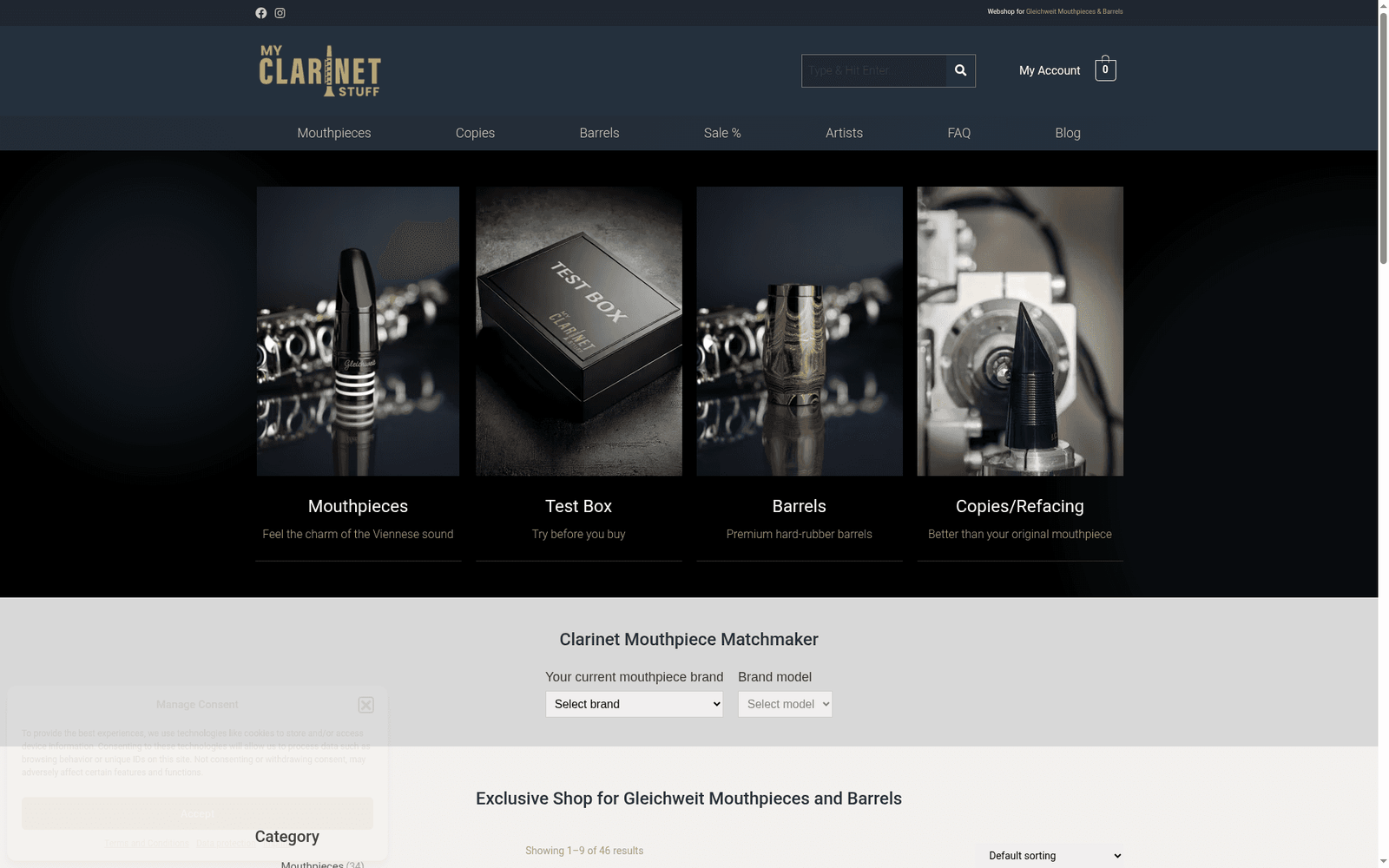
A few ways equipment shapes what you hear back:
- Tip opening and facing length control how quickly your tone responds, which affects how closely you can match a fast bebop line like DeFranco’s.
- Tonal flexibility on a synthetic mouthpiece can let you shift between a dark classical center and a brighter jazz edge without switching gear entirely.
- Consistent synthetic material means the setup that matched your reference recording last week can still match it today.
If you’re not sure where to start, try the Clarinet Mouthpiece Matchmaker to find the model that fits the tone you’re chasing, then head to the shop to order and start comparing it against your own listening list.
Sources
- The best recordings of Mozart’s Clarinet Concerto | Classical Music
- 10 must-hear jazz clarinet players — JazzFuel