


Many clarinetists struggle with tuning despite regular practice, often due to misunderstanding the clarinet’s unique transposition and acoustic properties. This guide clarifies common tuning challenges including temperature effects, harmonic structure, and register-specific tendencies. You’ll discover practical techniques to achieve consistent intonation across all registers, from throat tones to altissimo, and learn how instrument design innovations can support more precise tuning during both practice and performance.
Table of Contents
- Understanding The Clarinet’s Transposition And Tuning Basics
- Impact Of Temperature And Assembly On Pitch And Tuning
- Clarinet Harmonic Structure And Its Effect On Tuning Tendencies
- Advanced Tuning Challenges: Throat Tones, Vocal Tract, And Instrument Design
- Explore Clarinet Accessories For Precise Tuning And Sound
Key takeaways
| Point | Details |
|---|---|
| Transposition awareness | Clarinets are transposing instruments, requiring a full step tuning adjustment relative to concert pitch. |
| Temperature impact | Warmer instruments play sharper, colder ones flatter, demanding thorough warm-up and ongoing pitch monitoring. |
| Harmonic structure | The clarinet overblows at the twelfth, producing odd harmonics that create distinct tuning tendencies in different registers. |
| Advanced techniques | Players adjust vocal tract shape and utilize optimized tone hole designs to refine intonation, especially in challenging registers. |
Understanding the clarinet’s transposition and tuning basics
Clarinets are transposing instruments, requiring a full step tuning adjustment from concert pitch. When you play written C on a Bb clarinet, it sounds as concert Bb. This fundamental difference creates confusion for beginners and even intermediate players when tuning in ensemble settings.
Understanding this transposition is critical before attempting any tuning procedure. When your director asks you to tune to concert A (440 Hz), you need to play written B on your instrument. Missing this step leads to being a whole step off from the rest of your ensemble, which no amount of barrel adjustment can fix.
Start your tuning process at the instrument level before making fine adjustments. Pull the barrel slightly to lower pitch or push it in to raise pitch, but only after confirming you’re playing the correct transposed note. Common beginner mistakes include tuning to the wrong reference pitch entirely because they forget the clarinet’s transposition.
Proper initial setup matters as much as the tuning note itself. Ensure your reed is properly moistened and seated on the mouthpiece. Check that all joints fit snugly without gaps. Even small air leaks from loose tenon joints will throw off your tuning and prevent accurate pitch adjustments.
For additional troubleshooting when tuning feels off despite correct transposition, review our clarinet sound troubleshooting guide for comprehensive solutions to common pitch and tone issues.
Key tuning fundamentals to remember:
- Always account for the Bb clarinet’s whole step transposition when selecting your tuning reference note
- Begin with barrel adjustments before blaming embouchure or reed for pitch problems
- Verify all instrument joints are properly sealed and aligned to prevent air leaks
- Use a reliable electronic tuner that displays both concert pitch and your written note
Impact of temperature and assembly on pitch and tuning
Temperature significantly impacts clarinet pitch, with warmer instruments playing sharper and colder ones playing flatter. A cold clarinet can be as much as 20 to 30 cents flat compared to its pitch when warmed to performance temperature. This represents a significant tuning discrepancy that barrel adjustments alone cannot fix.
Warm up your instrument by playing scales, long tones, or technical exercises for at least 10 to 15 minutes before tuning. This practice brings the bore and tone holes to a stable temperature, preventing continuous pitch drift during performance. Room temperature changes during concerts or rehearsals can still shift your tuning, requiring ongoing awareness and minor adjustments.
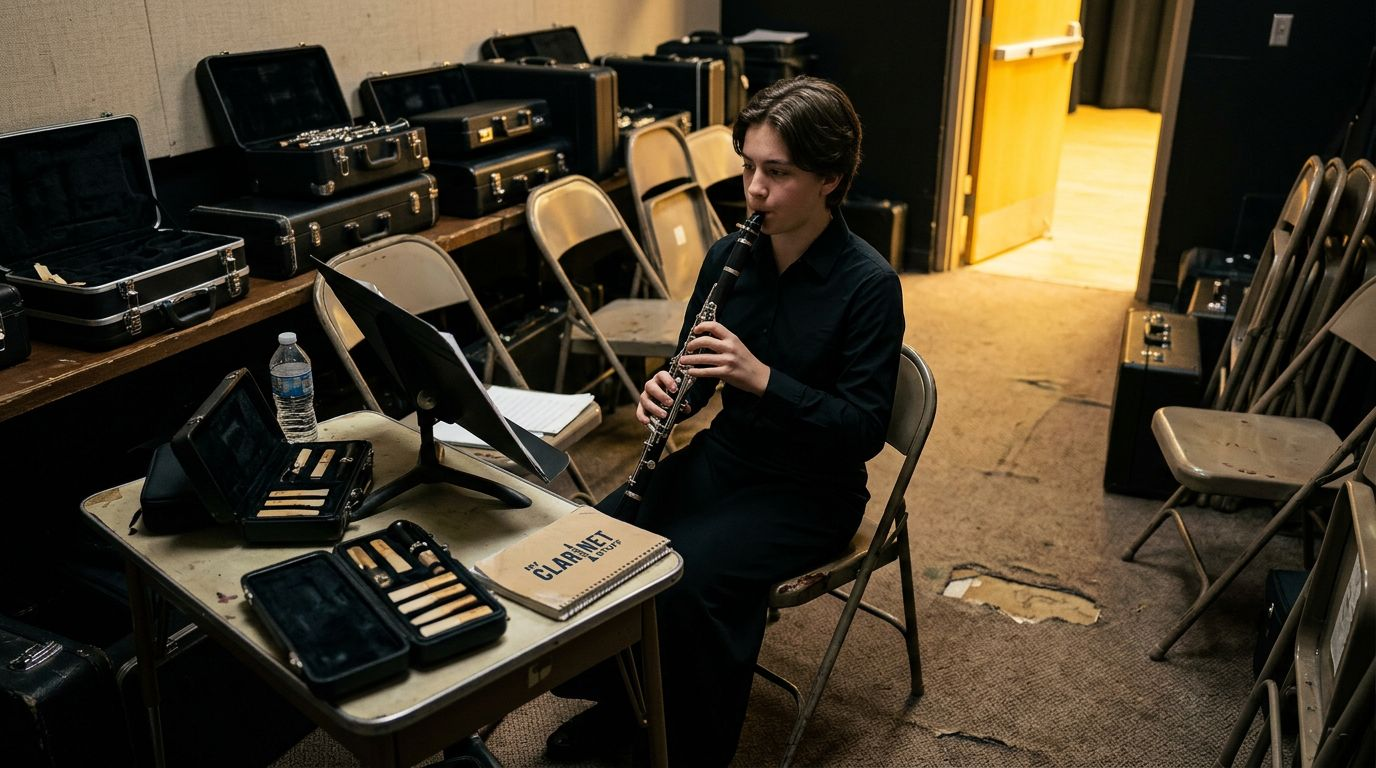
For effective warm-up strategies that stabilize pitch while improving tone production, explore our expert clarinet warm-up tips designed specifically for performance preparation.
Proper assembly is crucial for tuning and sound production, avoiding leaks and misalignment that destroy intonation accuracy. When connecting joints, use a gentle twisting motion rather than forcing pieces together. Cork grease should be applied regularly but sparingly to maintain smooth assembly without damaging the cork or creating gaps.
Misaligned keys and tone holes affect both pitch and tone quality. If the bridge keys between upper and lower joints don’t align perfectly, certain notes will sound flat or airy. Similarly, loose ring keys or cracked pads create air leaks that lower pitch accuracy across multiple notes, making consistent tuning impossible.
Pro Tip: Keep your clarinet in its case when not playing, even during short breaks. Temperature fluctuations of just a few degrees can shift your pitch enough to require retuning, disrupting ensemble balance and your confidence.
Temperature and assembly best practices:
- Allow 10 to 15 minutes of playing time before final tuning to stabilize instrument temperature
- Monitor room temperature changes during long rehearsals or performances
- Check that bridge keys align precisely between upper and lower joint connections
- Maintain cork moisture with regular but light applications of cork grease
Clarinet harmonic structure and its effect on tuning tendencies
The clarinet’s cylindrical bore and closed-end design create a unique acoustic fingerprint. Unlike conical instruments such as the oboe or saxophone that overblow at the octave, the clarinet overblows at the twelfth, producing odd harmonics predominant in its tone. This twelfth interval (octave plus a perfect fifth) fundamentally shapes the instrument’s tuning behavior and tonal color.
This overtone structure causes certain registers to exhibit less stability than others. The throat tone register, spanning from written G4 to Bb4, is particularly problematic because these notes rely on complex fingering combinations that don’t reinforce the natural harmonic series as effectively. Players must compensate through embouchure adjustments and alternate fingerings.
Understanding these acoustics clarifies why some notes consistently play sharp or flat regardless of barrel position. The clarinet’s harmonic behavior means that different registers respond differently to the same air pressure, embouchure formation, and oral cavity shape. What works for tuning low E may not work for middle B or altissimo F.
“The clarinet’s odd harmonic emphasis creates a darker, more focused tone compared to instruments dominated by even harmonics, but this same acoustic property introduces register-specific tuning challenges that require thoughtful technical solutions.”
How the clarinet’s harmonic structure impacts your tuning approach:
- Recognize that overblowing a twelfth means your upper register notes (clarion register) relate to lower register notes by this interval, not by a simple octave
- Accept that throat tones will require special attention and potentially alternate fingerings to achieve acceptable intonation
- Understand that the odd harmonic emphasis affects not just pitch but also tone quality, making tuning adjustments inseparable from timbre considerations
- Realize that your embouchure must adapt to different harmonic behaviors across registers rather than maintaining one position for all notes
For deeper exploration of how harmonic structure influences your clarinet’s voice and how to shape it intentionally, visit our guide on clarinet tone customization sound.
Advanced tuning challenges: throat tones, vocal tract, and instrument design
Throat tones tend to be sharp and unstable due to unique overtone structures that don’t align well with the clarinet’s natural harmonic series. The written A4 is particularly notorious, often playing 15 to 20 cents sharp even on well-maintained instruments. This sharpness stems from the short effective tube length and complex acoustic impedance at this pitch.
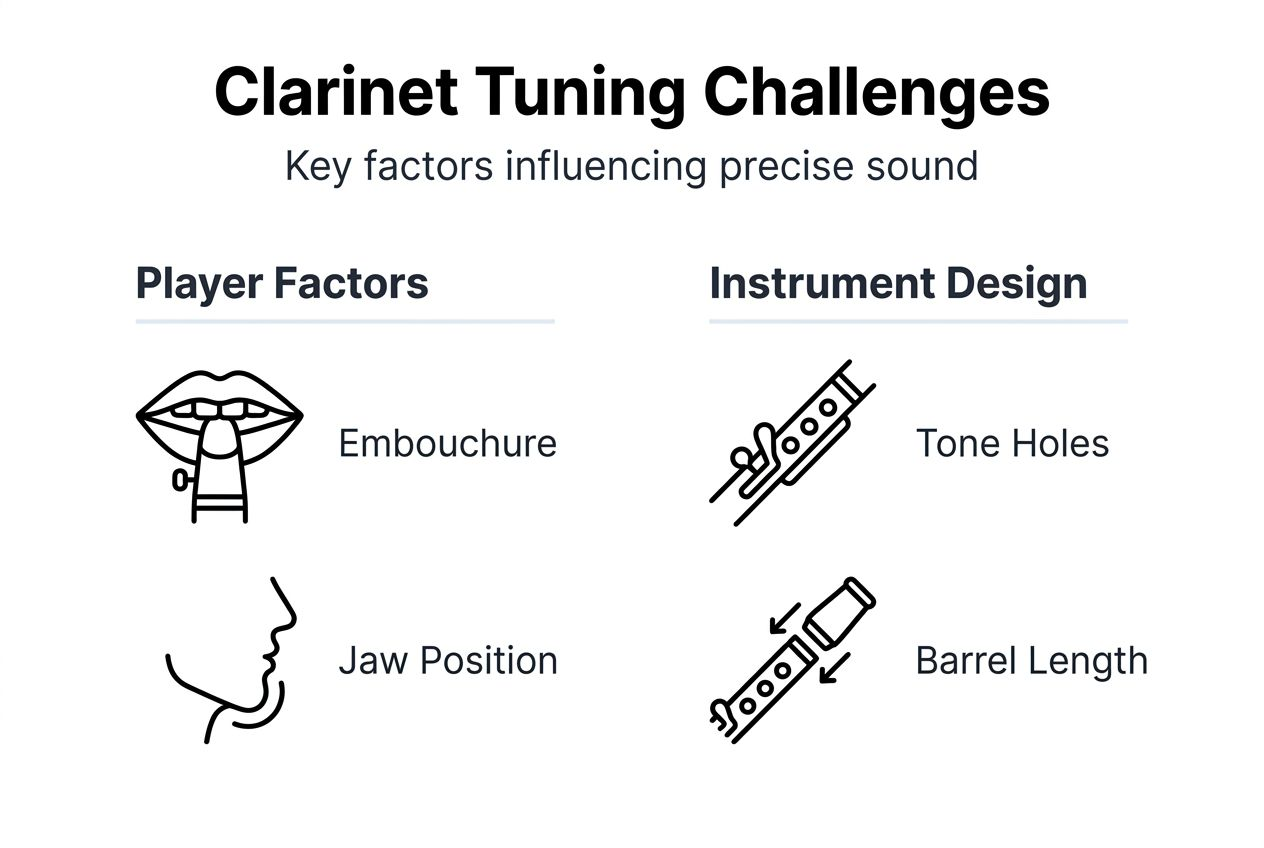
Experienced players address throat tone issues through embouchure relaxation and alternate fingerings. Dropping the jaw slightly or reducing lip pressure can lower pitch without compromising tone quality. Some clarinetists use the left hand first finger side key (often called the A key) with specific combinations to flatten sharp throat tones while maintaining reasonable response.
Modern clarinet design has evolved to address these inherent tuning challenges. Numerical optimization of tone hole geometry achieves intonation within 10 cents over the clarinet range. Researchers use computer modeling to calculate ideal tone hole sizes, positions, and undercutting angles that minimize pitch discrepancies across all registers.
| Aspect | Traditional Design | Optimized Design |
|---|---|---|
| Tone hole placement | Based on historical templates and maker intuition | Calculated using acoustic impedance modeling for precise frequency targets |
| Intonation variance | Commonly 15 to 25 cents off in throat and altissimo registers | Achieves consistent tuning within 10 cents across full range |
| Throat tone stability | Often requires significant embouchure compensation | Improved through optimized vent hole geometry and undercutting |
| Altissimo response | Unpredictable pitch and response without advanced technique | More reliable due to calculated resonance relationships |
Beyond instrument design, players adjust vocal tract resonances to control pitch and effects, especially in altissimo registers. By changing tongue position, throat opening, and oral cavity shape, you modify the acoustic impedance the instrument experiences. This technique allows fine-tuning adjustments of 5 to 15 cents without changing embouchure or air pressure.
Vocal tract adjustments become especially important in altissimo playing. The high register responds dramatically to changes in oral cavity resonance, allowing skilled players to bend pitch, adjust intonation, and create expressive effects. Raising the tongue toward the hard palate generally raises pitch, while lowering it flattens pitch.
Pro Tip: Practice long tones in the throat register with a tuner, experimenting with small tongue position changes while maintaining consistent air pressure. You’ll discover your personal range of pitch control through vocal tract adjustment, typically 10 to 20 cents depending on the note.
For comprehensive guidance on setting up your clarinet to minimize tuning issues before they start, review our 7 clarinet setup essentials covering mouthpiece placement, reed selection, and ligature positioning.
To apply these tuning concepts during actual performances, explore our clarinet performance tips guide for real-world strategies that maintain pitch stability under pressure.
Explore clarinet accessories for precise tuning and sound
Achieving consistent tuning across all registers requires more than technique alone. Your equipment choices significantly impact how easily you can maintain accurate intonation during practice and performance.

Finding the right mouthpiece greatly influences tuning stability and tone quality. Gleichweit precision-crafted synthetic mouthpieces offer exceptional consistency without the pitch variability common in traditional hard rubber designs. Our Austrian-made mouthpieces maintain stable tuning characteristics across temperature changes and humidity levels that would affect natural materials.
Proper setup including barrel length and reed selection impacts intonation consistency throughout your range. Explore our clarinet mouthpiece matchmaker to find equipment combinations that support your tuning goals. Whether you’re struggling with sharp throat tones or flat low register notes, targeted equipment upgrades can make tuning easier and sound more precise.
For comprehensive guidance on choosing equipment that addresses your specific tuning challenges, review our mouthpiece selection tips clarinetists covering facing curves, tip openings, and chamber designs that affect pitch tendencies. Optimize your complete setup with our 7 clarinet setup essentials to create a foundation for reliable intonation.
FAQ
How do temperature changes affect clarinet tuning?
Temperature impacts clarinet pitch, with cold making it flat and warmth making it sharp. The clarinet should be warmed up by playing scales and long tones for 10 to 15 minutes prior to tuning and performing. Environmental changes during rehearsals may require ongoing barrel adjustments to maintain proper pitch.
Why is the throat-tone register on a clarinet difficult to tune?
Throat tones are unstable and tend sharp due to the clarinet’s overtone structure and short effective tube length at these pitches. The acoustic impedance characteristics at throat tone frequencies don’t align well with the instrument’s natural harmonic series. Players often adjust embouchure pressure and use alternate fingerings to stabilize pitch in this register.
Can vocal tract adjustments really influence clarinet tuning?
Musicians change vocal tract configuration to alter pitch and produce special effects especially in high registers. By modifying tongue position and oral cavity shape, you change the acoustic impedance the clarinet experiences, allowing pitch adjustments of 5 to 15 cents. Experienced players use this technique to refine tuning and create expressive effects, particularly in altissimo notes where vocal tract resonances strongly influence pitch and response.
What barrel length should I use for better tuning?
Barrel length depends on your instrument’s inherent pitch tendencies and typical playing temperature. If you consistently play sharp, a longer barrel (67mm or 68mm instead of standard 66mm) lowers overall pitch. Start with your instrument’s standard barrel and make small adjustments based on tuner feedback during warm-up. Some players own multiple barrels for different temperature conditions or ensemble pitch standards.
How accurate should my tuning be for ensemble playing?
Aim for intonation within 5 cents of the target pitch for professional-level ensemble blend. Most listeners can detect pitch differences of 10 to 15 cents, which create audible beats and poor blend. Practice with a tuner until you can consistently hit pitches within this 5-cent window across all registers. During performance, rely on your ear and adjust continuously to match other players rather than trusting only your pre-performance tuning.