


TL;DR:
- Mouthpiece profiling involves measuring and understanding the complete geometry of a clarinet mouthpiece to influence tone, response, and comfort. It combines precise objective measurements with subjective player experience, enabling smarter equipment choices. Using profiling data helps players tailor their gear to their goals, improving sound quality and playing ease across all levels.
If you’ve shopped for a clarinet mouthpiece lately, you’ve probably seen the term “mouthpiece profiling” thrown around without much explanation. What is mouthpiece profiling, exactly? Is it something a technician does in a workshop, or is it the numbers printed in a product spec sheet? The answer is both, and once you understand it, you’ll make smarter decisions about every mouthpiece you ever try. This article breaks down the definition, the measurement techniques behind it, how profiling shapes your sound, and how you can use that knowledge right now.
Table of Contents
- Key takeaways
- What mouthpiece profiling means
- How mouthpiece profiling is done
- How profiling shapes tone, response, and comfort
- Comparing professional mouthpiece profiles
- Using profiling to select and optimize your gear
- My perspective on profiling and the art of clarinet
- Find the right mouthpiece profile with Myclarinetstuff
- FAQ
Key takeaways
| Point | Details |
|---|---|
| Profiling is more than specs | Mouthpiece profiling covers geometry, feel, and acoustic behavior, not just tip opening numbers. |
| Measurements drive decisions | Parameters like facing curve, chamber shape, and backbore dimensions can be measured and compared objectively. |
| Profile affects tone and comfort | Small changes in chamber size or rim width translate directly into tonal color and physical ease of playing. |
| Subjective and objective both matter | Combining your personal trial experience with profiling data leads to the best mouthpiece match. |
| Any level can benefit | Students and professionals alike gain clarity and save money by understanding profile before buying. |
What mouthpiece profiling means
Mouthpiece profiling is the detailed characterization of a mouthpiece’s physical geometry and how that geometry influences sound, response, and feel. Think of it as a full dossier on a mouthpiece. Rather than relying on a single number like tip opening, profiling captures the complete picture. EGGER describes profiling as measuring and analyzing mouthpiece parameters to create data-based selections for players, which is about as clear a mouthpiece profiling definition as you’ll find from a maker.
There are two sides to profiling. Objective profiling relies on precise measurements and documented geometry. Subjective profiling captures how a player experiences the mouthpiece: words like “resistant,” “dark,” or “easy blowing” are actually grounded in physics. Those player sensations correlate to acoustic impedance, which comes from the mouthpiece’s internal shape. One informs the other.
The core components that profiling examines include:
- Tip opening: The gap between the reed tip and the mouthpiece tip rail, measured in millimeters.
- Facing curve: The curved section where the mouthpiece separates from the reed, determining how the reed vibrates.
- Chamber shape: The internal cavity behind the reed window, which colors tone.
- Baffle: The slope or shape directly opposite the reed, affecting brightness and projection.
- Rim and mouthpiece body: The outer profile that determines comfort and grip.
- Backbore: The bore taper feeding into the clarinet barrel, influencing resistance and intonation.
Each of these elements contributes a layer to your sound. Profiling means understanding how they all interact.
How mouthpiece profiling is done
Profiling a mouthpiece is not guesswork. Makers and specialists use a defined sequence to capture every relevant dimension and use that data to guide recommendations.
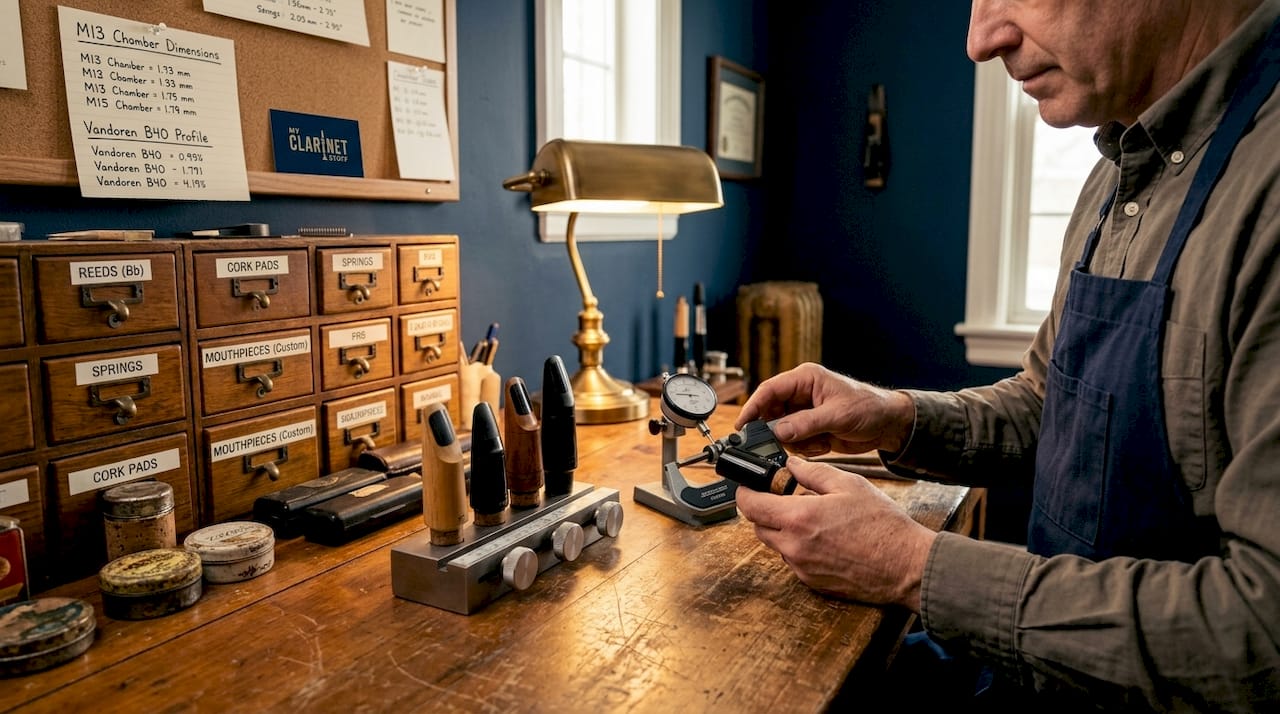
- Visual and tactile inspection. A trained eye identifies wear, irregularities in the facing curve, and asymmetry in the tip rail before any tools come out.
- Tip opening measurement. A feeler gauge or calibrated device measures the exact gap at the tip. This is typically listed in millimeters or as an arbitrary number that maps to a millimeter range.
- Facing length measurement. Makers measure the point where the reed lifts off the facing rail to determine the contact curve. Longer facings generally suit lower tip openings and vice versa.
- Chamber profiling. Digital calipers or 3D scanning tools map the internal geometry. Chamber volume, baffle slope, and bore diameter at key points are all recorded.
- Backbore analysis. Bore diameter at the shank and the taper rate affect resistance and tuning. Digital scanning techniques allow millimeter-level precision that enables custom reproductions or modifications.
- Comparative analysis. The collected data is placed alongside reference profiles from other mouthpieces, allowing makers or players to identify patterns. A player who loves one mouthpiece can find alternatives by matching its profile metrics.
This is where understanding mouthpiece profiling explained as a process pays off practically. When you know the facing length and chamber volume of a mouthpiece that worked for you, you have a template for finding the next one.
Pro Tip: Before trying any new mouthpiece, write down what you liked and disliked about your current one using profiling terms: tip opening, chamber feel, and resistance. That shortlist becomes your shopping filter.
The comparison of rim, cup, backbore, and facing across models is one of the most effective ways to translate profile data into practical playing decisions.
How profiling shapes tone, response, and comfort
This is where mouthpiece configuration stops being abstract and starts affecting what you hear in the practice room. Profiling impacts three areas directly: tone, response, and physical comfort.
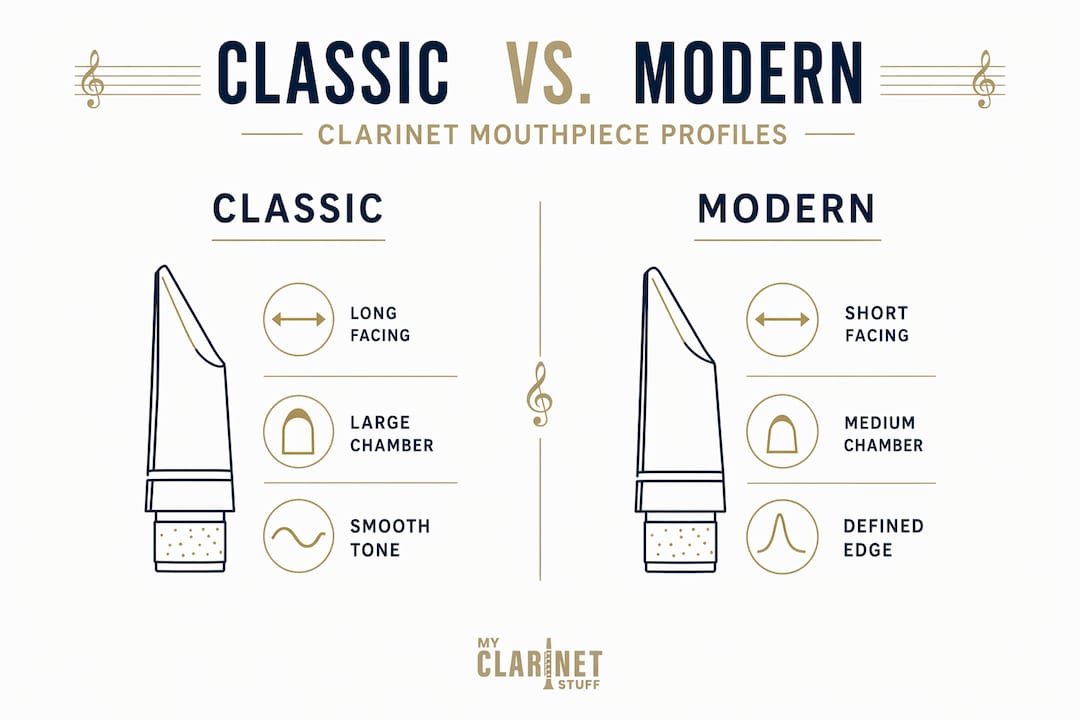
Tone color and richness are largely controlled by chamber size and shape. A large, round chamber produces a warm, dark tone with more resonance in the lower frequencies. A smaller, more tapered chamber creates a brighter, more focused sound. This is why chamber and baffle geometry directly influences acoustic output and player experience. Classical players typically seek larger chambers, while jazz players often favor tighter, brighter chambers.
The facing curve determines how easily the reed begins to vibrate. A shorter, steeper facing requires less airspeed to start vibration, making it more responsive but potentially harder to control in soft passages. A longer, more gradual curve rewards consistent air support and suits players who want more control over dynamics. This is one reason two mouthpieces with the same tip opening can feel completely different under your lip.
- Wider rims distribute embouchure pressure across a larger area, reducing fatigue during long rehearsals.
- Narrower rims give more tonal control and flexibility but can cause discomfort over extended playing.
- Backbore dimensions affect tuning stability. A tighter backbore increases resistance and can sharpen upper register notes, while a larger backbore opens up the sound but may reduce focus.
- Baffle height shapes brightness instantly. A high, flat baffle reflects air directly at the reed, creating projection. A scooped or rolled baffle softens the attack.
Subtle profiling differences also suit different skill levels. Beginners benefit from a more forgiving facing with medium tip openings. Advanced players often seek tighter tolerances and more feedback from the instrument. Different profiles suit different styles and player requirements, which is why knowing your profile preferences matters at every stage of development.
Comparing professional mouthpiece profiles
One of the most practical applications of mouthpiece analysis is placing side-by-side profile comparisons of real mouthpieces. The table below shows how common profiling parameters vary across three general profile categories you encounter in the market.
| Profile feature | Classic/traditional profile | Modern orchestral profile | Jazz/bright profile |
|---|---|---|---|
| Tip opening | Medium (1.05–1.15 mm) | Medium-narrow (0.95–1.10 mm) | Medium-wide (1.10–1.30 mm) |
| Facing length | Long | Medium-long | Medium-short |
| Chamber shape | Large, round | Medium, slightly tapered | Small, tight |
| Baffle | Low, scooped | Medium, flat | High, angled |
| Backbore | Open taper | Moderate taper | Tight taper |
| Best suited for | Warm orchestral tone | Projection and clarity | Brightness and volume |
The mouthpiece comparison data from Myclarinetstuff illustrates how these variables align with player preferences in the real world. Reading a profile table like this helps you predict how a mouthpiece will feel before you ever put it in your mouth.
Classic profiles with long facings and large chambers are popular in German and Austrian orchestral traditions. Modern orchestral profiles strike a balance between warmth and projection, which suits most American conservatory-trained players. Jazz profiles prioritize brightness and fast response. None of these is objectively “better.” They match different goals.
Pro Tip: When reading a product spec sheet, never rely on tip opening alone. Check whether the maker lists facing length and chamber description. Those two data points together tell you far more about how the mouthpiece will actually play.
Understanding how to choose the best clarinet mouthpiece becomes much more straightforward once you know which profile parameters to prioritize for your playing goals.
Using profiling to select and optimize your gear
Knowing the theory is useful. Knowing how to apply it is what changes your playing. Here is a practical approach to using mouthpiece profiling for smarter selection.
- Define your current profile. Note your existing mouthpiece’s tip opening, facing length if listed, and any maker descriptions of chamber or baffle. This is your reference point.
- Identify what you want to change. Is your tone too bright? Look for a larger chamber. Too resistant? Try a slightly longer facing or wider backbore. Too dark to project? Move toward a higher baffle or smaller chamber.
- Test systematically. When trying new mouthpieces, change one variable at a time if possible. The step-by-step testing method from Myclarinetstuff walks you through exactly how to structure a comparative trial so your conclusions are reliable, not random.
- Combine objective data with your ear. Testing with both subjective trial and objective data produces the most accurate result. Record observations after each session. Tone, response in soft passages, upper register stability, and embouchure fatigue are all worth tracking.
- Consider skill level and musical context. Students benefit from medium tip openings with longer facings because they are forgiving and consistent. Advanced players can afford tighter tolerances and more specialized profiles. Profiling data enables custom modifications that guarantee consistent performance, which matters most at the professional level.
The benefits of mouthpiece profiling go beyond gear selection. When you understand your profile preferences, you can communicate them clearly to teachers, makers, and fellow players. That shared vocabulary makes advice much more useful than “try this one, it sounds great.”
My perspective on profiling and the art of clarinet
I’ve spent years paying attention to why certain mouthpieces work and others don’t, and I can tell you that profiling changed how I think about the instrument entirely. Before I understood it, I was just swapping mouthpieces hoping for a lucky match. Once I started thinking in terms of facing curves and chamber geometry, every trial became a structured conversation between the mouthpiece and my playing.
What I’ve learned is that players underestimate how much they already know about profiling through feel. When you say a mouthpiece “fights you” in the upper register, you are already describing resistance, likely from a tight backbore or steep facing. Profiling just gives you the vocabulary to name what you feel and act on it.
The balance between science and feel is where the real skill lies. Measurements tell you what a mouthpiece is. Playing tells you how it fits you. Neither is sufficient alone. The clarinetists I’ve seen grow fastest are the ones who use both. They try a mouthpiece, form an opinion, then check the specs to understand why they feel that way. That feedback loop accelerates learning like nothing else I know.
My encouragement to you: start small. Learn your current mouthpiece’s tip opening and facing length. That alone will make your next upgrade far less confusing and far more satisfying.
— Milos
Find the right mouthpiece profile with Myclarinetstuff

Once you understand what profiling means, the next step is putting that knowledge to work with real equipment. Myclarinetstuff carries precision CNC-crafted Gleichweit mouthpieces from Austria, where every parameter is manufactured to exact tolerances so there is no variability between units. You can use the Clarinet Mouthpiece Matchmaker to find a mouthpiece profile suited to your style, skill level, and tonal goals. The tool translates your preferences directly into a personalized recommendation. For players who want to go deeper, the mouthpiece selection tips guide at Myclarinetstuff covers key profiling factors with practical, player-focused advice. Fast U.S. shipping and direct support from people who actually play make the process even easier.
FAQ
What is mouthpiece profiling in simple terms?
Mouthpiece profiling is the process of measuring and characterizing a mouthpiece’s physical geometry, including tip opening, facing curve, chamber shape, and backbore, to understand how it will affect tone, response, and comfort.
How does mouthpiece profiling affect tone?
Chamber size and baffle shape are the two profiling features with the most direct impact on tone. A large chamber produces warmth and depth, while a high baffle increases brightness and projection.
Can beginners benefit from understanding mouthpiece profiling?
Yes. Even basic knowledge of tip opening and facing length helps beginners avoid mismatched equipment and gives them a clearer way to describe what they need when seeking advice from a teacher.
What tools are used to profile a clarinet mouthpiece?
Makers use feeler gauges for tip opening, digital calipers for chamber dimensions, and in advanced cases, 3D digital scanning to capture the complete internal and external geometry for reproducible profiling data.
How do I use profiling to choose my next mouthpiece?
Start by documenting your current mouthpiece’s key parameters, then identify which aspects of your tone or response you want to change. Match those goals to the corresponding profiling features and use a structured testing approach to confirm the fit with your ear.