
Most American clarinetists discover that even small changes to equipment can lead to dramatic improvements in tone and response. Many players spend months searching for the right combination, only to overlook a methodical approach to upgrades. This guide offers expert strategies that help intermediate and advanced musicians analyze their setup, select the best components, and achieve reliable results for a richer, more satisfying sound.
Table of Contents
- Step 1: Assess Your Current Clarinet Setup
- Step 2: Choose Key Components for Upgrade
- Step 3: Consult with Experts for Custom Fitting
- Step 4: Install and Adjust New Equipment
- Step 5: Test Results and Fine-Tune Your Setup
Quick Summary
| Significant Insight | Detailed Explanation |
|---|---|
| 1. Assess your clarinet setup carefully | Perform a thorough evaluation of pads, keys, and mouthpiece to identify improvement areas for better sound. |
| 2. Choose impactful upgrade components | Focus on mouthpiece, barrel, and pads; select materials and designs that enhance tone and resonance based on your needs. |
| 3. Consult with experts for custom fitting | Seek professional insights for tailored adjustments to maximize instrument performance and personal comfort. |
| 4. Properly install and adjust new equipment | Follow precise assembly techniques to ensure optimal performance and maintain the integrity of the clarinet. |
| 5. Test and fine-tune your setup diligently | Methodically evaluate your instrument after upgrades, making necessary adjustments for pitch accuracy and sound quality. |
Step 1: Assess Your Current Clarinet Setup
Preparing to upgrade your clarinet requires a thorough and systematic assessment of your current equipment. Your goal is to understand exactly where improvements can maximize your sound quality and playing experience.
Begin by conducting a comprehensive instrument regulation check that evaluates critical elements of your clarinet setup. Examine each component carefully: inspect the pads for proper sealing, verify key alignment, and confirm that bridge mechanisms and posts are correctly positioned. Pay special attention to how smoothly your keys operate and whether there are any signs of misalignment or wear that might compromise playing performance.
Next, focus on your mouthpiece and reed combination. Efficient vibration is crucial for achieving superior tone quality, so carefully assess how well your current mouthpiece and reed interact. Look for even contact points, symmetrical reed placement, and consistent response across different registers. Check your ligature positioning to ensure it provides balanced pressure and allows optimal reed vibration.
Pro tip: Keep a detailed written log of your observations during this assessment to track potential upgrade opportunities and document your clarinet’s current condition.
Step 2: Choose Key Components for Upgrade
Upgrading your clarinet involves strategically selecting components that will dramatically enhance your overall sound quality and playing experience. Your mission is to identify and invest in the most impactful upgrades that match your specific performance needs.
Start by examining the critical clarinet components that influence tone and timbre. Focus first on your mouthpiece, as it plays a pivotal role in sound production. Consider factors like material composition, chamber design, and tip opening that align with your preferred playing style. When selecting a mouthpiece, consult with experienced teachers to guide your reed, mouthpiece, and ligature choices, ensuring you match reed strength precisely to your new mouthpiece specifications.
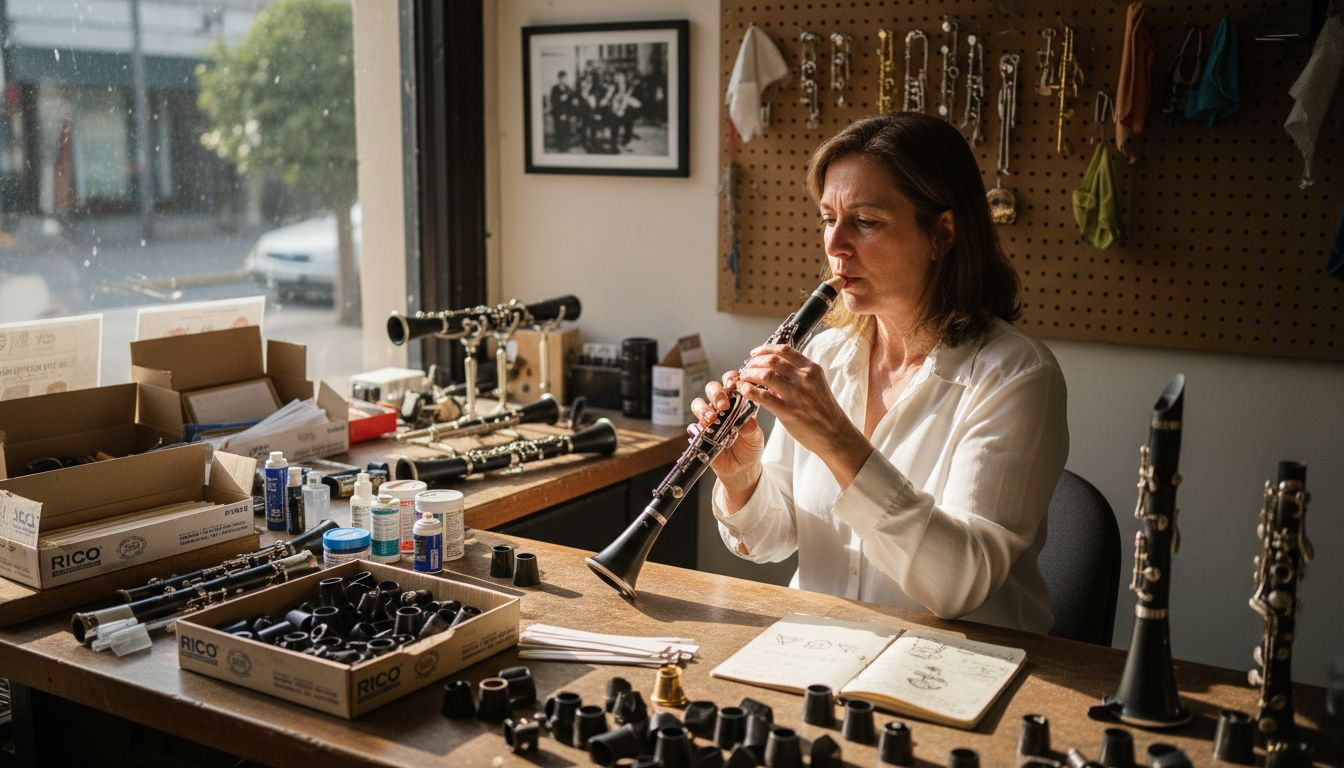
Next, evaluate potential upgrades for your barrel, upper and lower joints. These components significantly impact resonance and tonal clarity. Look for materials and designs that complement your existing instrument and playing techniques. Pay close attention to how different materials like wood, hard rubber, or synthetic composites might enhance your clarinet’s sound profile and response.
Pro tip: Always test multiple component options side by side and record yourself playing to objectively compare sound quality improvements.
Here’s a summary of clarinet component upgrades and their potential impacts:
| Component | Upgrade Options | Impact on Performance | Typical Materials |
|---|---|---|---|
| Mouthpiece | Different shape, size | Alters tone, improves comfort | Hard rubber, crystal |
| Barrel | New length, bore size | Enhances resonance, clarity | Wood, plastic, composite |
| Pads | Precision sealing | Affects response, reliability | Felt, synthetic, cork |
| Ligature | Alternative design | Changes reed vibration, tone | Metal, leather, fabric |
Step 3: Consult with Experts for Custom Fitting
Narrowing the gap between your current clarinet setup and professional performance requires expert guidance that goes beyond basic equipment selection. Your objective in this step is to leverage professional insights that can transform your instrument from standard to exceptional.
Professional clarinet repair technicians offer critical insights into personalized instrument adjustments that can dramatically improve your playing experience. Seek out experienced technicians who can perform detailed assessments including precise reed shaping, meticulous pad regulation, and precise key alignment. These specialized adjustments are fundamental to creating a truly custom fit that maximizes your clarinet’s tonal potential and your personal playing comfort.
Expert consultation provides nuanced guidance on identifying and resolving instrument performance issues. Schedule a comprehensive consultation where a professional can evaluate your specific playing style, analyze your current instrument’s condition, and recommend targeted upgrades or adjustments. Be prepared to discuss your musical goals, performance challenges, and any specific sound qualities you want to enhance.
Pro tip: Bring recordings of your current playing to your consultation so the expert can hear exactly how your instrument performs in real musical contexts.
Compare standard clarinet setup adjustments with expert custom fitting for best results:
| Adjustment Type | Standard Setup | Expert Custom Fitting | Benefit to Player |
|---|---|---|---|
| Key Alignment | Visual check | Precision professional tuning | Smoother action, fewer leaks |
| Pad Regulation | Basic inspection | Meticulous custom adjustments | Improved sealing, response |
| Reed Setup | Manual placement | Shaping by technician | Optimized tone, easier playing |
| Joint Fit | Simple alignment | Measured fit, fine tuning | Enhanced resonance, comfort |
Step 4: Install and Adjust New Equipment
Transitioning to your upgraded clarinet components requires precision and careful attention to detail. Your goal is to seamlessly integrate new equipment while maintaining the instrument’s optimal performance and sound quality.
Carefully assemble your new clarinet components using professional techniques that protect delicate mechanisms and ensure perfect alignment. Begin by handling each new piece with clean hands and minimal pressure. When connecting joints, align them gently and precisely without forcing or twisting. Pay special attention to key positioning and ensure each component fits smoothly without resistance.
Proper pad installation is critical for maintaining instrument functionality. Verify that each new pad creates a perfect seal when pressed against tone holes. Check for consistent contact and smooth movement across all keys. If you encounter any resistance or uneven sealing, consult your professional technician for fine tuning. Take time to adjust each component methodically ensuring that your new equipment integrates seamlessly with your existing clarinet structure.
Pro tip: Use white cotton gloves when handling new components to prevent oil transfer and maintain pristine condition during installation.
Step 5: Test Results and Fine-Tune Your Setup
After upgrading your clarinet equipment, the critical process of testing and fine-tuning begins. Your objective is to systematically evaluate your new setup and make precise adjustments that optimize sound quality and performance.
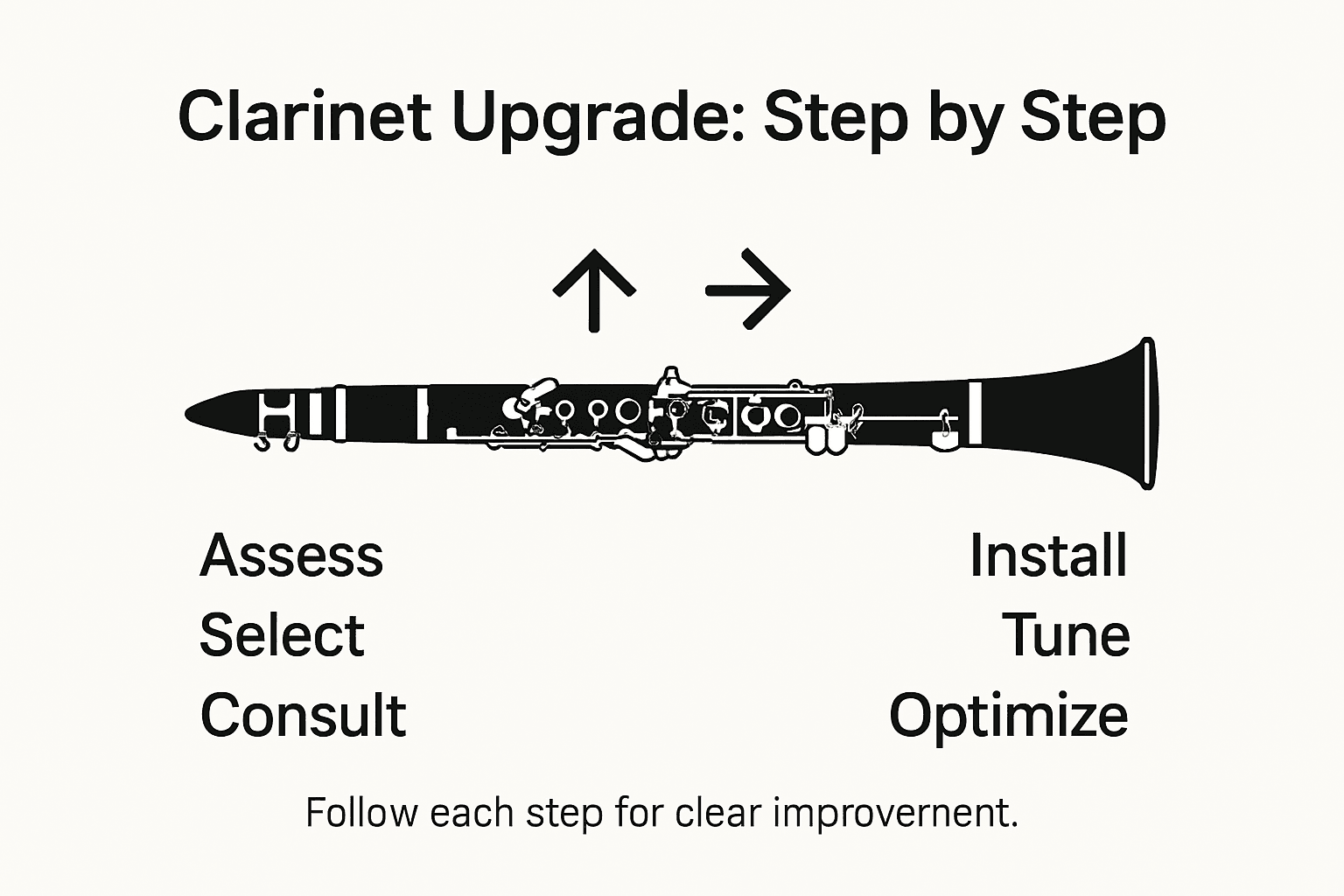
Carefully tune your clarinet by methodically adjusting different instrument sections to ensure accurate pitch and consistent tone across all registers. Start by playing long sustained notes in different octaves, listening critically for any variations in intonation. Pay close attention to how changes in air pressure and embouchure interact with your new equipment. Experiment with slight repositioning of the mouthpiece, barrel, and joints to find the optimal alignment that produces the most resonant and balanced sound.
Conduct a comprehensive warm-up and tuning process that accounts for temperature variations and their impact on pitch. Begin by allowing your instrument to acclimate to room temperature, then systematically test each register. Use a tuner to objectively measure pitch accuracy and make incremental adjustments. Record yourself playing to capture nuanced sound differences and compare your new setup against your previous configuration. Be patient and methodical your goal is to achieve a setup that feels comfortable and sounds exceptional.
Pro tip: Create a detailed log documenting each adjustment and its corresponding sound quality to track your optimization process.
Elevate Your Clarinet Sound with Expert-Selected Components
Upgrading your clarinet requires more than just new parts. You need precision-crafted mouthpieces, barrels, and accessories designed to unlock your instrument’s full tonal potential just like the article describes. If your goal is to improve resonance, optimize reed vibration, and achieve superior sound quality combined with comfortable playing, addressing key components and professional custom fitting are crucial steps. At My Clarinet Stuff, we understand these challenges and offer a curated collection of boutique clarinet gear rooted in the Viennese tradition to help you get there.

Discover our selection of professional-grade mouthpieces and barrels crafted for precise acoustics and personalized sound. Whether you are looking for a new ligature or specialized accessories like O-rings or plastic reed mouthpieces, we provide detailed product descriptions and customizable options. Take advantage of our personalized consultation services to find the perfect match for your playing style. Start your clarinet upgrade journey today with trusted components designed for serious musicians at My Clarinet Stuff. Your superior sound awaits.
Frequently Asked Questions
How do I assess my current clarinet setup before upgrading?
To assess your current clarinet setup, conduct a comprehensive regulation check to evaluate the condition of the pads, key alignment, and bridge mechanisms. Inspect how smoothly your keys operate and document any signs of wear to identify potential improvements.
What key components should I consider upgrading for better sound quality?
Focus on upgrading your mouthpiece for a significant impact on tone and comfort. Evaluate the barrel and joint materials as well, ensuring they match your playing style to enhance resonance and tonal clarity.
How can I find expert guidance for custom fitting my clarinet?
Seek professional clarinet repair technicians who can perform detailed assessments and provide personalized adjustments. Schedule a consultation to discuss your playing style and sound preferences for targeted recommendations on upgrades.
What steps should I follow when installing new clarinet equipment?
Handle your new clarinet components carefully during installation, ensuring precise alignment and avoiding unnecessary force. Verify that each pad creates a perfect seal against tone holes to maintain optimal performance and sound quality.
How do I test the results after upgrading my clarinet components?
Test your upgraded clarinet by tuning it and playing sustained notes across different octaves to check for pitch accuracy. Make incremental adjustments to find the optimal setup that enhances resonance and comfort in your playing.