
Most clarinetists assume their tone is locked in by their instrument brand or reed choice. That belief is understandable, but it misses the bigger picture. Clarinet timbre arises primarily from its emphasis on odd-numbered harmonics due to its cylindrical bore, which means the physics of the instrument create a unique starting point. But your embouchure, air stream, vocal tract shape, and gear choices all layer on top of that foundation. Small adjustments in any one of these areas can shift your sound from dark and woody to bright and cutting in ways that surprise even experienced players. This guide breaks down the science, the art, and the practical methods you need to master your own unique sound color.
Table of Contents
- What is sound color? Defining clarinet timbre
- The science behind clarinet sound color
- Player technique: Embouchure, air, and the vocal tract’s hidden role
- Sound color across clarinet registers: From chalumeau to altissimo
- Control parameters: Pressure, reed, and mouthpiece selection
- Edge cases and special effects: Advanced sound color tricks
- Find your unique sound: Tools and resources for clarinetists
- Frequently asked questions
Key Takeaways
| Point | Details |
|---|---|
| Timbre shaped by harmonics | The clarinet’s tone color is defined by its strong odd-numbered harmonics and unique bore structure. |
| Technique is key | Embouchure, air support, and vocal tract make the biggest difference in mastering sound color. |
| Gear complements skill | Mouthpiece and reed adjustments fine-tune color once technique is established. |
| Each register differs | Chalumeau, clarion, and altissimo registers each have distinct tonal palettes. |
| Experiment for effect | Special techniques and gear tweaks open new doors for jazz, folk, and contemporary styles. |
What is sound color? Defining clarinet timbre
Sound color, or timbre (pronounced TAM-ber), is what makes a clarinet sound like a clarinet even when it plays the same pitch as a flute or oboe. It is the texture and personality of a note, not just its pitch or volume. You might describe it as warm, bright, woody, nasal, or edgy depending on what you hear.
Clarinet timbre is shaped by harmonic content, with odd-numbered harmonics dominant due to the instrument’s acoustics. This gives the clarinet its famously dark, hollow quality in the lower register. Understanding this helps you make smarter choices about how you play and what gear you use.
Here is what shapes sound color in practical terms:
- Harmonic balance: Which overtones are loud or soft in your tone
- Register: Chalumeau, clarion, and altissimo each have distinct tonal personalities
- Technique: Embouchure, air pressure, and vocal tract position all shift the harmonic mix
- Equipment: Mouthpiece facing, reed strength, and barrel material all contribute
“The clarinet’s closed-cylinder design suppresses even-numbered harmonics in the lower register, creating that signature dark, woody quality that no other woodwind can replicate.”
For a deeper look at what drives clarinet sound quality factors, it helps to understand both the physics and the player’s role together.
The science behind clarinet sound color
The clarinet overblows at the 12th interval, not the octave like most woodwinds. That single fact changes everything about how its harmonics stack up. In the chalumeau register, odd harmonics dominate heavily. As you move into the clarion and altissimo registers, even harmonics begin to appear more prominently, brightening the tone.
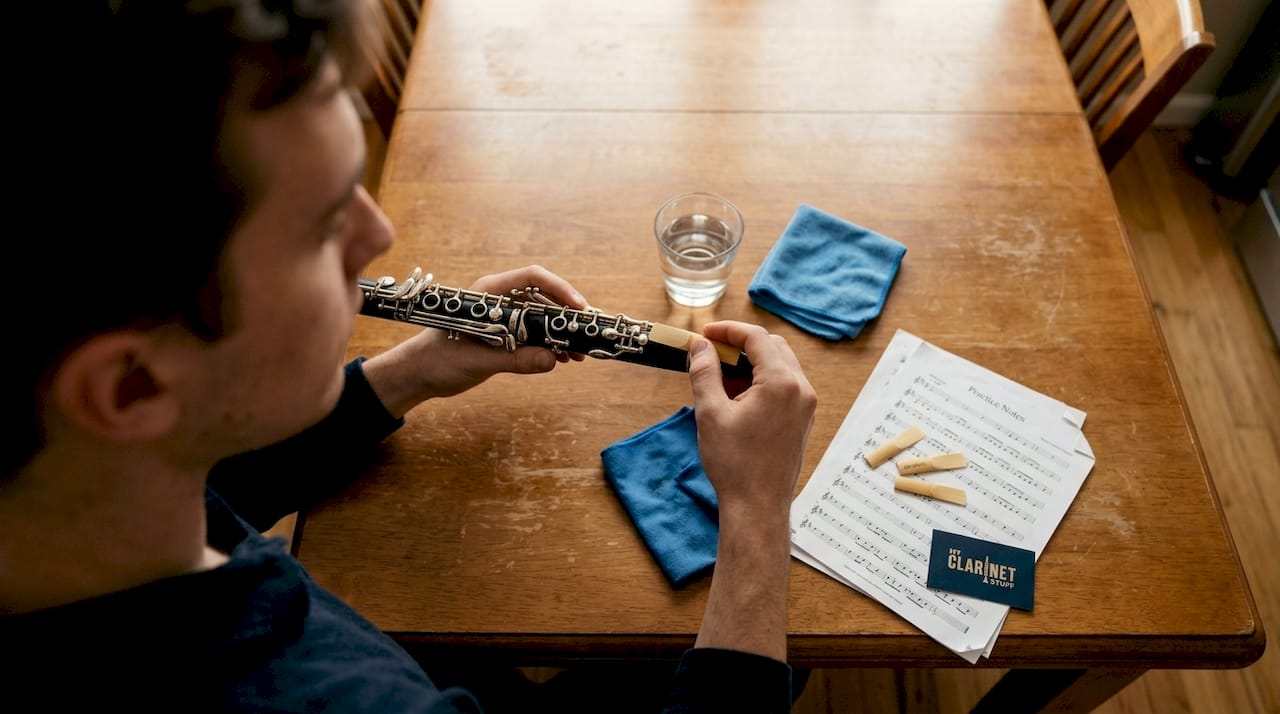
Blowing pressure and reed aperture are key control parameters for timbre variation, affecting the spectral brightness and harmonic profile of the sound. In plain terms: blow harder and your tone gets brighter. Open the reed aperture and you add brilliance. These are not just abstract physics concepts. They are levers you can pull in real time during a performance.
Here is how the three main registers compare in tonal character:
| Register | Dominant harmonics | Tonal character | Best use |
|---|---|---|---|
| Chalumeau | Odd (1st, 3rd, 5th) | Dark, woody, rich | Jazz ballads, classical bass lines |
| Clarion | Mixed, more even | Bright, energetic, clear | Melodic leads, folk melodies |
| Altissimo | Complex, upper partials | Edgy, piercing, striking | Avant-garde jazz, extended technique |
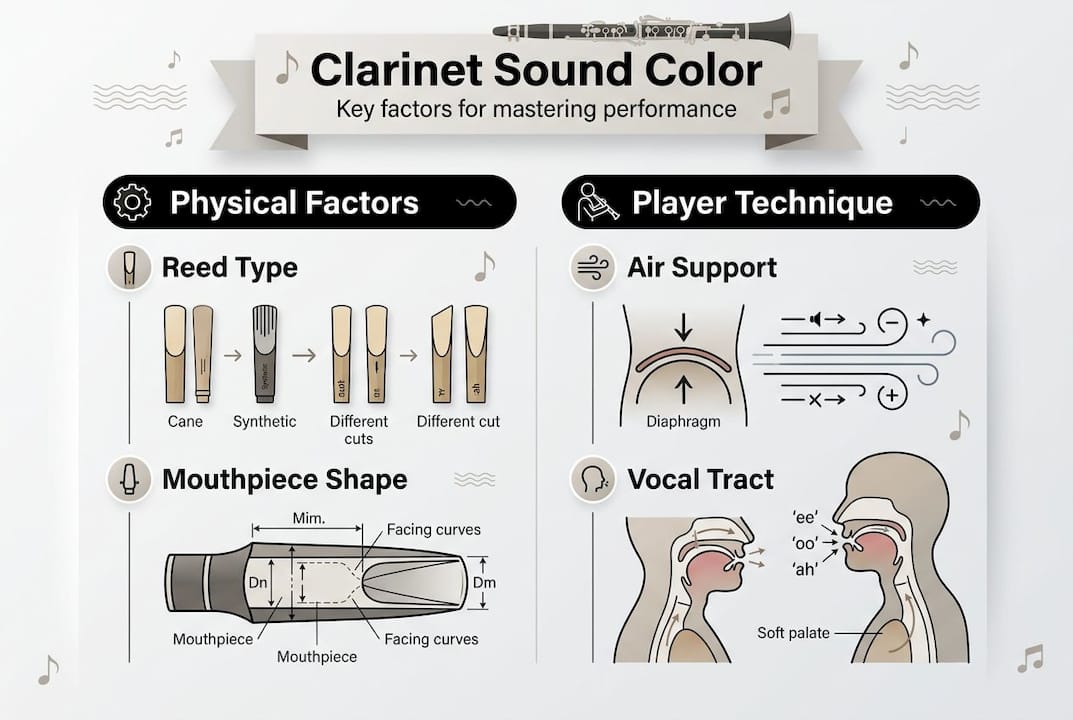
Pro Tip: Practice long tones across all three registers while consciously adjusting your air speed. Notice how the tone color shifts even before you change any gear. This builds your internal awareness of the harmonic palette you already have.
For more actionable guidance, explore these tone quality tips and performance tips for better sound that connect physics to practice room habits.
Player technique: Embouchure, air, and the vocal tract’s hidden role
Your body is the most powerful sound-shaping tool you own. No mouthpiece upgrade replaces what a refined embouchure and intentional air stream can do. Let’s break down the three main physical controls.
Embouchure is the balance between firmness and flexibility. Too much pressure on the reed chokes the sound and kills resonance. Too little and the tone goes flat and unfocused. The goal is a light, consistent seal that lets the reed vibrate freely.
Air support is the engine behind everything. Inconsistent breath pressure creates wavering tone color, especially across register breaks. Think of your air as a steady, fast stream rather than a pushed burst.
Vocal tract shaping is the hidden variable most players overlook. Tongue and jaw position shift the timbre by altering resonance peaks inside your oral cavity, creating brighter or darker sounds and impacting even harmonics. Saying “ee” internally raises the tongue and brightens the tone. Saying “aw” drops the tongue and darkens it. This is not metaphor. It is measurable acoustic physics.
Here is a quick reference for vocal tract shapes and their tonal effects:
| Vocal tract shape | Tongue position | Tonal result | Genre application |
|---|---|---|---|
| “ee” | High, forward | Bright, projecting | Jazz, folk leads |
| “oh” | Mid, rounded | Balanced, warm | Classical solo work |
| “aw” | Low, back | Dark, full | Orchestral blending |
Pro Tip: Record yourself playing the same phrase three times using each vocal tract shape. The difference will be immediately obvious on playback, and it will train your ear to hear what your body is doing.
For more detail on physical technique, check out these clarinet embouchure tips and use the sound improvement checklist to track your progress systematically.
Sound color across clarinet registers: From chalumeau to altissimo
Each register of the clarinet is essentially a different instrument in terms of color. Treating them as one uniform sound is a missed opportunity. Skilled players learn to lean into each register’s natural personality rather than fight it.
Here is what each register offers:
- Chalumeau (low register): Rich, dark, and woody. The fundamentals are strong and the odd harmonics create that signature hollow warmth. This is the register for jazz ballads, slow folk melodies, and classical bass lines where depth matters more than projection.
- Clarion (middle register): Brighter and more energetic. The tone opens up and carries well in ensemble settings. This is where most melodic material lives in classical and folk repertoire.
- Altissimo (high register): Striking and sometimes edgy. The altissimo register emphasizes tamed odd partials and special effects, making it ideal for modern jazz, avant-garde passages, and moments where you want the clarinet to cut through a dense texture.
“The chalumeau register’s dark, woody quality comes from its strong fundamental and dominant odd harmonics. The altissimo register, by contrast, brings out upper partials that give the clarinet an almost otherworldly edge.”
Learning to control tone customization across registers is one of the most rewarding skills you can develop as a clarinetist. It transforms you from a player who reacts to the instrument into one who shapes it.
Control parameters: Pressure, reed, and mouthpiece selection
Once your technique is solid, gear choices become meaningful. Before that point, equipment changes often mask problems rather than solve them. Here is a practical order of operations for shaping sound color through equipment.
- Dial in your air pressure first. Increased blowing pressure links to changes in spectral centroid and irregularity, meaning how bright or complex a sound feels. Experiment with pressure before touching your gear.
- Adjust reed strength. A harder reed generally produces a brighter, more resistant tone. A softer reed opens up the sound but can reduce control in the altissimo register.
- Evaluate your mouthpiece facing. A more open facing gives you more dynamic range and color flexibility. A closer facing offers precision and consistency.
- Match reed and mouthpiece together. The interaction between these two elements is where most of the tonal magic happens. A great reed on a mismatched mouthpiece will underperform every time.
- Consider barrel material last. Barrel upgrades can refine intonation and add warmth, but they are the final layer, not the foundation.
Pro Tip: Before buying new gear, spend two weeks focusing exclusively on air pressure and vocal tract adjustments. You may find you already have the sound you were shopping for.
For structured guidance on gear decisions, the accessory selection guide and equipment selection process walk you through the decision in a logical sequence.
Edge cases and special effects: Advanced sound color tricks
Once you have a handle on the fundamentals, the real fun begins. Advanced players use deliberate extremes to create expressive effects that go beyond standard tone production.
- Reed beating: Allowing the reed to beat more aggressively adds a buzzy, noisy quality to the tone. Jazz players use this for punchy accents and gritty low-register effects that cut through a rhythm section.
- Glissando and slurred effects: Shifting your vocal tract mid-note while sliding between pitches creates a smooth, vocal-like glide. This is a staple of klezmer and jazz clarinet playing.
- Altissimo color palette: Reed beating, glissandi, and intentional vocal tract use achieve extreme or special sound color effects that expand what the instrument can express. In the altissimo register, these techniques reveal partials that are normally hidden, giving you entirely new tonal textures.
Pro Tip: Practice reed beating intentionally on low G in the chalumeau register. Start with a relaxed embouchure and gradually reduce your lip pressure until you hear the reed begin to buzz. Then learn to control how much buzz you add. This gives you a new expressive tool rather than an accident to avoid.
If you are ready to take your sound to the next level with better equipment, the clarinet upgrade guide offers a step-by-step path that matches your technique to the right gear.
Find your unique sound: Tools and resources for clarinetists
You have just covered a lot of ground, from harmonic physics to reed beating tricks. The next step is putting it all into practice with the right support.

At MyClarinetStuff.com, we carry precision CNC-crafted Gleichweit mouthpieces designed and manufactured in Austria. These synthetic mouthpieces deliver consistent tonal response without the variability of traditional hard rubber, which means the sound color you develop in the practice room stays reliable on stage. Start with the mouthpiece matchmaker to find the right facing and model for your playing style. Browse the full accessory selection guide to build a setup that supports your sound goals. And if you are ready for a bigger change, the clarinet upgrade guide walks you through every decision with clarity and confidence.
Frequently asked questions
Why does the clarinet have such a unique sound color compared to other woodwinds?
Its cylindrical bore and closed mouthpiece create a harmonic profile dominated by odd-numbered harmonics, giving a dark, woody tone that no other woodwind replicates.
Can a player’s vocal tract adjustments really alter the clarinet’s timbre?
Yes. Changing tongue and jaw position affects resonance peaks, brightening or darkening the sound and shifting certain harmonics in measurable ways.
What practical steps improve clarinet sound color most efficiently?
Consistent embouchure, solid air support, and experimenting with vocal tract shapes yield the quickest results. Long tones across registers build consistency and sharpen your tonal awareness faster than almost any other exercise.
How does mouthpiece or reed selection influence sound color?
Different mouthpiece and reed combinations change the response and balance of harmonics. Reed aperture and blowing pressure interact with mouthpiece facing to make tones brighter, darker, or more complex depending on the combination.