


TL;DR:
- True clarinet intonation depends on coordinated control of embouchure, air, voicing, and equipment.
- Register-specific pitch tendencies require targeted corrections like adjusting tongue position and air support.
- Consistent practice with long tones, drones, and voicing exercises improves real-time pitch stability.
Most clarinetists assume that pulling out the barrel a few millimeters and matching the tuner needle is all it takes to play in tune. That belief is the single biggest obstacle to real pitch control. True clarinet intonation is a living, breathing skill that changes from note to note, register to register, and even room to room. It involves your embouchure, air speed, tongue position, reed, mouthpiece, and barrel working together at the same time. This guide breaks down each of those elements, walks through register-specific challenges, and gives you concrete exercises and accessory choices that make stable pitch achievable at any level.
Table of Contents
- What is clarinet intonation?
- How registers and mechanics affect pitch
- Effective practice routines for stable intonation
- Nuances, accessories, and solutions for intonation challenges
- What most articles miss about clarinet intonation
- Find your ideal setup for better intonation
- Frequently asked questions
Key Takeaways
| Point | Details |
|---|---|
| Intonation is pitch accuracy | It means how well you control note pitch across all clarinet registers, not just basic tuning. |
| Registers require different fixes | Low, middle, and high clarinet ranges each demand unique adjustments for proper intonation. |
| Practice builds stability | Routine exercises like long tones and pitch bends steadily improve intonation control. |
| Accessories matter | High-quality mouthpieces, reeds, and barrels make pitch stability easier for any player. |
| Ear training > tuners | Long-term success relies more on listening skills and drones than simply using electronic tuners. |
What is clarinet intonation?
Tuning and intonation sound like the same thing, but they are not. Tuning is a one-time adjustment, usually setting your barrel length so that a single reference pitch like A=440Hz sits in the right place. Intonation is what happens across every other note you play after that. Clarinet intonation is the accuracy of pitch across all registers, achieved through coordinated control of embouchure, air support, voicing, reed and mouthpiece setup, and instrument adjustments like barrel position. That is a lot of moving parts, and none of them work in isolation.
Here is a quick comparison to make the difference concrete:
| Feature | Tuning | Intonation |
|---|---|---|
| When it happens | Before you play | While you play |
| What you adjust | Barrel length, mouthpiece position | Embouchure, air, voicing, tongue |
| Tool used | Tuner app or device | Your ear, drone, or tuner feedback |
| Frequency | Once per session | Every note, every phrase |
| Fixes | Mechanical | Physical and musical |
The key elements that control intonation in real time include:
- Embouchure: How firmly and evenly your lips seal around the mouthpiece affects pitch directly. Too much pressure sharpens the note. Too little flattens it.
- Air support: A steady, fast airstream keeps pitch centered. Sagging air pressure causes notes to droop flat.
- Voicing: The shape of your oral cavity, specifically tongue height and throat openness, acts like a resonance chamber that nudges pitch up or down.
- Reed and mouthpiece setup: A soft reed or a mouthpiece with a poor seal introduces pitch instability that no amount of embouchure adjustment can fully fix.
- Barrel position: Pulling the barrel out lowers pitch slightly across the whole instrument. This is your coarse adjustment before playing begins.
A useful benchmark: if you can hold a steady tone on middle G for 8 to 12 seconds without the pitch wavering more than a few cents, your foundational pitch stability is solid. If the note drifts or wobbles, air support and voicing are the first places to look.
Starting your session with clarinet warm-up tips that focus on long tones and slow scales builds the muscle memory your body needs to hold pitch without conscious effort. Pairing that with the right equipment, including a well-fitted barrel, matters more than most players realize. Exploring clarinet barrel benefits can reveal how a small hardware change creates a more stable pitch foundation before you even play a note.
How registers and mechanics affect pitch
With foundational knowledge in hand, it is crucial to understand how clarinet mechanics and registers impact intonation. The clarinet is physically unusual because it overblows at the twelfth rather than the octave. That quirk creates distinct pitch tendencies in each register, and knowing them in advance lets you correct proactively rather than reactively.
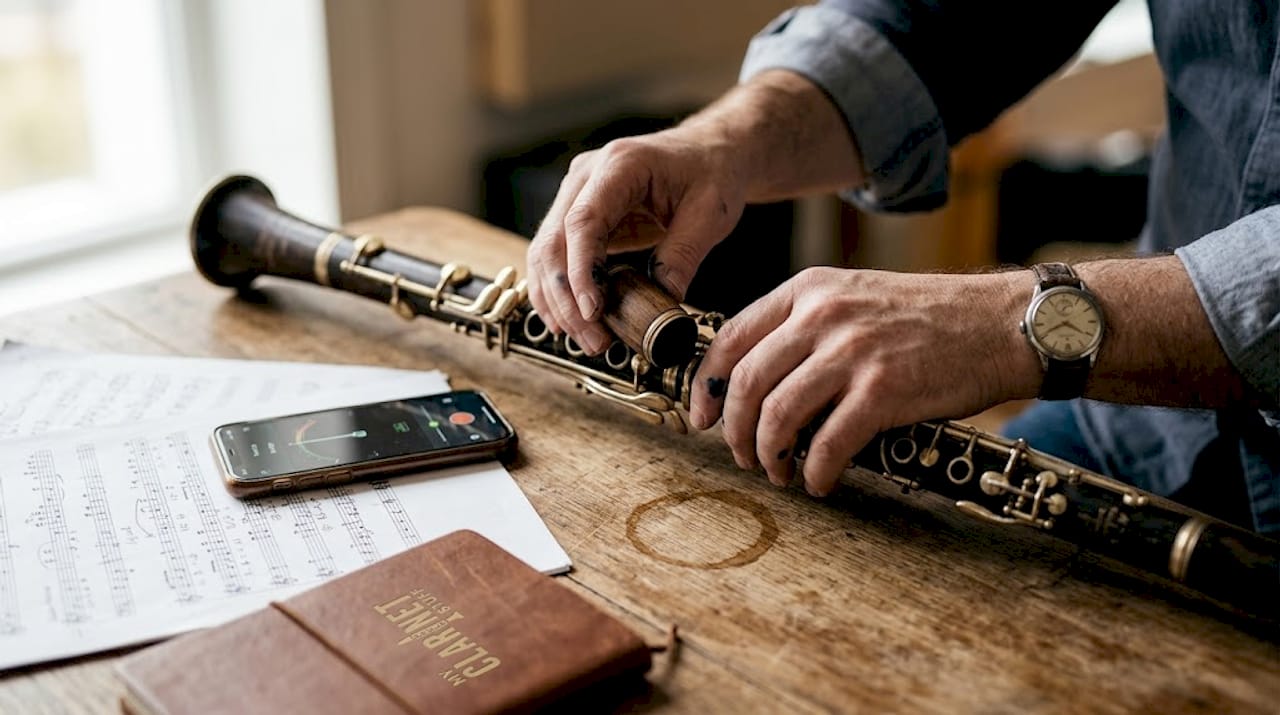
Register pitch tendencies and corrections vary significantly across the instrument:
| Register | Common tendency | Primary correction |
|---|---|---|
| Chalumeau (low) | Variable, often flat on throat tones | Open voicing, less embouchure pressure |
| Throat tones (A, Bb) | Sharp and thin | Relax jaw, lower tongue, use alternate fingerings |
| Clarion (middle) | Tends sharp | Increase air speed, slightly relax embouchure |
| Altissimo (high) | Requires high tongue and voicing | Raise tongue to “ee” position, firm embouchure |
To correct pitch register by register, work through these steps:
- Chalumeau: Keep your throat open and your air moving forward. Tension in the throat is the most common cause of flat low notes.
- Throat tones: Relax your jaw slightly and drop your tongue. Throat A and Bb are notoriously sharp on most instruments. Alternate fingerings can help, but voicing is the faster fix.
- Clarion: Increase air speed rather than adding embouchure pressure. Squeezing harder sharpens the note further.
- Altissimo: Raise your tongue toward the roof of your mouth as if saying “ee.” This raises the resonance frequency inside your oral cavity and centers the pitch.
Research on clarinet acoustics shows that mouthpiece-barrel buzz frequency sits around 740 to 800 Hz, roughly F# to G. That narrow range is the sweet spot where the instrument’s resonance and the player’s air column align most efficiently. Playing outside that zone, through poor voicing or a mismatched barrel, forces you to fight the instrument instead of working with it.
Pro Tip: For throat A specifically, try dropping your jaw just a fraction of a millimeter while simultaneously raising your tongue slightly toward the back of your mouth. That combination lowers the sharpness without killing the tone quality.
Using custom clarinet barrels matched to your mouthpiece can reduce the mechanical pitch variance between registers before you even address voicing. A well-matched reed is equally important. A reed adjustment guide can walk you through how to balance a reed so it responds evenly across all registers.
Effective practice routines for stable intonation
Once you know what affects intonation, implementing targeted practice routines can deliver lasting improvements. The good news is that the most effective exercises are also some of the simplest.
Effective strategies for building pitch stability include:
- Long tones: Hold each note for 8 to 10 seconds while watching a tuner or listening to a drone. Focus on keeping the needle or pitch locked without adjusting your embouchure mid-note.
- Pitch bends: Intentionally bend a note flat and then bring it back to center using only air and voicing. This builds the physical awareness needed for real-time correction.
- Overtone exercises: Slurring from low E to B as an overtone series trains your voicing to shift registers without losing pitch center.
- Vowel changes: Practice scales while consciously changing your internal vowel shape from “haw” in the low register to “ee” in the altissimo. This directly trains voicing.
- Slow scales with held notes: Hold each pitch for 4 to 8 seconds before moving on. This forces you to stabilize pitch rather than glide past it.
“A hiss-voiced, fast airstream is the foundation of intonation control at every level of playing.” This principle from ICA methodology applies whether you are a student or a professional.
Pro Tip: Drones beat tuners for long-term ear training. A tuner tells you whether you are sharp or flat. A drone forces you to hear the interval and physically adjust until it locks in. That process builds relative pitch, which is what actually helps you in ensemble playing.
Methodologies like long tones and register slurs combined with tuner work at A=440Hz and daily 15 to 25 minute focused sessions show measurable improvement within weeks. Warming your instrument for at least 30 minutes before serious practice also matters. A cold clarinet plays sharp and then shifts as the bore warms, which means your first 20 minutes of playing are fighting a moving target. 12-week structured plans show consistent intonation stability gains when these routines are followed daily.
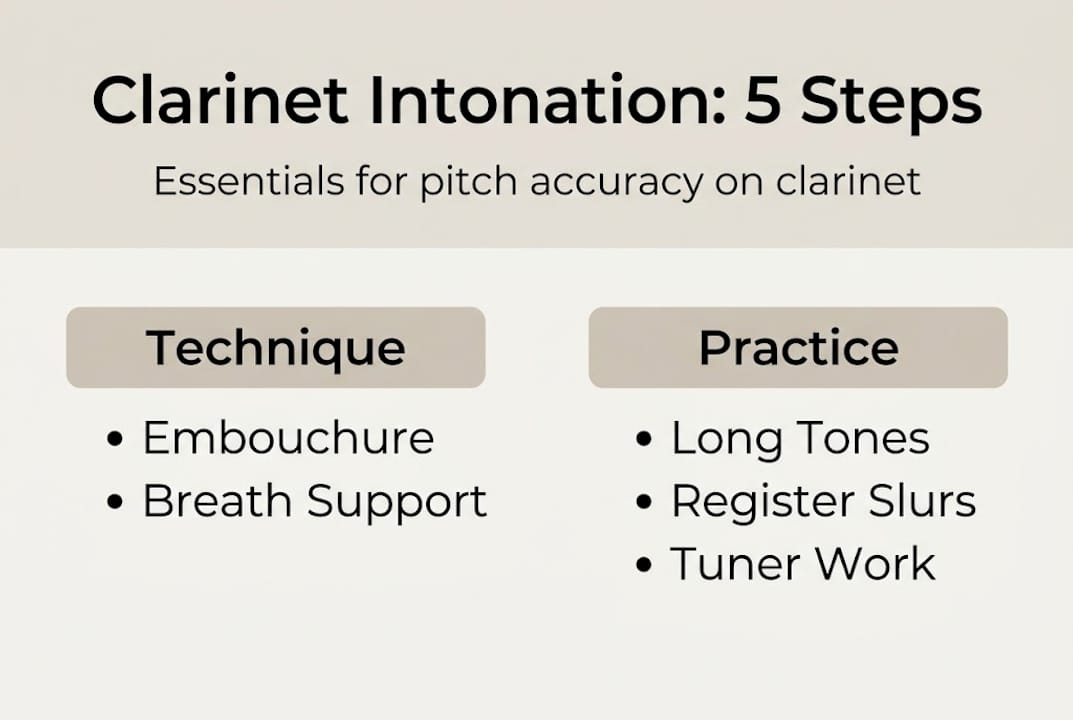
Building your practice around a solid clarinet practice essentials framework keeps your sessions focused. When you are preparing for a performance, clarinet performance tips that address intonation under pressure are worth adding to your preparation toolkit.
Nuances, accessories, and solutions for intonation challenges
Finally, addressing intonation challenges means understanding both advanced nuances and the role of accessories. Even players with excellent technique run into edge cases that technique alone cannot solve.
Common intonation problems and their solutions:
- Cold instrument plays sharp: Pre-warm the bore by blowing warm air through the instrument for several minutes before tuning. A cold instrument sharpens as it reaches playing temperature, so tuning cold locks you into a pitch that will drift.
- Soft reed plays flat: A reed that is too soft for your mouthpiece facing cannot vibrate at the correct frequency. Move up half a reed strength and recheck your pitch center.
- Multiphonics and microtones: These extended techniques require pitch bends via tongue position only. Jaw movement muddies the tone and creates unintended pitch shifts.
- Altissimo instability: Raise your tongue higher, increase air speed, and firm your embouchure slightly. Altissimo is the register most sensitive to voicing changes.
- Ensemble sharpness: In a warm concert hall, your clarinet may run sharp. Pulling the barrel slightly and using a slightly more open voicing compensates without sacrificing tone.
Pro Tip: A mouthpiece with strong resonance characteristics makes intonation easier because the instrument itself wants to vibrate at the correct pitch. You spend less energy fighting the setup and more energy playing musically. This is one area where equipment genuinely changes the experience.
Professional players often vary their “normal” configuration, using different reeds, barrel lengths, or mouthpiece positions depending on the hall, the ensemble, and the repertoire. What they never vary is their commitment to pitch stability. The mouthpiece selection tips that matter most are the ones that match your playing style and physical setup. A sound improvement checklist can help you identify whether your intonation issues are physical, mechanical, or both. Understanding the mouthpiece and reed relationship is also essential before making any equipment changes.
What most articles miss about clarinet intonation
Most articles on clarinet intonation spend 80 percent of their space on tuners and embouchure. Both matter, but neither is the whole story. The real separator between players who struggle with pitch and players who do not is ear training, specifically the ability to hear an interval and physically respond before the note ends.
Tuners are a diagnostic tool, not a practice method. Staring at a needle teaches you to react after the fact. Practicing with drones and intervals builds the internal pitch reference that lets you correct in real time, which is the only kind of correction that matters in a live performance.
Voicing is equally underemphasized. Most players know it exists but treat it as an advanced concept. It is not. Even beginners can learn to shift their tongue position between registers, and doing so early prevents the bad habits that cause plateau-level intonation problems later.
Equipment also plays a real role that gets dismissed as gear obsession. A mouthpiece that aids resonance genuinely reduces the physical effort required to center a pitch. That is not marketing. It is acoustics. Using a sound troubleshooting guide to separate technique problems from equipment problems is a practical first step that most players skip entirely.
Find your ideal setup for better intonation
Better intonation starts with understanding your technique, but the right equipment makes every improvement easier to achieve and easier to maintain.

At MyClarinetStuff.com, we carry Gleichweit precision CNC-crafted mouthpieces designed to give you consistent resonance and pitch stability across every register. Whether you are a student working on long tones or a professional preparing for a concert hall performance, matching your mouthpiece to your playing style changes what is possible. Use our mouthpiece matchmaker to find the right fit, explore our accessory selection guide for a complete setup review, or browse our performance accessories guide for tools that support pitch accuracy at every level.
Frequently asked questions
What does clarinet intonation mean?
Clarinet intonation refers to how accurately you play pitches across all registers by controlling embouchure, air, voicing, and instrument setup. It is an active, ongoing skill rather than a one-time adjustment.
How do clarinet players fix intonation problems?
Players adjust tongue position, air speed, embouchure, and barrel length, and they use practice routines like long tones and drones to build the physical awareness needed for real-time pitch correction.
Do mouthpieces and reeds affect clarinet intonation?
Yes. Mouthpieces that aid resonance reduce the physical effort required to center a pitch, and the right reed strength and cut make pitch stability more consistent across all registers.
Why does my clarinet sound sharp in cold rooms?
A cold instrument sharpens as it warms to playing temperature, so pre-warming your instrument for at least 30 minutes before tuning helps stabilize pitch from the start.
What are good exercises for clarinet intonation?
Long tones, pitch bends, and slow scales with held notes, register slurs, and drone practice are all proven methods for building intonation stability over time.
Recommended
- Master clarinet tuning tendencies for precise sound in 2026
- 7-Step Clarinet Sound Improvement Checklist for Experts – My Clarinet Stuff
- Clarinet Performance Tips Guide for Achieving Your Best Sound – My Clarinet Stuff
- Clarinet articulation explained techniques for every player
- 7 Proven Singing Techniques to Instantly Improve Your Voice – TMRG Solutions
- What Is Intonation for Clarinet: A Player's Guide