
Every beginner walks into a music store or opens a browser and asks the same question: “What clarinet should I buy?”
The brand, the material, the price, the color. Students research for hours. Parents compare reviews. Teachers recommend models they’ve seen last for decades.
Almost nobody asks the more important question: “What mouthpiece should I play?”
It turns out that finding the best clarinet mouthpiece for beginners — not the best clarinet — is the decision that shapes everything that follows.
That’s the mistake. And it costs players — beginners and professionals alike — more than they realize.
The Uncomfortable Truth About Beginner Clarinets
Here’s something most music teachers won’t say out loud: you can get away with a cheap clarinet.
A decent plastic student model from a reputable brand — Yamaha, Buffet Prodige, Jupiter — will play in tune, hold together through years of lessons, and do the job. Yes, it’s plastic. Yes, the keywork won’t feel like a professional instrument. But it won’t hold back a motivated beginner from learning, progressing, and eventually sounding great.
The clarinet body is the house. It needs to be solid and reasonably well-built. But you don’t need a mansion to start learning how to live.
You Cannot Get Away with a Bad Mouthpiece
The mouthpiece, on the other hand, is not the house. The mouthpiece is the door. Every single note you play, every breath you take, every tone quality you produce — it all comes through the mouthpiece first.
A bad mouthpiece doesn’t just make you sound worse. It makes everything harder. The tone feels resistant or airy. Intonation wanders in the upper register. The sound is thin, bright, or unfocused. And here’s the worst part: you don’t even know it’s the mouthpiece’s fault. You think it’s your embouchure. You think it’s your reed. You think you’re just not good enough yet.
You practice harder. You change reeds. You adjust your jaw. And the mouthpiece keeps leaving a bad taste in every note you play.
This is why experienced players — the ones who’ve been around long enough to know — will tell you: spend less on the clarinet if you have to, but never scrimp on the mouthpiece.
Why the Mouthpiece Matters This Much
Think about how sound is actually produced on a clarinet. You don’t buzz your lips like a brass player. You don’t blow across a hole like a flutist. You press a reed against the lay of a mouthpiece, and the vibration of that reed against that precise curve of facing and tip opening creates the sound.
Everything — tone, response, intonation, register transitions, how easily high notes speak, how dark or bright the sound is — is determined at that single point of contact between reed, facing, and tip opening.
The clarinet body amplifies and shapes what the mouthpiece starts. But if the starting point is wrong, no amount of clarinet body can fix it.
This is why two players can pick up the same instrument and sound completely different. And why the same player can transform their sound overnight simply by changing mouthpieces.
What Most Beginners Are Actually Playing On
Most student clarinets come with a stock mouthpiece in the case. These are mass-produced, injection-molded plastic pieces made to a generic specification — not to any particular player’s needs, playing style, or reed preference.
They work well enough to get a sound out. That’s about all you can say about them.
The facing curve is usually imprecise. The tip opening is standard-medium with no refinement. The chamber dimensions are whatever was cheapest to mold. These mouthpieces don’t make you bad — they just never let you be as good as you could be.
Replacing the stock mouthpiece is almost always the single biggest upgrade a beginner can make. More than upgrading the clarinet. More than buying premium reeds. The mouthpiece is where the money goes furthest.
What to Look for in a Beginner Mouthpiece
When choosing a mouthpiece as a beginner, a few specs matter more than anything else:
Tip opening is the gap between the reed and the tip of the mouthpiece at their furthest point. Smaller tip openings (around 1.00–1.05mm) are more controlled and require less embouchure strength — great for beginners. Medium openings (around 1.10–1.20mm) offer more flexibility and expressiveness as you develop. Very open tips (1.25mm+) are for advanced players with strong, developed technique.
Facing length is how far back along the mouthpiece the reed separates from the lay. A longer facing gives more flexibility and expressiveness; a shorter facing responds more immediately and predictably. Most beginners do well with a medium facing that doesn’t require as much reed control.
Material matters more than people expect. Hard rubber (ebonite) is the traditional material for professional mouthpieces — it produces a warm, focused, dark tone and is temperature-stable. Synthetic materials with precision manufacturing can match or exceed hard rubber’s consistency. Cheap plastic lacks the density and precision machining that makes a mouthpiece actually work reliably.
Manufacturing precision is where most budget mouthpieces fall apart. A mouthpiece’s facing curve needs to be exact — we’re talking tolerances measured in hundredths of a millimeter. Injection-molded plastic can’t achieve this consistently. CNC-machined mouthpieces can.
The Gleichweit Lineup: From First Lesson to Concert Stage
Gleichweit mouthpieces are made in Vienna, Austria — where the clarinet tradition runs deep and the standards for tone and precision are uncompromising. Every Gleichweit mouthpiece is CNC-machined from high-grade synthetic material and tested for consistency.
The result is a mouthpiece that plays the same way every time — no batch variation, no “good one” and “bad one” in the same model run. What you order is exactly what you get.
Here are the five models that have resonated most strongly with US players — and the ones we recommend most often when asked about the best clarinet mouthpiece for beginners and advancing players alike:
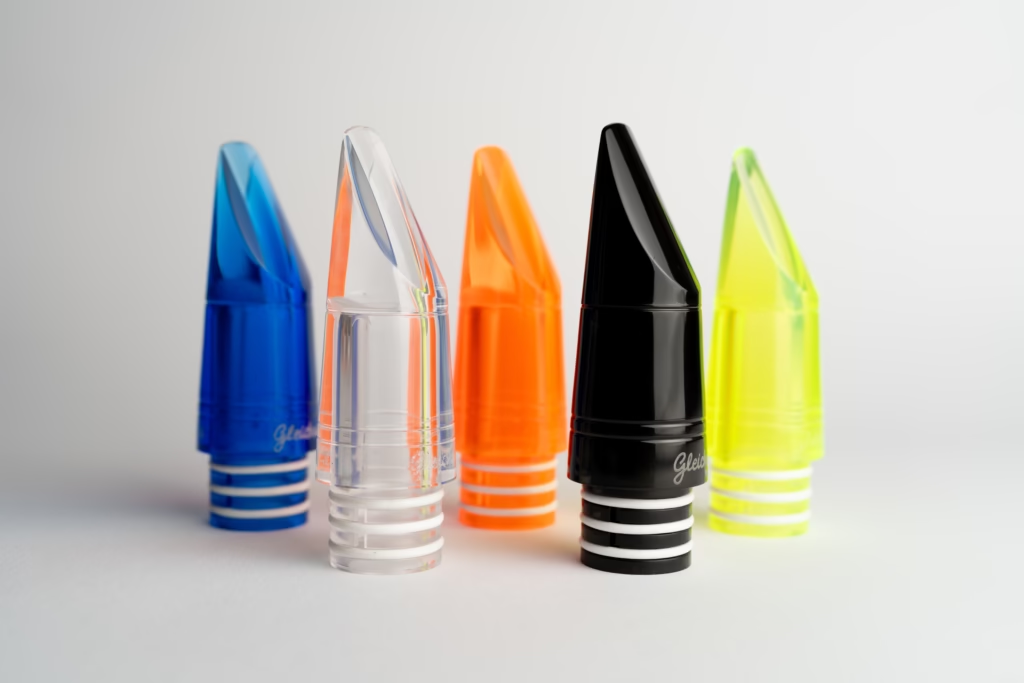
Gleichweit B7-4 — The Best Seller, and the Best Place to Start
If you ask us which mouthpiece to start with, this is the answer most of the time. The B7-4 is our most popular Bb clarinet mouthpiece, and for good reason: it’s balanced in a way that rewards beginners and satisfies advanced players simultaneously.
The tip opening sits in the closed-to-medium range, which means the reed responds predictably without demanding perfect embouchure control. The tone is warm and focused. Intonation is stable across all three registers. It works beautifully with both French-style cane reeds and synthetic reeds, which gives you flexibility as you explore what works for you.
This is the mouthpiece that doesn’t get in your way. It lets you focus on developing your sound rather than fighting your equipment.
Best for: Intermediate and advancing beginners who want to sound good from day one. Also a reliable choice for professionals who want a controlled, dark, focused sound.
Gleichweit B8-2 — Warmth and Phrase Flexibility
The B8-2 opens up the sound and adds depth. With a medium tip opening and an extended 25mm facing, it gives the reed more room to vibrate — which translates into a richer, more resonant tone with exceptional phrase flexibility.
This is a mouthpiece that rewards musical expression. Pianissimo passages have depth. Forte passages project without hardening. The longer facing means it asks a bit more of your reed control, so it’s ideal for players who have passed the beginner stage and want to start shaping a genuinely personal sound.
Best for: Intermediate to advanced players — especially those working on orchestral or chamber repertoire where tonal warmth and phrase shaping are essential.
Gleichweit B8-4 — Familiar Feel, Elevated Quality
If your teacher plays a Vandoren M30, or if you’ve read about the M30 as a benchmark for clarinet mouthpieces, the B8-4 will feel like coming home — but better. It delivers the same focused, balanced, warm tone that has made the M30 a standard for decades, but with Gleichweit’s precision manufacturing and consistency.
The medium tip opening makes it approachable. The balanced tone makes it versatile. From jazz to classical, from lessons to recitals, this mouthpiece handles everything without asking too much of the player.
Best for: Players of any level wanting a versatile, all-purpose mouthpiece with a familiar Vandoren-comparable feel. Excellent for students making their first serious upgrade.
Gleichweit B9-1 — Expression Without Limits
The B9-1 opens things up. With a medium-open tip, it gives the reed freedom to vibrate fully — producing a fuller, more projecting, more expressive sound. It’s the mouthpiece for players who feel like they’ve been “held back” by a closed tip and want to breathe more life into their playing.
The B9-1 compares favorably to the Vandoren B40 — one of the most respected open-tip mouthpieces in classical clarinet playing. But it adds something the B40 doesn’t always offer: outstanding synthetic reed compatibility, which matters for players who value stability and consistency in different playing environments.
Best for: Advanced players and professionals who want expressive freedom, full projection, and excellent synthetic reed response.
Gleichweit B9-5 — Speed and Power
The B9-5 combines the tonal body and freedom of a medium-open tip with the immediate response of a short 21mm facing. The result is a mouthpiece that speaks fast and plays with authority. Technical passages feel effortless. Response in the altissimo register is instant. The sound is full without requiring extra effort to project.
This is a mouthpiece that keeps up with you — and then some. It’s particularly well-suited for players who work in fast, technically demanding repertoire, or who perform in large hall settings where projection and clarity matter most.
Best for: Advanced players and professionals who prioritize technical facility, immediate response, and powerful projection.
Not Sure Which One Is Right for You?

You don’t have to guess. Gleichweit’s 7-Day Test Box lets you try multiple mouthpieces at home — on your own clarinet, with your own reeds, in your own playing environment — before committing to a purchase. It’s the only honest way to choose a mouthpiece, and it’s how most professional players would tell you to do it.
Because picking a mouthpiece by reading specs is like picking a pair of shoes by reading measurements. The numbers tell part of the story. Your mouth, your air, your sound — they tell the rest.
The Bottom Line
Buy the clarinet that fits your budget. Spend wisely on reeds. But when it comes to the mouthpiece — the single piece of equipment that every note, every tone, every musical idea passes through — don’t compromise.
A bad clarinet with a great mouthpiece will still sound decent. A great clarinet with a bad mouthpiece will always sound bad. And bad mouthpieces have a way of leaving a bad taste — in your tone, in your progress, in your relationship with the instrument itself.
Upgrade the mouthpiece first. Everything else will sound better for it.
Ready to hear the difference? Start with the Gleichweit Test Box and try before you buy.
One Response