
TL;DR:
- Craftsmanship in clarinet mouthpieces involves precise shaping and finishing of the facing curve and internal geometry to ensure consistent reed response and sound. Properly crafted features significantly influence tone, resistance, and control, making informed selection critical for players and educators. Manufacturing discipline and internal design coherence are essential for reliable performance and achieving the maker’s musical intent.
Craftsmanship in clarinet mouthpieces is defined as the careful shaping, finishing, and measurement of the facing curve, internal geometry, and overall construction to deliver reliable reed response and sound projection. The role of craftsmanship in mouthpieces goes far beyond aesthetics. Every millimeter of the facing curve, every contour inside the chamber, and every surface finish decision directly shapes how a reed vibrates and how a player experiences tone, resistance, and control. For clarinet musicians and educators, understanding these technical choices turns mouthpiece selection from guesswork into an informed decision.
How does the facing curve geometry affect reed response?
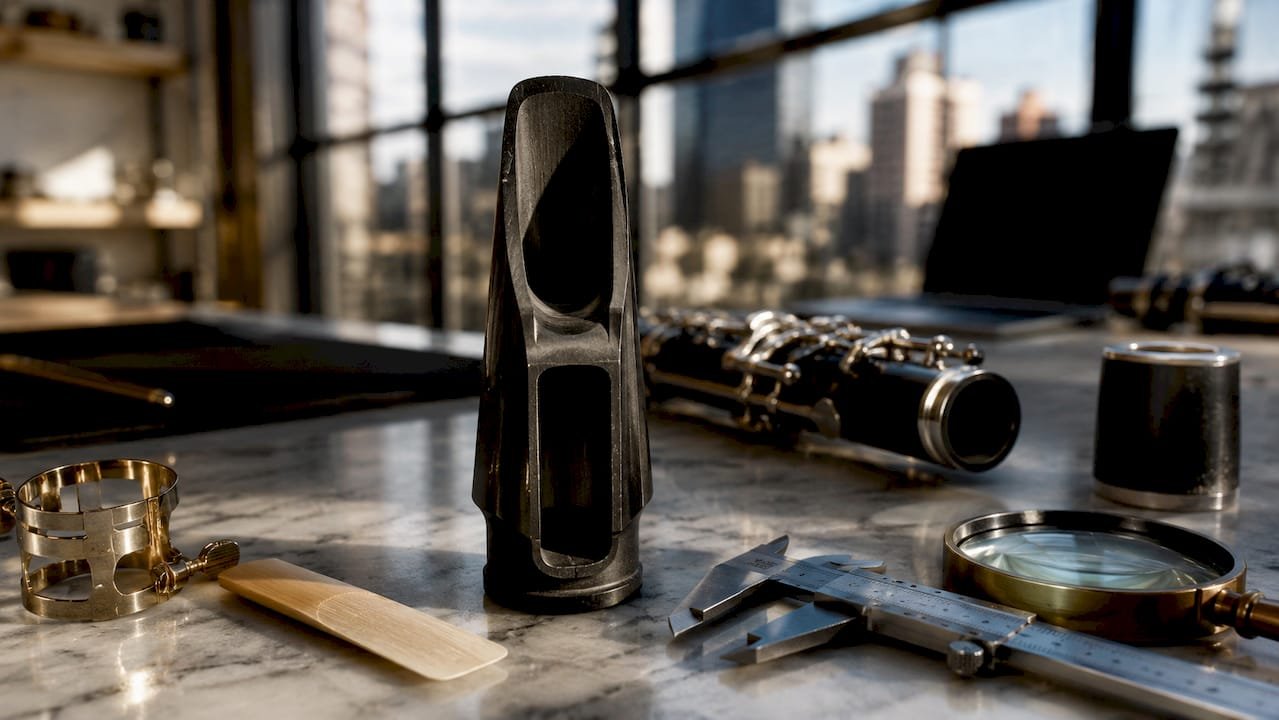
The facing curve is the most performance-critical surface on any clarinet mouthpiece. It acts as a moving boundary condition during reed vibration cycles, meaning two curves that look nearly identical can behave very differently under dynamic playing conditions. Facing curves serve as moving boundaries in reed oscillation, so even small geometric differences change how reed stiffness loads and unloads across each cycle. That physical reality explains why players often feel a dramatic difference between two mouthpieces with the same tip opening measurement.
Three qualities define a well-crafted facing curve:
- Smoothness. Surface irregularities create inconsistent reed contact forces. A rough or pitted facing introduces unpredictable resistance that no embouchure adjustment can fully correct.
- Left-right symmetry. Asymmetry introduces torsional reed behavior that no curve shape can mask. A reed that twists during vibration produces uneven tone and unstable pitch.
- Continuity. Abrupt inflections in the curve cause sudden changes in reed seating forces. A smooth, continuous transition from the table to the tip rail gives the reed a predictable path through each oscillation.
Mass production often sacrifices these three qualities for speed. A craftsman, by contrast, spends time measuring and refining each surface until all three conditions are met. Skilled artisan refinements in facing and finishing can transform a mediocre mouthpiece into a genuinely expressive one. That is not marketing language. It is a measurable outcome of surface geometry.
Pro Tip: When testing a new mouthpiece, play a long tone pianissimo in the throat register. Unevenness or sudden resistance changes at low dynamic levels almost always point to facing curve inconsistencies rather than reed problems.
What internal mouthpiece design features shape tone and impedance?
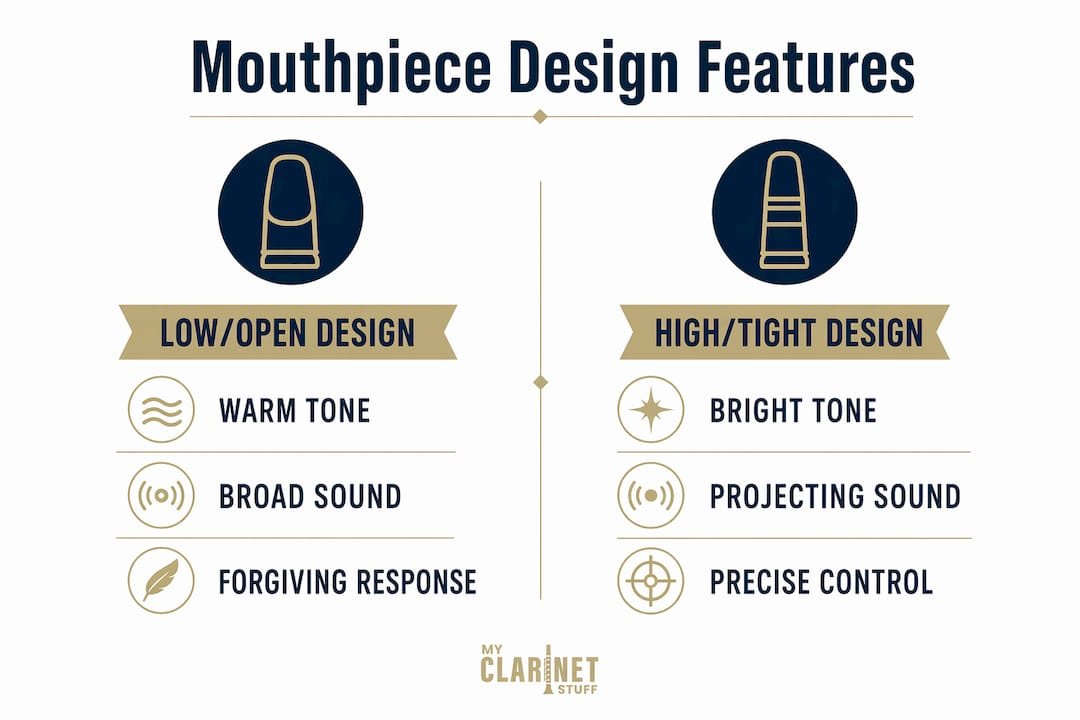
The facing curve gets most of the attention, but the interior of a mouthpiece shapes the sound just as much. The baffle, chamber volume, and throat diameter each contribute to the instrument’s acoustic impedance. Internal components like baffle, chamber, and throat shape impedance in ways that stabilize pitch centers and define tonal brightness or warmth. A high baffle reflects sound energy back toward the reed quickly, producing a bright, forward tone. A large, rounded chamber slows that reflection and creates a broader, darker sound.
Here is how the major internal features compare in their tonal effect:
| Feature | Low or open design | High or tight design |
|---|---|---|
| Baffle | Warm, broad tone | Bright, projecting tone |
| Chamber volume | Dark, resonant sound | Focused, direct sound |
| Throat diameter | Flexible, open response | Centered, controlled response |
Craftsmanship determines whether these design choices actually reach the player. A well-executed facing reveals internal design rather than overriding it. If the facing is poorly finished, the player cannot access the tonal character the maker intended. The two systems work together. A beautifully designed chamber paired with a rough or asymmetric facing produces a mouthpiece that underperforms its own potential.
The interplay between internal geometry and facing curve also affects how forgiving a mouthpiece feels. A chamber designed for a focused sound requires a facing with tight tolerances to deliver that focus consistently. A broader chamber design allows slightly more variation in the facing without losing its core character. Makers who understand this relationship build mouthpieces where every element reinforces the others. That coherence is the clearest sign of genuine craftsmanship in musical mouthpieces.
Pro Tip: Ask a mouthpiece maker or retailer whether the internal geometry was designed for a specific style of playing. A classical chamber profile paired with a jazz-oriented facing curve creates a mouthpiece that does neither job well.
Why does measurement discipline matter in mouthpiece production?
Consistency separates a craftsman from a manufacturer. Two mouthpieces from the same production run can feel completely different if measurement controls are absent. Measurement discipline involves repeatable methods and controlled references. Without them, perceived differences between mouthpieces may reflect measurement bias rather than true geometric variation. That distinction matters enormously when a player buys a second mouthpiece expecting it to match the first.
The key measurement disciplines in quality mouthpiece production include:
- Facing curve mapping. Craftsmen use feeler gauges or optical measurement tools to map the curve at multiple points along its length. This produces a profile that can be compared, adjusted, and replicated.
- Table flatness verification. The table must be flat to within tight tolerances. A warped table prevents the reed from seating correctly, regardless of how well the facing curve is shaped.
- Tip rail symmetry checks. Both sides of the tip rail must open at the same rate. Unequal openings produce the torsional reed behavior described earlier.
- Throat and chamber diameter measurement. Internal dimensions affect acoustic impedance. Measuring them at multiple depths ensures the intended tonal character is built into every piece.
CNC machining has changed what consistency means in modern mouthpiece production. CNC protects design intent by replacing the variability of handcrafted batches with repeatable geometry. Gleichweit mouthpieces, manufactured in Austria and distributed in the U.S. through Myclarinetstuff, use CNC production on synthetic material to deliver exactly this kind of consistency. The design originates with a skilled maker. The machine preserves it across every unit. That combination gives players a mouthpiece that performs the same way on the first day and the hundredth.
Pro Tip: When comparing two mouthpieces of the same model, play them back to back on the same reed. Any difference you feel is real geometry, not your imagination. Consistent craftsmanship means the two pieces should feel nearly identical.
How can musicians and educators use craftsmanship knowledge in selection?
Understanding how craftsmanship affects sound gives musicians and educators a practical framework for choosing and recommending mouthpieces. Differences in facing curvature can feel disproportionately large to clarinet educators relative to tip opening changes. That means a small facing adjustment carries more weight in a student’s experience than a change in tip opening measurement. Educators who know this can diagnose playability problems more accurately and recommend solutions with more confidence.
Use these criteria when assessing mouthpiece craftsmanship quality:
- Check the table. Hold the mouthpiece up to light with a flat reed or glass plate on the table. Any visible gap or rocking indicates a warped table. This is the most common quality failure in budget mouthpieces.
- Inspect the tip rail. The tip rail should be even in width from left to right. Uneven width signals asymmetric finishing.
- Feel the facing. Run a thin reed slowly across the facing from the table toward the tip. The resistance should build gradually and evenly. Any sudden grab or skip points to a surface irregularity.
- Listen for tonal consistency. Play the same note at three dynamic levels. A well-crafted mouthpiece responds predictably across the dynamic range. Sudden changes in tone color at soft dynamics often trace back to facing problems.
- Test reed compatibility. A well-crafted mouthpiece works with a range of reed strengths. If a mouthpiece only plays well on one specific reed, the facing geometry is likely too narrow in its tolerances.
For educators, the facing curves complete guide at Myclarinetstuff provides detailed reference material on how curve geometry maps to student experience. Pairing that knowledge with hands-on assessment gives teachers a reliable method for matching students to mouthpieces that support their technical development. The signs of quality mouthpieces resource at Myclarinetstuff also covers the physical indicators that separate well-made pieces from mass-produced alternatives.
Key Takeaways
Craftsmanship in clarinet mouthpieces determines whether a maker’s design intent reaches the player, and it depends on facing geometry, internal design, and measurement discipline working together.
| Point | Details |
|---|---|
| Facing curve geometry is foundational | Smoothness, symmetry, and continuity in the facing curve control reed behavior more than tip opening alone. |
| Internal design shapes tone | Baffle, chamber, and throat dimensions define brightness, warmth, and player effort through acoustic impedance. |
| Measurement discipline ensures consistency | Repeatable methods prevent variability between mouthpieces of the same model and build player trust. |
| CNC preserves design intent | Precision machining locks in a maker’s geometry across every unit, eliminating batch-to-batch variation. |
| Educators can apply this knowledge | Assessing table flatness, tip rail symmetry, and facing feel gives teachers a reliable mouthpiece selection framework. |
What I’ve learned about craftsmanship after years with clarinet mouthpieces
The conversation about mouthpiece quality used to focus almost entirely on materials. Hard rubber versus crystal versus synthetic. That framing misses the point. A poorly finished hard rubber mouthpiece will always underperform a well-crafted synthetic one, regardless of what the material is. The geometry is what plays. The material just holds it.
What changed my thinking was watching a skilled maker refine a facing curve by hand and then measure it against a CNC-produced piece with the same nominal dimensions. The handcrafted piece had subtle asymmetries that the maker had to correct through multiple passes. The CNC piece held its geometry from the first measurement. Neither approach is inherently superior. But the CNC piece gave the player a reliable starting point that the handcrafted piece required more work to reach.
The practical lesson for educators is this: craftsmanship bridges design intent and player experience in ways that no amount of brand reputation can substitute for. When a student struggles with a mouthpiece, the first question should be about the geometry, not the brand name on the side. Teaching players to assess a mouthpiece physically, rather than by reputation, is one of the most useful skills a clarinet educator can pass on.
— Milos
Gleichweit mouthpieces and selection tools at Myclarinetstuff
Myclarinetstuff carries Gleichweit clarinet mouthpieces, designed in Austria and CNC-machined from synthetic material for consistent geometry across every unit. The design intent is locked in from the first piece to the last, which means players get the same facing curve, chamber profile, and throat dimensions every time.
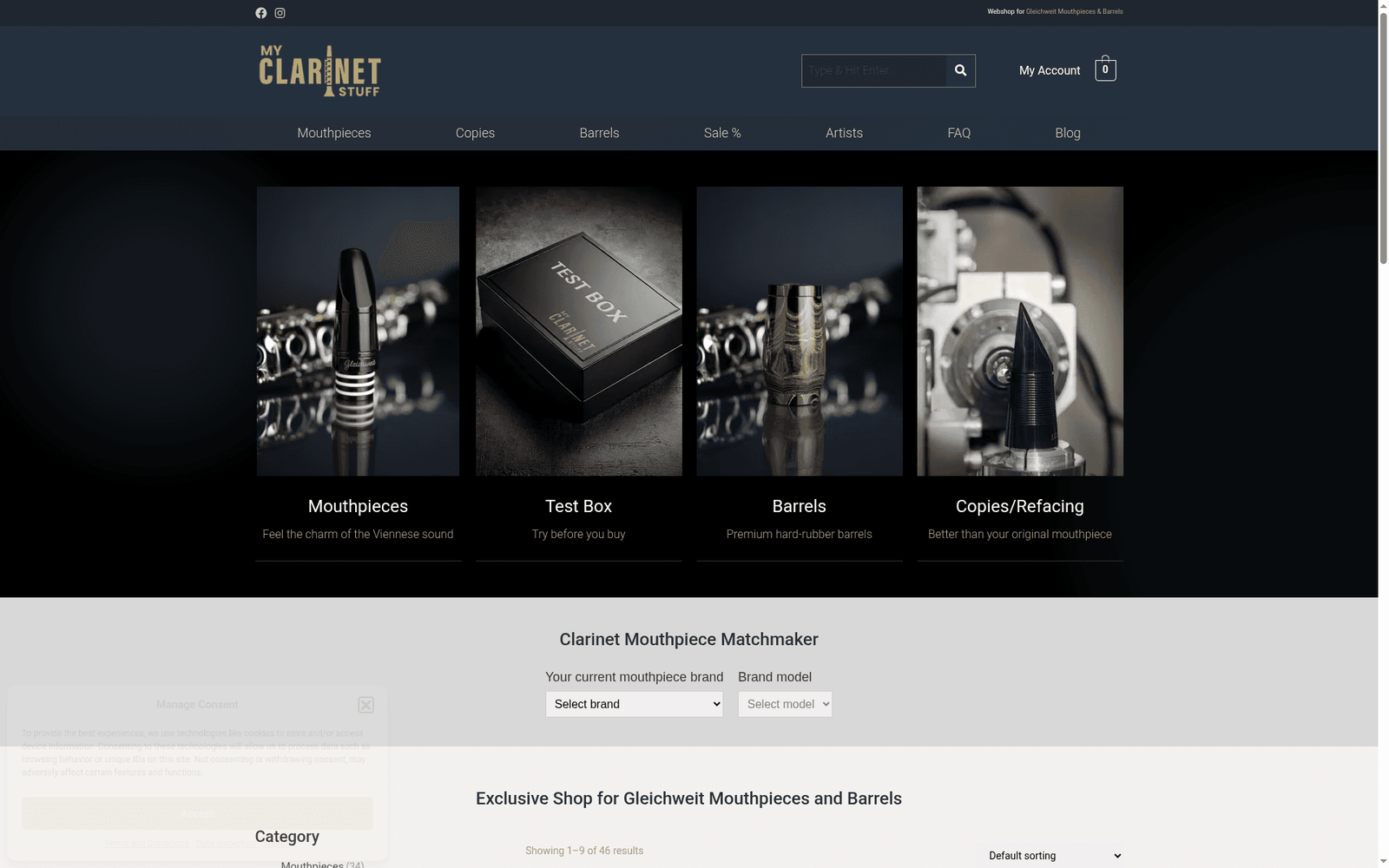
The Clarinet Mouthpiece Matchmaker at Myclarinetstuff helps players identify which Gleichweit model fits their playing style, reed preference, and tonal goals. For players who want to compare options before committing, the at-home test box program lets you try mouthpieces in your own practice environment. The mouthpiece selection tips guide on the site translates the craftsmanship criteria covered here into a practical shopping checklist.
FAQ
What is the role of craftsmanship in mouthpieces?
Craftsmanship in mouthpieces refers to the precise shaping and finishing of the facing curve, internal geometry, and surface quality to ensure reliable reed response and consistent tone. Without it, even a well-designed mouthpiece fails to deliver its intended sound.
How does the facing curve affect clarinet playability?
The facing curve controls how the reed seats and vibrates during each oscillation cycle. Smoothness, left-right symmetry, and curve continuity matter more than the specific mathematical shape of the curve.
Why do two mouthpieces of the same model sometimes feel different?
Inconsistent measurement methods during production cause real geometric variation between nominally identical pieces. Measurement inconsistency leads to unpredictable playability even within the same model line.
Does CNC machining replace skilled craftsmanship?
CNC machining preserves a designer’s geometry with high repeatability, but it does not create the original design. CNC protects design intent rather than replacing the skilled judgment that produced it.
How can educators identify a well-crafted mouthpiece for students?
Check the table for flatness, inspect the tip rail for even width, and feel the facing for smooth, gradual resistance. Facing curvature differences affect student playability more than tip opening changes, making physical assessment more reliable than spec sheets alone.