
TL;DR:
- A test mouthpiece box is a curated set allowing players to evaluate clarinet mouthpieces under consistent conditions. It ensures accurate comparisons, better reed matching, and reduces purchase regret by providing repeatable, controlled testing environments. Using these boxes improves sound quality choices and helps players make confident, objective decisions about their equipment.
A test mouthpiece box is defined as a curated set of clarinet mouthpieces packaged together so players can evaluate each one under the same conditions before committing to a purchase. Knowing why use test mouthpiece boxes matters because the mouthpiece is the single most influential component in your clarinet setup. A good mouthpiece can significantly improve even an average clarinet’s sound quality, while a poor fit holds back even an expensive instrument. Myclarinetstuff offers the Gleichweit Test Box program specifically to give clarinetists a controlled, repeatable way to find the right match without guesswork or wasted money.
Why use test mouthpiece boxes for accurate evaluation
Test mouthpiece boxes give you a controlled testing environment that casual in-store tryouts simply cannot replicate. When you swap mouthpieces in an unfamiliar store with background noise and time pressure, your impressions are unreliable. A test box lets you isolate mouthpiece performance from external variables like room acoustics, fatigue, and social pressure.
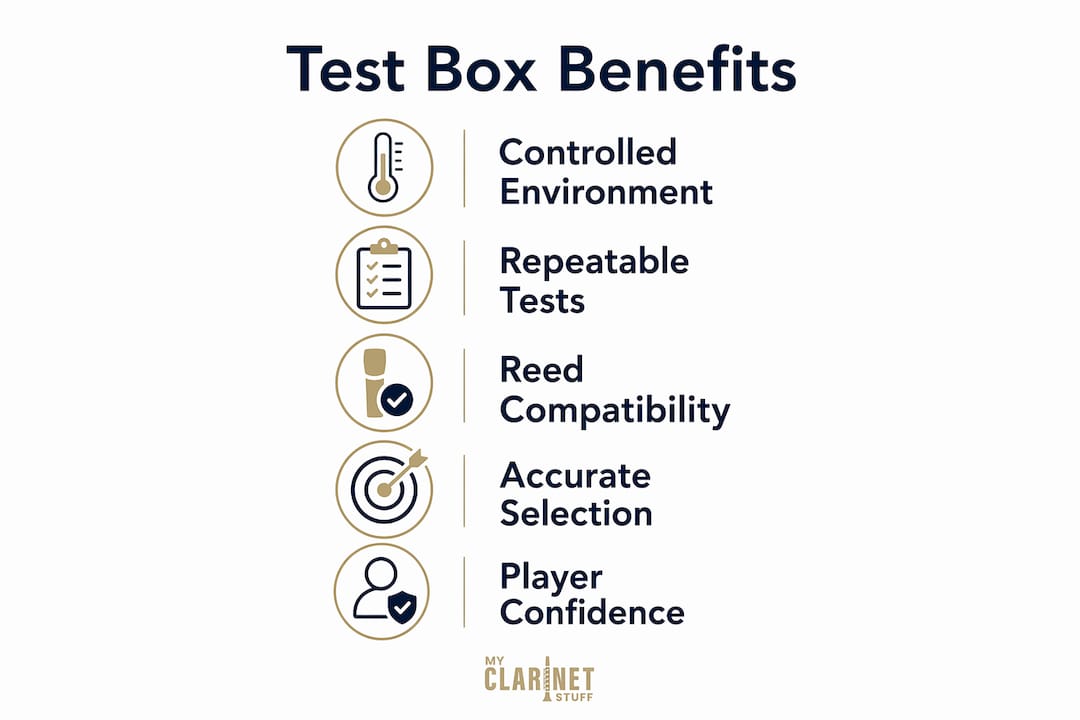
The industry term for this approach is “standardized mouthpiece evaluation,” and it is the method professional players and educators rely on when making serious equipment decisions. Test boxes bring that professional standard within reach of students and advancing players. Myclarinetstuff built its Gleichweit Test Box program around this exact principle.
The core advantage is repeatability. You play the same passage on mouthpiece A, then mouthpiece B, then return to A if needed. That back-and-forth comparison is what reveals real differences in tone, projection, and response.
How do test mouthpiece boxes work?
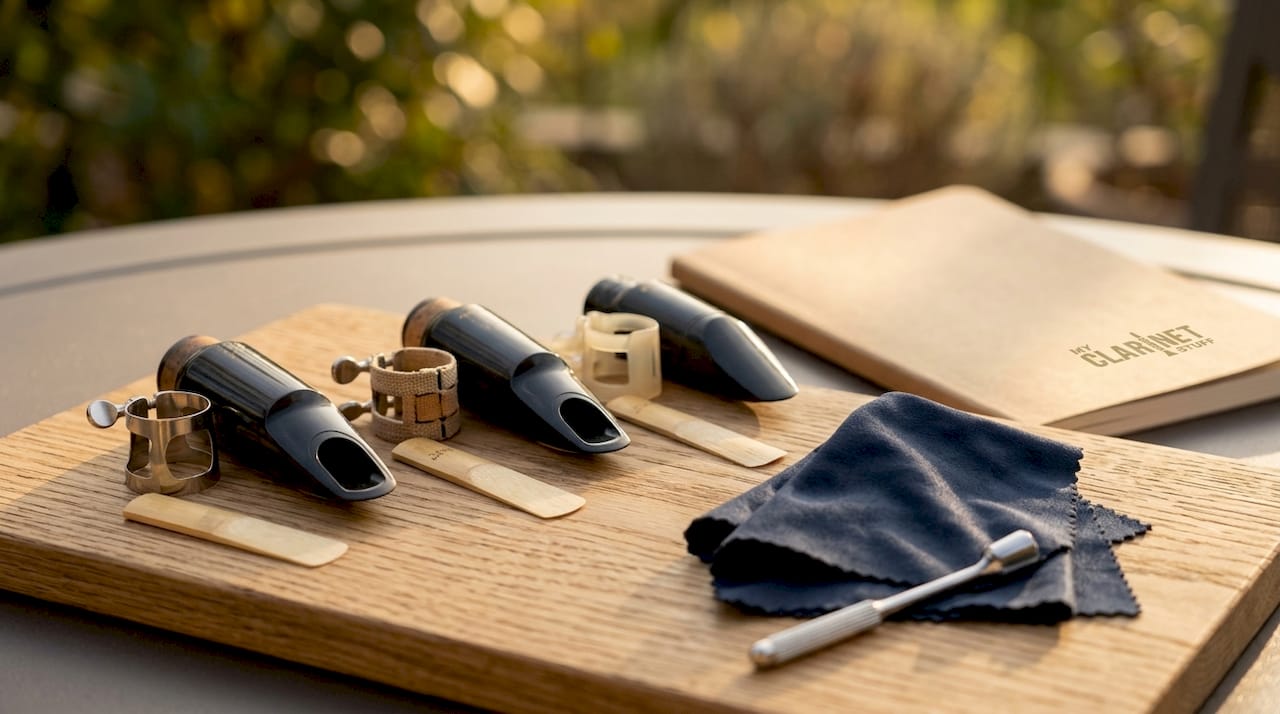
A test box contains multiple mouthpieces grouped by tip opening category, typically closed, medium, and open. Each mouthpiece in the set shares the same material and manufacturing standard, so the only variable you are evaluating is the tip opening and its effect on your playing. Myclarinetstuff’s Gleichweit mouthpieces are CNC-crafted from synthetic material in Austria, which eliminates the batch-to-batch inconsistency common in traditional hard rubber.
Key features you will find in a well-designed test box include:
- Tip opening range: Mouthpieces grouped from closed to open so you can feel the resistance spectrum
- Reed compatibility notes: Guidance on which reed strengths pair with each tip opening
- Protective compartments: Individual slots that keep mouthpieces safe during at-home testing
- Consistent material: Synthetic construction that holds its shape and dimensions regardless of humidity or temperature
Clarinet mouthpieces differ by chamber size, tip opening, rails, and baffle shape, and all these variables affect tone and response. A test box controls for chamber, rails, and baffle by keeping those consistent, leaving tip opening as the primary variable you are testing.
Pro Tip: When you first open a test box, resist the urge to play every mouthpiece in one session. Test two at a time, rest your embouchure, then compare a third. Fatigue distorts your perception of tone more than almost any other factor.
What are the main benefits of using test mouthpiece boxes?
The benefits of mouthpiece boxes go well beyond simple convenience. Here is what systematic testing actually delivers:
- Accurate tone comparison. Playing the same scale on three mouthpieces back to back reveals projection and warmth differences that memory alone cannot capture.
- Reed compatibility testing. You can try different reed strengths with each tip opening to find the pairing that feels most natural for your embouchure.
- Reduced purchase regret. Test boxes reduce trial-and-error and improve satisfaction with the final mouthpiece choice.
- Objective self-knowledge. You learn whether you prefer a closed or open tip, which is information that carries forward to every future mouthpiece decision.
- Confidence in the classroom. Music students who test before buying arrive at lessons with equipment that suits their current technique, not equipment chosen by a salesperson under time pressure.
The test mouthpiece box advantages extend to reed selection as well. Reeds take on a slight imprint of the mouthpiece’s window over time, and swapping reeds between mouthpieces can cause control issues that mask the true character of a new mouthpiece. A test box program that includes fresh reeds for each mouthpiece eliminates this problem entirely.
Players upgrading from a stock mouthpiece notice immediate improvement in sound, especially in the upper register. That improvement is only reliable when the new mouthpiece is tested properly. Without a structured test box, players often choose based on brand reputation or price alone, which is not the same as choosing based on how the mouthpiece actually performs for their specific embouchure and reed preference.
How to effectively use a test mouthpiece box
Systematic testing produces reliable results. Random noodling does not. Follow these steps to get the most from your test box session:
- Match your reeds to the tip opening. The tip opening and reed strength must complement each other. A mismatched pairing causes poor playability that has nothing to do with the mouthpiece itself.
- Play consistent material. Use the same two or three passages for every mouthpiece. A long tone exercise, a scale run, and a short lyrical phrase cover tone, agility, and expression.
- Take written notes immediately. Your memory of mouthpiece A fades the moment you pick up mouthpiece B. Write down one or two words describing each mouthpiece right after you play it.
- Rest between mouthpieces. Give your embouchure two to three minutes of rest when switching. Tired muscles produce a different sound than fresh ones.
- Return to your favorite twice. After testing all mouthpieces, go back to your top choice and play it again. Confirmation on a second pass is the strongest signal you have found the right fit.
Properly testing mouthpieces involves playing consistent musical material and making careful notes on tonal and response differences. Systematic evaluation leads to objective, reliable decisions. The Myclarinetstuff step-by-step testing guide walks through this process in detail for players who want a structured framework.
Pro Tip: If a mouthpiece feels difficult at first, adjust your reed strength before dismissing it. Experts recommend patience and reed adjustment when testing new mouthpieces to get accurate impressions. What feels resistant with a hard reed may feel free and resonant with a softer one.
Common misconceptions about test mouthpiece boxes
Several misunderstandings lead clarinetists to abandon testing too early or draw the wrong conclusions from their sessions.
- “If it feels hard to play, it’s the wrong mouthpiece.” This is the most common mistake. Players who switch mouthpieces prematurely without adjusting reeds or embouchure face false negatives. Resistance often signals a reed mismatch, not a bad mouthpiece.
- “Small tonal differences don’t matter.” They do. The difference between a slightly brighter and a slightly warmer mouthpiece becomes significant over hours of practice and performance. Small differences compound.
- “One session is enough.” A single testing session under pressure gives you a snapshot, not a full picture. Testing the same mouthpieces on two different days, with fresh embouchure, produces far more reliable results.
- “My teacher’s recommendation is enough.” Teacher recommendations are a starting point, not a final answer. Your embouchure, air support, and tonal goals are unique. What works for your teacher may not work for you.
The importance of mouthpiece boxes lies partly in how they protect you from these traps. A structured test environment forces patience and consistency that casual tryouts do not.
Test box testing versus other mouthpiece selection methods
Different selection methods suit different situations. Here is how test box testing compares to the main alternatives:
| Method | Controlled conditions | Reed compatibility testing | Return risk | Repeatability |
|---|---|---|---|---|
| Test mouthpiece box | Yes | Yes | Low | High |
| In-store tryout | Partial | Rarely | Medium | Low |
| Online purchase (no test) | No | No | High | None |
| Peer recommendation only | No | No | High | None |
Test boxes provide controlled, repeatable conditions that in-store tryouts lack. Unlike buying online without testing, a test box program reduces returns and dissatisfaction. Peer recommendations and online reviews offer useful context, but they cannot account for your individual embouchure or reed preference. The test box method complements all other approaches by adding objective data to what is otherwise a subjective process.
A well-organized test box also benefits music retailers. Retail display accessories and structured product presentation help stores create testing environments that serve customers better. For at-home programs like the Gleichweit Test Box, the packaging itself functions as the display and storage system, with compartmentalized wooden boxes keeping each mouthpiece protected and organized during the evaluation period.
Key Takeaways
Test mouthpiece boxes are the most reliable method for clarinetists to evaluate mouthpiece performance because they control variables, enable reed compatibility testing, and produce repeatable results that casual tryouts cannot match.
| Point | Details |
|---|---|
| Controlled environment | Test boxes isolate tip opening as the key variable, removing room acoustics and time pressure from the equation. |
| Reed matching matters | Always pair reed strength to tip opening before judging a mouthpiece; mismatches cause false impressions. |
| Written notes are required | Record your impressions immediately after each mouthpiece to prevent memory from distorting your comparison. |
| Repeatability beats single sessions | Testing the same mouthpieces across two sessions produces far more reliable results than one rushed evaluation. |
| Test boxes reduce purchase regret | Structured testing improves satisfaction with the final choice and lowers the chance of costly returns. |
What I’ve learned from years of watching players test mouthpieces
The single biggest mistake I see clarinetists make is treating a test session like a performance audition. They pick up a mouthpiece, play something difficult, feel self-conscious about the result, and blame the equipment. That is backwards. A test session is a diagnostic, not a recital.
The players who get the most out of a test box are the ones who slow down. They play long tones. They listen for where the sound sits in the room. They notice whether the upper register speaks easily or requires extra effort. Those are the signals that matter, not whether the mouthpiece made them sound impressive in the first thirty seconds.
I have also noticed that students consistently underestimate how much their reed choice affects the test. Switching from a strength 3 to a strength 2.5 reed on a more open mouthpiece can transform a frustrating session into a revelation. The reed compatibility guide at Myclarinetstuff addresses this directly, and I recommend reading it before your first test box session.
My honest advice: commit to at least two full testing sessions before making a decision. The mouthpiece that surprises you on day two is almost always the right one.
— Milos
Myclarinetstuff’s test box program for clarinetists
Myclarinetstuff makes it straightforward to test Gleichweit mouthpieces at home before buying. The Gleichweit Test Box program ships directly to you with mouthpieces organized by tip opening, so you can run a proper evaluation on your own schedule with your own reeds and your own clarinet.

The Gleichweit Test Box Variety Pack covers the full tip opening range in one shipment, which is the fastest way to identify where your embouchure naturally sits. If you already know you prefer a specific range, the closed tip and medium tip options let you go deeper within that category. Not sure where to start? The Clarinet Mouthpiece Matchmaker at Myclarinetstuff asks a few targeted questions and points you toward the right test box for your playing style and goals.
FAQ
What is a test mouthpiece box?
A test mouthpiece box is a packaged set of clarinet mouthpieces grouped by tip opening that allows players to evaluate and compare each mouthpiece under consistent conditions before purchasing.
How many mouthpieces should I test at one time?
Test two mouthpieces per session, rest your embouchure between each, and limit full sessions to three or four mouthpieces. Fatigue distorts tone perception and leads to unreliable conclusions.
Do I need special reeds for a test box session?
Use reeds matched to the tip opening of each mouthpiece you are testing. A mismatched reed strength causes playability problems that reflect the reed, not the mouthpiece itself.
Can beginners benefit from test mouthpiece boxes?
Test boxes assist both beginners and advanced players in selecting mouthpieces tailored to their tonal preferences and playing needs. Beginners benefit especially because they have not yet developed strong preconceptions about what a mouthpiece should feel like.
How is a test box different from buying online and returning?
A test box is designed for evaluation from the start, with multiple tip openings available for direct comparison. Buying and returning individual mouthpieces online gives you no side-by-side reference point and often involves restocking fees or shipping costs.
One Response