
TL;DR:
- Mastering the bass clarinet altissimo register relies on throat voicing and instrument-specific fingering experimentation. Consistent practice with overtones, proper setup, and patience are essential for reliable, musical high notes. Adjusting equipment and listening to the instrument help progress faster in this challenging register.
The bass clarinet altissimo register is defined as the pitch range that extends significantly above the standard written range, requiring specialized fingerings, throat voicing, and embouchure control to produce reliably. Most players encounter it as a wall: the notes exist on paper, but getting them to speak cleanly feels like a different instrument entirely. Understanding the clarinet registers as a whole system makes the altissimo far less mysterious. This article covers what the altissimo register includes, why fingering it is so complicated, and exactly how to practice it so the notes come out stable and musical.
What is the bass clarinet altissimo register?
The altissimo register on the bass clarinet refers to the notes that begin above C6 (written) and can extend upward by 4 to 10 ledger lines above the treble clef staff. That range is not a theoretical curiosity. Contemporary composers and jazz writers regularly call for it, and advanced players need it to perform modern repertoire. The term “altissimo” comes from Italian for “very high,” and while it is used across woodwind instruments, the bass clarinet version presents unique challenges because the instrument’s long bore and large bell create acoustic conditions that make these partials harder to isolate.
The altissimo register sits above the instrument’s standard three-register system: the chalumeau (low), the clarion (middle), and the upper clarion (high). Altissimo notes are produced by overblowing into the fourth, fifth, and higher partials of the overtone series. Each of those partials requires a specific combination of register keys, side keys, and vent configurations to speak clearly.
How altissimo notes are notated
Bass clarinet music is written in treble clef and sounds a major ninth lower than written. That transposition matters when you read altissimo passages. A written C6 sounds as Bb4 in concert pitch. Players reading orchestral or chamber parts must track both the written fingering position and the concert pitch result. The table below shows the written altissimo range and the approximate concert pitch equivalent for reference.
| Written Note | Approximate Concert Pitch | Ledger Lines Above Staff |
|---|---|---|
| C6 | Bb4 | 1 |
| E6 | D5 | 3 |
| G6 | F5 | 5 |
| C7 | Bb5 | 8 |
| E7 | D6 | 10 |
Why is fingering the altissimo register so challenging?
Altissimo fingerings on the bass clarinet are not standardized. That single fact explains most of the frustration players experience. Fingering efficacy varies substantially depending on whether your instrument has a single-vent or double-vent register system. Double vents are common on professional models and support fingering combinations that simply will not work on single-vent student instruments. A fingering that produces a clean G6 on one horn may produce nothing but air noise on another.
The lack of a universal standard extends beyond vent systems. Manufacturing differences among brands like Leblanc, Selmer, and Eppelsheim mean that techniques and fingerings developed on one instrument may not transfer to another. Players who switch instruments mid-career often have to rebuild their entire altissimo fingering vocabulary from scratch.
The practical result is that no single fingering chart covers every player’s situation. Here is what that means for your practice:
- Single-vent instruments require simpler vent combinations and often produce fewer reliable altissimo pitches.
- Double-vent instruments open up more fingering options but also introduce more variables to manage.
- Side keys (the extra keys on the upper joint) combine with register keys to vent specific partials. Missing one key in the combination kills the note.
- “Best compromise” fingerings are the goal. Choose fingerings that feel playable and sound musical rather than searching for a single “correct” option.
- Discomfort is data. If a fingering feels awkward or produces a pinched tone, that is a signal to try an alternative, not to push harder.
The altissimo register is best understood as an abyss of options. Embracing that reality speeds up progress more than any single fingering chart.
How do embouchure, throat shape, and voicing affect altissimo tone?
Throat voicing controls altissimo production more than embouchure does. That surprises most players who assume the answer is a tighter lip grip. Throat pressure and aperture adjustments are the primary drivers of pitch stability in the altissimo range. The jaw should remain relaxed. Squeezing the jaw shuts off the air column and kills the note before it speaks.
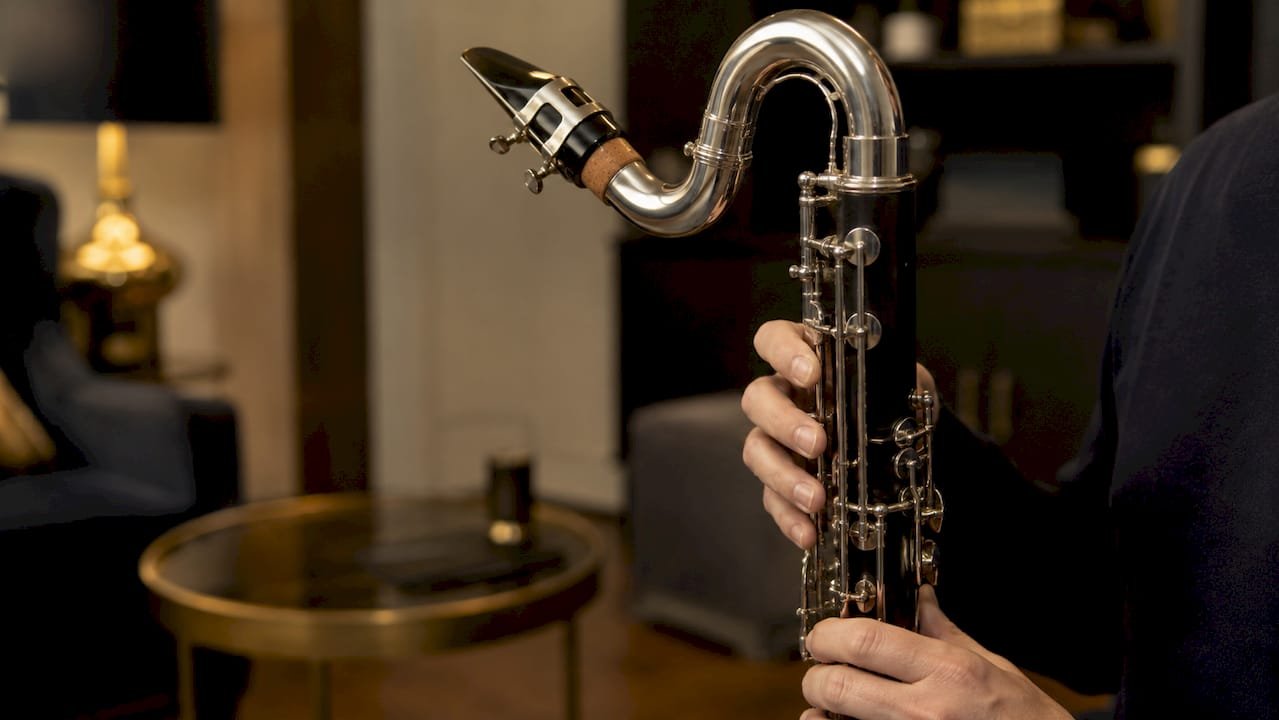
The embouchure itself needs to stay firm with adequate reed contact, similar to what a saxophonist uses in the upper register. Firm lip pressure combined with active throat voicing is the correct combination. Think of the embouchure as a stable seal and the throat as the active control mechanism. The two work together, but the throat does the heavy lifting.
The swab exercise for throat positioning
The swab exercise is the most effective pedagogical technique for isolating altissimo partials. You place a swab in the bell to create backpressure, then blow through the instrument without fingering any keys. The backpressure forces your throat and tongue to find the position that produces overtones. The exercise targets four primary overtones: Concert A, C#, E, and G. If you can produce those four pitches cleanly with the swab in place, your tongue position is correct for altissimo production.
The swab exercise removes fingering from the equation entirely. That isolation is its value. Players who struggle with altissimo often blame their fingers when the real problem is throat position. The swab exercise makes that diagnosis fast and clear.
Pro Tip: Practice the swab exercise for five minutes before any altissimo session. It warms up the throat muscles and sets the tongue position before you add the complexity of fingerings.
Common mistakes in this area include raising the back of the tongue too high (which chokes the air stream), dropping the jaw to compensate for a tight throat (which flattens pitch), and pushing air too hard (which overblows the partial and produces a squeak). The fix for all three is the same: relax the jaw, raise the back of the throat gently, and use a steady, focused air stream rather than a forceful one.
What exercises help you master the altissimo register?
Building altissimo reliability takes structured daily practice, not occasional attempts. Mastering altissimo is like learning to ride a bike: muscle memory develops through repetition, not through understanding the physics. The following sequence builds that memory systematically.
- Start with the swab exercise. Five minutes of overtone production with the bell blocked sets your throat position for the session.
- Long tones on the highest standard notes. Sustain written Bb5 and C6 for eight counts each, focusing on a stable, centered tone before entering altissimo territory.
- Overtone slurs. From a low Bb (written), slur upward through the overtone series without changing fingerings. Each partial you reach is an altissimo note in disguise.
- Scale fragments ascending into altissimo. Play a chromatic or major scale from the upper clarion register and push two or three notes into the altissimo. Stop, reset, and repeat.
- Document your fingerings. Keep a notebook. Write down which fingerings work on your specific instrument for each altissimo pitch. This record becomes your personal fingering chart.
- Alternate fingerings for the same pitch. For each altissimo note, find at least two working fingerings. One may suit slow passages; the other may suit fast technical runs.
- Apply altissimo in musical context. Once a note speaks reliably in isolation, practice it inside a phrase. Tone quality and intonation behave differently when you add musical context.
Pro Tip: Limit altissimo practice to 15–20 minutes per session when you are building the register. Fatigue in the throat muscles produces bad habits faster than any other factor.
Incremental range expansion works better than trying to play the full altissimo range at once. Add one new pitch per week. Consolidate it before moving higher. Players who rush this process often develop inconsistent voicing habits that take months to correct.
How does instrument setup affect altissimo playing?
Equipment choices have a direct effect on how easily the altissimo register speaks. Mouthpiece and equipment selection influences altissimo note response and tonal consistency in ways that no amount of practice can fully compensate for. A mouthpiece with a facing that is too open requires more embouchure pressure to control, which works against the relaxed jaw position altissimo demands. A facing that is too closed restricts the air column and limits the overtone response.
Reed strength interacts with mouthpiece facing. A reed that is too hard for your mouthpiece makes altissimo partials sluggish. A reed that is too soft collapses under the air pressure needed to drive the high partials. The right combination produces a free, resonant response across the full range.
Key considerations for your setup:
- Mouthpiece facing length and tip opening should match your air support level and playing style. Consult a clarinet accessory guide for bass clarinet-specific recommendations.
- Reed strength should allow free vibration without collapsing. Most advanced bass clarinetists use medium-hard to hard reeds for altissimo work.
- Register vent condition matters. A leaking register vent key produces inconsistent altissimo response regardless of technique.
- Instrument maintenance is non-negotiable. Pad leaks anywhere on the instrument affect the air column and make altissimo production unreliable.
A well-maintained instrument with a matched mouthpiece and reed removes the equipment variables from the equation. That leaves only technique to develop, which is the right problem to have.
Key Takeaways
Mastering the bass clarinet altissimo register requires throat voicing control, instrument-specific fingering experimentation, and structured daily practice built on the overtone series.
| Point | Details |
|---|---|
| Altissimo range starts at C6 | Notes extend 4–10 ledger lines above the treble clef staff and require overtone-based fingerings. |
| Throat voicing drives pitch | Jaw tension kills altissimo notes; back-of-throat aperture control is the primary pitch mechanism. |
| No universal fingering standard | Single-vent and double-vent instruments require different fingerings; document what works on your horn. |
| Swab exercise builds the foundation | Practicing overtones with a blocked bell trains throat position before adding fingering complexity. |
| Equipment matters | Mouthpiece facing, reed strength, and vent condition all affect how freely altissimo notes speak. |
What I have learned from years in the altissimo register
The biggest mistake I see bass clarinetists make is treating the altissimo register as a fingering problem. They collect charts, memorize combinations, and then wonder why the notes still do not speak. The fingerings are the last piece of the puzzle, not the first. Voicing is the foundation. Until your throat knows where to go, no fingering chart will save you.
The second thing I have learned is that patience with your specific instrument pays off more than any general advice. I have played instruments where a textbook fingering for G6 produced nothing, and a completely unconventional combination worked perfectly. That is not a failure of the system. That is the nature of the bass clarinet. Embrace it. Keep your notebook, document what works, and treat your fingering chart as a living document you update as your instrument and technique evolve.
The players who progress fastest in the altissimo register are the ones who stop looking for the right answer and start listening to what their instrument is telling them. The sound will guide you if you let it.
— Milos
The right mouthpiece changes what is possible in the altissimo
Altissimo playing puts every weakness in your setup under a magnifying glass. A mouthpiece that works fine in the clarion register may actively fight you in the altissimo. Myclarinetstuff carries the Gleichweit 22-3 bass clarinet mouthpiece, a precision CNC-crafted synthetic mouthpiece designed for consistent response across the full bass clarinet range, including the high register. Austrian manufacturing and synthetic construction eliminate the variability that makes hard rubber mouthpieces unpredictable from piece to piece.
Not sure which mouthpiece fits your playing style and altissimo goals? The Myclarinetstuff Mouthpiece Matchmaker walks you through a short set of questions and returns a specific recommendation based on your instrument, repertoire, and technique level. Fast U.S. shipping and personalized support are included with every order.
FAQ
What notes are in the bass clarinet altissimo register?
The altissimo register begins above written C6 and extends upward by as many as 10 ledger lines above the treble clef staff. In concert pitch, these notes sound a major ninth lower than written.
Why do altissimo fingerings differ between instruments?
Single-vent and double-vent register systems require different fingering combinations, and manufacturing differences among brands add further variation. A fingering that works on one instrument may produce no sound on another.
How do I start learning how to play altissimo on bass clarinet?
Begin with the swab exercise to train throat position, then practice overtone slurs from low Bb without changing fingerings. Add altissimo fingerings only after your throat voicing is stable.
Does mouthpiece choice affect altissimo response?
Yes. Mouthpiece facing and reed strength directly influence how freely altissimo partials speak. A mismatched setup creates resistance that technique alone cannot overcome.
How long does it take to develop a reliable altissimo register?
Progress depends on daily practice consistency and instrument quality, but most dedicated players develop reliable production of the first three or four altissimo pitches within several months of structured work on voicing and overtone exercises.