


Bring your own clarinet and current mouthpiece, warm up fully, and test only 2 to 4 candidates per session using fresh reeds matched to each tip opening. Record every take, label the files blind, and score each one on feel, tone, tuning, and repertoire fit before you compare notes. Skip any of these steps and you’re not testing mouthpieces. You’re testing luck.
TL;DR:
- Using your own instrument for testing ensures that bore, barrel fit, and intonation do not skew your evaluation of mouthpieces.
- Limiting tests to 2 to 4 mouthpieces and controlling reed strength prevents fatigue and choice overload from affecting judgment.
- Conducting structured, repetitive warm-up and technical exercises helps reliably assess tuning, resistance, tone quality, and response differences.
- Recording all tests with identical settings and scoring blindly minimizes bias and aids objective comparison over time.
- Running comparison sessions over multiple days and in consistent environments reduces errors caused by fatigue or variable room acoustics.
Table of Contents
- How to prepare for a mouthpiece trial: the pre-trial checklist
- How should you set up the room for a repeatable test?
- What is the right order for playing tests?
- How do you record and score mouthpieces objectively?
- Getting the most out of a paid at-home Test Box trial
- Why did your last mouthpiece trial go wrong?
- Why disciplined testing beats impulse buying
- Make your next mouthpiece trial faster with a Gleichweit Test Box
- Sources
How to prepare for a mouthpiece trial: the pre-trial checklist
A fair trial starts before you ever put reed to mouthpiece. The goal is to control every variable except the one thing you’re actually testing: the mouthpiece itself.
Start with your own instrument. A borrowed clarinet introduces bore differences, barrel fit, and intonation quirks that have nothing to do with the mouthpiece in front of you. Retail guidance from Dawkes Music is consistent on this point: testing on your own setup, against your current mouthpiece as a baseline, is the only way to get a comparison that means anything.
What to pack:
- Your clarinet and current mouthpiece (the baseline)
- Fresh reeds in at least two strengths per candidate mouthpiece
- A reed case, reed rush or flat glass, and a small knife or reed tool
- A standalone digital tuner (not just a phone app you’ve never calibrated)
- A recording device with consistent settings, plus a notebook or printed scoring sheet
- Warm-up material and repertoire excerpts spanning low, middle, high, and altissimo registers
A few practical notes make the difference between a useful session and a wasted one:
- Fresh reeds matter more than most players think. A broken-in reed on one mouthpiece and a stiff one on another will skew your read on resistance and response.
- Cap your session at 2 to 4 mouthpieces. Beyond that, fatigue and choice overload start corrupting your judgment, a pattern backed up by testing advice from Copeland Clarinets.
- Learn the terms before you start. Tip opening and facing length aren’t just spec sheet jargon. They directly shape how a reed feels against your embouchure, something Jenny Maclay covers well for players newer to the vocabulary.
Pro Tip: Write your repertoire excerpts on index cards before the session starts. Deciding what to play in the moment burns mental energy you need for listening.
How should you set up the room for a repeatable test?
Room and setup consistency matters as much as the mouthpieces themselves. If your test conditions shift between candidates, you’re no longer isolating the variable you care about.
Pick a quiet, familiar room and mark a spot to stand or sit so your distance from walls and any recording device stays constant. Testing in an unfamiliar acoustic space, according to guidance from Dawkes Music, makes it harder to judge how a mouthpiece will actually perform once you’re back in your usual rehearsal room or studio.
Temperature affects tuning more than players give it credit for. Warm the clarinet fully before your first note, and avoid stepping between a cold hallway and a heated room mid session. That kind of swing will move your pitch center regardless of what’s screwed onto the barrel.
For recordings, lock in these constants:
- Same microphone or phone, every take
- Same distance, roughly 1 to 2 feet from the bell or bore
- Same angle and same input level settings
- A note on your scoring sheet listing room, time of day, and how long you’d been playing that session
If you’re working through a Gleichweit Test Box, let the mouthpieces and reeds sit out at room temperature for a short while before you start. Synthetic material behaves consistently once it’s acclimated, but a mouthpiece straight out of a shipping box in cold weather won’t give you an honest first impression.
Pro Tip: Keep a printed environmental log next to your scoring sheet. Six weeks from now, “felt sharp in the third session” means nothing without knowing the room was 15 degrees warmer than your first test.
What is the right order for playing tests?
A reproducible test sequence removes guesswork from the comparison and keeps you listening for the same things across every mouthpiece.
Start with a proper warm-up: long tones from low to high, then a quick embouchure check to confirm you’re not compensating for fatigue before you’ve even started comparing. From there, run the same battery on every candidate:
- Long tones, low register to high, listening for evenness
- Chromatic scales across the full range
- Arpeggios through at least two octaves
- Tuning check against concert A, then chromatically and through arpeggios to map pitch tendencies
- A technical etude you know well
- A representative excerpt from your actual repertoire
Dawkes Music recommends this kind of structured sequence specifically because it surfaces tuning problems and register weaknesses that a five-minute noodle session will miss entirely.
While you play, listen for specific things rather than a vague sense of “good” or “bad”:
- Resistance: does the reed feel appropriately firm, or fight you?
- Tone center: is the sound focused, or does it spread and lose definition?
- Ease of the high register and altissimo, where mouthpiece design differences show up fastest
- Homogeneity of tone color across registers
- Dynamic control at both extremes, pianissimo and forte
- Projection, especially if you’re testing for orchestral or solo use
Tip opening and facing length interact directly with reed strength to change how resistance and altissimo response feel, according to Dawkes Music’s deeper testing notes, which is exactly why controlling reed strength across candidates isn’t optional. A more open tip opening paired with the same reed you used on a closer facing will feel stuffy or unresponsive, and you’ll blame the mouthpiece instead of the mismatch.
Keep each mouthpiece session to 10 to 15 minutes. Longer than that, and reed bedding effects (the reed literally wearing into a slightly different shape) start contaminating your comparison.
How do you record and score mouthpieces objectively?
Recording turns a subjective impression into something you can actually compare side by side, days later, without memory bias creeping in.
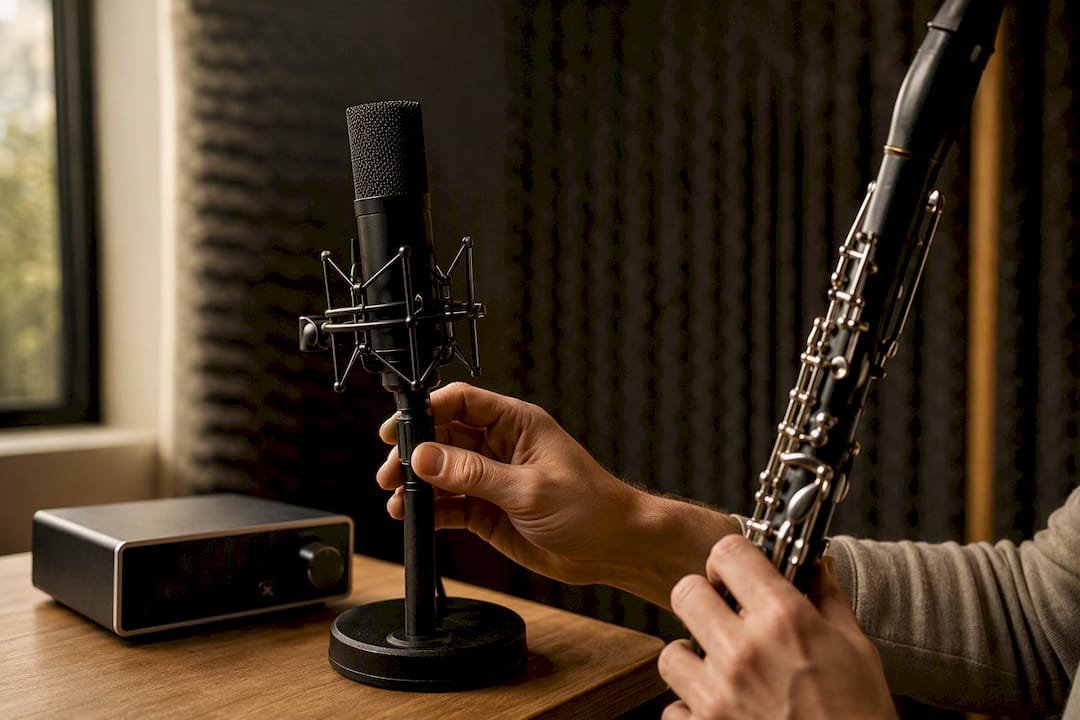
Record every mouthpiece on the identical excerpt, using identical device settings, and name the files with neutral labels like “Mouthpiece 1” and “Mouthpiece 2” rather than the brand or model. Then send those recordings to a teacher or trusted colleague without revealing which file is which. Jenny Maclay’s advice on blind listening exists for a reason: brand names and price tags shape what we hear far more than most players want to admit.
A simple scoring sheet works better than a mental impression that fades by the third candidate:
| Category | What to rate | Weight it heavier if… |
|---|---|---|
| Tone | Focus, warmth, color across registers | You play orchestral or chamber repertoire |
| Response/feel | Ease of articulation, resistance | You do a lot of technical or fast passage work |
| Tuning stability | Pitch tendencies across the range | You play in ensembles with strict intonation demands |
| High-register reliability | Altissimo control and evenness | You perform contemporary or extended-range repertoire |
| Reed compatibility | How consistent results are across reed strengths | You want a mouthpiece that’s forgiving day to day |
| Repertoire suitability | Fit for your actual performance context | Almost always, this one matters most |
A mouthpiece built for orchestral blend and one built for solo projection will score differently depending on which column matters to your playing.
Pro Tip: When the recording and the live feel disagree, trust the context you’ll actually be performing in. A mouthpiece that feels stiff under your chin but records with a gorgeous, centered tone might be exactly right for a section player who values blend over solo ease.
Getting the most out of a paid at-home Test Box trial
A Gleichweit Test Box lets you run this entire protocol without leaving home, but the trial only pays off if you treat the arrival day differently from your real testing day.
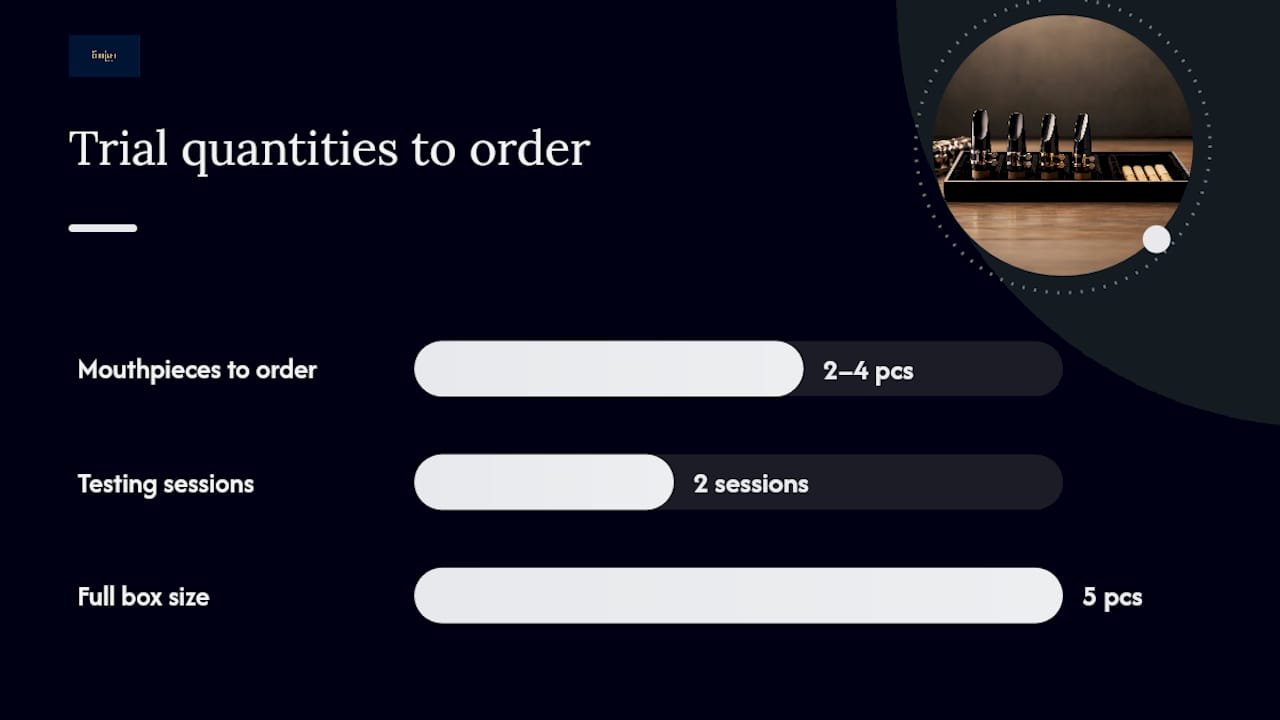
Order a box with 2 to 4 mouthpieces rather than the full five at once, and plan on two separate short sessions instead of one marathon afternoon. When the box arrives, do a quick inspection: check the fit on your barrel, play each mouthpiece briefly to rule out obvious defects, then set the box aside. Save the actual scored protocol, long tones through repertoire excerpts, for a later session when you’re not distracted by the novelty of new gear.
- Inspect and fit-check each mouthpiece on arrival
- Let everything acclimate to room temperature if you unboxed it in cold weather
- Run your full testing sequence in a separate, focused session
- Document the exact reed strength and facing you used for each mouthpiece
- Include that reed and facing data in any feedback you send back
That documentation step matters more than most players realize. MyClarinetStuff’s step-by-step testing guide walks through matching recommended reed strengths to specific facings, and having your own notes ready means any follow-up conversation about swapping candidates or adjusting reed strength moves fast instead of starting from scratch.
Before you order, confirm the return, refund, and restocking terms so you know your testing window and any costs tied to sending mouthpieces back.
Pro Tip: Don’t judge a mouthpiece on the fit-check day. First impressions on arrival are about ruling out defects, not about deciding if you like the sound.
Why did your last mouthpiece trial go wrong?
Most disappointing trials trace back to one of three fixable mistakes.
If a mouthpiece feels inconsistent or resistant in ways that don’t match its reputation, try a softer or firmer reed before writing it off. Facing length and tip opening change how much resistance a given reed strength produces, and a mismatch there gets misread as a flaw in the mouthpiece itself.
Testing too many candidates at once is the second common error. Drop back to 2 to 4 mouthpieces and split testing across separate days, as multiple retailers recommend, rather than trying to judge six mouthpieces in one sitting.
Tuning problems deserve a diagnostic step before you blame the mouthpiece: check that the instrument is fully warmed up and that the reed is seated correctly on the table. Both throw off pitch in ways that have nothing to do with mouthpiece design.
- Feels stiff or stuffy? Try a different reed strength before switching mouthpieces
- Testing more than 4 at once? Split into separate sessions
- Pitch problems? Rule out cold instrument and poor reed seating first
- Want honest feedback? Label files neutrally, never by brand or model
Pro Tip: If two mouthpieces score nearly identically on your sheet, retest both in a single back-to-back session. Small score gaps often disappear or flip once fatigue and day-to-day variation are equalized.
Why disciplined testing beats impulse buying
Clarinetists tend to trust their gut in the moment, and then regret it three months later when the “perfect” mouthpiece from the trial doesn’t hold up once the honeymoon wears off. That gap exists because gut feel is contaminated by fatigue, room acoustics, and whatever mouthpiece you happened to play last in the session, not because your ear is unreliable.
Scored, blind-labeled trials strip out most of that noise. A mouthpiece that wins on a scoring sheet across two separate sessions, in your own room, on your own instrument, is a mouthpiece that’s actually earned the decision rather than won on novelty. That distinction is where most trial regret comes from: players remember the excitement of a new mouthpiece and forget to check whether it survived a second look.
If you want help interpreting your results or matching reed strengths to a specific facing, a specialized team can be a resource worth using rather than guessing alone.
— Milos
Make your next mouthpiece trial faster with a Gleichweit Test Box
Running the full protocol above on mouthpieces you haven’t purchased yet is where most players stall out, and it’s exactly what the Gleichweit Test Box is built to solve. Instead of guessing from specs or a five-minute shop visit, you get up to five CNC-crafted synthetic mouthpieces sent to your home, so every step in this article, from A/B comparison to blind-labeled recordings, happens on your own instrument, in your own room, on your own timeline.
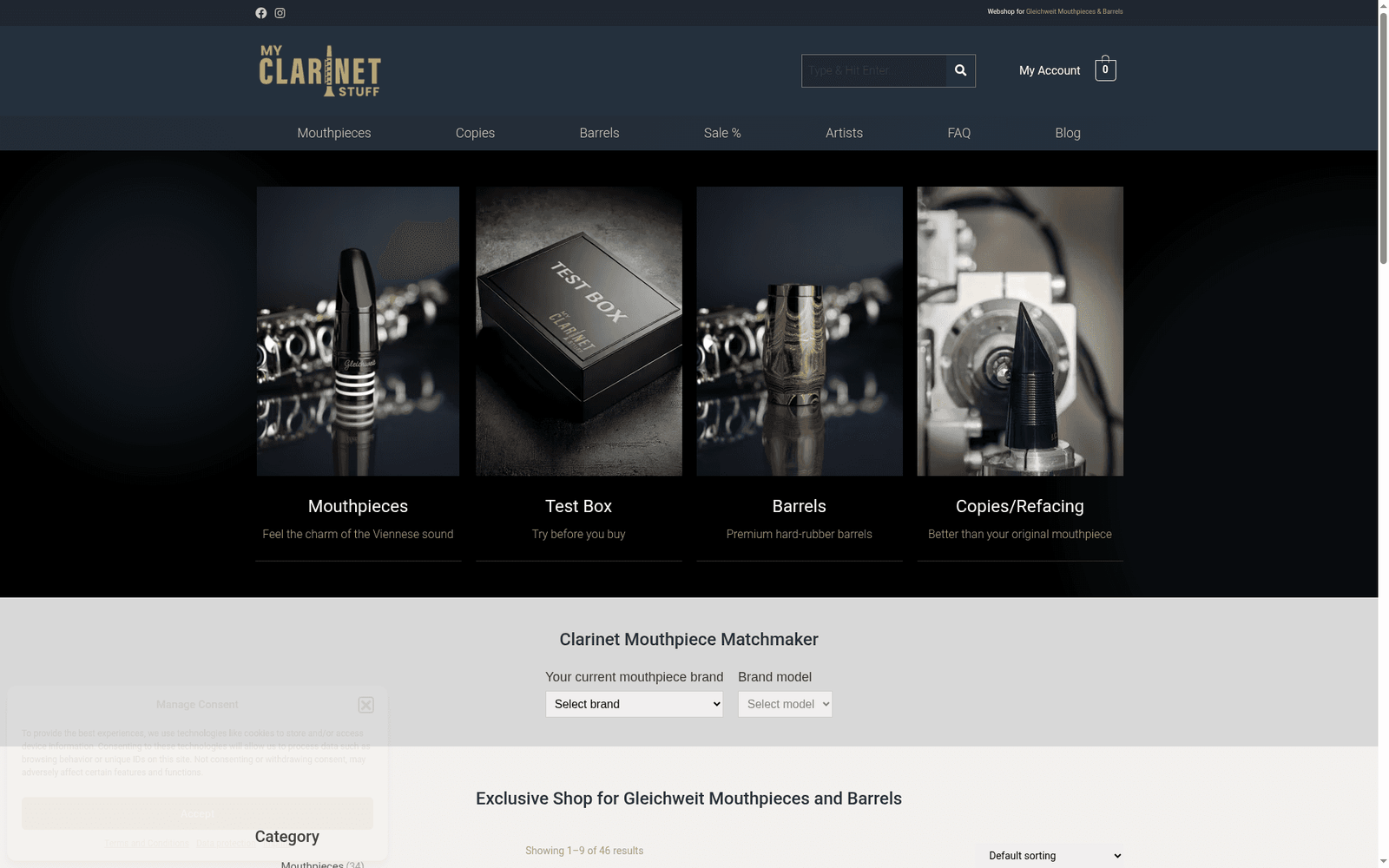
Before your box arrives, spend ten minutes with the mouthpiece matchmaker to narrow your candidates toward tip openings and facings suited to your playing style, and keep the mouthpiece FAQ bookmarked for quick answers on reed strength during your sessions. Synthetic construction means the consistency you measure in your trial is the consistency you’ll get in the mouthpiece you actually buy, without the piece-to-piece variability that hard rubber is known for.
Order a Test Box, run the protocol over two sessions instead of one, and document your reed and facing notes along with any follow-up questions to help the process go smoothly.
Sources
- Top Tips: Testing a Clarinet Mouthpiece | Dawkes Music
- How to choose a new clarinet mouthpiece – Jenny Maclay
- Clarinet Mouthpieces: Choosing the Right One – Copeland Clarinets