
TL;DR:
- Testing clarinet mouthpieces at home involves structured exercises and consistent conditions to accurately evaluate tone, response, and comfort before making a purchase. Limiting options to three or four per session and recording performances helps ensure reliable and objective comparisons. Physical comfort and sound quality both influence the best mouthpiece choice for each player.
Testing clarinet mouthpieces at home is a hands-on process that requires consistent setup, controlled playing sessions, and careful assessment of sound, feel, and response. The industry term for this process is “mouthpiece evaluation,” and knowing how to test mouthpieces at home gives you a real advantage before committing to a purchase. You control the variables, play your own repertoire, and judge results on your own instrument. This guide walks you through every step, from setting up your testing space to interpreting your results, using methods recommended by Myclarinetstuff.
How to test mouthpieces at home: setting up your space and tools
The right setup makes or breaks a home mouthpiece evaluation. Without consistent conditions, you end up comparing apples to oranges, and your results tell you nothing useful.
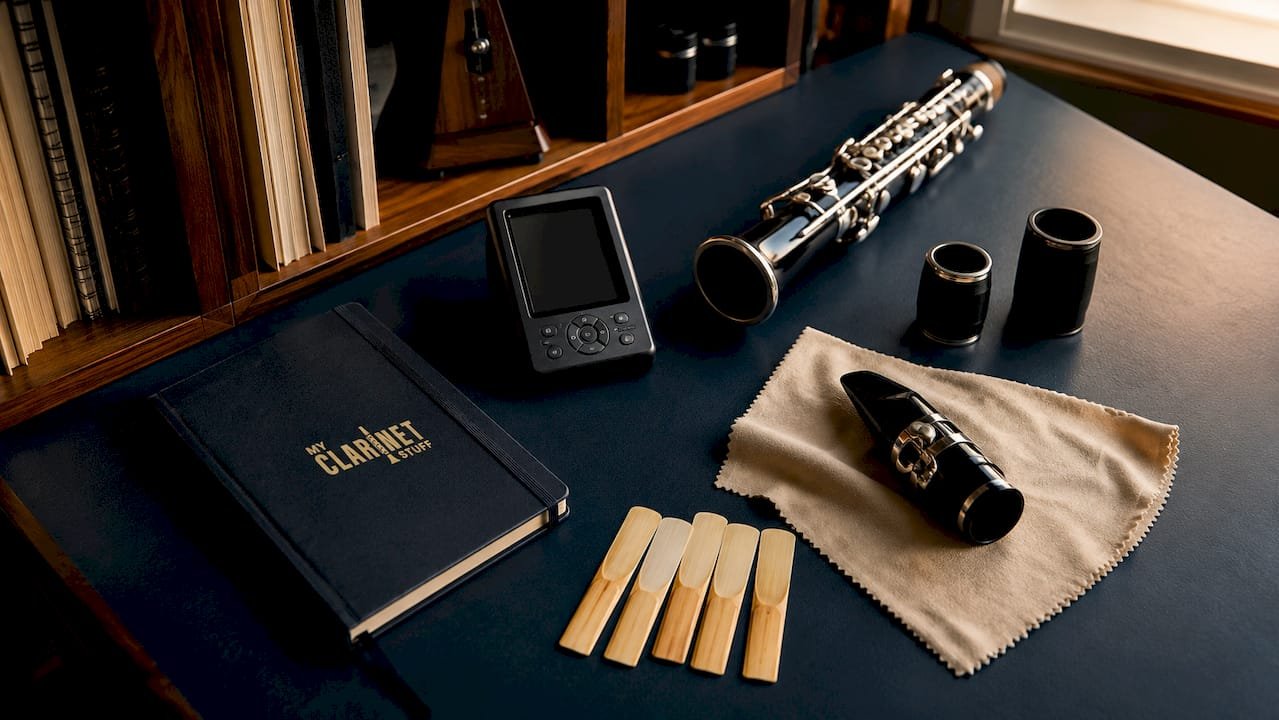
What you need before you start
Gather these items before your first session:
| Tool | Role in testing |
|---|---|
| Fresh reeds (same brand and strength) | Prevents reed variation from skewing results |
| Chromatic tuner | Checks intonation across registers |
| Metronome | Keeps tempo consistent across exercises |
| Recording device or smartphone | Captures audio for objective playback review |
| Notebook or scoring sheet | Tracks observations per mouthpiece |
Every item on this list serves a specific purpose. The tuner and metronome remove human inconsistency from your playing, and the notebook keeps your impressions from blurring together after multiple trials.
A quiet, consistent playing space is non-negotiable. Environmental noise can mask subtle tone and tuning differences that are critical for quality evaluation. A carpeted room with soft furnishings absorbs reflections and gives you a cleaner sonic picture than a tiled bathroom or a live concert hall.
Pro Tip: Always use the same brand and strength of reed for every mouthpiece you test. Changing reed variables mid-session skews results and causes confusion that sends you back to square one.
What exercises should you play when testing a mouthpiece?
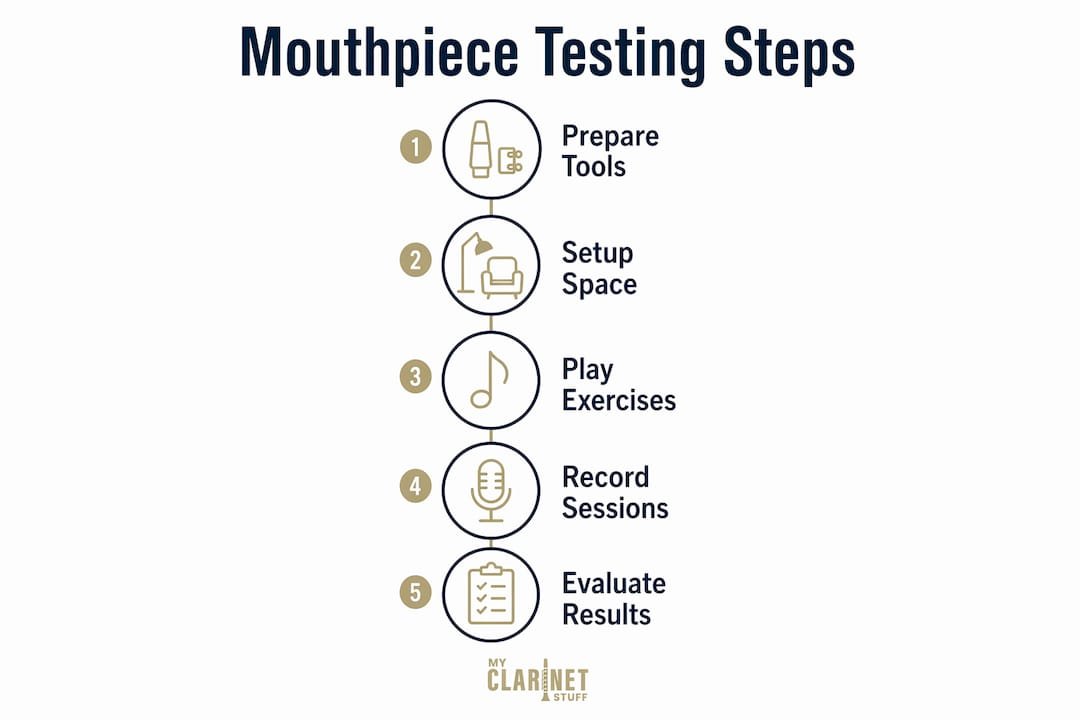
The most effective testing method uses a structured sequence of exercises that covers the full range of your clarinet. Long tones, scales, and etudes over the full range give you a clear picture of tonal consistency, response, and intonation. Each exercise type reveals something different about the mouthpiece.
Follow this sequence for every mouthpiece you test:
- Long tones in the chalumeau register. Hold each note for 8 counts at a comfortable dynamic. Listen for evenness of tone and ease of production.
- Long tones in the clarion register. Notice whether the tone thins out or stays full. Check whether the break between registers feels smooth.
- Chromatic scale, full range. Play slowly with a tuner active. Mark any notes that pull sharp or flat.
- Major scales and arpeggios. Use a metronome at a moderate tempo. Assess finger response and whether the mouthpiece rewards clean technique.
- A short etude or passage from your current repertoire. This is your real-world test. Play something you know well so the mouthpiece is the variable, not your preparation.
- Articulation exercise. Single tongue a repeated note at three dynamic levels. A good mouthpiece responds cleanly at both piano and forte.
Write down your impressions immediately after each exercise. Memory fades fast when you switch between mouthpieces.
Recording your sessions is one of the most underrated steps in home mouthpiece testing. Playback lets you re-evaluate tone color and projection without the distraction of playing. You often hear things on a recording that you completely miss in the moment.
Pro Tip: Limit each session to 3–4 mouthpieces maximum. Testing more than four options in one sitting causes decision fatigue, and your evaluations become unreliable after the third or fourth trial.
How do you evaluate and interpret your test results?
Comparing your notes across mouthpieces is where the real work happens. Look at four core criteria: tone color, intonation, response, and physical comfort.
Tone color describes the overall character of the sound, whether it is warm and dark, bright and projecting, or somewhere in between. Intonation tells you whether the mouthpiece plays in tune with itself across registers. Response measures how easily the mouthpiece speaks at different dynamics and articulation speeds. Physical comfort covers how the mouthpiece feels against your embouchure over a sustained playing session.
Two technical factors shape all four criteria: tip opening and facing length. A wider tip opening generally requires a softer reed and produces a more flexible, open sound. A narrower tip opening pairs with a stiffer reed and rewards players who want control and focus. Player comfort and feel are often as important as the sound produced, and some players prioritize control and response over tonal color based on their playing style.
Watch out for these common evaluation mistakes:
- Confusing initial brightness with quality. A mouthpiece that sounds exciting on the first note may fatigue your embouchure within 20 minutes.
- Mistaking ease of response for good intonation. A mouthpiece that speaks easily is not automatically in tune.
- Letting first impressions override your notes. Trust your written observations over your gut feeling after a long session.
- Ignoring the upper register. Many mouthpieces perform well in the middle range but struggle above high C. Test the full range every time.
Score each mouthpiece on a simple 1–5 scale for each criterion. The mouthpiece with the highest total score across all four categories is usually the right choice, though a perfect score in your top priority area often matters more than a high average.
What are the most common mistakes when testing mouthpieces at home?
Home mouthpiece testing fails most often because of three avoidable problems: inconsistent reeds, poor room acoustics, and rushing the process.
Reeds conform to the shape of a mouthpiece over time, changing their playability on other mouthpieces. Using a reed that has already been broken in on a different mouthpiece introduces bias you cannot control. Always start each mouthpiece trial with a fresh reed from the same box.
Room acoustics matter more than most players realize. A live, reflective room adds apparent brightness and projection that disappears in a dry acoustic. Test in the same room every time, and if possible, test in a space similar to where you normally perform.
Rushing a mouthpiece trial is the single biggest mistake in home testing. Give each mouthpiece at least two full playing sessions on separate days before making a judgment. First impressions are unreliable, and your embouchure adapts to a new mouthpiece faster than you expect.
Disinfection between trials is a practical concern, especially when testing mouthpieces that have been handled by others. Boiling water disinfects synthetic and silver mouthpieces effectively, but never apply boiling water to the clarinet itself or to hard rubber mouthpieces, which can warp.
Pro Tip: Use a mouthpiece cushion or patch during testing sessions. It protects the mouthpiece from teeth indentations and gives you a more consistent bite point across different mouthpiece shapes.
When home testing reaches its limits, a session with a teacher or a visit to a specialty retailer fills the gaps. A trained ear catches things your own recording misses, and a second opinion on tone color is worth more than another solo session.
Key Takeaways
Effective home mouthpiece evaluation requires consistent equipment, structured exercises, and written observations reviewed across multiple sessions.
| Point | Details |
|---|---|
| Consistent setup is non-negotiable | Use the same clarinet, reed brand, and reed strength for every mouthpiece trial. |
| Limit options per session | Test no more than 3–4 mouthpieces per session to avoid decision fatigue and unreliable results. |
| Record every session | Audio playback reveals tone and projection details you miss while playing. |
| Score four core criteria | Rate each mouthpiece on tone color, intonation, response, and physical comfort. |
| Test across multiple days | First impressions are unreliable; give each mouthpiece at least two separate sessions before deciding. |
Why I think most players test mouthpieces the wrong way
Most clarinetists walk into a testing session with too many options and too little structure. They pick up five or six mouthpieces, play a few bars on each, and go with the one that felt exciting in the moment. That approach almost always leads to regret within a month.
The method that actually works is boring by comparison. You use the same reed, the same exercises, the same room, and you write everything down. You record yourself and listen back the next morning when your ears are fresh. You limit yourself to three or four options per session, which feels restrictive until you realize how much clearer your thinking becomes.
The other thing most players underestimate is the role of physical comfort. A mouthpiece that sounds great but tires your embouchure in 30 minutes is not a good mouthpiece for you. Sound and feel are both part of the equation, and neither one wins automatically.
My honest advice: trust your written notes over your gut feeling, especially after a long session. Your notes are objective. Your gut is tired. The mouthpiece selection tips at Myclarinetstuff reinforce this approach and are worth reading before your first session.
— Milos
Myclarinetstuff makes home testing easier
Finding the right mouthpiece without a structured process wastes time and money. Myclarinetstuff built the Clarinet Mouthpiece Matchmaker to give you a personalized starting point based on your playing style, experience level, and tonal goals. Instead of guessing which tip opening to try first, you get a focused recommendation that narrows your field before you even start playing.
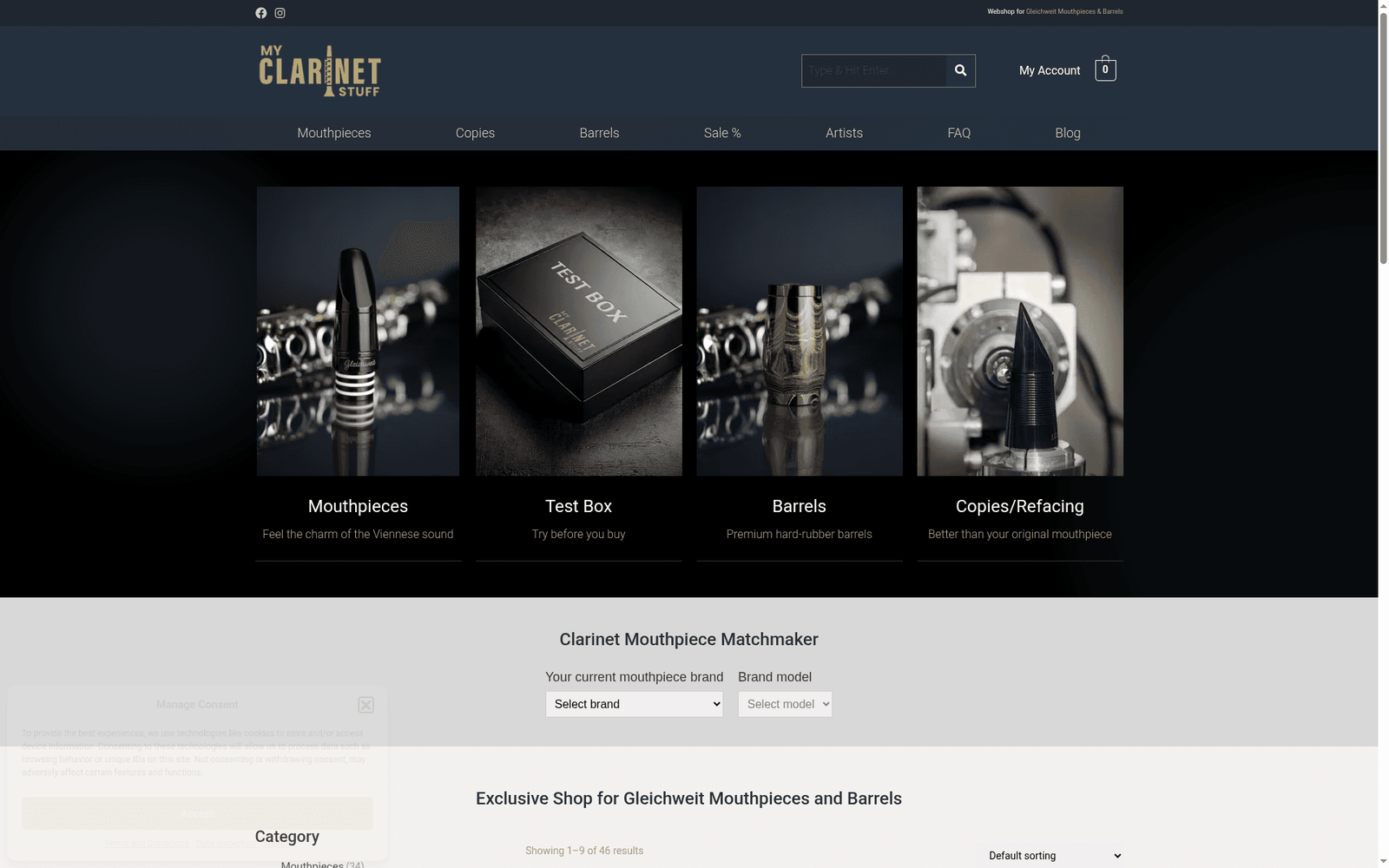
Myclarinetstuff also offers an exclusive at-home Gleichweit Test Box, which ships a curated set of Austrian-made Gleichweit mouthpieces directly to your door. You test them on your own instrument, in your own space, with your own reeds. The CNC-crafted synthetic construction means every mouthpiece in the box performs consistently, so your results reflect real differences in design rather than manufacturing variation. Visit Myclarinetstuff.com to find the test box that fits your tip opening preference and get started.
FAQ
What do I need to test mouthpieces at home?
You need fresh reeds of the same brand and strength, a chromatic tuner, a metronome, a recording device, and a quiet room. Consistent equipment across every trial is what makes your comparisons valid.
How many mouthpieces should I test in one session?
Limit each session to 3–4 mouthpieces. Testing more causes decision fatigue, and your evaluations become unreliable after the third or fourth option.
Should I use new reeds for each mouthpiece I test?
Yes. Reeds conform to a mouthpiece’s shape over time and change their playability on other mouthpieces. A fresh reed from the same box gives you an unbiased baseline for every trial.
How do I compare mouthpieces objectively?
Score each mouthpiece on tone color, intonation, response, and physical comfort using a simple 1–5 scale. Review your recorded sessions the following day for a fresh perspective.
When should I get professional help with mouthpiece selection?
Seek a teacher’s opinion or visit a specialty retailer when home testing leaves you undecided after two or more sessions. A trained ear catches tone and projection details that recordings often miss.