


TL;DR:
- Professional clarinetists can optimize their setup by trialing Gleichweit mouthpieces, which are CNC-crafted synthetic units made in Austria for consistent quality. Using the at-home test-box program from Myclarinetstuff allows detailed comparisons of multiple facings with the same reeds and ligatures before purchase.
For professional clarinetists, the clearest path to a reliable, high-performance setup is trialing Gleichweit mouthpieces, available through Myclarinetstuff and distributed in the U.S. by Gleichweit USA LLC. These precision CNC-crafted synthetic mouthpieces, manufactured in Austria, deliver consistent tolerances across every unit — something traditional hard rubber simply cannot guarantee. The at-home test-box program makes it practical to compare multiple facings in your own rehearsal space, with your own reeds and ligature, before committing.
Best-fit player types and quick logistics:
- Symphonic/classical players: Closed-to-medium tip openings, low baffle profiles, focused projection
- Jazz and folk clarinetists: Medium-to-open tip options, brighter tonal response, dynamic flexibility
- Chamber and doubling players: Medium facings that balance control with tonal warmth
- Logistics: Order a test box via Myclarinetstuff, fast U.S. shipping, distributed by Gleichweit USA LLC
Pro Tip: During your initial time with a new mouthpiece, run a fixed routine — long tones, a two-octave scale, and a short etude passage — before looking at the tip number. Feel and response tell you more than the printed spec.
Table of Contents
- What mouthpiece options does Gleichweit offer for professionals?
- How do professionals actually choose a mouthpiece?
- How to try and buy professional mouthpieces in the U.S.
- How to set up and maintain your mouthpiece for long-term performance
- When should a professional change or upgrade a mouthpiece?
- Key Takeaways
- A teacher’s perspective on guiding students to the right mouthpiece
- Try Gleichweit mouthpieces at home with Myclarinetstuff
- Useful sources and further reading
What mouthpiece options does Gleichweit offer for professionals?
Gleichweit’s lineup covers professional Bb clarinet and bass clarinet players, with models spanning closed, medium, and open tip-opening ranges. Each mouthpiece is CNC-crafted from synthetic material in Austria, which eliminates the unit-to-unit variability that plagues traditional hard rubber. When you order two of the same model, they play the same — a genuine advantage for orchestral players who need a reliable backup or educators outfitting a studio.
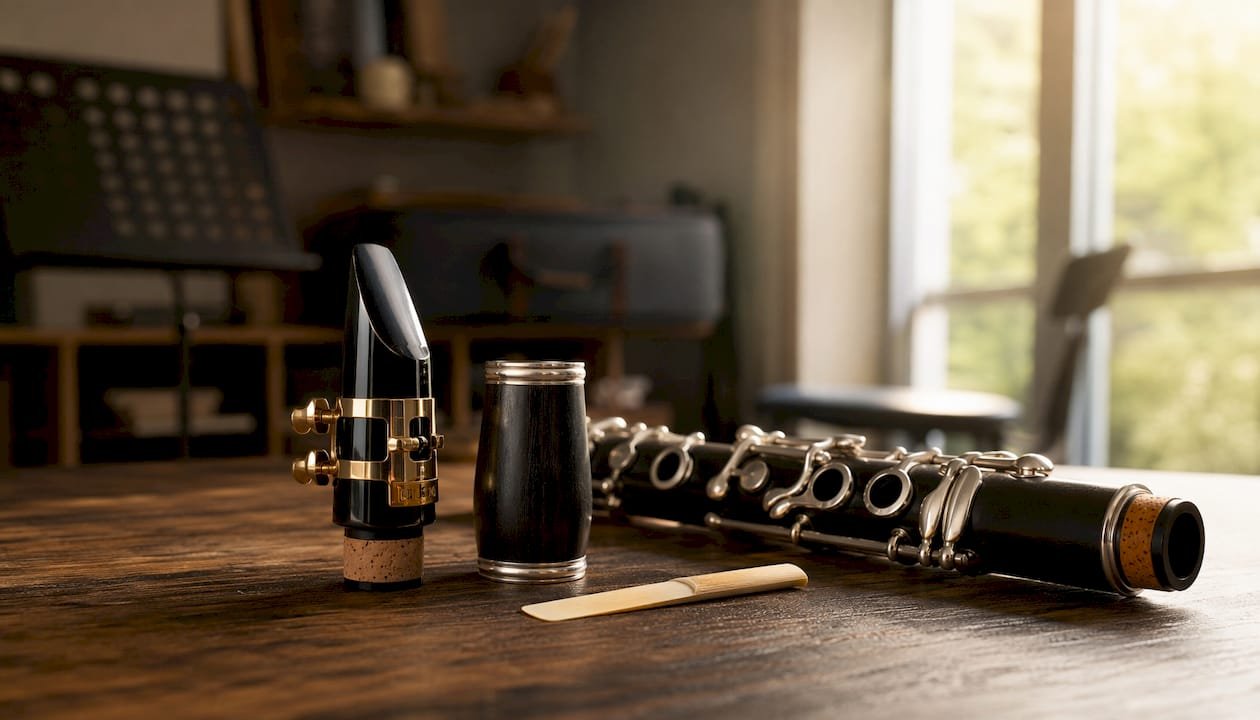
The Bb professional line addresses the widest range of playing contexts, from tightly focused classical tone to the brighter, more projecting sound jazz demands. Bass clarinet options follow the same manufacturing philosophy, giving low-register specialists the same consistency their Bb colleagues expect. Specialized facings within the lineup let you fine-tune response and articulation speed without switching material types.
| Attribute | Closed Tip | Medium Tip | Open Tip |
|---|---|---|---|
| Tip-opening character | Controlled, focused | Balanced, versatile | Free-blowing, projecting |
| Facing character | Short-to-medium | Medium | Medium-to-long |
| Intended use | Classical, chamber | All-around, orchestral | Jazz, folk, solo |
| Reed pairing | Harder strength | Medium strength | Softer strength |
| Material | CNC synthetic | CNC synthetic | CNC synthetic |
Key trust signals:
- Manufactured in Austria under Gleichweit’s quality standards
- Distributed in the U.S. exclusively by Gleichweit USA LLC
- At-home test-box program via Myclarinetstuff for risk-free trialing
How do professionals actually choose a mouthpiece?
The criteria that matter most, in order of practical weight:
- Sound goal — Define the tonal character you need before you pick up a single mouthpiece. Classical players typically want a darker, focused tone; jazz players want brightness and projection.
- Resistance and feel — A mouthpiece that sounds great but fatigues your embouchure within 30 minutes is a liability, not an asset. Resistance and response are as critical as tone for long-term professional use.
- Response and articulation speed — Short facings produce quicker articulation; longer facings give fuller low-register tone but slow the response slightly.
- Tip opening — A more open tip allows a softer reed and produces a more powerful, flexible sound. A closed tip pairs with a harder reed for maximum control.
- Facing length — Determines how much reed vibrates freely and directly shapes dynamic range and tonal color.
- Chamber and inner profile — Narrower chambers produce brighter, more projecting sound; wider chambers give a darker, warmer resonance.
- Intonation tendencies — Test across registers, especially the throat tones and altissimo, where mouthpiece geometry has the most impact.
- Reed, ligature, and instrument compatibility — Your current reed brand and strength, ligature style, and barrel length all interact with the mouthpiece. Change one variable at a time.
One critical caution: mouthpiece nomenclature is not standardized across makers. A “5” from one manufacturer does not equal a “5” from another. Prioritize subjective feel and tonal match over printed numbers.
What to listen and feel for during your test routine:
- Long tones: evenness across registers, tone color, and resistance level
- Scales: intonation consistency, especially in the throat-tone register
- Etude or excerpt: articulation clarity, dynamic flexibility, and embouchure fatigue
Pro Tip: Record a 60-second sound sample on your phone for each mouthpiece you trial. Listening back 30 minutes later, away from the instrument, gives you a far more objective read than in-the-moment impressions.
How to try and buy professional mouthpieces in the U.S.
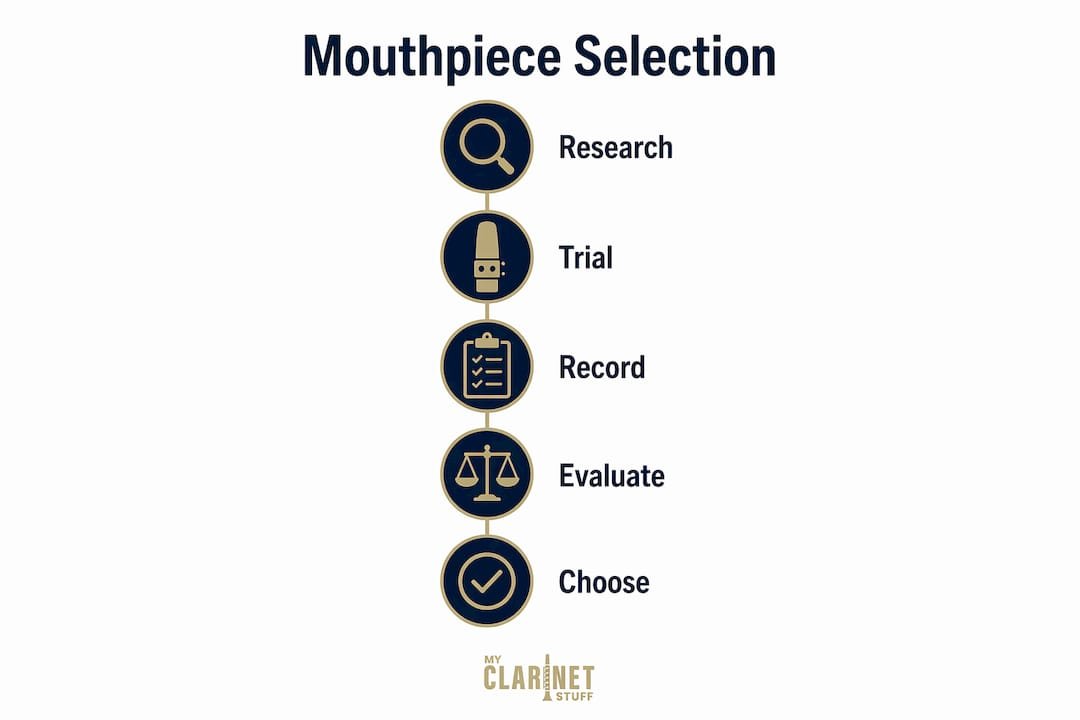
Order a Gleichweit test box from Myclarinetstuff, shortlist three or four models based on your sound goal and tip-opening preference, run a fixed test routine across two or three sessions, then finalize your purchase with confidence.
Step-by-step trial workflow:
- Choose your models. Use your sound goal and tip-opening range to narrow to three or four candidates. The mouthpiece selection tips on Myclarinetstuff can help you build that shortlist.
- Prepare your setup. Use the same reeds (same brand, same strength, broken in identically), the same ligature, and the same barrel for every trial. Changing multiple variables at once makes comparison unreliable.
- Run a fixed test routine. Long tones (low E to high C), a two-octave scale, and a short etude or orchestral excerpt. Target 10–20 minutes per mouthpiece per session.
- Record and take notes. Note resistance level, articulation feel, intonation tendencies, and tonal character. Record a brief sound sample for each.
- Compare across sessions. Test the same two or three finalists on a second day, ideally after a rest. Fresh ears catch things a fatigued session misses.
Timeline: Allow at least several days of staggered sessions before deciding. A single short session is rarely enough for a professional-level choice.
Common trial pitfalls:
- Switching reed strengths between mouthpieces, which skews resistance comparisons
- Judging a mouthpiece on a single note or register
- Testing immediately after a long rehearsal, when embouchure fatigue distorts feel
- Ignoring intonation in the throat-tone register, where problems surface first
For U.S. customers, Myclarinetstuff offers fast domestic shipping and a structured at-home testing routine through the test-box program. Check the product pages for current shipping and return details.
How to set up and maintain your mouthpiece for long-term performance
Professional maintenance starts with consistency: use the same ligature every session, rotate reeds so no single reed carries all the wear, and clean the mouthpiece gently after every use.
Daily and weekly care:
- Wipe the interior with a soft swab after each session
- Clean with mild soap and lukewarm water weekly; avoid alcohol on synthetic mouthpieces, as some formulations can affect the surface finish
- Hard rubber mouthpieces are more tolerant of gentle alcohol-based cleaners, but mild soap remains the safest choice for both materials
- Store in a dedicated case or pouch, away from direct sunlight and temperature extremes
Setup and reed guidance:
- Break in new reeds gradually: play each reed for several minutes over multiple sessions before using it in performance
- More open tip openings generally pair well with softer reeds (strength 2.5–3); closed tips work best with harder reeds (strength 3–4)
- Adjust embouchure position slightly when switching between tip-opening sizes — a more open tip typically requires a slightly more relaxed jaw
Long-term care:
- Inspect the tip rail and facing for chips or wear every few months; even minor chips affect reed seating and response
- Consult a professional refacer when response or intonation drifts without an obvious reed cause
- Replacing a mouthpiece every several years is a reasonable guideline for active players, though heavy touring use may shorten that window
Pro Tip: Keep a short log of your reed brand, strength, ligature, and mouthpiece pairing for each setup you use. When a combination works in performance, that log lets you reproduce it exactly — no guesswork at the next concert.
When should a professional change or upgrade a mouthpiece?
The clearest triggers: persistent intonation drift that reeds and barrel adjustments cannot fix, noticeably increased resistance or embouchure fatigue, loss of tonal clarity across registers, or visible chips and fitting issues at the tip rail or tenon.
Symptoms to watch for during rehearsal and performance:
- Sound becomes dull or loses its characteristic color, even with fresh reeds
- Reeds are harder to seat consistently, or the sweet spot narrows
- Articulation response slows without a change in reed or ligature
- Frequent reed switching required to maintain intonation
- Throat tones or altissimo become unreliable
Active touring players may notice these signs after three to five years of heavy use. Studio and chamber players who practice moderately usually replace mouthpieces every 5–10 years, depending on their playing frequency. Before committing to a full replacement, consider refacing. A skilled refacer can alter the facing surface to restore response and intonation at a fraction of the cost of a new mouthpiece — worth exploring before you retire a model you love.
Key Takeaways
For professional clarinetists, the most reliable path to a high-performance setup is systematic play-testing with consistent reeds, a fixed routine, and access to multiple tip-opening options — exactly what the Gleichweit test-box program through Myclarinetstuff provides.
| Point | Details |
|---|---|
| Prioritize feel over specs | Resistance, response, and fatigue matter as much as tone; numbers narrow options but do not replace playing experience. |
| Use a fixed test routine | Long tones, scales, and an etude with the same reeds and ligature every session gives reliable A/B comparisons. |
| Active players should inspect for wear and consider refacing before full replacement when response drifts; most professionals replace mouthpieces every 5–10 years, depending on usage. | |
| Match tip opening to genre | Closed tips suit classical control; open tips suit jazz projection; medium tips serve orchestral and doubling work. |
| Myclarinetstuff test-box program | Order a Gleichweit test box to trial closed, medium, or open tip options at home before buying. |
A teacher’s perspective on guiding students to the right mouthpiece
The most common mistake I see in studio teaching is rushing the mouthpiece decision. A student plays one model for ten minutes, feels something unfamiliar, and immediately concludes it is wrong for them. What they are actually feeling is the difference in resistance or facing length — and that difference, given a few sessions, often becomes exactly what they needed.
When guiding students through professional mouthpiece choices, I recommend keeping the test routine identical across every candidate. Player anatomy and embouchure interact with mouthpiece geometry in ways that are genuinely individual — a facing that works beautifully for one player may feel stiff and unresponsive for another with a slightly different jaw shape. That is not a flaw in the mouthpiece; it is the nature of the instrument.
For educators managing a section where players use different mouthpieces, the practical goal is intonation consistency and tonal blend, not identical equipment. Encourage students to document what works and why. When a mouthpiece starts showing the symptoms described above — narrowing sweet spot, drifting intonation, slower articulation — that is the moment to recommend refacing or a trial of something new, not before.
Try Gleichweit mouthpieces at home with Myclarinetstuff
Myclarinetstuff gives professional clarinetists something most retailers cannot: the ability to trial multiple Gleichweit facings in your own practice space, with your own instrument and reeds, before spending a dollar on the wrong mouthpiece.
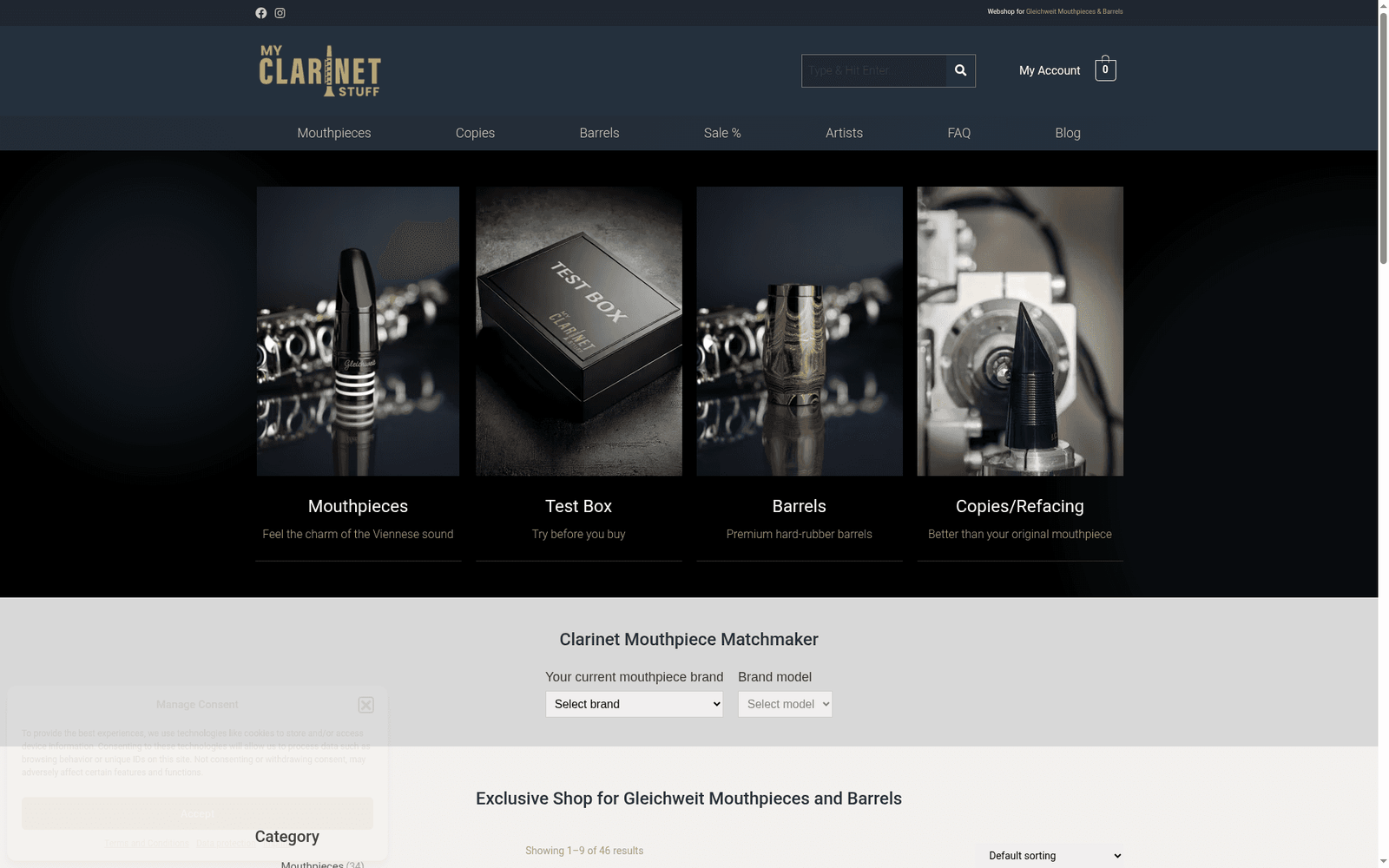
The at-home test-box program ships directly to U.S. customers through Gleichweit USA LLC distribution. Choose the open-tip test box, the closed-tip test box, or the variety pack if you want to compare across the full range. Each box includes multiple Gleichweit mouthpieces, so you can run the fixed test routine described above and make a data-driven decision. Not sure where to start? The Clarinet Mouthpiece Matchmaker on Myclarinetstuff walks you through a short selection process and points you to the right test box for your playing style and goals.
Useful sources and further reading
These sources were selected for practical depth on mouthpiece anatomy, facing systems, testing methodology, and professional selection criteria.
- Mouthpieces (Woodwind.org) — Detailed anatomy of mouthpiece geometry and how interior changes affect pitch and tonal color; essential reading for understanding why numbers vary across makers.
- How to Choose a New Clarinet Mouthpiece (Dansr) — Practical guidance on trial methodology, replacement timelines, and when refacing makes more sense than buying new.
- Your Mouthpiece and You (BetterClarinets) — Educator and performer perspective on feel, resistance, and long-term playability as the primary selection criteria.
- How to Play a Mouthpiece (ClarinetPerfection) — Facing-length categories, tip-opening guidance, and a structured approach to controlled testing.
- Understanding and Selecting a Clarinet Mouthpiece (Band Director Media Group) — Teacher-focused guidance on anatomical fit and why the same mouthpiece works differently for different players.
- About Gleichweit Clarinet Mouthpieces (Myclarinetstuff) — Manufacturing details, CNC construction notes, and the case for synthetic consistency over traditional hard rubber.
- How to Test Clarinet Mouthpieces (Myclarinetstuff) — Step-by-step testing routine and A/B comparison method for in-home or in-studio trials.
- Key Features of Professional Clarinet Mouthpieces (Myclarinetstuff) — Technical primer on the features that separate professional-grade mouthpieces from student models.