
TL;DR:
- Custom clarinet barrels improve sound by controlling bore geometry, length, and material, influencing tone and tuning. Matching bore profile and length to your playing needs enhances resonance and stability, while material choice adds tonal warmth and character. Proper care and experimentation with different configurations can help players achieve their ideal sound.
Custom clarinet barrels are the primary components that refine tonal quality, tuning stability, and sound projection by controlling bore geometry and material characteristics. The barrel sits between the mouthpiece and the upper joint, and that position makes it the acoustic gateway of the entire instrument. Every vibration generated at the reed passes through the barrel before reaching the body of the clarinet. Understanding how custom barrels enhance sound gives you direct control over your tonal identity as a player.
How does barrel bore design affect sound quality?
Bore design is the single most important factor in how a barrel shapes clarinet acoustics. Bore profile determines resistance, tuning stability, and tonal projection more than material alone. That means two barrels made from the same wood but with different bore shapes will sound noticeably different in your hands.
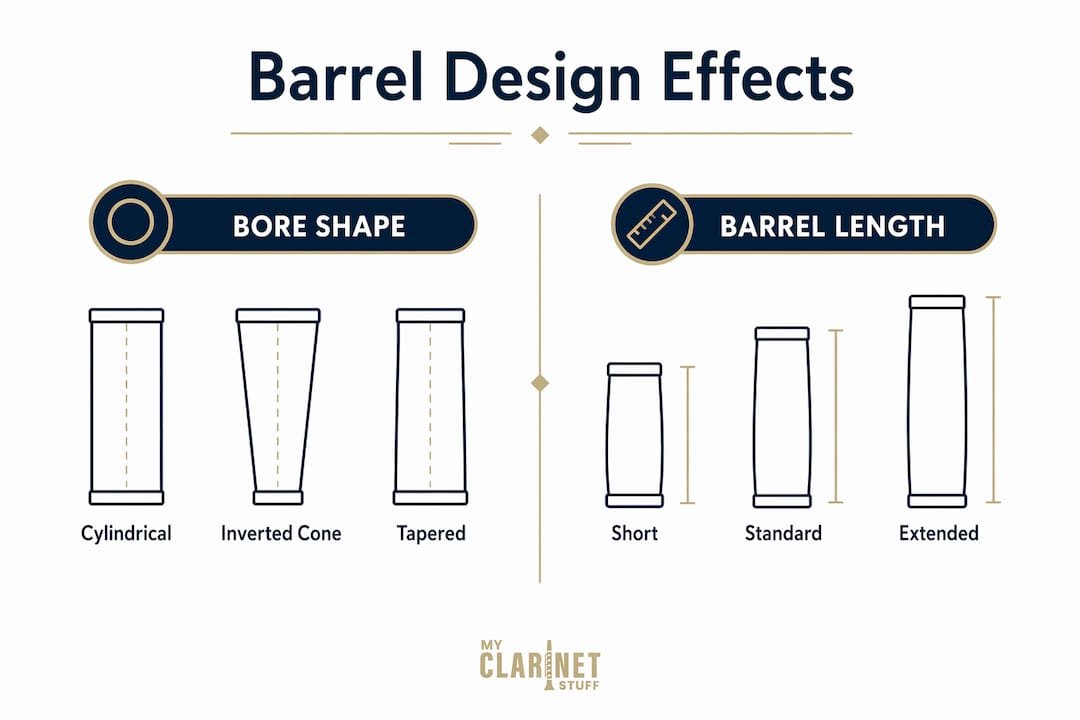
Four bore profiles appear most often in custom barrel design:
- Cylindrical bore: Produces an even, neutral tone with consistent resistance throughout the register. This is the baseline profile found on most student instruments.
- Tapered bore: Narrows from the mouthpiece end toward the body, which focuses the tone and increases resistance slightly. Players often describe this as a “centered” or “direct” sound.
- Reversed tapered bore: Widens toward the body, opening up the sound and reducing back pressure. This profile suits players who want a broader, more diffuse tone color.
- Inverted cone bore: Developed through innovations like those associated with Hans Moennig, this profile improves twelfth-interval tuning and throat tone focus. It corrects the natural tendency of clarinets to play sharp in the throat tones and flat in the upper register.
The inverted cone bore is worth understanding in depth. Standard cylindrical bores leave the twelfth interval slightly uneven, which forces players to compensate with embouchure adjustments. An inverted cone bore corrects this at the acoustic level, so your intonation becomes more stable without extra physical effort. That is a meaningful gain for any player working in ensemble settings where tuning precision matters.
Pro Tip: Match your bore profile to your reed strength and mouthpiece facing. A tight-facing mouthpiece with a tapered bore can create excessive resistance. A more open facing paired with a reversed taper often produces a freer, warmer sound.
What role does barrel length play in pitch and tuning?
Barrel length controls overall pitch, and the relationship is direct. Longer barrels lower pitch; shorter barrels raise it. Standard Bb clarinet barrels fall in the 63–67mm range, with most stock barrels sitting at 65–66mm. A 1mm difference shifts pitch noticeably across the full range of the instrument.
Custom length options address several real tuning problems:
- Playing sharp consistently: A player who runs sharp in warm rooms or with a warm embouchure benefits from a 66mm or 67mm barrel. The added length brings pitch down without requiring constant pulling out at the barrel joint.
- Playing flat consistently: A 63mm or 64mm barrel raises pitch for players who tend to run flat, particularly in cold environments or during long rehearsals when embouchure fatigue sets in.
- Matching a specific mouthpiece: Some mouthpieces are designed to play at a particular pitch center. Custom barrel length lets you align the barrel to that mouthpiece without compromising tone.
- Ensemble tuning standards: Orchestras and chamber groups often tune to A=442 or A=443 rather than the standard A=440. A custom barrel length helps you meet that standard without fighting your instrument.
The mistake most players make is choosing barrel length based on feel rather than measurement. Consulting a teacher or experienced repair technician before purchasing a custom length saves you from buying a barrel that pulls your pitch in the wrong direction. Length selection should always start with an honest assessment of your tuning tendencies, ideally recorded and reviewed with a tuner.
How does barrel material affect tonal warmth and resonance?
Material choice shapes the character of your sound in ways that bore design alone cannot fully address. Tropical hardwoods like African blackwood produce warmer, richer tones compared to plastic or hard rubber barrels. The density and grain structure of the wood absorb and reflect sound waves differently, adding complexity and warmth to the tone.
Here is how the most common barrel materials compare in practical terms:
- African blackwood (grenadilla): The standard for professional clarinet barrels. Dense, stable, and acoustically responsive. Produces a dark, complex tone with strong projection.
- Cocobolo and rosewood: Slightly lighter than grenadilla, these woods add warmth and a slightly brighter edge. Popular with players who want a more colorful tone without sacrificing depth.
- Stabilized temperate woods: Wood stabilization using methyl methacrylate polymerisation improves hardness and durability while maintaining acoustic properties close to tropical hardwoods. This makes sustainably sourced woods viable for professional-grade barrels.
- Hard rubber (ebonite): Produces a focused, consistent tone with slightly less warmth than wood. Resistant to humidity changes, which makes it reliable across different climates.
- Synthetic and resin composites: Offer the most consistency across temperature and humidity conditions. Tone tends to be bright and direct, which suits jazz and folk styles well.
One design detail that separates many custom barrels from stock options is the removal of conventional metal rings. Barrels without metal rings avoid the damping effect that hardware creates on the wood’s natural resonance. The result is a freer, more acoustically efficient sound.
Pro Tip: Oil your wooden barrel regularly with bore oil to keep the inner surface smooth. Polished and treated inner surfaces reduce acoustic losses caused by surface roughness, which sustains better resonance over time.
Practical tips for choosing and using custom barrels
Selecting a custom barrel requires honest self-assessment before you spend money. Start by recording yourself playing long tones and scales with a tuner running. Note where your pitch consistently drifts and what your tone sounds like in the middle and upper registers. That data tells you whether you need a length adjustment, a bore profile change, or a material upgrade.
The clarinet equipment selection process works best when you treat barrel choice as part of a system. Your barrel, mouthpiece, and reed interact constantly. Changing one element without considering the others can produce unexpected results. A wider bore barrel with a close-facing mouthpiece and a soft reed, for example, often produces a thin, unfocused sound.
Maintenance matters as much as initial selection. Wooden barrels need consistent care to stay acoustically stable. Swab the bore after every playing session to remove moisture. Apply bore oil every few weeks during the first month of use, then monthly after that. Store the barrel in a case that protects it from rapid temperature changes, which can cause cracking.
Incremental testing produces the best results. Borrow or trial barrels before committing to a purchase. Many players find that the barrel they expected to prefer sounds wrong in practice, while a less obvious choice fits their setup perfectly. Myclarinetstuff offers resources to help you work through this process with confidence, including guidance on matching barrels to your setup.
Key Takeaways
Custom clarinet barrels enhance sound by combining bore geometry, material density, and precise length to control tuning, tone color, and resonance at the acoustic source.
| Point | Details |
|---|---|
| Bore design drives acoustics | Bore profile shapes resistance, tuning stability, and tonal projection more than any other barrel variable. |
| Length controls pitch | A 1mm change in barrel length produces a noticeable pitch shift; choose length based on your tuning tendencies. |
| Material adds tonal character | African blackwood and stabilized hardwoods produce warmer, richer tones than plastic or hard rubber alternatives. |
| Ring-free design improves resonance | Removing metal rings from barrel construction eliminates hardware damping and frees the wood’s natural acoustic response. |
| System thinking wins | Barrel, mouthpiece, and reed interact as a unit; changing one element requires reassessing the others. |
What I’ve learned from watching players swap barrels
Most clarinetists underestimate the barrel until they try a well-matched custom one. The change is not subtle. Players who have spent years fighting sharp throat tones or a thin upper register often find that a single barrel swap resolves problems they assumed were embouchure issues. That realization is both exciting and a little frustrating, because it means years of unnecessary compensating.
The detail I see overlooked most often is length selection. Players focus on material and bore profile, which are visible and easy to discuss, but they guess at length. A barrel that is 1mm too short can make an otherwise excellent setup feel tense and sharp throughout a rehearsal. The fix is simple: measure your tuning tendencies over multiple sessions before choosing a length.
Material choice is genuinely personal, and I think the industry undersells that. African blackwood is the professional standard for good reason, but stabilized temperate woods have closed the gap considerably. A player who practices in a climate with wide humidity swings may actually get better long-term results from a stabilized wood or hard rubber barrel than from premium grenadilla. Consistency of response matters as much as peak tonal quality.
My honest advice: treat your first custom barrel as an experiment, not a final answer. Try it across different rooms, different reeds, and different temperature conditions before deciding whether it fits. The players who find their signature sound are the ones who test thoughtfully rather than buying based on reputation alone. The clarinet tone customization process rewards patience.
— Milos
Custom barrels and Myclarinetstuff
Myclarinetstuff carries a curated selection of precision-crafted custom barrels designed to work with the Gleichweit mouthpiece lineup and a wide range of Bb clarinet setups. Every barrel option on the site is chosen with bore design, material quality, and tonal performance in mind.
If you are working through a tuning problem or want to add warmth and depth to your sound, the custom barrel selection at Myclarinetstuff gives you real options backed by expert guidance. The site also includes a clarinet accessory guide to help you build a complete setup that performs consistently. Fast U.S. shipping and personalized support make it easy to find the right fit without guesswork.
FAQ
What is the main function of a clarinet barrel?
The barrel connects the mouthpiece to the upper joint and serves as the primary acoustic interface between the two. Its bore design, length, and material directly control tuning, tone color, and resonance.
How does bore shape affect clarinet sound?
Bore shape determines how air vibrates inside the barrel, which affects resistance, pitch ratios across registers, and tonal projection. Inverted cone bore designs improve twelfth-interval tuning and throat tone focus compared to standard cylindrical profiles.
Does barrel length really change pitch that much?
A 1mm difference in barrel length produces a noticeable pitch shift across the full range of the instrument. Longer barrels lower pitch; shorter barrels raise it, making length the most direct tuning variable available to a clarinetist.
Is African blackwood worth the cost for a barrel?
African blackwood produces warmer, richer tones than plastic or hard rubber due to its density and grain structure. For players performing in classical or chamber settings, the tonal complexity it adds justifies the higher price point.
How often should I oil a wooden clarinet barrel?
Oil a new wooden barrel every few weeks during the first month of use, then monthly after that. Treated inner surfaces reduce acoustic losses and sustain better resonance over the life of the barrel.