


Anthony McGill has held the principal clarinet chair at the New York Philharmonic since 2014, becoming the orchestra’s first African American principal player. He won the 2020 Avery Fisher Prize, and his recordings of the Nielsen Clarinet Concerto and the Mozart and Brahms quintets are reference points for serious students. Beyond the stage, he directs Juilliard’s Music Advancement Program and has become one of classical music’s most visible advocates for representation.
TL;DR:
- Anthony McGill’s recordings of Nielsen’s Clarinet Concerto and the Mozart and Brahms quintets highlight his range from technical agility to blend and restraint.
- His role as principal clarinet of the New York Philharmonic since 2014 makes him the orchestra’s first African American in that position, elevating his visibility nationally.
- McGill’s teaching at Juilliard, Curtis, Peabody, and Bard, along with his advocacy campaigns, emphasize a commitment to increasing institutional access for underrepresented musicians.
- His versatility requires adjusting gear to suit both orchestral projection and chamber transparency, making contextual testing essential for flexible playing.
- Winning the 2020 Avery Fisher Prize signals recognition of artistic excellence combined with public leadership in expanding access and representation.
Table of Contents
- Who Is Anthony McGill? A Clarinetist’s Path to the New York Philharmonic
- Anthony McGill’s Major Performances and Recordings
- Anthony McGill’s Teaching Posts and Advocacy Work
- What to Listen for in Anthony McGill’s Recordings
- Anthony McGill’s Awards and Cultural Impact
- What Clarinetists Can Learn From McGill’s Career
- Sources
- FAQ
Who Is Anthony McGill? A Clarinetist’s Path to the New York Philharmonic
McGill grew up in Chicago, where his earliest training came through the Merit School of Music and Interlochen Arts Academy, two programs known for producing disciplined, ensemble-ready young musicians rather than isolated soloists. That grounding shows in how McGill talks about music today: less about individual virtuosity, more about fitting into a larger sound.
He went on to the Curtis Institute of Music, one of the small handful of conservatories that accepts students on full scholarship and treats orchestral training as its central mission. Curtis alumni tend to land major posts early, and McGill was no exception.
His professional arc moved through several serious chairs before New York:
- Associate principal clarinet with the Cincinnati Symphony Orchestra
- Principal clarinet at the Metropolitan Opera, a post demanding stamina and color across a wildly varied repertoire
- Appointment as principal clarinet of the New York Philharmonic in September 2014
That last move carried weight beyond the audition result. McGill became the Philharmonic’s first African American principal player in the orchestra’s history, a fact institutional bios now foreground alongside his artistry. The appointment placed him among a very small group of clarinetists leading a major American orchestra while also building an active solo and chamber career on the side, something most principal chairs simply don’t have time for.
Anthony McGill’s Major Performances and Recordings
McGill’s discography reads like a syllabus for anyone serious about the instrument’s chamber and orchestral repertoire. Three entries matter most for students building a listening list.
- Nielsen’s Clarinet Concerto with the New York Philharmonic. McGill recorded this notoriously difficult concerto with Alan Gilbert conducting, a piece that demands constant shifts between lyrical warmth and near-manic technical bursts, often within the same phrase.
- The Mozart and Brahms clarinet quintets with the Pacifica Quartet. These recordings pair McGill with one of the country’s most respected string quartets, and the results show a clarinetist thinking like a chamber musician first, soloist second.
- Solo appearances with the New York Philharmonic, including Mozart’s Clarinet Concerto, plus recurring festival residencies that put him in front of audiences well beyond his home orchestra’s subscribers.
What ties these together is range. Nielsen tests agility and register control; the quintets test blend and restraint. Few working clarinetists move between those demands as convincingly, and it’s part of why his recordings get assigned in conservatory listening rooms rather than just streamed for pleasure.
Anthony McGill’s Teaching Posts and Advocacy Work
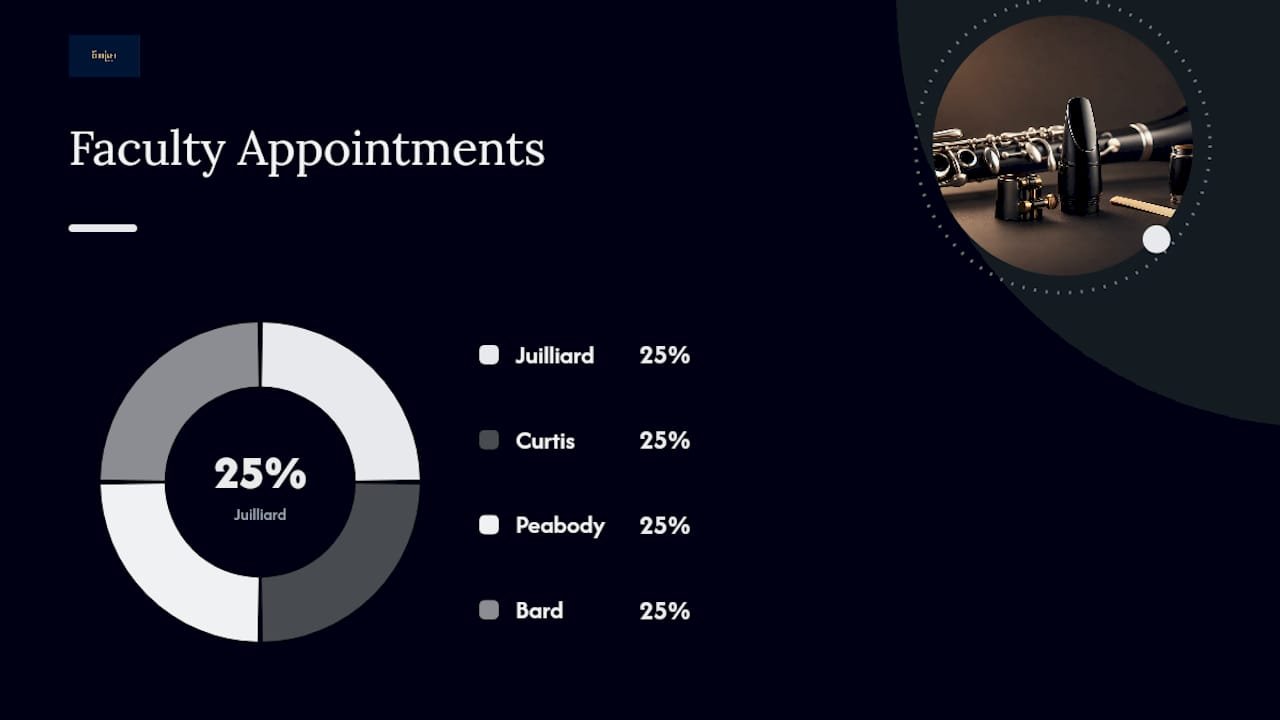
McGill’s influence extends well past his own playing. He holds faculty positions at Juilliard, Curtis, Peabody, and Bard, putting him in direct contact with the next generation of orchestral and chamber musicians across four of the field’s more selective programs.
His most structurally significant role, though, is as artistic director of Juilliard’s Music Advancement Program (MAP), a Saturday program that trains young musicians from underrepresented backgrounds in New York City. Alongside trombonist Weston Sprott, McGill helped establish the Weston Sprott and Anthony McGill MAP Summer Scholarship Fund, extending that access into MAP’s more intensive summer sessions.
His advocacy has also taken a more public, activist turn:
- The #TakeTwoKnees campaign, launched with his brother, flutist Demarre McGill, and violinist Michael Morgan, used solo performances filmed in protest poses to draw attention to racial injustice
- Continued partnership work tied to the Equal Justice Initiative, extending the reach of that initial campaign into ongoing programming
Combined, the teaching posts and the activism paint a musician who treats institutional access as part of the job, not a side project.
What to Listen for in Anthony McGill’s Recordings
Start with the Nielsen concerto if you want to hear control under pressure. Nielsen wrote the piece for a specific personality type, a player who could turn on a dime between menace and tenderness, and McGill’s recording with the Philharmonic captures that instability without letting the tone crack.
Move to the Mozart and Brahms quintets next. These recordings reward attention to blend: notice how McGill matches the string quartet’s vibrato and dynamic shading rather than asserting himself as the featured voice.
A few practical listening and practice targets:
- Tone consistency across registers — track how the sound holds its color from the low chalumeau up through the clarion break
- Phrasing in the Mozart Larghetto — one of the most exposed slow movements in the repertoire, and a useful study excerpt on its own
- Dynamic control in Brahms Quintet tuttis — listen for restraint, not volume
- Ensemble timing in the quintet recordings, where McGill often defers rhythmically to the quartet
Pro Tip: Record yourself playing the same sixteen bars of the Mozart Larghetto three days in a row, then compare tone consistency across takes rather than just pitch accuracy. Small equipment or embouchure drift shows up faster in slow, exposed lines than in fast passages. For more structured excerpt work, this list of iconic clarinet solos pairs well with McGill’s recordings as a study companion.
Anthony McGill’s Awards and Cultural Impact
McGill won the 2020 Avery Fisher Prize, one of American classical music’s most significant individual honors.
The prize carries a monetary award, and in 2020 an additional donation was designated for charity by McGill.
Coverage of the award, including a New York Times profile that called him a “citizen musician,” framed the honor as recognition for artistry paired with public leadership rather than performance alone. That framing matters for how the field talks about excellence now: technical mastery gets you into the room, but institutions increasingly reward musicians who also expand who gets to be in that room. McGill’s visibility, built through the Philharmonic chair, the recordings, and the MAP directorship, has made him a reference point in that conversation well beyond clarinet circles.
What Clarinetists Can Learn From McGill’s Career
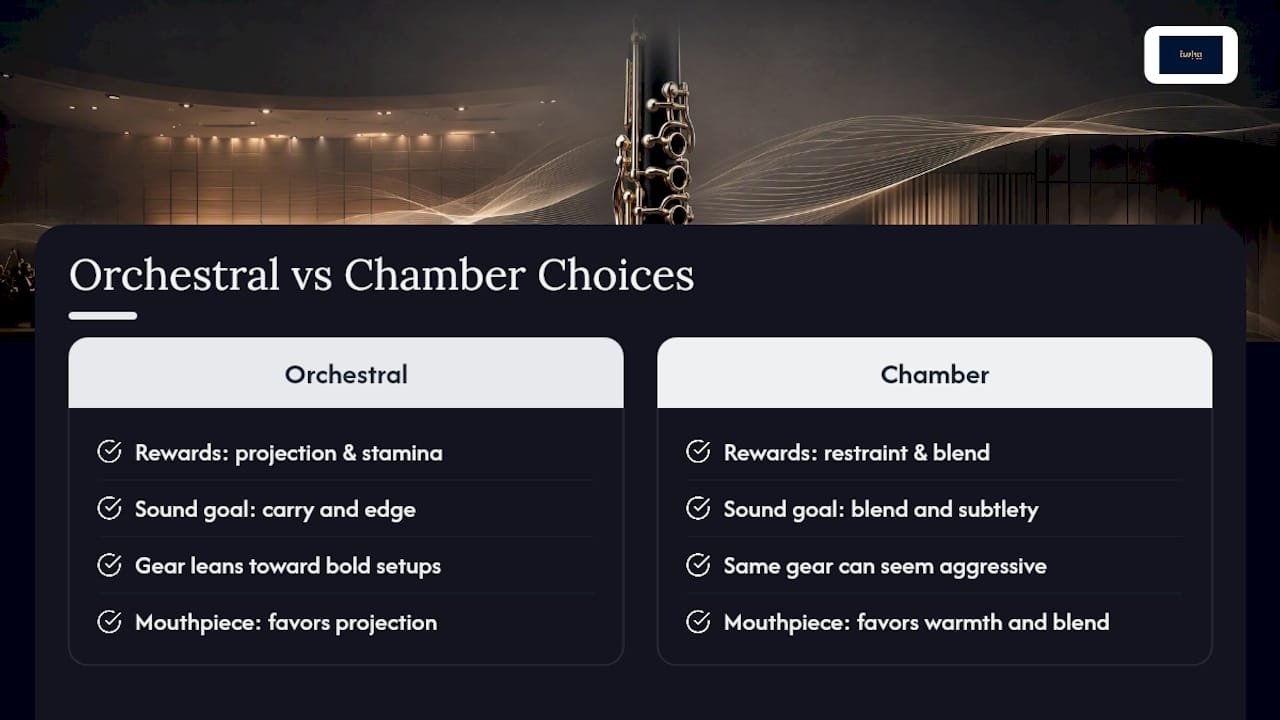
McGill’s path suggests something worth sitting with: the clarinetists who last aren’t the ones who pick a lane and stay in it. He moves between orchestral concerto work, which rewards projection and stamina, and chamber repertoire, which rewards restraint and blend, sometimes within the same season. That’s a harder discipline than it sounds, because the two contexts pull equipment choices in different directions.
Reed and mouthpiece setups that give you edge and carry in a concerto hall can sound aggressive in a quintet. Players serious about covering both should treat gear as context-specific, not fixed. A mouthpiece matched to orchestral projection is not automatically the right choice for an intimate chamber date, and testing setups across contexts, rather than settling on one “main” mouthpiece, tends to separate versatile players from specialists.
— Milos
Sources
- Anthony McGill | Principal Clarinet — New York Philharmonic
- McGill awarded Avery Fisher Prize — Curtis Institute news
- Biography | Clarinetist Anthony McGill
- Anthony McGill recipient 2020 Avery Fisher Prize and Artistic Director of Juilliard’s MAP — The Juilliard School
If you’re building your own practice routine around McGill’s repertoire choices, these clarinet performance tips and core practice essentials offer a solid starting structure, and Myclarinetstuff’s Mouthpiece Matchmaker can help you test how a setup performs across both orchestral and chamber contexts before you commit to one.
FAQ
Who Is the Principal Clarinetist of the New York Philharmonic?
Anthony McGill has held the principal clarinet chair at the New York Philharmonic since September 2014, making him the first African American principal player in the orchestra’s history.
Who Is Anthony McGill Married To?
Anthony McGill’s personal life, including his marital status, is not publicly detailed in his official biography or major press coverage, and this article does not report unverified personal details.
Who Is the Greatest Clarinetist of All Time?
There’s no single agreed-upon answer, since “greatest” depends on era, repertoire, and personal taste, but McGill is consistently named among today’s most respected clarinetists thanks to his Avery Fisher Prize, his Philharmonic chair, and his recordings of the Nielsen concerto and the Mozart and Brahms quintets.
Who Are the Most Famous Clarinet Players Today?
Anthony McGill is among the most prominent working clarinetists, known for his New York Philharmonic principal chair, his 2020 Avery Fisher Prize, and his chamber recordings with the Pacifica Quartet and with his brother, flutist Demarre McGill.
What Award Did Anthony McGill Win in 2020?
McGill received the 2020 Avery Fisher Prize, which carries a $100,000 award, plus an additional $30,000 designated that year for donation to a charity of his choosing.