


Many clarinetists believe that selecting the perfect mouthpiece is the single most important factor in achieving great sound quality. While the mouthpiece plays a significant role, this oversimplifies the complex equation behind clarinet tone production. Your sound is actually shaped by multiple interconnected elements including mouthpiece design, reed characteristics, instrument condition, and your own playing technique. This comprehensive guide explores each of these critical factors and provides actionable insights to help you optimize your clarinet tone in 2026 and beyond.
Table of Contents
- Understanding Core Clarinet Sound Quality Factors
- How Mouthpiece Materials And Designs Impact Clarinet Tone
- The Role Of Reeds And Instrument Condition In Shaping Sound Quality
- Enhancing Clarinet Sound Quality Through Player Technique And Setup
- Enhance Your Clarinet Sound With Expert Mouthpiece Selection
- Frequently Asked Questions
Key takeaways
| Point | Details |
|---|---|
| Multiple factors shape tone | Clarinet sound quality depends on mouthpiece, reed, instrument condition, and player technique working together. |
| Mouthpiece design matters | Tip opening, facing length, chamber shape, and material significantly influence tonal character and projection. |
| Reed quality affects response | Reed strength, cut, and maintenance directly impact vibration properties and tonal clarity. |
| Technique drives consistency | Embouchure control, breath support, and articulation determine how effectively you produce your desired sound. |
| Maintenance preserves quality | Regular cleaning, pad checks, and bore inspection sustain optimal sound production and tuning stability. |
Understanding core clarinet sound quality factors
Achieving exceptional clarinet tone requires understanding how multiple elements work together to create your unique sound. Each component plays a distinct role in shaping the final result you hear.
Your mouthpiece serves as the primary vibration source where sound begins. Mouthpiece shape and tip opening are critical to tone production and player comfort. The tip opening determines how much the reed can vibrate, affecting both resistance and tonal flexibility. A wider tip opening typically produces a fuller, darker tone but requires more air support. Facing length influences how gradually the reed separates from the mouthpiece table, impacting response speed and tonal warmth.
Reed selection dramatically alters your sound’s character and responsiveness. The reed’s strength, cut style, and current condition determine how freely it vibrates against the mouthpiece. Softer reeds vibrate more easily, producing a brighter tone with less resistance, while harder reeds offer greater control and projection but demand stronger embouchure support. Understanding mouthpiece material matters helps you make informed choices about tonal warmth versus brightness.
Your clarinet’s physical construction affects resonance and tonal color. Wood type influences warmth and projection characteristics, with grenadilla wood offering rich, focused tone and alternative materials providing different tonal qualities. Bore dimensions, tone hole placement, and key mechanism precision all contribute to intonation stability and sound consistency across registers.
Player technique represents the most variable factor in sound production. Your embouchure shape, firmness, and positioning directly control reed vibration and air column direction. Breath support determines dynamic range and tonal fullness, while articulation style affects note clarity and musical expression. Developing these skills through focused practice yields the most dramatic improvements in sound quality. Explore clarinet reed selection tips to optimize this critical component.
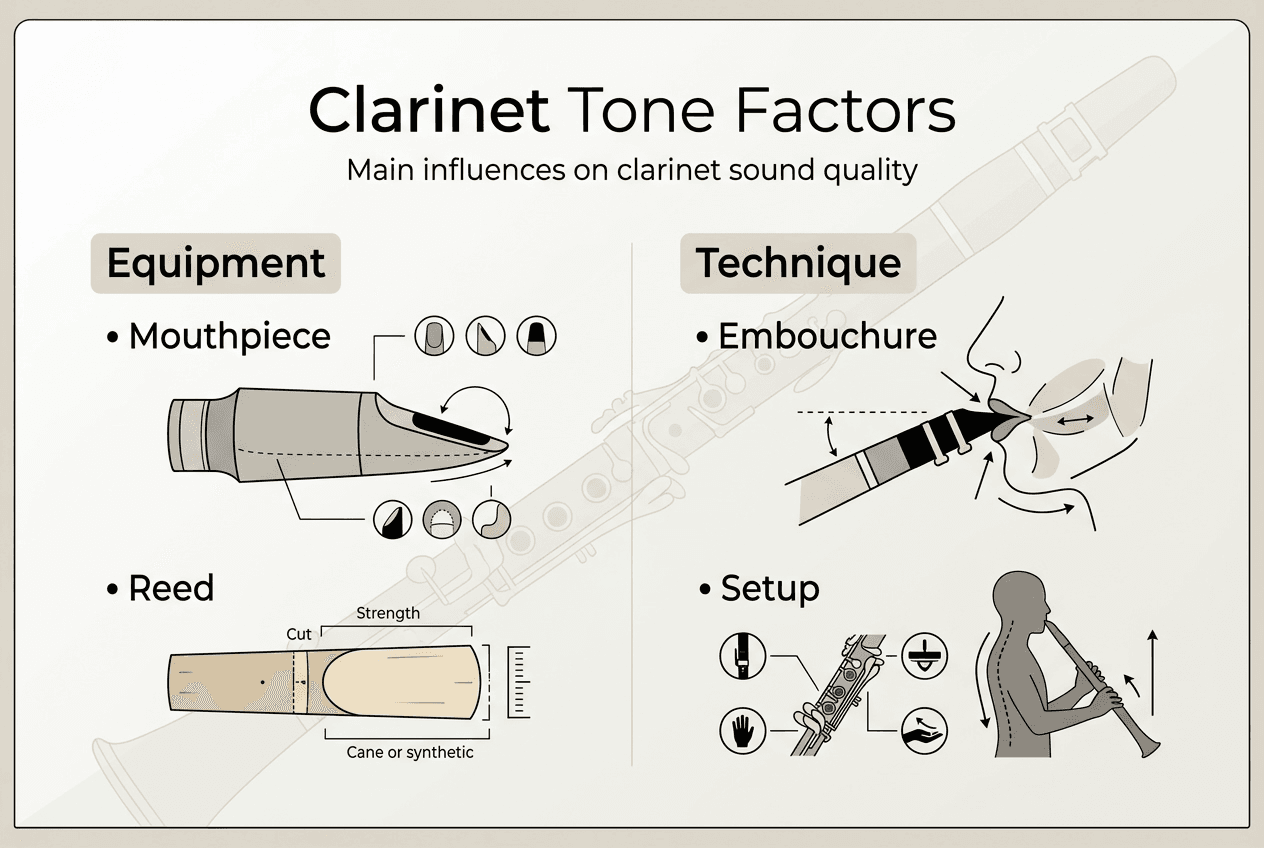
Proper maintenance preserves your instrument’s ability to produce quality sound. Regular swabbing removes moisture that can warp pads and affect tone holes. Pad condition directly impacts air seal quality, preventing leaks that create fuzzy tone and tuning problems. Cork and spring adjustments ensure keys close completely and open at the correct height for optimal resonance.
Key factors affecting clarinet sound quality:
- Mouthpiece tip opening and facing geometry
- Reed strength, cut, and moisture content
- Instrument bore dimensions and material composition
- Embouchure formation and consistency
- Breath pressure and air stream direction
- Pad seal integrity and key mechanism alignment
Pro Tip: Record yourself playing the same passage with different mouthpiece and reed combinations to identify which setup produces your ideal tone. This comparative approach reveals subtle differences that are hard to notice during performance.
Understanding these interconnected factors empowers you to troubleshoot sound issues systematically rather than blaming a single component. Check out comprehensive clarinet performance tips to refine your technique alongside equipment choices.
How mouthpiece materials and designs impact clarinet tone
Mouthpiece construction significantly shapes your clarinet’s tonal character, projection capabilities, and playing feel. Understanding material properties and design features helps you select equipment that matches your musical goals.
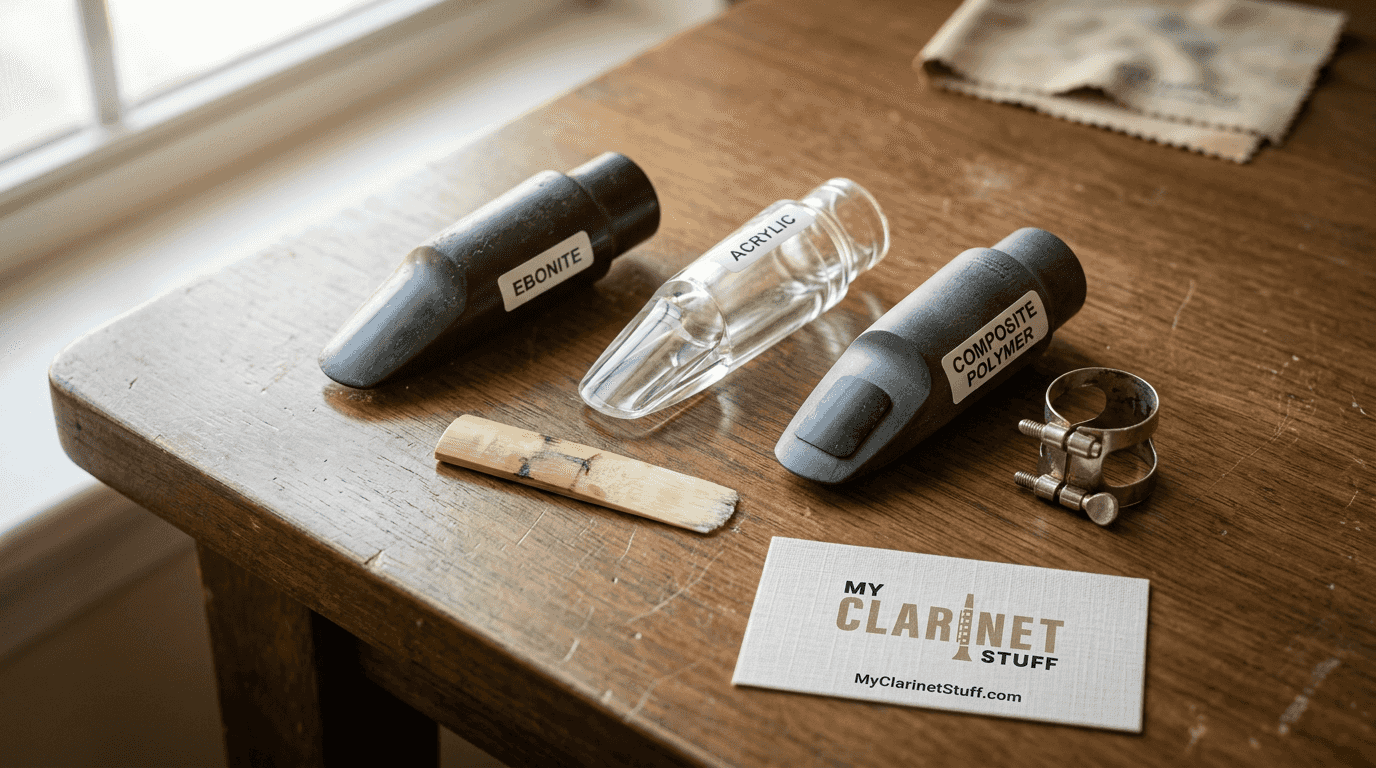
Material choice affects tonal warmth and brightness characteristics. Ebonite and hard rubber mouthpieces deliver warm, centered tones favored in classical settings. These materials absorb some high frequency vibrations, producing a mellower sound with excellent focus. Metal mouthpieces generate brighter, more projecting tones ideal for jazz and contemporary styles. The rigid metal surface reflects more high frequencies, creating edge and brilliance that cuts through ensemble textures.
Synthetic materials like acrylic and composite polymers offer consistency advantages. Unlike natural hard rubber, synthetic mouthpieces maintain dimensional stability across temperature and humidity changes. This consistency ensures your setup performs identically whether you’re practicing in a dry winter studio or performing in a humid summer venue.
Tip opening size determines how freely your reed vibrates and how much air resistance you encounter. Smaller tip openings (0.90mm to 1.10mm) provide greater control and focused tone but require precise embouchure control. Medium openings (1.10mm to 1.25mm) balance ease of playing with tonal flexibility, making them popular among advancing students and professionals. Larger openings (1.25mm+) produce fuller, darker tones but demand strong breath support and embouchure development.
Facing length affects response speed and tonal color. Shorter facings produce quick response and bright tone, ideal for articulate passages and contemporary styles. Longer facings generate warmer, more resonant tones with slightly slower response, preferred for lyrical classical repertoire. The facing curve’s exact shape influences how smoothly the reed transitions from rest to vibration.
Chamber design shapes tonal warmth and projection balance. Round chambers produce warm, focused tones with excellent projection in orchestral settings. Square chambers create brighter, more open sounds favored in solo and jazz contexts. Baffle height and placement further modify tonal brightness and edge characteristics.
| Mouthpiece Feature | Tonal Impact | Playing Characteristic |
|---|---|---|
| Ebonite/Hard Rubber | Warm, centered tone | Excellent focus, classical sound |
| Metal | Bright, projecting tone | Enhanced edge, jazz brilliance |
| Synthetic | Consistent, reliable tone | Stable across conditions |
| Small Tip Opening | Focused, controlled tone | Higher resistance, precision |
| Large Tip Opening | Full, dark tone | Lower resistance, air demand |
| Long Facing | Warm, resonant tone | Slower response, lyrical |
| Short Facing | Bright, articulate tone | Quick response, clarity |
Balancing these design elements requires considering your playing style, ensemble setting, and repertoire demands. Classical orchestral players typically prefer ebonite mouthpieces with medium tip openings and longer facings for warm, blending tone. Jazz musicians often choose metal or bright synthetic mouthpieces with larger openings for projection and tonal edge. Discover various clarinet mouthpiece types to understand your options.
Pro Tip: When testing mouthpieces, play both soft lyrical passages and loud articulated sections to evaluate tonal consistency across dynamics and articulation styles. A quality mouthpiece maintains tonal character throughout your full playing range.
Modern manufacturing precision enables 92 percent tonal match consistency between identical mouthpiece models, reducing the variability that plagued traditional hand-finished mouthpieces. This consistency allows you to replace worn mouthpieces without dramatically altering your established sound concept.
The role of reeds and instrument condition in shaping sound quality
Reed selection and instrument maintenance form the foundation for consistent, quality clarinet tone. Neglecting either element undermines even the finest mouthpiece and technique.
Reed characteristics directly influence vibration properties and tonal response. Strength ratings indicate reed thickness and resistance level, typically ranging from 1.5 (soft) to 5.0 (hard). Softer reeds vibrate more freely, producing brighter tone with easier high register response but less projection and stability. Harder reeds offer greater dynamic control and fuller low register tone but require stronger embouchure and breath support. Most advancing players use strengths between 2.5 and 3.5 to balance playability with tonal control.
Reed cut style affects tonal character and response feel. Filed reeds feature a thin area behind the vamp, producing brighter tone with quicker response in the upper register. Unfiled reeds maintain thickness closer to the tip, generating darker, more resistant tone favored for orchestral playing. French file cuts offer compromise characteristics between these extremes. Reed quality and adjustment are essential for optimal vibration and tonal control.
Proper reed care maintains consistent performance characteristics. Rotating between multiple reeds prevents individual reeds from becoming waterlogged and losing responsiveness. Store reeds at stable humidity levels using reed cases with humidity control to prevent warping. Flatten the reed table on fine sandpaper if it curves away from the mouthpiece, ensuring complete contact for optimal vibration transfer.
Essential reed maintenance practices:
- Rotate among 4 to 6 reeds to extend lifespan
- Wipe reeds dry after playing to prevent warping
- Store in humidity-controlled cases at 45 to 55 percent relative humidity
- Inspect for cracks, chips, or uneven tip rails before playing
- Replace reeds showing diminished response or tonal clarity
Instrument condition profoundly affects sound production and tuning stability. Worn pads create air leaks that produce fuzzy tone, poor response, and intonation problems. Check pad seal quality by closing keys over cigarette paper, then gently pulling the paper. Resistance indicates good seal, while easy removal reveals leaks requiring professional attention. Explore detailed clarinet reed care workflow to optimize this critical element.
Regular maintenance preserves optimal playing condition and prevents expensive repairs:
- Swab the bore thoroughly after every playing session to remove moisture
- Inspect pads monthly for tears, hardening, or impression marks
- Check cork condition on tenon joints and ensure airtight connections
- Oil keywork pivot points annually to maintain smooth action
- Clean tone holes quarterly to remove buildup affecting resonance
- Schedule professional servicing every 12 to 18 months for comprehensive adjustment
Bore cleanliness impacts tonal clarity and response. Residue buildup in the bore and tone holes dampens vibrations and creates stuffy tone. Use bore oil sparingly on wooden clarinets to prevent cracking, following manufacturer recommendations for frequency and product type. Synthetic clarinets require less maintenance but still benefit from regular cleaning.
Systematic troubleshooting identifies sound quality issues efficiently. Start with the reed, testing different strengths and checking for damage. Next examine mouthpiece condition, looking for chips, cracks, or facing wear. Then assess instrument pad seals and mechanical alignment. Finally evaluate your technique, ensuring consistent embouchure and breath support. Access comprehensive clarinet maintenance checklist for detailed procedures.
Pro Tip: Keep a practice journal noting which reed and mouthpiece combinations produce your best tone on specific days. Patterns emerge revealing how humidity, temperature, and playing duration affect your optimal setup choices.
Addressing equipment issues before blaming technique prevents frustration and accelerates improvement. Consult the clarinet sound troubleshooting guide when persistent problems arise despite proper maintenance and reed care.
Enhancing clarinet sound quality through player technique and setup
Your physical approach to the clarinet ultimately determines how effectively you translate equipment potential into beautiful sound. Technique development and setup optimization work together to elevate your tonal quality.
Embouchure formation controls reed vibration and air direction with remarkable precision. Proper embouchure balances firmness with flexibility, supporting the reed without choking its vibration. Your lower lip cushions the reed against your bottom teeth, while facial muscles provide lateral support. Excessive pressure restricts reed vibration, producing thin, pinched tone. Insufficient support allows the reed to vibrate chaotically, creating unfocused, spread sound. Player technique can significantly enhance or degrade clarinet sound quality through embouchure control.
Consistent embouchure development requires focused practice. Long tone exercises build muscle memory and endurance for maintaining proper formation throughout extended playing sessions. Practice crescendos and diminuendos on single pitches to develop dynamic control without altering embouchure shape. This consistency ensures tonal stability across your full volume range.
Breath support provides the energy source for sound production. Controlled air pressure from your diaphragm and abdominal muscles sustains steady tone and enables expressive dynamics. Shallow chest breathing produces weak, unstable tone that fluctuates with natural breathing rhythm. Deep breathing from the diaphragm supplies consistent air pressure for full, resonant sound across all registers.
Breath control techniques for enhanced tone:
- Practice breathing exercises away from the instrument to develop diaphragm strength
- Sustain long tones for 20 to 30 seconds to build air capacity
- Maintain steady air pressure throughout note duration, avoiding tapers
- Support soft dynamics with controlled slow air rather than reduced pressure
- Coordinate breath support with embouchure firmness for tonal consistency
Setup choices beyond mouthpiece and reed affect playing comfort and sound production. Ligature design influences how evenly the reed contacts the mouthpiece, affecting vibration symmetry and tonal focus. Metal ligatures with single contact points produce bright, focused tone. Leather or fabric ligatures with distributed pressure create warmer, more complex tones. Mouthpiece placement on the cork affects tuning and resistance, with deeper placement generally lowering pitch and increasing resistance.
Articulation style impacts note clarity and musical expression. Tongue position and motion speed determine attack character and note separation. Light, quick tongue motion produces clean articulation without disrupting air stream, maintaining tonal consistency between tongued and slurred notes. Heavy tonguing interrupts air flow, creating harsh attacks and uneven tone quality. Develop clarinet performance tips alongside equipment knowledge for comprehensive improvement.
Consistent practice focused on tone development yields continuous improvement. Dedicate portion of each practice session to sound quality work separate from technical exercises or repertoire preparation. Record yourself regularly to identify tonal inconsistencies and track progress over time. Compare your recordings to professional performances, noting differences in tonal color, projection, and consistency across registers.
Pro Tip: Practice overtone exercises by fingering low register notes while voicing higher partials with embouchure and air speed adjustments. This develops precise control over tonal color and intonation without relying on fingering changes.
Balancing equipment optimization with technique development creates a comprehensive approach to sound quality improvement. Neither element alone produces optimal results, but their combination unlocks your full tonal potential. Explore essential clarinet practice tips to structure your development effectively.
Enhance your clarinet sound with expert mouthpiece selection
Finding the ideal mouthpiece and accessories transforms your clarinet’s tonal potential into consistent, beautiful sound. My Clarinet Stuff provides specialized tools and expert guidance to simplify this critical selection process.

Our Clarinet Mouthpiece Matchmaker tool analyzes your playing style, experience level, and tonal goals to recommend precisely matched mouthpieces from our curated selection. Access detailed mouthpiece selection tips tailored for students, educators, and professional clarinetists seeking to optimize their setup. Explore our comprehensive clarinet accessory selection guide covering ligatures, barrels, and maintenance tools that support optimal sound production. Our Austrian-made Gleichweit mouthpieces deliver exceptional consistency and tonal clarity through precision CNC manufacturing, eliminating the variability that plagues traditional hand-finished mouthpieces. Leverage these trusted resources to elevate your clarinet tone with equipment choices backed by expert knowledge and player-focused design.
Frequently asked questions
What factors most influence clarinet sound quality?
Clarinet sound quality results from the interaction of mouthpiece design, reed characteristics, instrument condition, and player technique. Mouthpiece tip opening, facing length, and material shape initial vibration properties. Reed strength and cut determine vibration freedom and tonal color. Instrument bore dimensions, pad seal integrity, and material composition affect resonance and projection. Player embouchure, breath support, and articulation ultimately control how these elements combine to produce your unique sound.
How often should I replace or adjust my clarinet mouthpiece?
Mouthpieces should be replaced when physical damage occurs or tonal quality diminishes noticeably. Inspect your mouthpiece quarterly for cracks, chips, or facing wear that affects reed seal and vibration. Hard rubber mouthpieces can warp over years of use, altering tip opening and facing curve. If your tone becomes increasingly difficult to control or you notice pitch instability despite proper reed selection and technique, professional mouthpiece evaluation may reveal the need for replacement.
Can changing my reed improve my clarinet’s sound quality?
Reed strength, cut style, and current condition significantly influence tone production and playing response. Switching to a different strength can dramatically alter tonal brightness, projection, and ease of playing across registers. Experimenting with filed versus unfiled cuts reveals tonal character differences suited to various musical styles. Proper reed selection and maintenance enhance playability and sound quality more immediately than most equipment changes, making reed optimization your first step when seeking tonal improvement.
What player techniques help improve clarinet tone?
Developing strong embouchure formation, controlled breath support, and refined articulation produces the most significant tone quality improvements. Practice long tones with consistent air pressure to build embouchure endurance and tonal stability. Focus on diaphragmatic breathing rather than shallow chest breathing to sustain full, resonant sound. Refine tongue position and motion speed for clean articulation that maintains tonal consistency. Consistent practice emphasizing tone development yields better results than equipment changes alone, as technique determines how effectively you utilize your mouthpiece and reed combination.
Recommended
- Clarinet Performance Tips Guide for Achieving Your Best Sound – My Clarinet Stuff
- 7-Step Clarinet Sound Improvement Checklist for Experts – My Clarinet Stuff
- Clarinet Tone Customization: Achieving Your Signature Sound – My Clarinet Stuff
- Clarinet Upgrade Step by Step for Superior Sound Quality – My Clarinet Stuff
- Hearing Aid Troubleshooting Guide for Clearer Sound – Audora