
TL;DR:
- The Viennese clarinet produces a warm, expressive tone by matching a system-specific mouthpiece, breath support, and embouchure. Its wider bore creates a darker sound that requires system-compatible mouthpieces and regulated, slow air release for proper tone. Success depends on proper equipment, technique, and patience in testing and refining the setup.
The Viennese clarinet sound is defined by a warm, vocal, and deeply expressive tone that sets it apart from the brighter character of the Böhm system. Crafting the Viennese clarinet sound requires three things working together: a system-specific mouthpiece, refined breath support, and a carefully shaped embouchure. Makers like Gleichweit have built their entire design philosophy around this integration. The result is a tone that emphasizes lyrical phrasing and natural resonance over brightness or volume. Get any one of these three elements wrong, and the sound suffers noticeably.
How does the Viennese clarinet system differ from other systems?
The Viennese clarinet system has a distinct bore design that separates it acoustically from both the Böhm and German systems. The bore dimensions, taper, and internal geometry all shape how the instrument resonates and responds to the player’s air. This is not a cosmetic difference. It changes intonation, tone color, and how the reed vibrates.
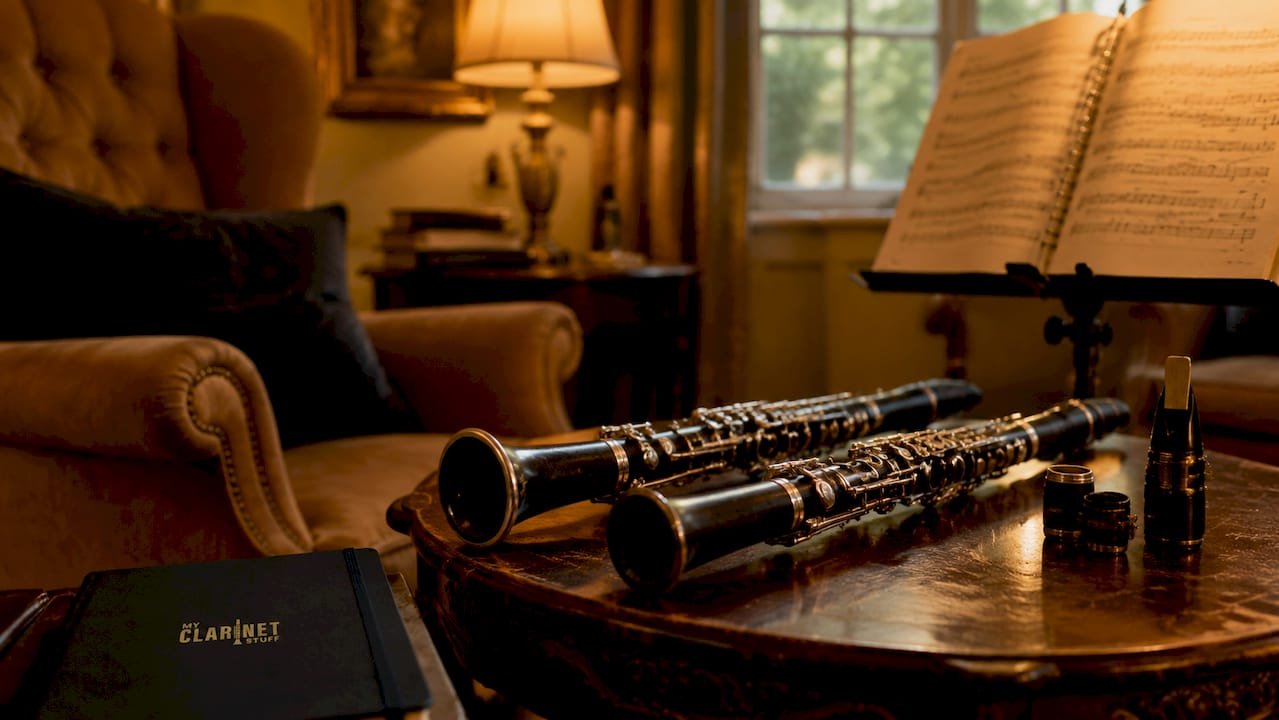
The Böhm system, which most players in the United States learn on, uses a narrower cylindrical bore optimized for projection and technical agility. The German system sits between Böhm and Viennese in bore width. The Viennese system uses a wider bore that produces a rounder, darker, and more complex tone. That wider bore also creates more resistance, which directly affects how you manage your air.
| Feature | Böhm System | Viennese System |
|---|---|---|
| Bore width | Narrower | Wider |
| Tone character | Bright, projecting | Warm, round, vocal |
| Resistance | Lower | Higher |
| Mouthpiece compatibility | Standard Böhm mouthpieces | System-specific mouthpieces required |
| Common region | USA, France, most of the world | Austria, parts of Central Europe |
The keywork and integrated construction of the Viennese clarinet also affect playability and articulation style. The instrument is built as a unified acoustic system. That means standard mouthpieces do not fit Viennese clarinets properly, and forcing a Böhm mouthpiece onto a Viennese instrument will compromise both intonation and tone response.
Pro Tip: If you play a Böhm clarinet and want to explore the Viennese sound, know that a Viennese-style mouthpiece alone will not replicate the tone. The bore must match the mouthpiece for authentic results.
Which mouthpiece characteristics are essential for the Viennese tone?
Mouthpiece selection is the single most consequential equipment decision for Viennese clarinet tone production. The mouthpiece must match the bore geometry and acoustic properties of the instrument. A mismatch produces flat intonation in the upper register, sluggish response, and a tone that never quite settles.
Gleichweit mouthpieces are developed specifically for the Viennese clarinet system to optimize resonance, pitch stability, and response. Gleichweit manufactures these in Austria using CNC-machined synthetic material, which removes the variability found in traditional hard rubber. That consistency matters when you are trying to build a reliable sound.
Key mouthpiece characteristics to evaluate for the Viennese tone:
- Bore compatibility: The mouthpiece shank must match the Viennese bore taper exactly. Even small mismatches cause air leaks and intonation problems.
- Chamber shape: A larger, rounder chamber supports the darker, fuller tone the Viennese system produces.
- Tip opening: A medium tip opening works well for most players starting with the Viennese sound. It balances resistance with tonal flexibility.
- Baffle height: A lower baffle produces a warmer, less bright tone. This aligns with the Viennese tonal ideal.
- Material consistency: Synthetic mouthpieces like those from Gleichweit hold their dimensions across temperature changes, which hard rubber does not always do.
Testing mouthpieces before committing is non-negotiable. Myclarinetstuff offers an at-home test box program that lets you compare multiple Gleichweit models on your own instrument before buying. This is the most reliable way to find natural resonance and pitch stability in your specific setup.
Pro Tip: When testing a mouthpiece, play long tones on the open G and throat tones first. These registers reveal intonation problems and tonal character faster than scales or technical passages.
What breathing techniques produce the Viennese clarinet tone?
Breath support for the Viennese clarinet is best understood as regulated, slow air release that matches the instrument’s resistance, not as pushing air harder. This distinction changes everything about how you approach tone production. Players who push air tend to overblow the instrument, which produces a thin, forced sound instead of the warm, centered tone the Viennese system is capable of.
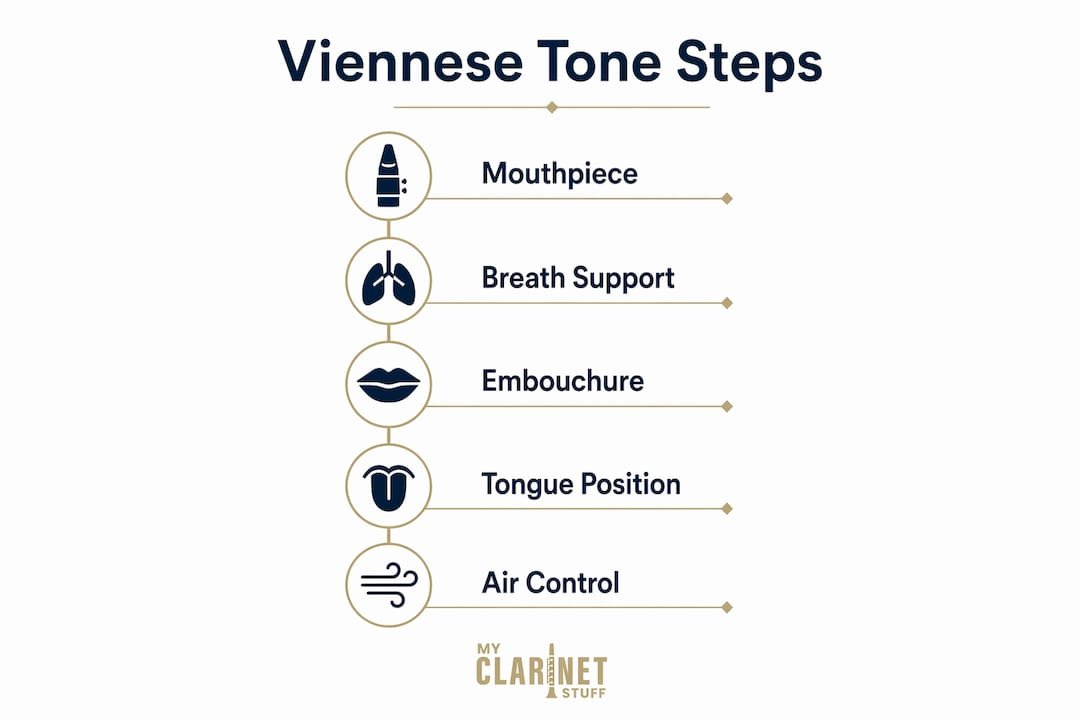
The wider bore of the Viennese clarinet creates more natural resistance. That resistance is your friend. It gives you something to play against, and your air column becomes more stable as a result. The key is learning to work with that resistance rather than fighting it.
Here is how to build the right breath support for Viennese tone production:
- Expand the ribcage on inhalation. Ribcage mobility allows air to return naturally rather than being forcibly drawn in. Think of your ribs opening outward, not your shoulders rising.
- Let the ribs descend slowly during the phrase. Rib descent regulates air pressure across a long phrase. This is the primary control mechanism, not the diaphragm alone.
- Engage the abdominal muscles as support, not as the engine. The abdominal muscles assist pressure regulation. They do not drive the air.
- Coordinate intercostal and abdominal muscles together. Distributed muscle coordination involving ribs, intercostals, and abdominals produces a stable, even air stream.
- Allow reflexive inhalation. When you finish a phrase, let the ribs spring back open naturally. Do not gasp or force the breath in.
“Support is not about pushing air. It is about regulating a column of air with precision, using the whole breathing apparatus as a coordinated system.” — Adapted from clarinet pedagogy research on breath support
The Viennese tone rewards patience in the air stream. A slow, steady column of air through a well-matched mouthpiece produces the characteristic warmth that defines this tradition.
How to form the Viennese clarinet embouchure and tongue position
The embouchure for Viennese clarinet playing requires deliberate shaping before the mouthpiece ever touches your lips. Larry Guy’s approach to embouchure formation starts away from the instrument: draw your lips in as if forming the vowel “oo,” flatten your chin downward, and firm the corners of your mouth. Only then do you bring the mouthpiece to your lips.
This pre-formed embouchure prevents the most common mistake in clarinet tone production, which is biting with the jaw. Jaw pressure collapses the reed, kills the tone, and creates a thin, pinched sound. The Viennese tone requires the reed to vibrate freely. Your embouchure controls that vibration through lip pressure and corner firmness, not jaw movement.
Key embouchure and tongue position points:
- Flat chin: A flat, stretched chin keeps the lower lip from bunching under the reed. Bunching creates uneven pressure and a muffled tone.
- Firm corners: Firm lip corners stabilize the embouchure and prevent air from escaping at the sides.
- Avoid jaw biting: Jaw pressure is the most common cause of a dull, unresponsive tone. Keep the jaw still.
- Tongue position: Maintain a high “ee” tongue position while playing. This raises pitch, increases air velocity, and reduces unwanted undertones.
- Reed contact: The lower lip should rest lightly against the reed, not press into it. Think of the lip as a cushion, not a clamp.
Pro Tip: Practice forming your embouchure in front of a mirror before playing. Check that your chin is flat and your corners are firm before the mouthpiece touches your lips. This builds muscle memory faster than correcting problems mid-practice.
The high tongue position is particularly important for Viennese tone production. A low tongue position creates a hollow, unfocused sound. Raising the tongue narrows the oral cavity slightly, which increases air velocity and produces a cleaner, more centered tone.
What are common challenges when crafting the Viennese clarinet sound?
Most players run into predictable problems when first working on the Viennese tone. Identifying the source of the problem quickly saves weeks of frustration.
Common symptoms and their causes:
- Flat intonation in the upper register: usually a mouthpiece mismatch or a bore incompatibility
- Thin, bright tone: often caused by jaw biting or a mouthpiece with too high a baffle
- Unstable pitch: frequently a sign of inconsistent air support or an embouchure that shifts between registers
- Airy, unfocused sound: typically a low tongue position or a reed that is too soft for the mouthpiece
- Fatigue after short playing sessions: usually jaw tension or embouchure collapse from biting
A practical troubleshooting sequence:
- Check your mouthpiece first. Confirm it is designed for the Viennese system, not a Böhm mouthpiece adapted to fit.
- Record yourself playing a slow, sustained tone. Listen for brightness, airiness, or pitch instability.
- Check your embouchure in a mirror. Is your chin flat? Are your corners firm? Is your jaw still?
- Focus on one breath phrase and monitor rib descent. Are you pushing air or regulating it?
- Listen to recordings of Viennese tradition players. The Vienna Philharmonic Wind Soloists and players in the Austrian orchestral tradition demonstrate the target sound clearly.
Comparing your recorded sound to reference recordings is one of the most underused tools in clarinet tone development. The ear learns faster than the body. When you know exactly what you are aiming for, corrections become more targeted and faster to implement. Exploring tone customization resources alongside active listening builds both knowledge and ear training simultaneously.
Key Takeaways
Crafting the Viennese clarinet sound requires a matched mouthpiece, regulated breath support, and a pre-formed embouchure working together as one system.
| Point | Details |
|---|---|
| System compatibility is non-negotiable | A Viennese mouthpiece on a Böhm clarinet will not replicate the authentic tone. |
| Mouthpiece design drives tone character | Chamber shape, baffle height, and bore match determine warmth and resonance. |
| Breath support means regulation, not force | Slow rib descent and coordinated muscle control produce a stable, centered air stream. |
| Embouchure starts before the mouthpiece | Pre-form your embouchure away from the instrument to prevent jaw biting and tone collapse. |
| High tongue position stabilizes pitch | An “ee” vowel tongue position raises air velocity and reduces undertones in every register. |
What I have learned about the Viennese sound after years of working with it
The biggest mistake I see players make is treating the Viennese tone as a style choice rather than a system requirement. They pick up a Viennese-style mouthpiece, put it on their Böhm clarinet, and wonder why the sound does not change the way they expected. The bore and the mouthpiece are not separate variables. They are one acoustic unit.
The second mistake is forcing the air. The Viennese bore gives you resistance, and that resistance is the instrument asking you to slow down and regulate. When I started working with Gleichweit mouthpieces on a proper Viennese instrument, the first thing I noticed was how much less effort the tone required once I stopped pushing. The sound opened up on its own when the air was right.
Patience with mouthpiece testing matters more than most players realize. The Gleichweit test box program exists for exactly this reason. You cannot know which tip opening and chamber combination suits your embouchure and air stream until you play them back to back on your own instrument, in your own room, at your own pace.
The Viennese clarinet tradition is a lifelong study. The tone you are after is not a trick or a setting. It is the product of equipment, technique, and musical intention all pointing in the same direction. Start with the right mouthpiece, build your breath support from the ribs outward, and let the sound come to you rather than chasing it with force.
— Milos
Find your Viennese clarinet setup at Myclarinetstuff
Myclarinetstuff is the official U.S. distributor of Gleichweit mouthpieces, the Austrian-made mouthpieces designed specifically for Viennese and system-specific clarinet playing. Every Gleichweit mouthpiece is CNC-machined from synthetic material for consistent dimensions across every unit.
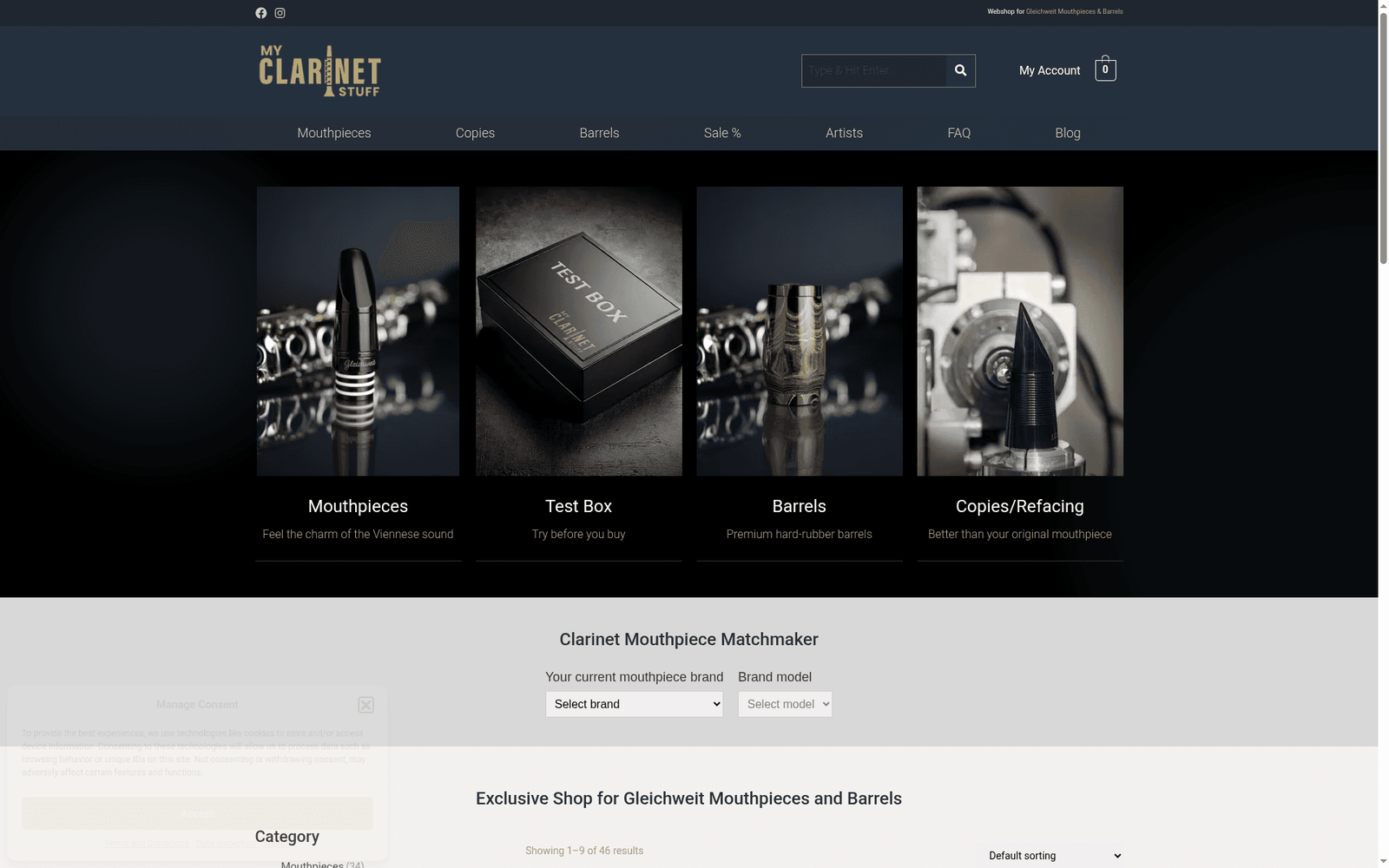
Start with the Clarinet Mouthpiece Matchmaker to find the right Gleichweit model for your system and playing style. If you want to test before you commit, the at-home test box program ships multiple mouthpieces directly to you. Myclarinetstuff also carries clarinet accessories that support tone and breath control for players at every level. Fast U.S. shipping and direct support are available for students, educators, and professionals.
FAQ
What makes the Viennese clarinet sound different from Böhm?
The Viennese clarinet uses a wider bore that produces a warmer, rounder, and more vocal tone compared to the brighter, more projecting sound of the Böhm system. The difference is acoustic, not stylistic, and requires system-specific mouthpieces to achieve authentically.
Can I use a standard mouthpiece on a Viennese clarinet?
Standard Böhm mouthpieces do not fit the Viennese bore correctly and will cause poor intonation and a compromised tone response. A mouthpiece designed specifically for the Viennese system, such as those made by Gleichweit, is required for proper results.
How does tongue position affect Viennese clarinet tone?
Maintaining a high “ee” tongue position raises air velocity, stabilizes pitch, and reduces unwanted undertones. A low tongue position produces a hollow, unfocused sound that works against the warm, centered tone the Viennese system is built to produce.
What is the correct way to support air for the Viennese sound?
Support means regulated, slow air release driven by rib descent and coordinated intercostal and abdominal muscles, not pushing air from the diaphragm alone. The Viennese bore’s higher resistance rewards a controlled, steady air column over forced pressure.
How do I test whether a mouthpiece suits my Viennese clarinet?
Play sustained long tones on open G and throat tones to evaluate intonation and tone color. Myclarinetstuff’s at-home test box program lets you compare multiple Gleichweit mouthpieces on your own instrument before purchasing.
Recommended
- Clarinet Performance Tips Guide for Achieving Your Best Sound – My Clarinet Stuff
- 7-Step Clarinet Sound Improvement Checklist for Experts – My Clarinet Stuff
- Clarinet Equipment Selection Process for Optimal Sound – My Clarinet Stuff
- The Viennese clarinet tradition: sound, technique, and legacy – My Clarinet Stuff