
TL;DR:
- The bass clarinet provides a dark, resonant voice that bridges low woodwinds and adds theatrical depth in orchestras. It is essential for anchoring the low register, adding color, and sometimes serving as a solo instrument. Technical control of embouchure, equipment, and expressive phrasing is crucial for its effective orchestral role.
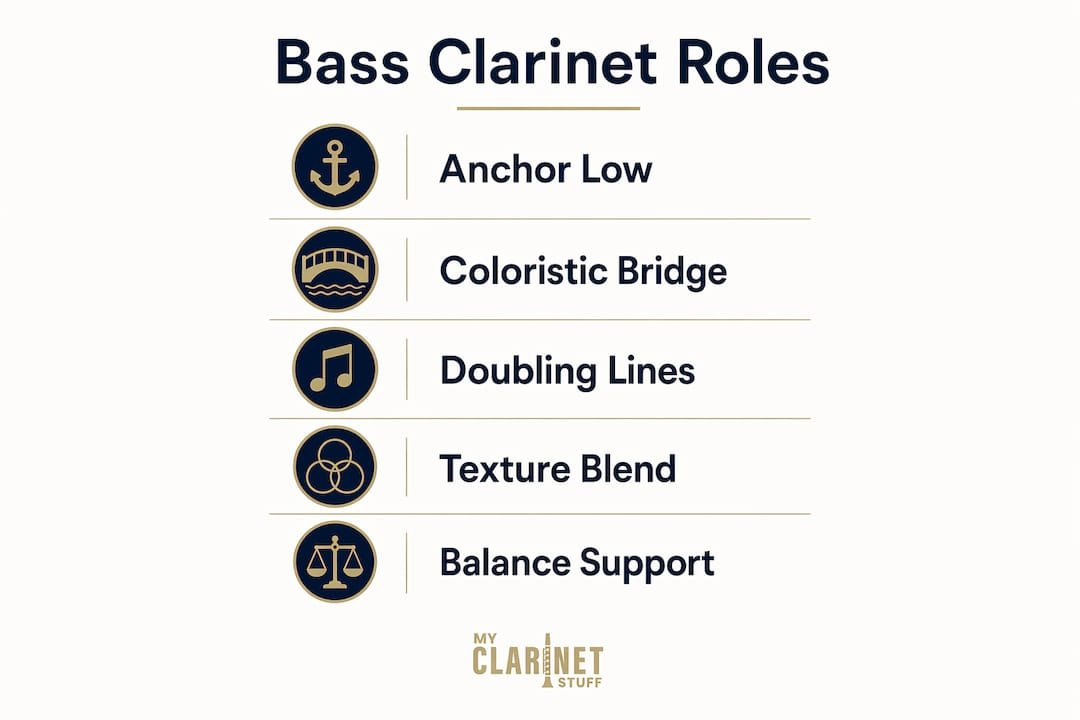
The bass clarinet is defined as the lowest-pitched standard member of the clarinet family, producing a dark, resonant tone that no other woodwind can replicate. Its role in the orchestra goes far beyond filling out the bass line. The bass clarinet in orchestra explained properly means understanding how it bridges the low woodwinds, colors entire sections, and gives composers like Mahler and Wagner a tool for expressing gloom, mystery, and atmospheric depth. This instrument carries a spectral signature that listeners and conductors recognize instantly, making it one of the most expressive voices in the woodwind family.
What is the bass clarinet’s role in the orchestra?
The bass clarinet serves three distinct functions in orchestral writing: it anchors the woodwind section’s low end, colors the texture with its unique timbre, and occasionally steps forward as a soloist. No other instrument occupies exactly this sonic space. The bassoon sits lower in the orchestra’s overall register, but the bass clarinet’s tone cuts through ensemble textures in a way the bassoon cannot always match.
Composers exploit the bass clarinet’s coloristic bridge function between the low woodwinds and the rest of the orchestra. Gustav Mahler used it in his Sixth Symphony specifically to express gloom and psychological weight. Richard Wagner wrote for it in the Ring Cycle to create atmospheric, almost supernatural effects. These are not decorative choices. They reflect how the instrument’s spectral behavior shapes listener perception at a deep level.
The roles of bass clarinet also include doubling cello lines, reinforcing contrabassoon passages, and providing a soft, dark cushion under oboe or flute solos. When the texture thins, the bass clarinet often becomes the most audible voice in the low register. That visibility demands both technical control and genuine musical thinking.
Physical characteristics and acoustics of the bass clarinet
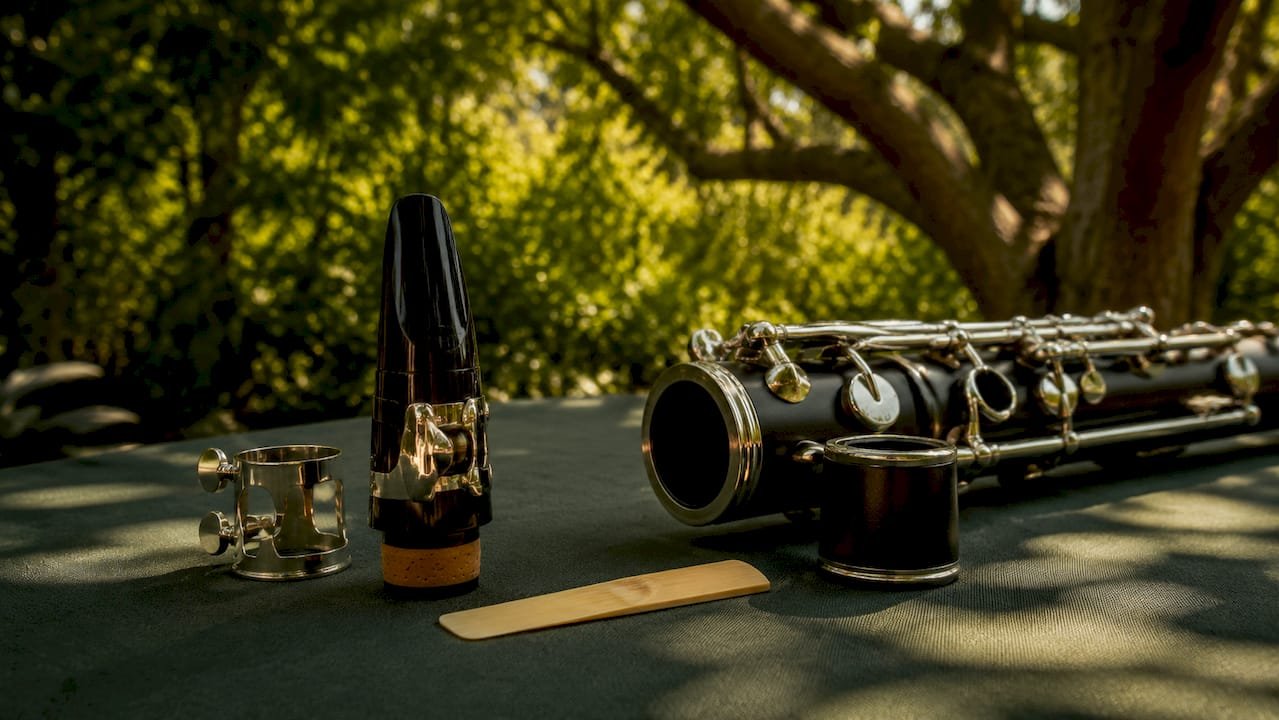
The bass clarinet is significantly larger than a standard Bb soprano clarinet, requiring a floor peg for support during performance. Its bore is consistent throughout the body, and its bell curves upward and outward in a distinctive metal shape. These design features are not cosmetic. They directly produce the instrument’s characteristic tone and projection.
Key physical features include:
- Consistent bore: Produces an even tone across all registers, unlike the flared bell of a saxophone.
- Upward-turned metal bell: Directs sound outward into the hall rather than toward the floor.
- Floor peg: Supports the instrument’s weight during long rehearsals and performances.
- Extended keywork: Allows access to low notes unavailable on soprano clarinets.
- Larger mouthpiece and reed: Requires a wider embouchure and a heavier reed than Bb clarinet.
The bass clarinet transposes in Bb, sounding a major ninth lower than written. That transposition places its practical range well below the soprano clarinet, overlapping with the bassoon and cello in the orchestra’s mid-to-low register. The contrabass clarinet sounds an octave below the bass clarinet and two octaves below the Bb clarinet, making it a far rarer and more extreme instrument. The basset clarinet, by contrast, is a historical variant with a slightly extended lower range. Earliest surviving basset clarinets date to around 1770, and modern composers including Thomas Adès write for it today.
Pro Tip: If you are switching from soprano clarinet to bass clarinet, spend focused time on embouchure flexibility in the low register before your first rehearsal. The wider mouthpiece demands a more relaxed jaw position than most soprano players expect.
How did the bass clarinet develop into an orchestral standard?
The bass clarinet’s path into the orchestra took nearly a century. Development began around 1750 and reached a mature, playable form by 1838. Acceptance into standard orchestral writing came later, driven by the demands of late Romantic composers.
The key milestones in that evolution:
- 1750–1838: Early experimental designs appear across Europe, with various builders attempting to extend the clarinet’s range downward.
- Mid-19th century: Giacomo Meyerbeer becomes one of the first major opera composers to write a prominent bass clarinet part, in Les Huguenots (1836).
- Late 19th century: Wagner and Mahler establish the bass clarinet as a standard orchestral voice alongside piccolo and contrabassoon.
- 20th century: The instrument appears in expanded woodwind sections across symphonic and chamber repertoire.
- Contemporary era: Composers like David Maslanka write demanding pedagogical works that push the instrument’s expressive and technical limits.
“The bass clarinet’s rise in the orchestra mirrors the Romantic era’s appetite for darker, more psychologically complex orchestral color. Wagner did not add it for novelty. He added it because nothing else sounded like it.”
The contrabass clarinet remains a very rare orchestral instrument, appearing mainly in expanded woodwind sections and specialized solo works. The basset clarinet has seen a revival in period performance and contemporary composition, but it requires specific adaptation from orchestral musicians trained on modern instruments. The bass clarinet, by contrast, is now a fixture in any full symphony orchestra.
How does the bass clarinet function within orchestral texture and ensemble balance?
The bass clarinet’s function in ensemble balance is more nuanced than most musicians outside the woodwind section realize. It does not simply double the cello or reinforce the bassoon. It adds a layer of tonal color that neither string nor double-reed instrument can provide.
Specific orchestral functions include:
- Low woodwind anchor: Fills the register between bassoon and the mid-range clarinets, preventing a textural gap.
- Coloristic doubling: Adds warmth and darkness when paired with cellos or violas playing in their lower range.
- Solo voice: Steps forward in exposed passages, particularly in 20th-century symphonic writing.
- Atmospheric texture: Creates sustained, dark pads under melodic lines in strings or brass.
- Dynamic flexibility: Moves from a whispered pianissimo to a full, projecting forte without losing tonal identity.
Balancing presence without overpowering the ensemble is the central challenge of orchestral bass clarinet playing. Players must control resonance, dynamic shading, and vibrato simultaneously. A bass clarinet that plays too loudly muddies the texture. One that plays too softly disappears entirely, leaving a gap that conductors and section leaders notice immediately.
Pro Tip: In tutti passages, aim for a tone that blends with the bassoon rather than competing with it. Think of your sound as the darker shadow of the bassoon’s line, not a separate voice fighting for space.
The importance of bass clarinet in ensemble settings also shows up in its interaction with the brass section. In low-register passages where trombones or tuba hold sustained notes, the bass clarinet’s tone adds a woody warmth that softens the brass edge. Orchestrators from Mahler onward have used this combination deliberately.
What are the technical challenges of playing bass clarinet in an orchestra?
Bass clarinetists face a specific set of technical demands that differ meaningfully from soprano clarinet playing. Intonation is the most persistent challenge. The instrument’s large bore and extended keywork create tuning tendencies that require constant embouchure adjustment.
Common technical challenges include:
- Low-register projection: Soft low notes must carry across the orchestra without sounding thin or unfocused.
- Intonation in upper registers: Pitch problems in upper registers often trace back to embouchure tension rather than equipment issues.
- Articulation clarity: The larger reed responds more slowly than a soprano reed, requiring adjusted tongue placement and speed.
- Bassoon substitution passages: Bass clarinetists sometimes cover delicate low-register passages where the bassoon struggles to project, demanding flexibility and quick technique adaptation.
- Reed and mouthpiece matching: The wrong reed weight or mouthpiece facing creates tonal inconsistency that no amount of embouchure adjustment can fully correct.
Mouthpiece selection matters more than many players acknowledge. A mouthpiece with the right facing length and tip opening for your reed weight gives you the dynamic range and tonal focus that orchestral playing demands. Myclarinetstuff carries the Gleichweit 22-3 bass clarinet mouthpiece, a CNC-crafted synthetic option designed for consistent projection and tonal clarity across the instrument’s full range.
Articulation strategy also separates good bass clarinetists from great ones. Shaping articulation and phrasing creatively makes even seemingly simple parts indispensable to the ensemble texture. A long, sustained note is not just a held pitch. It is a tonal decision about color, weight, and placement within the chord. Recording your own playing with a quality dynamic microphone during practice sessions reveals intonation and tonal issues that are impossible to hear from behind the instrument.
Pro Tip: Before changing your reed or mouthpiece to fix a pitch problem, spend one full practice session working only on embouchure position and air support. Most upper-register intonation issues disappear with better air speed and a more relaxed jaw.
Key Takeaways
The bass clarinet is the orchestral woodwind section’s most versatile low-register voice, combining coloristic depth, dynamic flexibility, and expressive range that no other instrument duplicates.
| Point | Details |
|---|---|
| Defined orchestral role | The bass clarinet bridges low woodwinds and mid-range strings with a unique spectral signature. |
| Historical standard | It became a fixture in full orchestras through Wagner and Mahler in the late Romantic era. |
| Technical demands | Intonation, low-register projection, and articulation require constant embouchure attention. |
| Ensemble balance | Players must control resonance and dynamic shading to support without overpowering the section. |
| Equipment matters | Mouthpiece facing and reed weight directly affect tonal focus and dynamic range in orchestral settings. |
What I’ve learned from watching bass clarinetists get overlooked
The bass clarinet is the most underestimated instrument in the woodwind section. I have watched players treat their parts as filler, holding long notes with no tonal intention, and then wonder why the conductor never acknowledges their contribution. The instrument rewards musicians who treat every note as a decision.
The most memorable bass clarinet playing I have encountered came from a player who understood that a single sustained low note in a Mahler slow movement is not background. It is the emotional floor of the entire passage. She shaped the attack, the body of the note, and the release with the same care a violinist gives a solo line. The conductor stopped the rehearsal to acknowledge it. That is what musical shaping in ensemble actually looks like in practice.
My honest advice: stop thinking of bass clarinet parts as support roles and start thinking of them as structural ones. The orchestra’s texture depends on what you do with your sound, not just whether you play the right notes. Your clarinet reed selection and mouthpiece setup are the foundation of that sound. Get those right first, and the musical decisions become much easier to execute.
— Milos
Myclarinetstuff resources for bass clarinet players
Bass clarinetists who want to improve their orchestral tone have a clear starting point: the mouthpiece.

Myclarinetstuff carries the Gleichweit 22-3, an Austrian-made CNC-crafted synthetic bass clarinet mouthpiece built for consistent projection and tonal clarity in demanding ensemble settings. The mouthpiece matchmaker tool at Myclarinetstuff helps you identify the right facing and tip opening for your playing style and reed weight. You can also browse the clarinet accessory guide for O-rings, barrels, and other setup components that affect how your bass clarinet responds in the hall. Fast U.S. shipping and direct support from players who know the instrument make Myclarinetstuff the practical first stop for serious bass clarinetists.
FAQ
What does the bass clarinet do in an orchestra?
The bass clarinet anchors the woodwind section’s low register, bridges the gap between bassoon and mid-range clarinets, and adds dark tonal color to the ensemble. It also takes solo roles in 20th-century symphonic writing.
How does the bass clarinet differ from the contrabass clarinet?
The contrabass clarinet sounds an octave below the bass clarinet and two octaves below the standard Bb clarinet, making it far rarer in orchestral settings. The bass clarinet is a standard woodwind section member; the contrabass appears mainly in expanded or specialized ensembles.
What composers wrote important bass clarinet parts?
Wagner used the bass clarinet in the Ring Cycle for atmospheric effects, and Mahler featured it prominently in his Sixth Symphony for expressive depth. Contemporary composers like David Maslanka have expanded its solo and ensemble repertoire significantly.
How do you fix intonation problems on bass clarinet?
Pitch problems, especially in the upper register, most often trace back to embouchure tension and air support rather than equipment. Assess your technique and jaw position before changing reeds or mouthpieces.
What mouthpiece should a bass clarinetist use for orchestral playing?
A mouthpiece with a facing and tip opening matched to your reed weight gives the best tonal focus and dynamic range for orchestral work. The Gleichweit 22-3 synthetic mouthpiece offers consistent performance without the variability of traditional hard rubber options.