
TL;DR:
- Clarinet tone color is shaped by acoustics, technique, and equipment working together.
- Technique adjustments like embouchure, blowing pressure, and vocal tract shape significantly influence tone color.
- Gear choices, especially mouthpieces and reeds, impact sound but personalized control is key for a distinctive tone.
Two clarinetists walk into a rehearsal with nearly identical instruments, the same brand of reed, and the same mouthpiece model. One sounds dark and rich. The other sounds thin and nasal. If gear were everything, that gap couldn’t exist. The truth is that clarinet sound color is shaped by a surprisingly complex mix of acoustics, technique, and equipment working together. This guide breaks down each of those layers so you can understand what drives your tone, how to control it intentionally, and which mouthpiece and reed choices will move you closer to the sound you actually hear in your head.
Table of Contents
- What is clarinet tone color?
- How technique shapes your clarinet tone color
- Clarinet mouthpiece and reed choices: Impact on tone color
- Advanced tone color control: Expression beyond the basics
- Common tone color goals and troubleshooting: Finding your signature sound
- Why mastery of tone color is the clarinetist’s secret weapon
- Ready to shape your sound? Next steps for clarinetists
- Frequently asked questions
Key Takeaways
| Point | Details |
|---|---|
| Tone color origins | Clarinet tone color comes from its unique harmonic structure and how you control it. |
| Technique matters most | Subtle changes in embouchure, blowing, and vocal tract shape dramatically shift your sound. |
| Mouthpiece and reed impact | Mouthpiece and reed pairings strongly influence tone color—choose combinations to match your style. |
| Experiment for mastery | Signature tone color is achieved through intentional experimentation with both gear and technique. |
What is clarinet tone color?
Tone color, also called timbre, is what makes a clarinet sound like a clarinet and not a flute, even when both play the same pitch at the same volume. It’s the fingerprint of a sound. For the clarinet specifically, tone color is determined by the balance of harmonics present in the vibrating air column, with odd-numbered harmonics dominating because of the instrument’s closed cylindrical bore. That physical structure is precisely why the clarinet has that signature woody, hollow quality that no other woodwind quite matches.
The energy distribution shifts depending on which register you’re playing. In the chalumeau register, roughly 40 to 60 percent of the acoustic energy sits in the fundamental frequency, which is why it sounds so warm and full. Move into the clarion or altissimo, and higher harmonics gain strength, brightening the color noticeably.
Here’s a quick look at how register maps to tone color:
| Register | Frequency range | Characteristic tone color |
|---|---|---|
| Chalumeau | 147–392 Hz | Warm, dark, woody |
| Throat tones | 370–466 Hz | Slightly hollow, neutral |
| Clarion | 466–1047 Hz | Bright, focused, singing |
| Altissimo | 1047 Hz+ | Brilliant, piercing, intense |
The sound quality factors shaping your overall timbre include:
- Harmonic balance (odd vs. even partials)
- Register and playing range
- Mouthpiece geometry and reed response
- Embouchure shape and pressure
- Vocal tract resonance and tongue position
“Timbre is not a single quality but a multidimensional profile of harmonic energy — it is the ‘color’ of the sound that tells us what instrument we are hearing before we even consciously register the note.”
How technique shapes your clarinet tone color
With a basic understanding of what tone color is, let’s move on to practical ways your own technique directly controls it. This is where most clarinetists have far more power than they realize.
- Embouchure adjustment. A firmer, more forward embouchure compresses the reed opening and emphasizes upper harmonics, brightening the tone. Relaxing the jaw slightly allows lower harmonics to dominate, darkening the color.
- Blowing pressure. Higher air pressure increases the spectral centroid of the sound, pushing energy into brighter partials. Lower pressure keeps the tone warm and controlled. Even subtle shifts of a few grams per square centimeter can shift your color significantly.
- Reed contact and aperture. The size of the reed opening directly shapes which harmonics get amplified. A more open aperture with lighter reed contact gives you a broader, airier sound.
- Vocal tract resonance and tongue shape. Adjusting the shape of your oral cavity is like tuning a resonator inside your body. Research confirms that vocal tract resonance shifts color and spectral irregularity while blowing pressure controls overall brightness and centroid.
One often overlooked factor is moisture. Even a small change in reed hydration can alter reed vibration modes by 2 to 5 percent, creating subtle but audible differences in tone stability and color.
Pro Tip: Try this exercise in your next practice session. Hold a single note in the clarion register and slowly arch your tongue from an “ah” vowel shape toward an “ee” shape while keeping your embouchure steady. You will hear the clarinet tone shift from rounder and darker to more focused and forward without touching the instrument. That is vocal tract resonance in action.
For more actionable strategies, explore these richer tone tips that connect technique to real practice results.
Clarinet mouthpiece and reed choices: Impact on tone color
Besides your own technique, the gear you use, especially your mouthpiece and reed, has a major influence on tone color. The mouthpiece is arguably the most influential single component in your setup, and the research backs that up strongly.
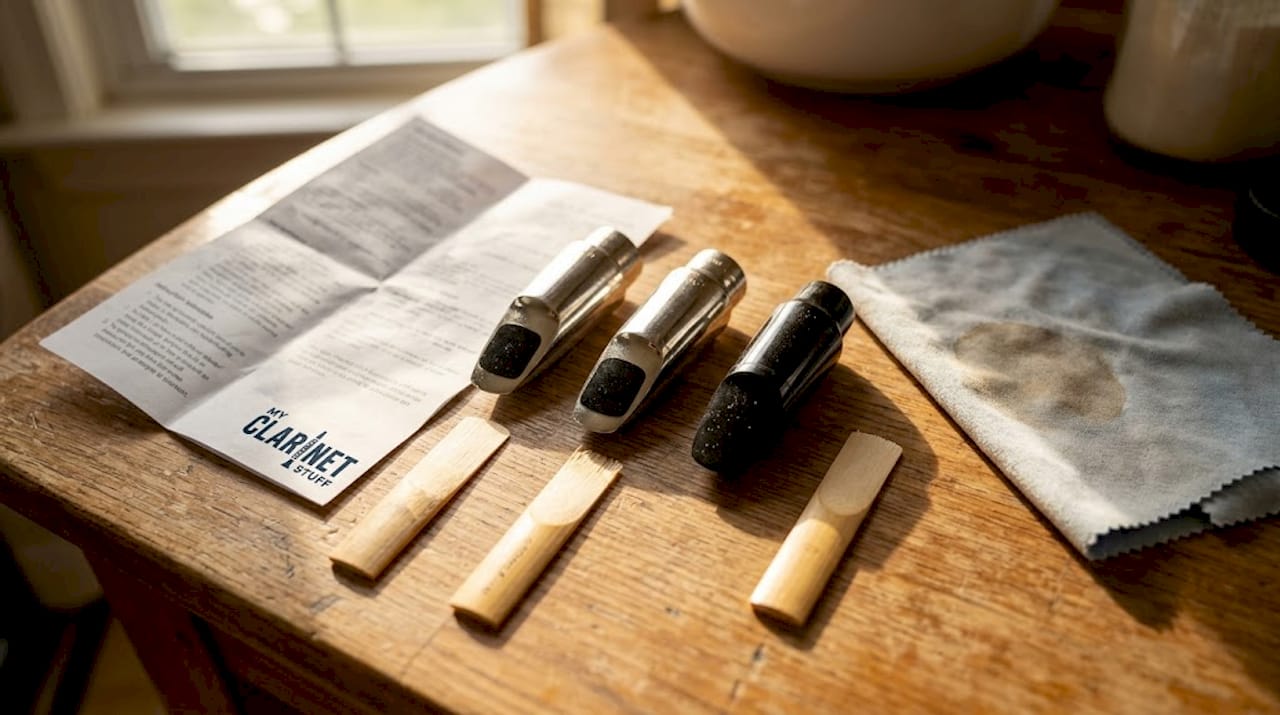
Mouthpiece facing and reed type interact in ways that go far beyond brand names or price points. Here’s how the key variables break down:
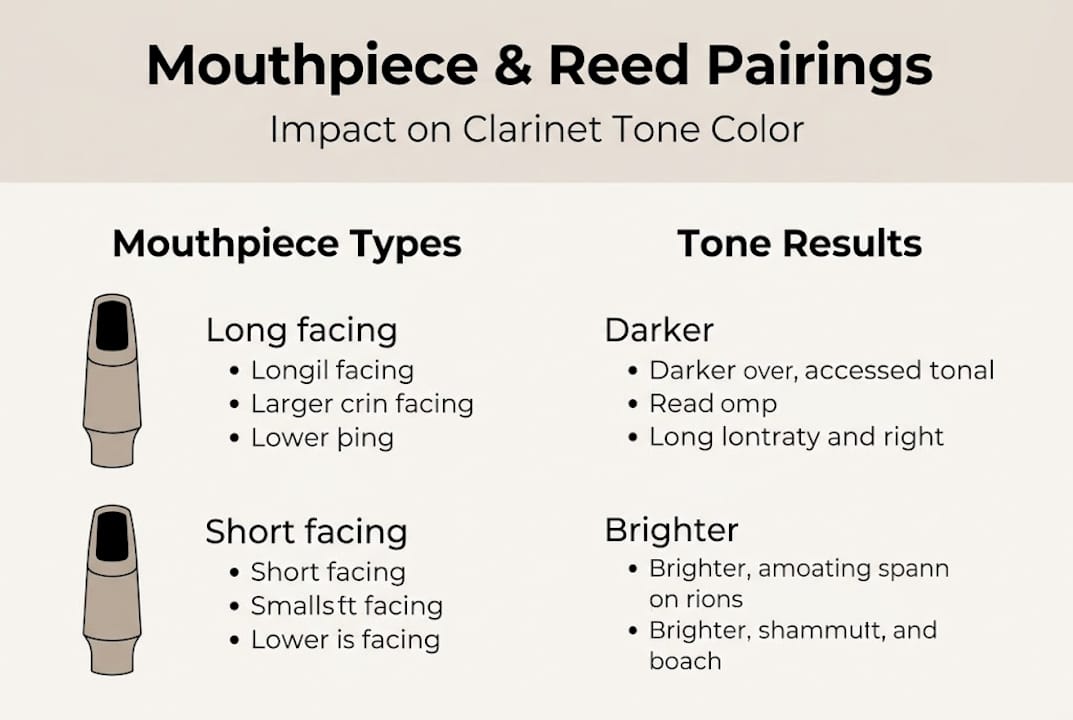
| Facing type | Best reed pairing | Resulting tone color | Best for |
|---|---|---|---|
| Long facing, closed tip | Medium to hard cane | Dark, full, rich | Orchestral, chamber |
| Short facing, open tip | Soft to medium synthetic | Bright, focused, projecting | Jazz, solo performance |
| Medium facing, medium tip | Medium synthetic or cane | Balanced, versatile | Band, teaching, general use |
Synthetic reeds tend to produce a brighter, more consistent tone across sessions, while cane reeds offer a rounder, slightly darker color with more organic variability. Neither is objectively better. Your musical context decides.
When choosing a setup, prioritize these factors:
- Your primary genre (orchestral blend vs. jazz projection vs. chamber warmth)
- The orchestral mouthpiece geometry that matches your natural embouchure
- Reed strength relative to facing length (mismatched combinations flatten or shrink tone color)
- Consistency across a full box of reeds when touring or performing frequently
For a detailed breakdown of reed types and how they interact with different mouthpieces, the clarinet reed types guide is a strong starting point.
Pro Tip: When testing new mouthpieces, play the same four-bar phrase in three different registers and note where the color feels uneven or forced. A mouthpiece that sounds good only in the clarion but loses warmth in the chalumeau is not the right fit for most contexts.
Advanced tone color control: Expression beyond the basics
For those wanting to push their tone color further, here are advanced techniques pros use to paint with sound. These go beyond setup and into real-time expressive control.
Articulation style changes tone color dramatically. A true legato connection between notes preserves the richness of the harmonic envelope. Staccato playing, by contrast, cuts the harmonic sustain and produces a drier, more percussive color. Subtone technique, used heavily in jazz clarinet, places the reed loosely to produce an airy, breathy darkness that is nearly impossible to achieve any other way.
Here are professional techniques for modifying tone color in real time:
- Use glissandi to slide through register breaks and blend colors between chalumeau and clarion
- Apply dynamic swells within single notes to shift harmonic emphasis without changing pitch
- Experiment with slightly altered vowel shapes mid-phrase for phrase-level color variation
- Use reed adjustment to fine-tune response for specific articulation types
- Practice extreme pianissimo passages to develop control over the softest harmonic layer of your sound
Research confirms that advanced tone control in professionals relies on nuanced vocal tract and pressure adjustments, not just equipment changes. The gear expands the ceiling. The player decides how high to reach.
“Tone color is as much a performer’s deliberate tool as it is a composer’s instruction. The most expressive clarinetists treat every phrase as a palette, not a fixed sound.”
In orchestral contexts, the goal is often blending, matching the darker colors of oboe and bassoon in the woodwind section. In jazz, you want projection and edge. Neither approach is purely a mouthpiece decision.
Common tone color goals and troubleshooting: Finding your signature sound
With advanced tools in hand, let’s look at your end goal, crafting a personal sound and addressing typical problems along the way. Different musical roles demand different color profiles, and knowing your target makes troubleshooting much faster.
- Orchestral player. Aim for a dark, blended tone that sits inside the ensemble without sticking out. Orchestral and jazz setups require fundamentally different mouthpiece and reed choices, with orchestral players leaning toward longer facings and harder cane.
- Solo performer. You want presence and character. A slightly brighter color with strong midrange harmonics helps you cut through an accompaniment without losing warmth.
- Jazz clarinetist. Projection and edge matter most. Shorter facings, softer reeds, and an open embouchure give you the wide dynamic range and tonal flexibility jazz demands.
- Band and ensemble player. Balance between blending and presence is the priority. A medium setup with consistent synthetic reeds often works best here for reliability across rehearsals.
Pro Tip: If your tone sounds too muffled, check your blowing pressure first before changing gear. If it sounds too thin or bright, try arching your tongue slightly lower and letting your embouchure relax just a fraction. Most tone problems are technique problems wearing a gear disguise.
For guidance on selecting and trying mouthpieces before committing to a purchase, there are practical frameworks available that help you evaluate options systematically.
Why mastery of tone color is the clarinetist’s secret weapon
Most clarinetists spend years chasing the perfect mouthpiece, the ideal reed brand, or the instrument that will finally make them sound the way they want. That’s understandable. Gear is concrete. You can order it, hold it, compare it. Tone color work is harder because it lives in the space between your body and the instrument.
Here’s what years of watching players improve actually shows: the clarinetists who develop the most distinctive and expressive sounds are the ones who experiment deliberately. They don’t just play through their practice session and hope the sound gets better. They isolate a single phrase, try three different vowel shapes, note what changes, and keep the one that serves the music.
Gear absolutely matters. A mouthpiece that matches your embouchure and playing context will expand what’s possible. But your signature sound is built in practice, not in a shopping cart. The players who treat tone color as a daily practice tool rather than a problem to solve with a purchase are the ones who develop sounds that are immediately recognizable. That kind of individuality is rare, and it’s worth pursuing every single day.
Ready to shape your sound? Next steps for clarinetists
If this guide has you thinking seriously about your tone color, the natural next step is finding a mouthpiece setup that actually matches your goals and embouchure.

At MyClarinetStuff.com, the mouthpiece matchmaker is a great place to start. It guides you through your playing style, genre, and tonal goals to recommend Gleichweit mouthpieces tailored to your needs. If you want to build out a complete setup, the accessory selection guide covers barrels, reeds, and ligatures that work together. And for practical decision-making frameworks, the mouthpiece selection tips guide gives you seven focused criteria to evaluate any mouthpiece confidently before you commit.
Frequently asked questions
Why does clarinet tone color vary so much between players?
Differences in embouchure, air pressure, vocal tract shape, and mouthpiece/reed setup make each clarinetist’s timbre unique, even on identical gear. Because clarinet timbre is determined by harmonic balance shaped by both the instrument and the player’s body, no two players produce exactly the same color.
What mouthpiece and reed combinations produce a bright clarinet tone?
Short-facing or open-tip mouthpieces paired with synthetic or softer reeds tend to deliver a brighter, more projecting sound. Short facings produce a crisp, forward color that works especially well in jazz and solo contexts.
Can I change my tone color without buying new gear?
Yes. Adjustments to embouchure, blowing pressure, and vocal tract shape offer major tone color shifts with zero equipment changes. Research confirms that vocal tract adjustments directly control brightness and spectral quality, giving players significant expressive range through technique alone.
Why do orchestral players prefer a darker sound?
A darker, blended tone helps clarinetists integrate with the other woodwinds and support the overall orchestral texture without sticking out. Orchestral dark tone preferences reflect an ensemble priority over individual projection.
Does moisture really affect clarinet tone color?
Yes. Even small changes in reed hydration alter reed vibration modes by 2 to 5 percent, creating subtle but real differences in tone stability and color, especially during long rehearsals or performances in dry conditions.