
TL;DR:
- The clarinet barrel affects resonance through its length, bore shape, and material, influencing pitch, tone, and response. A longer barrel lowers pitch, while bore taper and material alter tone color and register smoothness. Proper barrel selection enhances tuning stability, tone warmth, and overall playing comfort.
The clarinet barrel is defined as the acoustic interface between the mouthpiece and the upper joint, and its design directly controls how resonance develops through the instrument. How barrels alter resonance is not a minor concern. Barrel length, bore shape, material, and construction each shift pitch, tone color, and register response in measurable ways. The barrel’s bore, length, taper, and material all meaningfully affect sound and feel. Understanding these variables gives you real control over your instrument’s performance.
How barrels alter resonance: length, bore, and material
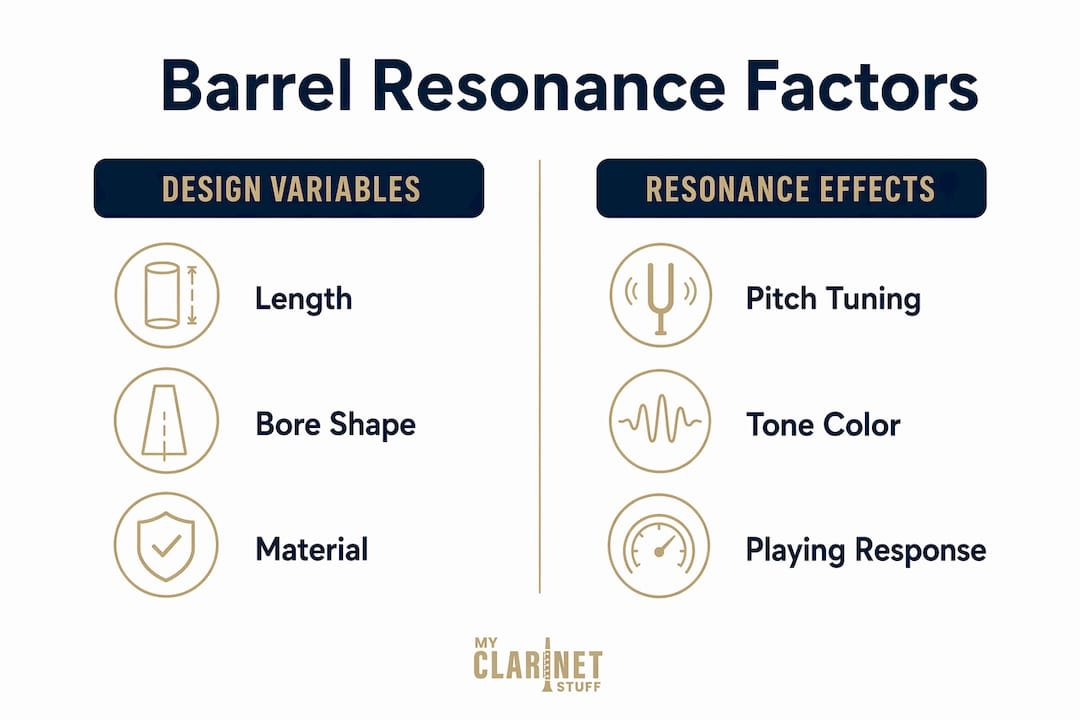
Barrel design shapes resonance through three primary variables: length, bore geometry, and material. Each one acts on the standing wave inside the clarinet differently. Length controls overall pitch. Bore shape controls how overtones stack and how registers respond. Material controls how freely the tube vibrates and how much energy it absorbs. No single variable works in isolation. A longer barrel made of dense wood with a cylindrical bore produces a very different acoustic result than a short, ringless barrel with an inverted cone taper.
The barrel sits at the shortest functional section of the clarinet. That position makes it disproportionately influential. Small changes at this point in the tube affect the entire resonance column, from the throat tones up through the clarion register.
How does barrel length affect pitch and tuning?
Barrel length is the primary tuning lever on a Bb clarinet. Standard lengths range from 63–67mm, with 65mm and 66mm being the most common. A longer barrel lowers pitch. A shorter barrel raises it. That relationship is direct and consistent across instruments.
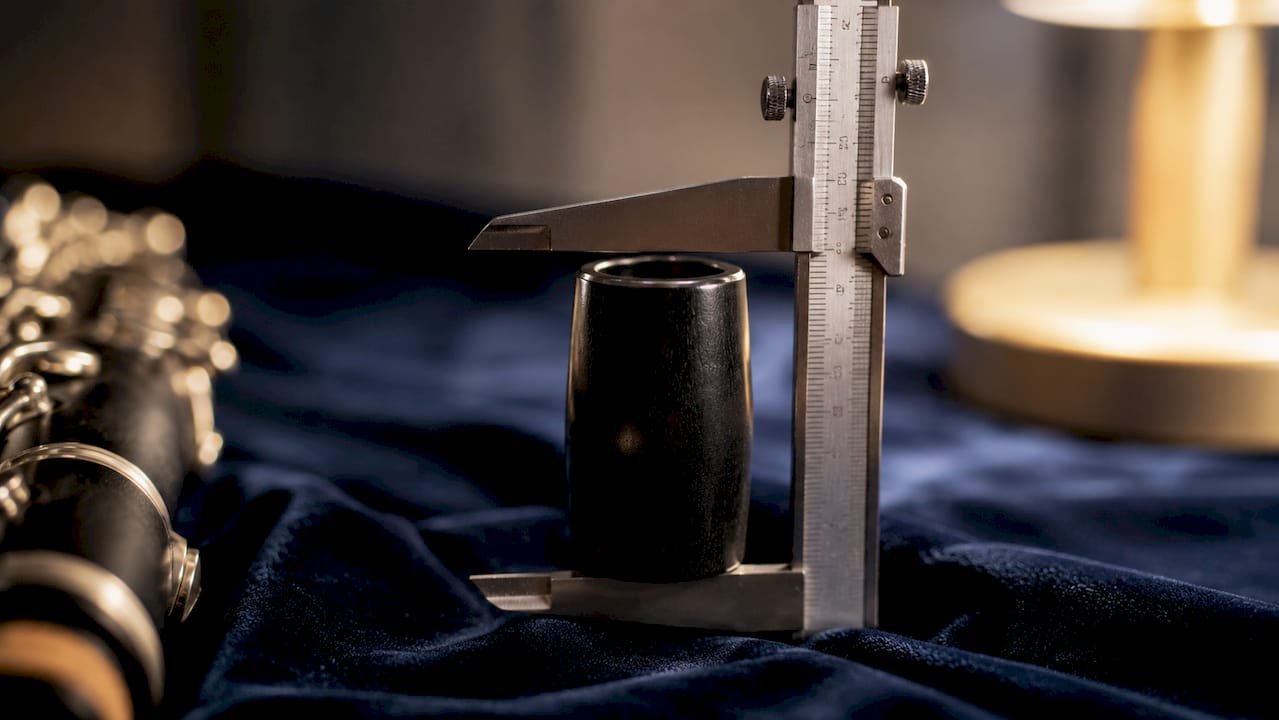
A 1mm change in barrel length produces a noticeable pitch shift. That means a player moving from a 65mm barrel to a 66mm barrel will need to adjust their embouchure or pull out less at the barrel joint to stay in tune. The effect compounds when combined with temperature changes, which cause the instrument to play sharper when warm and flatter when cold.
| Barrel Length | Pitch Effect | Typical Use Case |
|---|---|---|
| 63–64mm | Raises pitch noticeably | Cold environments, sharp-playing instruments |
| 65mm | Neutral reference point | General practice and performance |
| 66mm | Lowers pitch slightly | Warm environments, flat-playing instruments |
| 67mm | Lowers pitch significantly | Correcting instruments that run consistently flat |
Tuning stability also depends on how consistently the barrel is machined. A barrel with uneven wall thickness or an imprecise tenon fit introduces air leaks that disrupt the standing wave. Those disruptions show up as unstable pitch and uneven response across registers.
Pro Tip: Test barrel length changes in the room temperature where you perform most often. A barrel that tunes perfectly in a cold rehearsal space may push you sharp on a warm concert stage.
In what ways does bore shape affect tone and resonance?
Bore taper is the most acoustically complex variable in barrel design. A purely cylindrical bore maintains a consistent diameter from end to end. An inverted cone bore widens slightly from the mouthpiece end toward the upper joint. That geometric difference changes where standing waves reflect inside the tube.
Inverted cone bores enhance twelfth intervals and improve resonance in polycylindrical clarinets. The practical result is better alignment between the fundamental and its twelfth, which is the interval the clarinet overblows. When those intervals align accurately, the register break feels smoother and throat tones respond more freely.
The effects of bore shape on tone color are equally significant:
- Cylindrical bore: Produces a more even, neutral tone across registers. Common in student and intermediate instruments.
- Inverted cone bore: Adds warmth and complexity to the lower register. Improves throat tone response and reduces stuffiness around G4 and A4.
- Reverse taper (narrowing toward upper joint): Brightens the tone and increases projection. Favored in some jazz and folk settings.
- Polycylindrical bore (stepped sections): Balances resonance across registers by targeting specific modal ratios. Used in professional-grade barrels.
Bore taper influences standing waves at the shortest functional lengths of the clarinet. That is why changing barrels affects the throat register and the break more dramatically than it affects the middle or upper clarion register. The bore shape at the barrel determines how cleanly the instrument transitions between registers.
Pro Tip: If your throat tones feel stuffy or your break is inconsistent, try a barrel with an inverted cone bore before adjusting your embouchure. The problem is often acoustic, not technical.
How do barrel materials change the clarinet’s resonance?
Material choice determines how much the barrel itself participates in vibration. Wooden barrels produce warmer, more complex tones compared to plastic or hard rubber barrels. Wood vibrates sympathetically with the air column inside, adding overtones that synthetic materials absorb or suppress. That difference is audible, especially in the lower and middle registers.
African blackwood is the most common professional choice. It is dense, stable, and produces a focused, warm tone. Aged African blackwood barrels without rings produce warmer tone and increased resonance compared to freshly machined or ringed alternatives. The aging process stabilizes the wood’s cellular structure, reducing the micro-movements that cause tonal inconsistency.
| Material | Tone Character | Resonance Behavior |
|---|---|---|
| African blackwood | Warm, focused, complex | High resonance, low damping |
| Grenadilla (aged) | Dark, rich, sustained | Very high resonance |
| Hard rubber | Neutral, consistent | Moderate resonance, stable |
| Plastic/resin | Bright, direct | Lower resonance, more damping |
| Synthetic composite | Even, predictable | Moderate, weather-resistant |
Metal barrel rings are a construction detail that most players overlook. Ringless barrel designs enhance resonance by reducing vibration damping from metal rings. Metal rings clamp the wood and restrict its natural vibration. Removing them allows the barrel wall to vibrate more freely, which adds warmth and sustain to the tone. Professional players increasingly prefer ringless barrels for this reason.
Precision machining matters as much as material selection. A barrel machined to tight tolerances fits the tenon joint without gaps, maintains consistent bore geometry, and supports a stable standing wave. Sloppy machining introduces turbulence at the joint, which scatters the resonance and produces a diffuse, unfocused tone.
What practical effects do barrel resonance changes have on playing?
Resonance changes from barrel design show up most clearly in three areas: throat tone response, register transition, and overall projection. Barrel design improvements like inverted cone bores better align tuning intervals and resonance, which makes the instrument easier to control across its full range.
Throat tones, the notes from G4 to Bb4, sit at the acoustic boundary between the chalumeau and clarion registers. These notes are notoriously unstable on many clarinets. A barrel with a well-designed bore taper stabilizes the standing wave at these pitches, making them easier to tune and control dynamically.
Practical effects to listen for when testing different barrels:
- Projection: A barrel with low damping and high resonance carries the sound further into the room without added effort.
- Register break: A bore-tapered barrel smooths the transition from throat tones to the clarion register.
- Dynamic range: High-resonance barrels respond more freely at soft dynamics, giving you more control at pianissimo.
- Tone focus: Ringless wooden barrels concentrate the tone, reducing spread and improving blend in ensemble settings.
Pro Tip: When testing a new barrel, play long tones on G4 and A4 first. Those notes reveal more about a barrel’s resonance quality than any other pitch on the instrument.
Selecting a barrel for a specific musical context is a practical decision. A clarinetist playing orchestral repertoire benefits from a warm, focused barrel that blends into the section. A jazz player may prefer a brighter, more projecting barrel that cuts through a rhythm section. The clarinet equipment selection process should account for these differences rather than treating barrel choice as a one-size-fits-all decision.
Key Takeaways
Barrel design controls clarinet resonance through length, bore shape, material, and construction, and each variable produces distinct, audible effects on pitch, tone, and register response.
| Point | Details |
|---|---|
| Length controls pitch | A 1mm change in barrel length produces a noticeable pitch shift across standard Bb clarinets. |
| Bore taper shapes registers | Inverted cone bores improve throat tone response and smooth the break between registers. |
| Material affects warmth | Aged African blackwood without rings produces the highest resonance and warmest tone. |
| Ringless design matters | Removing metal rings allows the barrel wall to vibrate freely, adding sustain and warmth. |
| Test on throat tones first | G4 and A4 reveal a barrel’s resonance quality faster than any other notes on the instrument. |
What I’ve learned from years of barrel testing
Players often underestimate how much a barrel change affects the throat register. I’ve seen clarinetists spend months working on their embouchure to fix a stuffy G4, when the real problem was a cylindrical bore barrel that simply couldn’t support that pitch acoustically. Swapping to an inverted cone bore resolved the issue in one session. The lesson: always rule out equipment before blaming technique.
The other misconception I encounter regularly is that expensive automatically means better resonance. A well-aged African blackwood barrel without rings will outperform a poorly machined exotic wood barrel every time. The custom barrel advantages come from precision and material quality together, not from price alone.
My honest advice is to test barrels systematically. Play the same passage on each barrel. Focus on throat tones, the break, and soft dynamics. Those three areas expose resonance differences that loud, fast playing masks. Trust your ear over the spec sheet. And if you can, have a trusted teacher or colleague listen from the other side of the room. Resonance differences that feel subtle to the player are often obvious to the listener.
— Milos
Barrels and accessories worth exploring at Myclarinetstuff
Myclarinetstuff carries a curated selection of clarinet barrels with detailed bore profiles and material specifications, so you can match the acoustic properties described in this article to your actual playing needs.

The barrel materials guide at Myclarinetstuff walks through wood types, bore geometries, and construction details in practical terms. For clarinetists who want to pair a new barrel with a matched mouthpiece, the clarinet accessory selection guide covers the full setup from mouthpiece to bell. Gleichweit mouthpieces, designed and manufactured in Austria with CNC precision, pair directly with the barrel resonance principles covered here. Fast U.S. shipping and personalized support are available for students, educators, and professionals.
FAQ
What is the standard barrel length for a Bb clarinet?
Standard Bb clarinet barrel lengths range from 63–67mm, with 65mm and 66mm being the most common. Longer barrels lower pitch; shorter barrels raise it.
How does bore taper affect clarinet resonance?
Bore taper shifts where standing waves reflect inside the barrel, changing modal ratios and overtone alignment. Inverted cone bores improve throat tone response and smooth register transitions.
Do wooden barrels really sound different from plastic ones?
Wooden barrels produce warmer, more complex tones because the wood vibrates sympathetically with the air column. Plastic and hard rubber barrels absorb more vibration, producing a brighter, more neutral sound.
Why do professionals prefer ringless barrels?
Metal rings clamp the barrel wall and restrict its natural vibration, which reduces resonance and warmth. Ringless barrels allow the wood to vibrate freely, producing more sustained and complex tone.
Which register is most affected by barrel changes?
The throat register, specifically G4 through Bb4, is most affected by barrel design because the barrel’s bore taper directly influences standing waves at those pitches. The register break also responds noticeably to bore shape changes.